
Your brand closes most of your deals before your sales team knows those deals exist, and manufacturers who keep treating brand strategy as cosmetics are losing bids they never got to compete for. That is not a slogan. It is what the buying data now shows. B2B buying groups fill about 80% of their vendor shortlist on day one, rank a favorite before they contact anyone, and buy from that favorite roughly three times out of four. The evaluation your engineers and estimators sweat over is, most of the time, a confirmation exercise. If your company was not already in the buyer’s head when the need surfaced, no proposal polish gets you back in.
Most manufacturers still run the opposite play: pour the budget into trade shows and demand capture, keep the website as a digital spec binder, and lean on “our quality speaks for itself.” This article lays out why that play now fails, what the mechanism underneath the failure is, and how to build a manufacturing branding program that wins the invisible part of the sale.
The Deal Is Decided Before the First Call
The 6sense 2025 Buyer Experience Report, built on more than 4,000 B2B buyer responses, found that 94% of buying groups had ranked a preferred vendor before making first contact, and that this pre-contact favorite won the deal 77% of the time. About 80% of the shortlist gets filled on day one of the buying journey, before any focused research begins. And 85% of buyers report prior experience with the vendor they picked. These are survey-based, self-reported figures, but three consecutive years of the study have replicated the pattern.
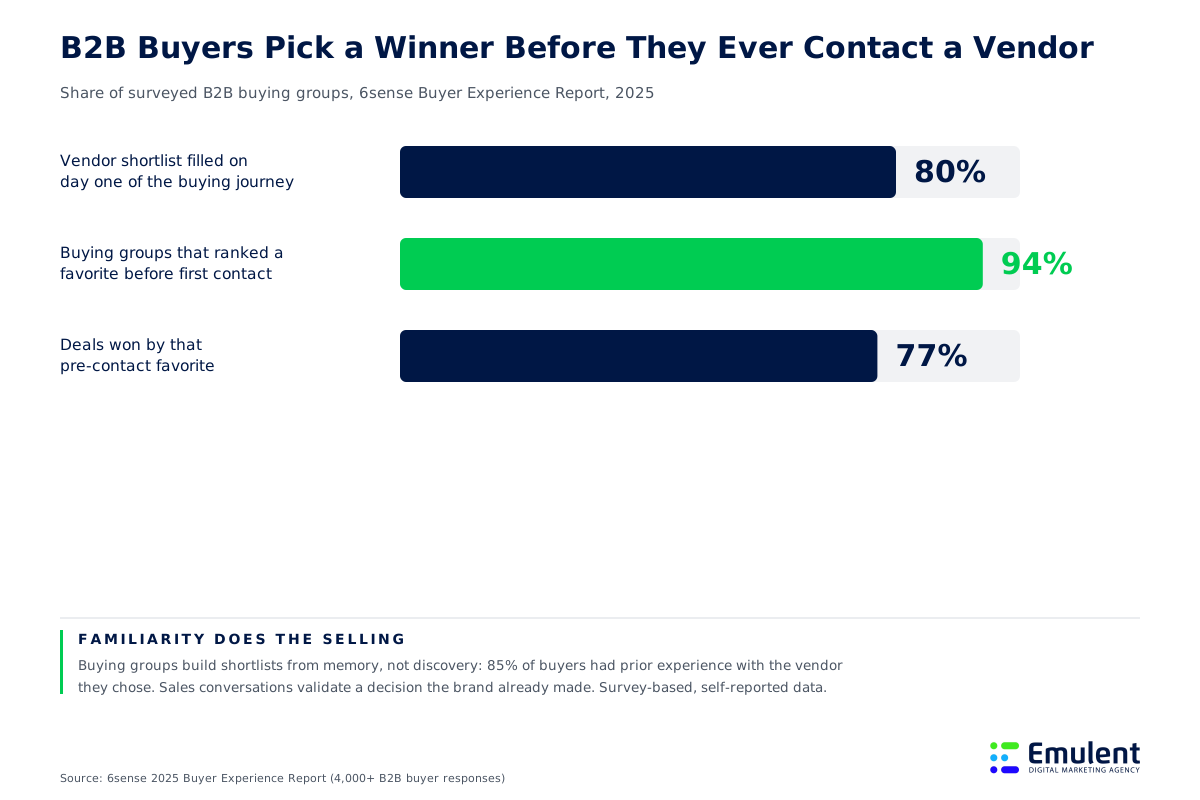
Read those numbers as a manufacturer and the implication is uncomfortable. The typical buying group runs about ten people, cycles run around ten months, and members have been through eight or nine purchase cycles in the category. They are not discovering suppliers when a project kicks off. They are remembering them. The window where brand strategy does its work is the months and years before the requisition exists, when a plant engineer reads your teardown article, sees your machines running in a video, or hears your name from a peer.
The Strategy Team at Emulent
Buyers Prefer Not to Talk to You, and the Preference Is Ratcheting
Gartner’s annual sales surveys put a trend line under the same behavior. In its August-September 2024 survey of 632 B2B buyers, 61% said they prefer a rep-free buying experience. One year later, in the 2025 survey of 646 buyers, that figure reached 67%, with 45% reporting they used AI tools during a recent purchase. Self-serve research is no longer an early-adopter behavior. It is the habit, and habits ratchet: once a procurement engineer has learned to build a comparison matrix from websites, videos, and AI summaries, going back to booking discovery calls feels like friction.
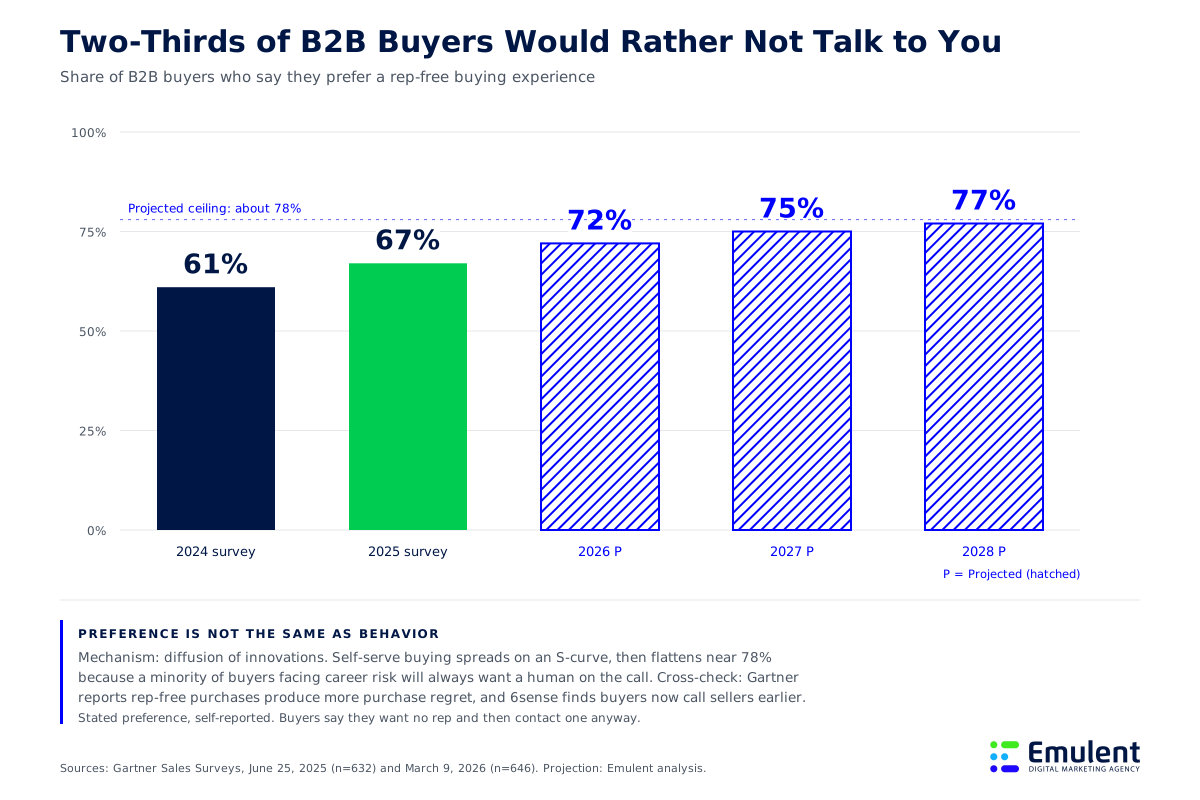
Projection: Emulent analysis based on a habit ratchet (status quo bias favoring entrenched self-serve research), assuming a 75-80% ceiling because complex configured purchases keep a human-validation floor, cross-checked against Gartner’s 2025 finding that 70% of buyers prefer a completely digital self-service experience.
We project the preference climbing toward the low 70s by 2028 and then bending flat. The ceiling is behavioral, not technological. Gartner’s own 2025 data shows 69% of buyers still turn to sales reps to validate AI-generated insights. When a purchase involves custom tooling, tolerances, and a supply commitment measured in years, buyers want a human to confirm what the research told them. What they no longer want is a human as the gatekeeper of basic information. For a manufacturer, that means your website, your videos, your spec libraries, and your published expertise are now doing the job your inside sales team did in 2015. If those assets are thin, you are rep-free by accident instead of by design, and the buyer’s self-serve research simply routes around you. Current b2b marketing trends data shows the same shift across every industrial category we track.
The Anonymous Research Phase Still Owns the Journey
6sense tracked buyers making first vendor contact at about 70% of journey completion in 2023 and 69% in 2024, then measured a shift to 61% in 2025, with first contact arriving about 3.5 weeks sooner (26.4 weeks into the journey versus 30). The driver was not a renewed love of sales conversations. Buyers reached out earlier mostly to interrogate unclear AI claims and to hedge economic uncertainty, and 6sense’s own commentary flags the change as possibly situational rather than permanent.
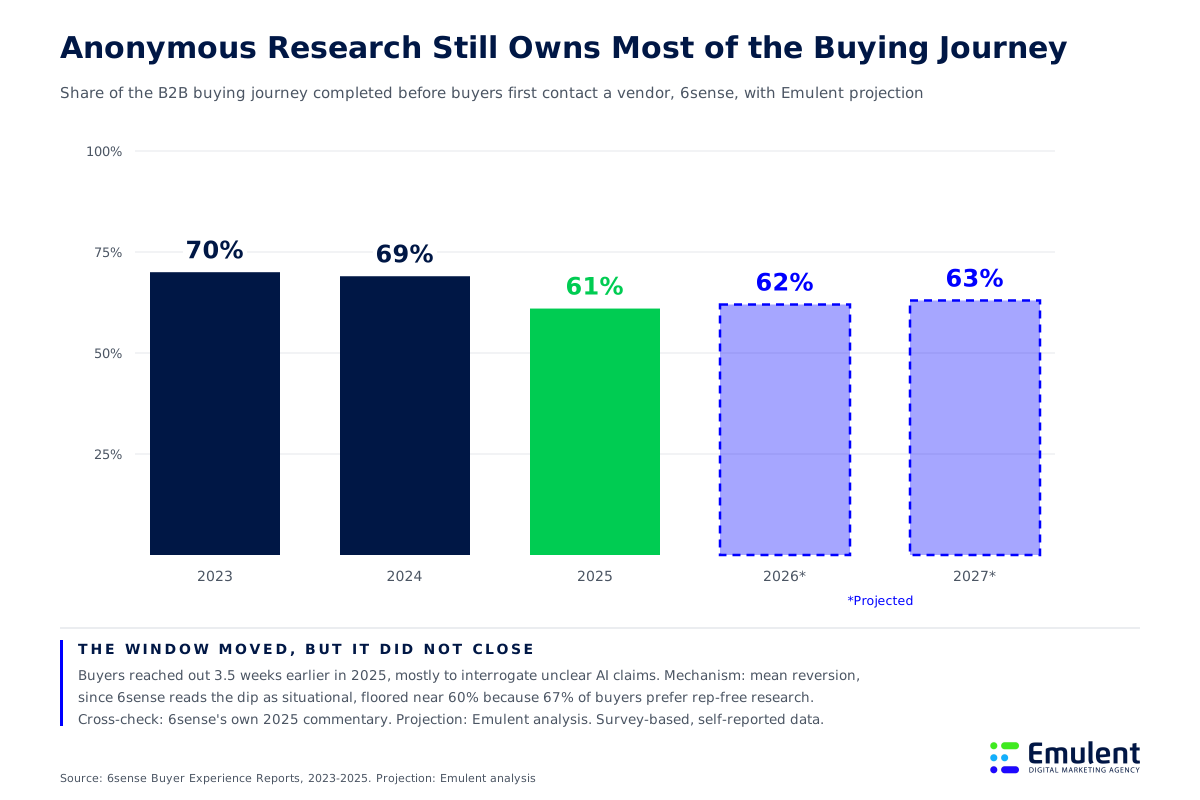
Projection: Emulent analysis based on mean reversion (part of the 2025 dip traces to one-time economic uncertainty and AI feature opacity), assuming a floor near 60% because buyers’ documented preference for rep-free research keeps early evaluation anonymous, cross-checked against 6sense’s 2025 commentary that the shift may prove situational.
We project partial reversion into the low 60s rather than a continued slide, and the strategic point holds at either number: roughly six-tenths of the buying journey happens where you cannot see it, staffed entirely by your brand. During those months your “sales team” is a Google result, a YouTube video, an AI Overview citation, a page on your site, and the memory of the last time a buyer encountered you. That is why we tell manufacturers that brand development services are sales infrastructure, not marketing decoration: they build the only asset that works the anonymous 60%.
Why “Our Quality Speaks for Itself” Fails
Quality cannot speak during the anonymous phase, because nobody has bought anything yet. What operates instead is psychology, and the mechanism is risk. A buying committee of ten people is not hunting for the best possible supplier; each member is protecting themselves from being the person who championed a bad one. Familiarity is how the human brain prices that risk. The supplier the committee already knows, has seen publish real expertise, and can picture as a running operation walks into every evaluation with a discount on doubt. The unknown supplier with the better spec sheet has to overcome a surcharge no spec sheet can pay down. The 6sense finding that brand familiarity plus prior experience precedes 85% of vendor selections is that mechanism showing up in the data.
Bill Ross, Founder of Emulent
This is also where the money shows up. The 2024 Edelman-LinkedIn B2B Thought Leadership Impact Report, a survey of 3,500 decision-makers across seven countries, found 60% of B2B decision-makers and C-suite leaders saying they are willing to pay a premium to work with an organization that produces valuable expertise-led content, and about 70% of C-suite respondents said such content made them question staying with a current supplier. Treat those as what they are, stated attitudes from a global survey rather than measured transactions. The direction still matters for a manufacturer competing on quote price: published expertise moves you out of the commodity column, and its absence invites the spreadsheet sort where the low bid wins.
Brand Is a System, and Buyers Audit the System
A logo refresh is not a brand strategy, and buyers prove it every time they cross-check you. In Gartner’s 2024 survey, 69% of B2B buyers reported inconsistencies between the information on a vendor’s website and what its sellers told them, and 73% said they actively avoid suppliers that send irrelevant outreach. Trust operates as a consistency check: every mismatch between the site, the sales deck, the LinkedIn page, and the rep re-opens the exact risk question the committee is trying to close.
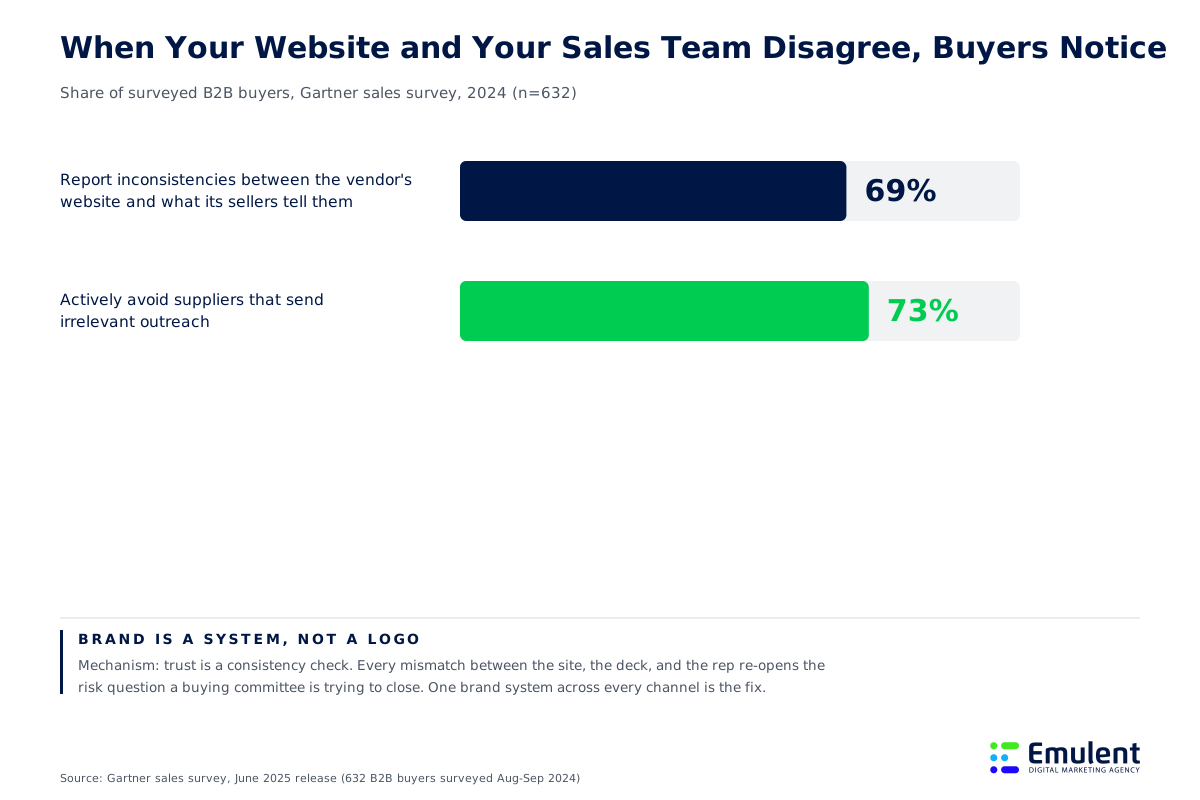
For manufacturers the system has specific parts, and they only work together. Positioning and messaging define the one claim you want remembered. Real manufacturing brand photography of your floor, your fixtures, and your people replaces the stock handshake photos that signal nothing. Manufacturing brand videography lets a buyer tour your capabilities during the anonymous phase, at 11 pm, without asking you for anything. Your manufacturing web design has to answer an engineer’s questions in two clicks instead of gating a PDF behind a form. A content strategy built by people who understand the work turns your senior engineers’ knowledge into the material buyers use to shortlist you, and disciplined manufacturing SEO makes that material findable in both classic search and AI-generated answers. Buy those as disconnected projects and you get the 69% problem: five vendors’ worth of assets telling five slightly different stories.
Your Brand Has a Second Customer: Workers You Cannot Hire
Manufacturing brand strategy is not only a revenue instrument. Deloitte and The Manufacturing Institute’s 2024 talent study projects the US manufacturing industry could need as many as 3.8 million new employees between 2024 and 2033, with 1.9 million of those jobs, more than five in ten of the skilled openings, potentially going unfilled. In the National Association of Manufacturers’ 2024 Q1 outlook, 65% of respondents named attracting and retaining talent their primary business challenge. Those projections belong to Deloitte and the Institute, not to us, and they describe an applicant gap as much as a skills gap.
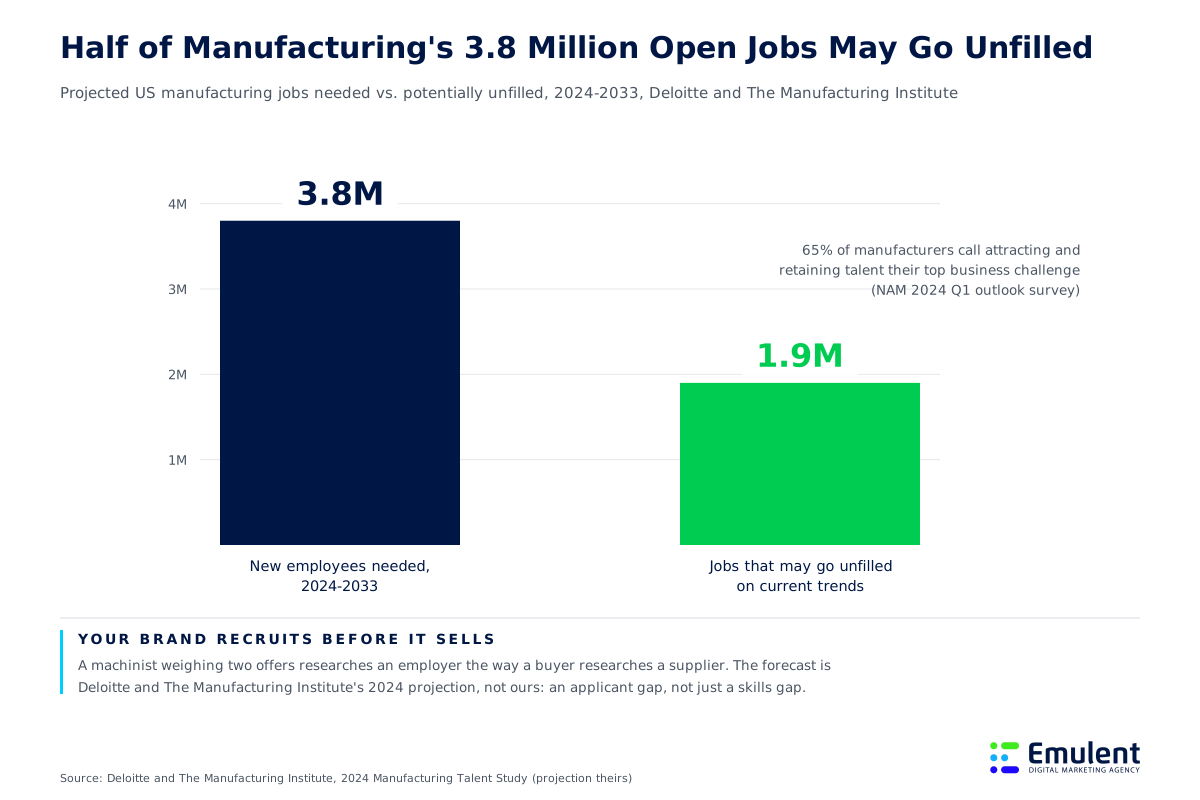
A machinist weighing two offers researches an employer the way a buyer researches a supplier: anonymously, online, judging what they can see. The company whose site shows a dated facility photo from 2011 loses that comparison to the company whose videos show a clean floor, modern equipment, and people who look like they want to be there. The same brand system that shortens sales cycles also fills apprenticeship classes, which is why we score branding investments against both pipelines. A brand that sells but cannot recruit is solving half the problem the Deloitte numbers describe.
How to Build It: The Order of Operations
Run the work in this sequence, because each stage compounds the next and reversing them wastes money.
1. Audit what buyers actually encounter. Search your category the way a buyer would, in Google and in an AI assistant, and record where you appear and what gets said. Then compare your website, your sales deck, your GBP, and your LinkedIn page line by line. If your rep’s pitch and your homepage disagree on what you do best, fix that before spending anything on reach. You are in the 69%.
2. Commit to a position one buyer type cares about. “Precision machining for aerospace-grade tolerances with 48-hour quoting” is a position. “Quality, service, value since 1987” is wallpaper. The position must be specific enough that some prospects self-select out; if nobody bounces, nobody remembers.
3. Build the proof assets. Photography and video of the real operation, spec and capability pages an engineer can use without calling you, and expertise-led content from your senior people. This is where most of the budget belongs, because these assets staff the anonymous 60% of the journey.
4. Distribute for memory, not just capture. The 6sense data says shortlists form from memory, so the job is being remembered by the whole buying group months before a project exists. That favors consistent publishing and video presence over one more retargeting campaign aimed at the sliver of buyers already in market.
5. Measure customers and revenue, not impressions. Track quote volume, quote-to-close rate, average deal size, inbound applicant quality, and how often prospects arrive saying “we’ve been following you.” Rankings and impressions are inputs. If they rise while quotes stay flat, the brand is being seen and not believed, which is a positioning problem, not a visibility problem. Our manufacturing marketing trends research tracks the benchmarks we use for these numbers.
The Strategy Team at Emulent
When We Would Tell You Not to Buy This Yet
Brand strategy is a compounding investment with a payback measured in quarters and years, not weeks. If your problem is a pipeline hole in the next 90 days, a rebrand will not fill it; fix your quoting speed, call your dormant accounts, and tighten your distributor relationships first. If your on-time delivery or quality escapes are the real reason deals die, marketing money will only advertise the problem to more people. And if you cannot commit to keeping the system consistent after launch, across the site, the decks, and the reps, you will buy assets that drift back into the 69% inconsistency statistic within a year. We would rather lose that engagement than take it, because a brand program sold into the wrong moment fails publicly, and results are the only retention plan we use.
The Part of the Sale You Are Never in the Room For
The stance we opened with is the one to leave with: your brand closes most of your deals before your sales team knows those deals exist. Buyers shortlist from memory on day one, prefer to research without you, run 60% of the journey anonymously, and hand the win to their pre-contact favorite three times out of four. Every one of those numbers points the same direction. Brand strategy and development is how a manufacturer competes in the part of the sale it is never in the room for, and it deserves the same capital-investment logic you apply to a new machine: specified deliberately, built once, maintained relentlessly, and judged on output. If you want a partner who has done this work for industrial companies, our team operates as a manufacturing marketing agency that builds the whole system, not a logo vendor. Either way, start the audit this month. The shortlists for next year’s projects are forming right now, from memory, and you are either in them or you are not.