
The fastest growing solar companies in 2026 are not the ones with the biggest lead budgets. They win by turning marketing into a system they own. Demand has cooled from its peak, customer acquisition cost is climbing again, and a homeowner now compares several installers before signing anything. In that market, solar marketing strategies that chase volume lose to ones built around efficiency, trust, and repeatable lead sources. We studied what separates the companies pulling ahead, and the pattern holds across every one of them: they measure the right outcomes, they build channels that keep producing, and they refuse to look like the installer next door. This is a study of how to treat marketing for solar companies as a growth engine instead of a line item.
Key takeaways for solar marketing in 2026
- Measure booked installs, not lead volume. Rankings, clicks, and lead counts feel like progress, but the number that predicts growth is the cost of a booked, installable job.
- The “demand is exploding” story is out of date. US solar fell 14% in 2025, home installs are flat to down, and a top national installer filed for bankruptcy. Planning on a boom means planning on a market that no longer exists.
- Own your channels. Referrals and organic search keep producing after you stop paying. Bought leads and ads go quiet the day the budget does.
- Stop looking like every other installer. Homeowners compare three to five companies, so a generic site and a copied offer is a quiet reason you lose the deal.
- Watch the lead-buying traps. New consent rules and shared-lead math mean the cheapest leads often cost the most per customer and hand control to vendors.
- Plan for a harder, not bigger, 2026 to 2030. Acquisition cost is set to jump about 40% in 2026 and the easy 7% of homes are already won, so the next phase rewards efficiency over reach.
Which solar marketing numbers actually predict installs?
Most solar marketing reports celebrate traffic, rankings, and lead counts. Those are inputs. A page that ranks first and a campaign that floods your CRM can both lose money if the leads never become installed systems. The number that matters is the cost of a booked install, and right now it is moving the wrong way.
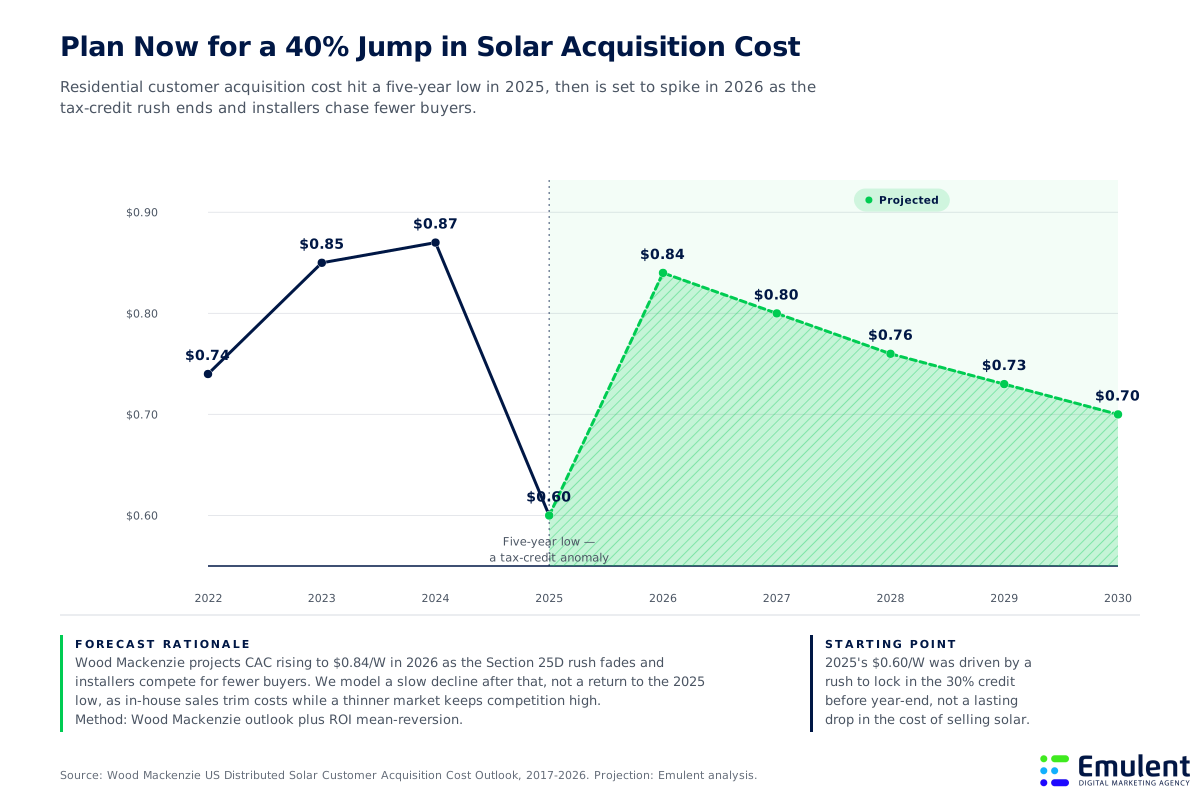
Residential customer acquisition cost dropped to a five-year low near $0.60 per watt in 2025, but that was a side effect of the rush to claim the 30% federal credit before it expired. Wood Mackenzie expects it to jump roughly 40% in 2026 as that rush ends and installers compete for fewer buyers. When the cost of winning a customer climbs that fast, lead volume becomes a vanity metric and unit economics become the whole game. The companies that grow through a cost spike like this track a short list of numbers and act on them every week. They watch how each source converts, not just how many leads it sends. They measure how fast a rep reaches a new lead, since answering within ten minutes makes a close about nine times more likely. And they judge a customer by lifetime value, because a referral and a battery upgrade years later change what a single install is worth.
The four numbers that predict solar growth:
- Cost per booked install: total sales and marketing spend divided by jobs that actually get installed, not leads collected.
- Close rate by source: which channels turn into signed contracts, so you fund the ones that convert and cut the ones that do not.
- Speed to first contact: minutes from new lead to first call, the cheapest lever you have on conversion.
- Customer lifetime value: referrals, storage add-ons, and service that make one customer worth several.
A solar company can rank first, fill its pipeline, and still go out of business. We have watched it happen. The only marketing number we let a client fall in love with is the cost of a customer who gets a system on the roof. – Strategy Team, Emulent
Tracking the right number only helps if the market you are planning against is the real one, and the story most solar content tells is already out of date.
Is solar demand really booming, or is that a stale story?
Open almost any solar marketing article and you will read that the industry is exploding and you simply need to grab the demand. The data says otherwise. The US installed about 43 gigawatts of solar in 2025, down 14% from the year before. Home installations passed their peak back in 2023 and then fell two years running.
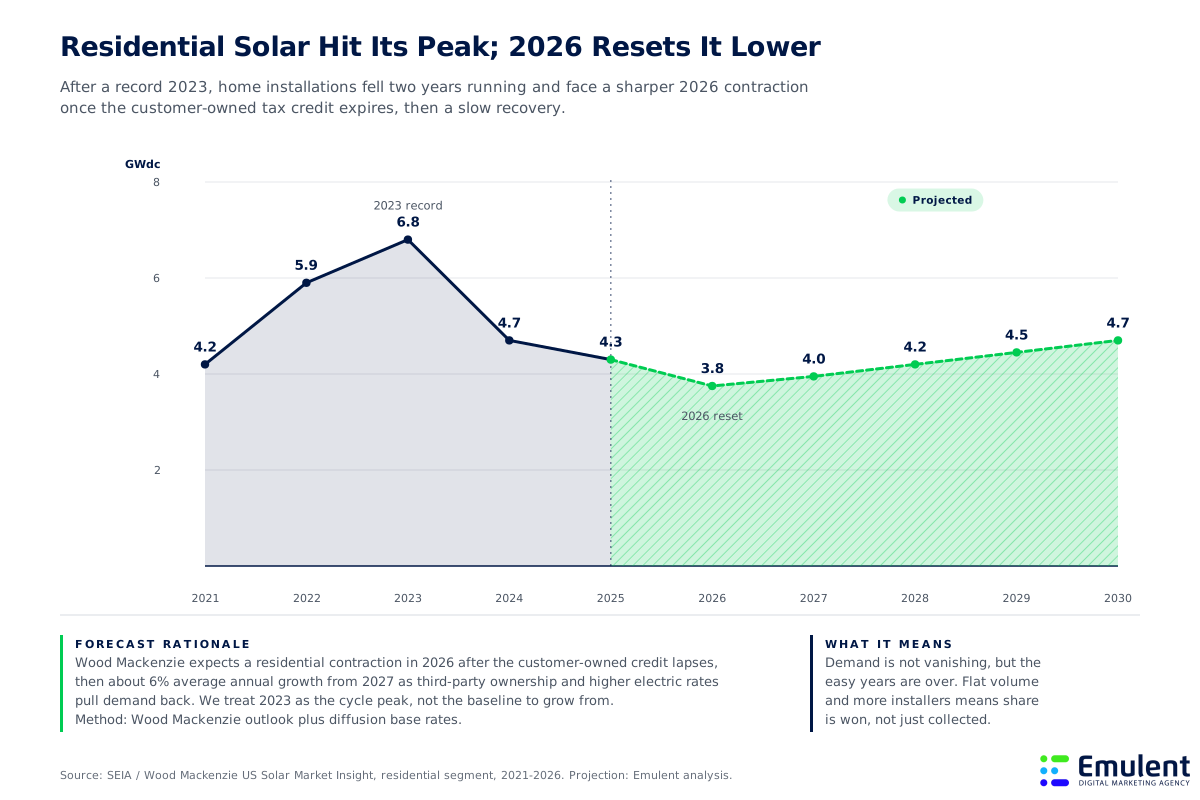
Early in 2026, one of the largest residential installers in the country filed for bankruptcy owing more than half a billion dollars. Solar has not collapsed. It is still the top source of new power added to the grid. But this is a reset, and the free ride of rising demand is over. That changes what good marketing has to do. When demand was climbing, sloppy marketing still produced leads because the rising tide carried everyone. In a flat market with more installers chasing the same homeowners, marketing has to win share, not just collect it. The honest version of this advice is uncomfortable: some tactics that worked in 2021 do not work now. High-volume cold calling burns out prospects. Buying the same shared leads as your competitors raises everyone’s cost and lifts no one’s close rate. The companies pulling ahead replaced “demand is huge” with a clear read of their own local market and their own numbers.
What changed between the boom and now:
- Volume peaked: residential solar topped out in 2023 and reset lower, so growth comes from share, not the rising tide.
- More competitors, same homeowners: a thinner market means your message has to beat a rival’s, not just exist.
- Incentives shifted: the customer-owned tax credit expired, pushing buyers toward leases and changing the pitch.
- Costs rose: tighter margins punish wasteful spending that a growth market used to forgive.
If the market will not do the growing for you, the question becomes which parts of your marketing keep working when you stop pushing, and which stop the moment you do.
What keeps producing solar leads after the rush ends?
Marketing channels fall into two groups, and the difference decides who survives a slow year. Some channels are assets you own. Others are rented. Referrals and organic search are owned: once a happy customer base and a strong local search presence are in place, they keep sending leads after you stop spending. Paid search, outbound canvassing, and bought leads are rented, useful for filling a gap fast, but the flow ends the day the budget does.
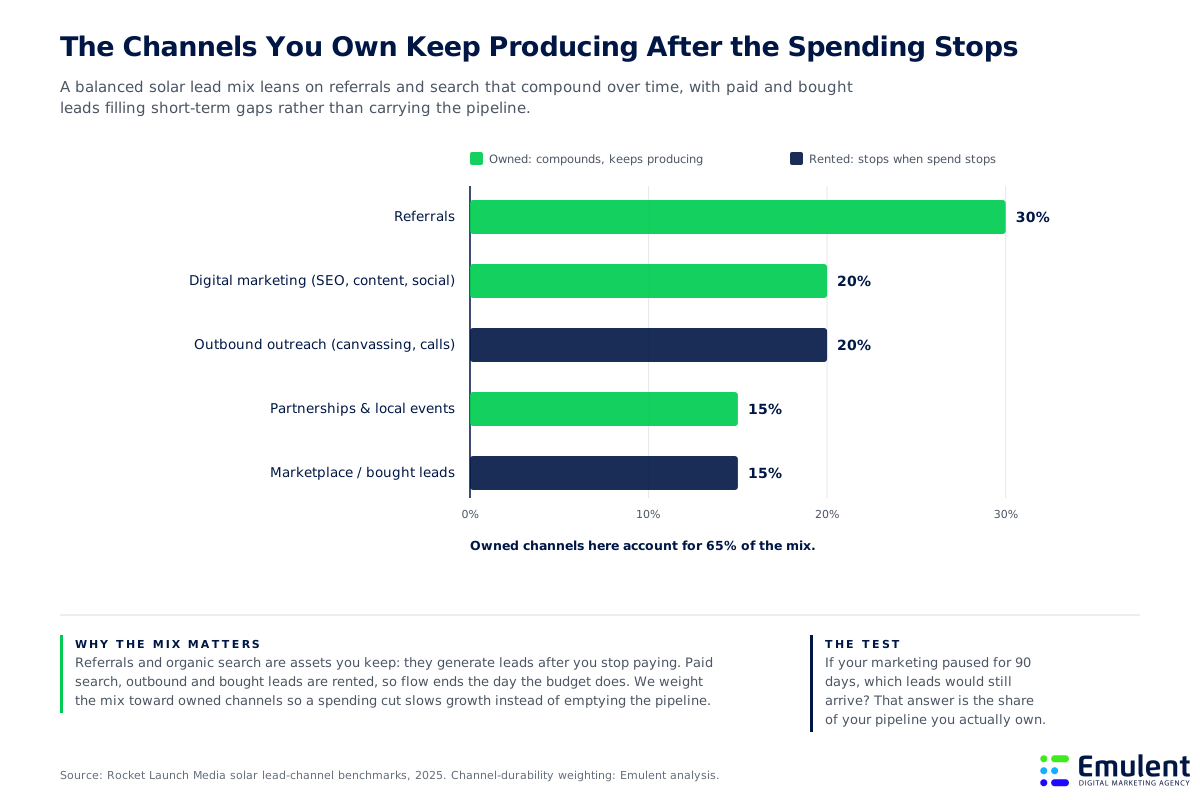
A balanced solar lead mix leans on the owned side, with referrals often the single largest and cheapest source, because referred homeowners arrive warm and close at a far higher rate. This is why the strongest solar companies treat marketing as a system, not a string of campaigns. They build educational content that answers the questions a homeowner asks while comparing installers, and that content keeps ranking and converting for years. They run a deliberate referral program instead of hoping for word of mouth, and some double their referral business doing it. The test is simple: if your marketing paused for ninety days, which leads would still arrive? Whatever the honest answer, that is the share of your pipeline you truly own, and the job every quarter is to grow it.
Owned channels that compound versus rented channels that stop:
- Referrals (owned): the cheapest, highest-closing source. Build a real program, do not wait for luck.
- Organic search and content (owned): ranks and converts for years after it is published.
- Paid search (rented): fast and controllable, gone the moment you pause the spend.
- Bought and shared leads (rented): instant volume, the lowest quality, and rising in cost.
Every solar company asks us how to get more leads this month. The better question is what you are building this month that still pays you next year. Campaigns end. Systems compound. We would rather hand a client an asset than rent them an audience. – Strategy Team, Emulent
Owning your channels is necessary, but it is not enough if everything you publish through them looks and sounds like every other installer in town.
Why do most solar companies look identical to the homeowner comparing them?
A homeowner shopping for solar contacts three to five companies before deciding. They visit each website, read the reviews, and compare proposals side by side. Now picture what they see: the same stock photo of panels on a blue-sky roof, the same “save money and the planet” headline, the same financing language, and a website that could belong to anyone. When every option looks the same, the homeowner falls back on price, and a price war is the worst place a solar company can compete. Blending in is expensive, and you pay for it on every deal.
Standing out in a crowded solar market does not require a gimmick. It requires being specific where competitors are generic. A real installer in a real city can show real projects on real roofs nearby, name the exact panels and inverters they use and why, and speak to the local utility, the local rates, and the local permitting that a national brand cannot. The companies copying one hero headline across five states are not being efficient. They are being forgettable. We start client work by studying the local search results to see exactly what every competitor says, then we build the message and the proof that none of them can claim.
Where solar marketing pushes you toward sameness, and the specific fix:
- Generic visuals: swap stock panels for your own project and team photos in the neighborhoods you serve.
- Copied headlines: replace “save money, save the planet” with the local reason this homeowner should act now.
- One message for every market: write city and utility-specific pages instead of a single national pitch.
- Vague proof: name the equipment, show production numbers, and feature reviews from the same zip codes.
If a homeowner could swap your logo for a competitor’s and not notice, sameness is your real problem. The solar brands that win refuse to look interchangeable, because interchangeable always loses on price. – Strategy Team, Emulent
Standing apart gets much harder when you have handed your pipeline to lead vendors who sell the very same homeowner to the competitors you are trying to beat.
Where does buying solar leads quietly cost you control?
Buying leads feels like the fast path to growth, and sometimes it earns a place in the mix. But the fine print costs more than the leads do. A shared lead is sold to several installers at once, so your rep is in a race to the phone against three or four competitors for the same homeowner.
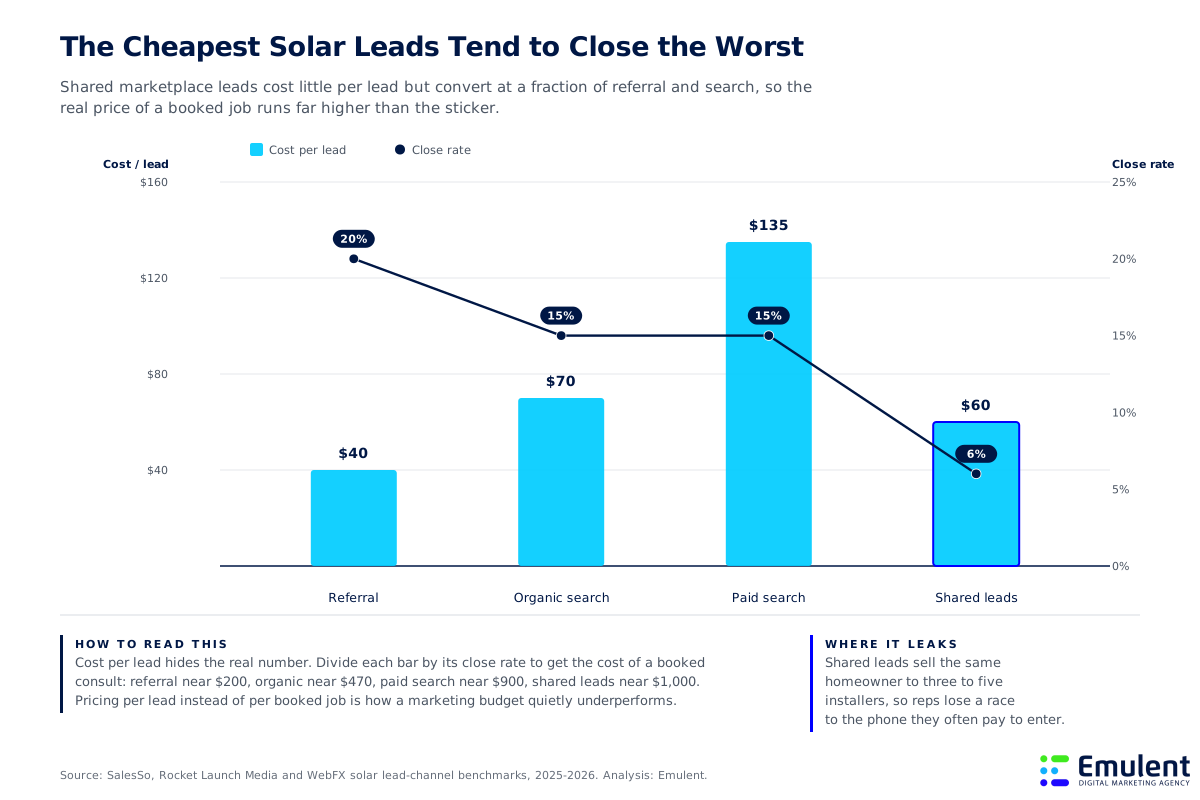
That is why shared leads close at a fraction of referrals or organic search, and why the cheapest lead often becomes your most expensive customer once you divide by the close rate. There is a regulatory change underneath this too. As of early 2025, federal rules require one-to-one consent for marketing contact, which ends the old practice of one form being sold to hundreds of buyers. Companies built entirely on bought lead lists are exposed. Control is the quiet advantage here. When you own your leads, your reviews, and your customer relationships, no vendor can raise your prices or change the rules on you, or sell your prospect to a rival. There is a related trap many installers miss. After the system switches on, the homeowner is often handed to a third-party monitoring app that carries someone else’s brand, so a few years later they cannot remember who installed their panels and cannot refer you. Keeping the relationship and the brand in your hands protects the referral engine the owned-channel math depends on.
Hidden costs in the lead-buying model, and how to keep control:
- Shared leads: sold to several installers, so budget for the low close rate or buy exclusive instead.
- Consent rules: one-to-one consent is now required, so a pile of old lead lists is a liability, not an asset.
- Borrowed brand: put your name on monitoring and follow-up so customers remember who to refer.
- Vendor dependence: the more of your pipeline you rent, the more power someone else holds over your growth.
Keeping control of your marketing today is what makes the harder phase of solar adoption ahead survivable.
What will solar customer acquisition actually look like through 2030?
Solar forecasts tend to come in two flavors: breathless and useless. The honest middle is more helpful. About 7.5% of US homes have rooftop solar today, and SEIA projects that doubling to roughly 15% by 2030. That sounds like easy growth, but the shape of the curve is the catch.
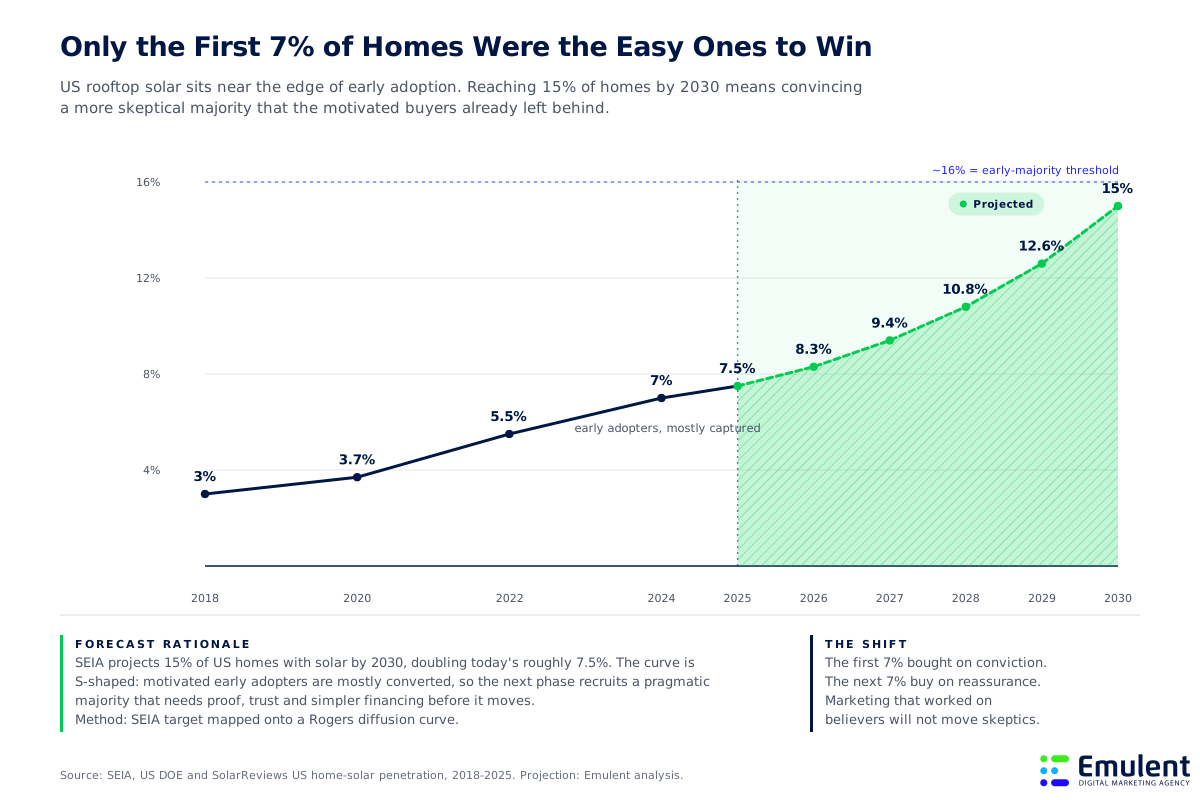
The first 7% were the motivated early adopters, the people who wanted solar and went looking for it. The next 7% are a more cautious majority who need proof, trust, and simple answers before they move. Marketing that worked on believers, urgency and savings math, does not move skeptics. Reassurance does: reviews from their own neighborhood, clear and honest pricing, and a brand that looks like it will still be around to honor the warranty. There is a second shift happening at the same time, and it is changing how those skeptics find you. Search is moving toward zero-click answers and AI summaries, with well over half of mobile searches now ending without a visit to any website. A homeowner may read an AI overview, see which companies it names, and judge them by their reviews before a single click reaches your site. So the work is no longer only ranking a page. It is making sure your business is the one the AI cites and the reviews back up. Planning for 2026 to 2030 on the assumption that organic traffic only grows is the kind of optimism that gets budgets cut.
What the next phase of solar adoption rewards:
- Proof over urgency: the cautious majority buys on reassurance, so lead with local reviews and real results.
- Honest pricing: transparent numbers beat pressure tactics with skeptical buyers comparing several quotes.
- Visibility in AI answers: earn citations and strong reviews so you appear before the click, not just after it.
- Staying power: a credible, lasting brand reassures buyers who fear being stranded by a closed installer.
We tell solar clients to plan for the customer they have to convince, not the one who was already sold. The easy buyers are mostly gone. What is left is a market that rewards patience, proof, and an honest story over hype. – Strategy Team, Emulent
How the Emulent team can help
The solar companies growing fastest in 2026 work from the same habits. They measure the customer they actually install, build channels they own, look different from the installer next door, keep control of their pipeline, and plan for a market that asks them to convince rather than just collect. Our team helps solar businesses put that into practice, from local search and content that compounds, to brand work that makes you the obvious choice, to lead systems you genuinely own. If you want help building solar marketing that grows on efficiency instead of spend, contact the Emulent team and we will map your next move together.