
Franchise marketing in 2026 rewards systems that solve a hard problem: keeping one brand intact while winning hundreds of individual local markets. We studied the latest industry data on unit growth, budgets, consumer review behavior, and AI search visibility to find what separates the fastest-growing franchise and multi-location brands from the rest. The short answer: the winners treat multi-location marketing as an operating system corporate builds and franchisees simply run, not a set of guidelines each owner interprets alone.
Key takeaways from this study:
- Growth is steady but consolidating: U.S. franchise units will reach roughly 845,000 in 2026, and multi-unit operators now control 58.8% of all locations.
- AI search is brutally selective: ChatGPT recommends just 1.2% of business locations, Perplexity 7.4%, and Gemini 11%, based on SOCi’s analysis of 350,000 locations.
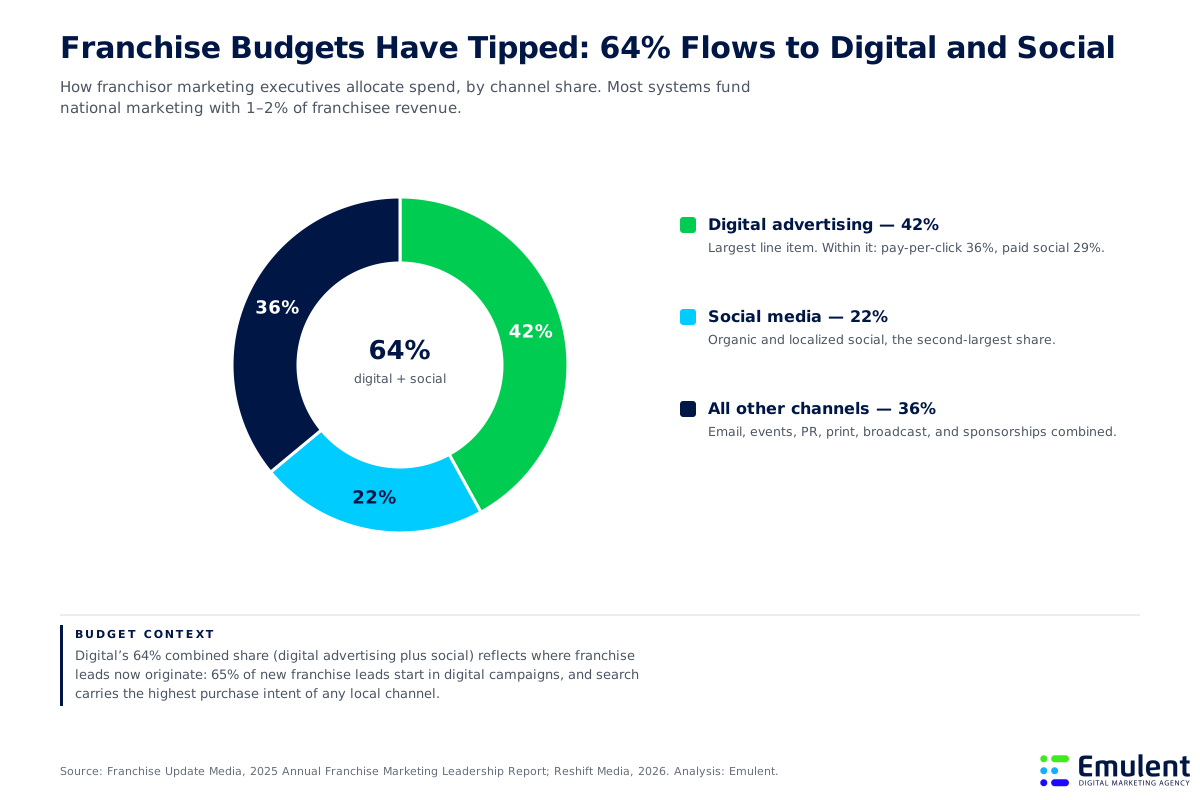
- Budgets have tipped digital: Digital advertising (42%) and social media (22%) now claim 64% of franchisor marketing spend.
- Review reading is fragmenting: Google’s share of review readers fell from 83% to 71% in one year, while the share of consumers who always read reviews jumped from 29% to 41%.
- The execution gap is the real divider: 85% of brands require or recommend local marketing spend, yet fewer than half of customer reviews and engagements get a response.
- Consistency pays: Brands that present themselves consistently across channels report revenue gains of 10% to 20%.
How Healthy Is Franchise Growth Heading Into 2027?
The franchise model enters 2026 in solid shape. The International Franchise Association projects more than 12,000 new franchised units this year, lifting the U.S. total from 832,521 to roughly 845,000 establishments, with economic output exceeding $921 billion. We extend that curve to about 868,000 units by 2028, because the growth rate itself tells a story: franchising sits in the late-majority phase of its adoption curve, where annual unit growth has settled into a decaying 1.3% to 1.5% band rather than the faster expansion of past decades.
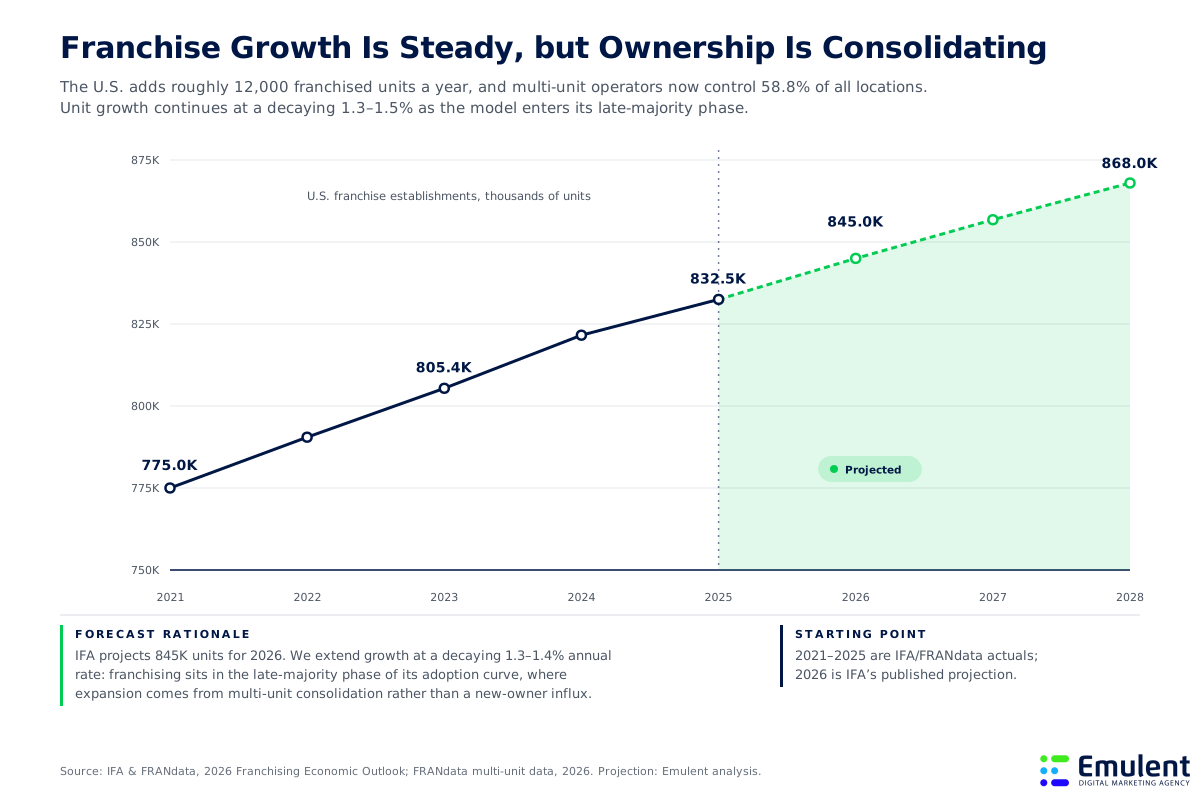
The more interesting number hides underneath the headline. FRANdata reports that 19.3% of franchisees now operate multiple units and collectively control 58.8% of all franchised locations. Growth is coming from experienced operators reinvesting, not a wave of first-time owners. That changes who franchisors are marketing to and what those buyers evaluate before signing.
What consolidation means for your marketing:
- Sophisticated buyers compare support: Multi-unit operators evaluate the marketing engine behind a brand the way investors read a balance sheet, so weak local marketing support now costs you development deals, not just customers.
- Proof beats promises: Item 19 performance data and visible per-location results carry more weight with repeat buyers than recruitment ad copy.
- Same-store sales pressure rises: With consumer spending growth slowing from 5.7% to 3.7%, marketing has to drive traffic to existing units, not just fill new territories.
Steady system growth, though, hides wild variation between units of the same brand, and that variation starts with how each brand resolves a core tension.
How Do the Fastest Growers Keep One Brand While Winning Each Local Market?
Every multi-location brand lives with a pull in two directions. Corporate wants consistency, because consistency compounds: companies that present their brand uniformly across channels report revenue gains of 10% to 20%, and 68% of organizations say consistency contributed at least 10% to their growth, according to Marq’s research. Franchisees want localization, because a gym in Wake Forest and a gym in Phoenix face different competitors, seasons, and communities. Brands that pick one side lose. The fastest growers split the difference deliberately through a documented brand strategy: they lock the identity layer and free the local layer.
“The brands that scale fastest don’t ask franchisees to be creative. They ask them to be present. Corporate owns the message; the location owns the proof that the message is true on that street corner.” – Emulent Strategy TeamWhat to centralize and what to localize:
- Centralize the identity layer: Visual standards, voice, offer architecture, and campaign creative stay locked, so every market sees the same brand.
- Localize the proof layer: Reviews, community sponsorships, location pages, local photography, and Google Business Profile content belong to the market they serve.
- Build the bridge in systems, not memos: Templated creative with locked brand zones and editable local zones lets franchisees customize without drifting off-brand, the same principle behind our brand experience system.
If geography explained performance, this would be the whole playbook. The location-level data says otherwise.
Why Do Two Locations of the Same Brand Perform So Differently?
Here is the finding that should reframe every budget conversation: the gap between top- and bottom-performing locations of the same brand is mostly a marketing gap, not a market gap. Both units share the same name, the same products, and access to the same playbook. What differs is execution, and the clearest place to see it is reputation. BrightLocal’s 2026 survey found 41% of consumers now always read reviews before choosing a business, up from 29% a year earlier. Localo’s analysis of two million profiles shows businesses in the top three local positions average around 240 Google reviews, far more than lower-ranked competitors. Review volume, response rate, and listing accuracy are among the heaviest local SEO ranking factors, and they are entirely within a location’s control.
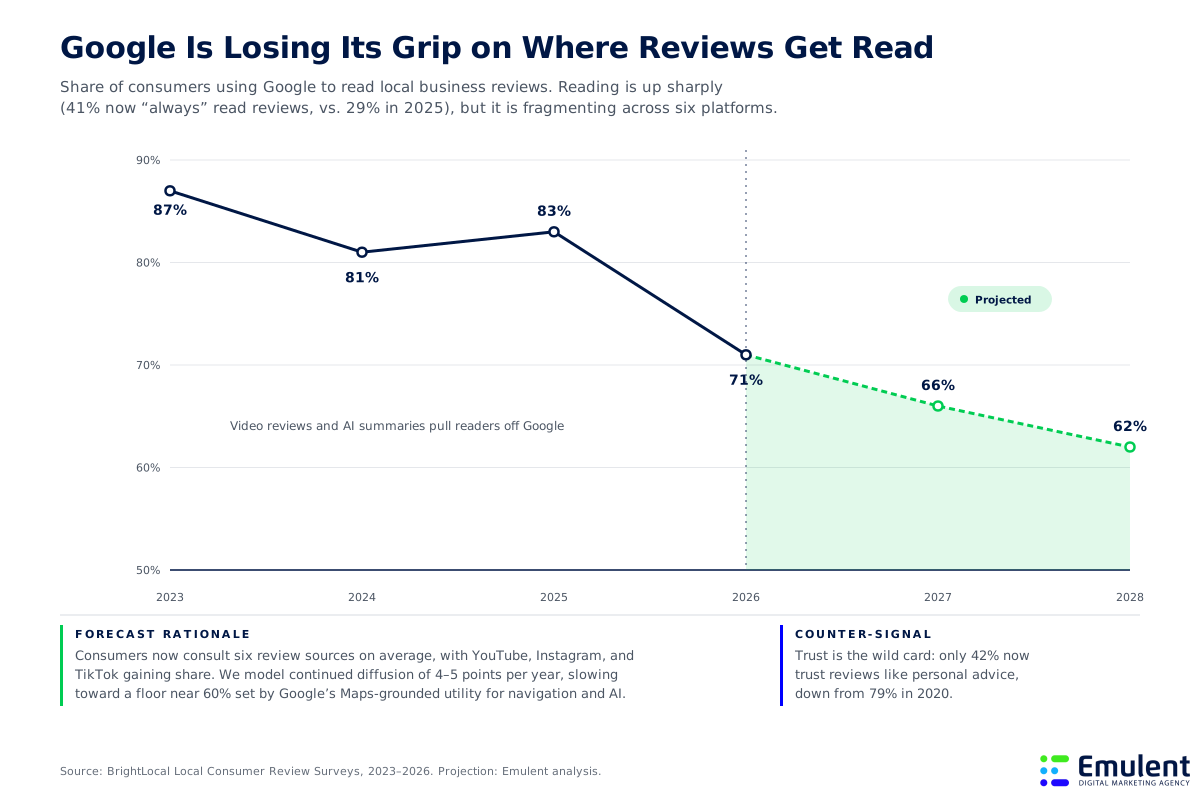
The work is also getting harder. Google’s share of review readers dropped from 83% to 71% in a single year as consumers spread their research across an average of six platforms, with YouTube, Instagram, and TikTok gaining ground. We project Google’s share drifts toward the low 60s by 2028, decelerating as its Maps utility sets a floor. For a 200-unit brand, that means reputation is no longer one channel to manage per location. It is six. Strong local SEO programs now treat reviews, listings, and location pages as a single connected discipline rather than three separate chores. And a new judge has arrived that grades that discipline more harshly than Google ever did.
What Happens to Locations That AI Assistants Can’t Verify?
SOCi’s 2026 Local Visibility Index, covering 350,000 locations across 2,751 multi-location brands, measured how often AI assistants actually surface or recommend a location. The results are stark: ChatGPT recommended 1.2% of locations, Perplexity 7.4%, and Gemini 11%. Business profile information was only about 68% accurate on ChatGPT and Perplexity. Even brands that dominate traditional local search don’t carry that strength over; in retail, only 45% of traditional local search leaders also appeared in AI recommendations.
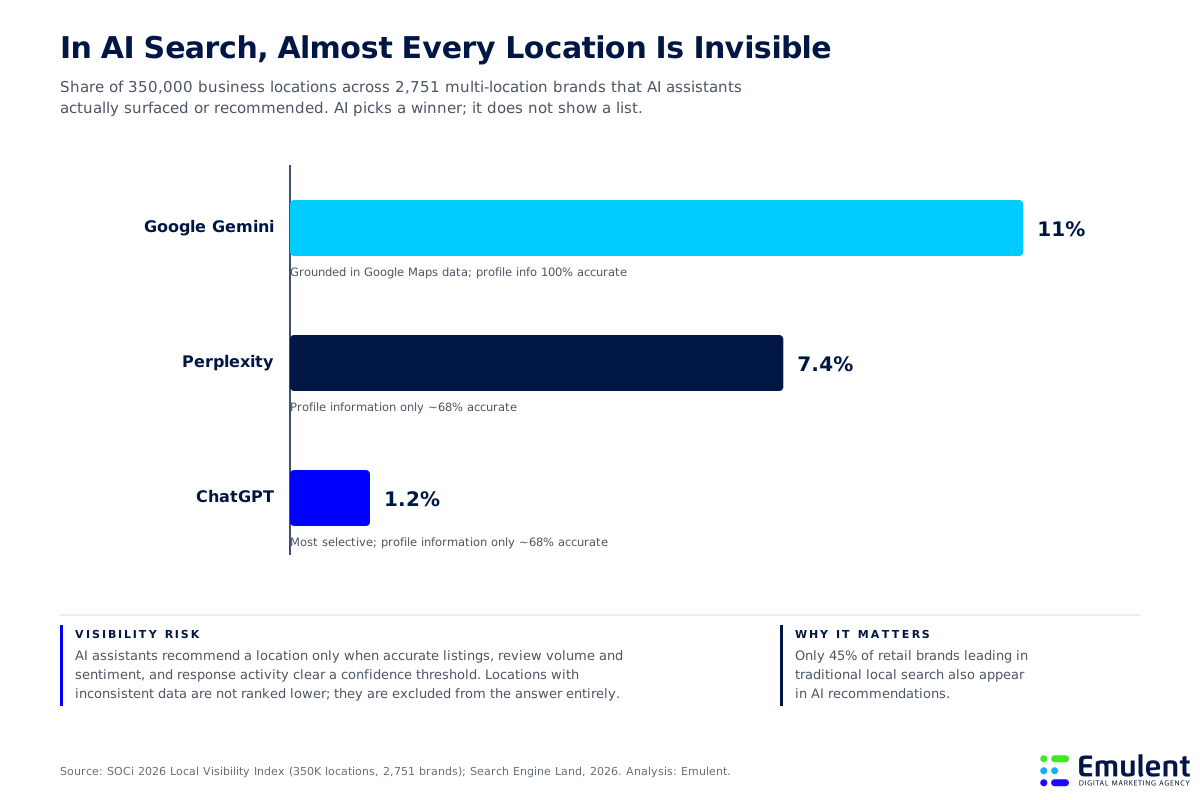
The mechanics matter here. AI assistants are not ranking ten blue links; they evaluate confidence. A location with inconsistent hours, thin reviews, or unanswered complaints doesn’t rank lower in the answer. It gets excluded from the answer entirely, which collapses the consumer’s decision into a single recommendation your location either wins or never sees. This is why AI SEO has become a location-level discipline, and why brands are widening their lens from Google alone to search everywhere optimization across assistants, maps, and platforms like Google AI Overviews.
“AI visibility is the first marketing channel where the penalty for sloppy data is total invisibility. There’s no page two to fall to. You’re either the answer or you’re absent.” – Emulent Strategy Team
Corporate can write the standards for all of this. But standards only matter if the field runs them, which brings us to the strongest growth predictor we found.
Does Franchisee Adoption Predict System Growth?
Yes, and the gap between mandate and adoption is wide. Franchise Update Media’s 2025 Annual Franchise Marketing Leadership Report found 85% of franchise brands require or recommend that franchisees spend on local marketing, yet a surprising share of those same brands don’t require franchisees to report what they actually spent. Out in the field, SOCi found more than half of customer reviews and digital engagements across industries still go unanswered. The mandate exists; the execution doesn’t.
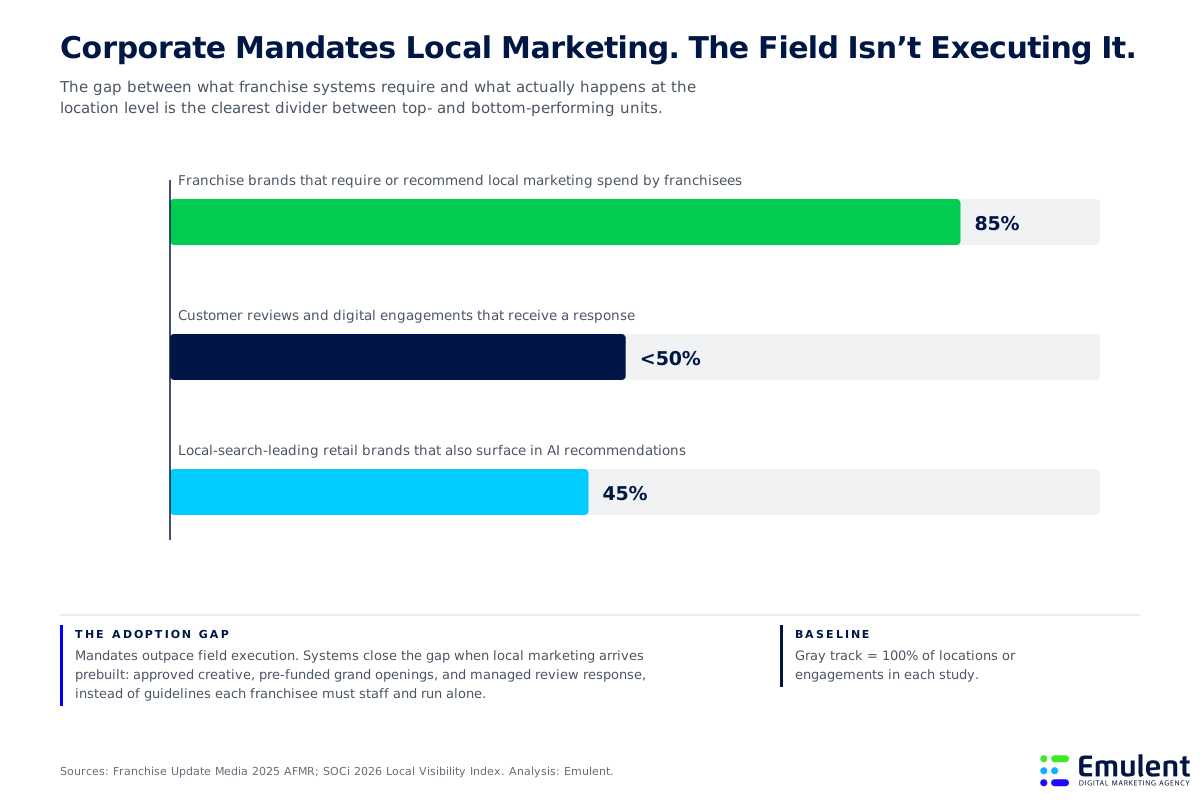
The pattern across fast-growing systems is that adoption tracks effort required. Franchisees are operators first and marketers fourth; every step a local marketing program demands of them cuts participation. Growth correlates with how ready-made corporate makes the local program.
What a prebuilt local marketing program includes:
- Pre-funded grand openings: Brands like Eggs Up Grill collect a $10,000 to $15,000 opening deposit so the corporate team runs launch marketing itself, proving the value before asking franchisees to invest on their own.
- Approved, editable creative: Campaign libraries with locked brand elements and open local fields remove the design burden entirely.
- Managed listings and reviews: Centralized tools (or an agency partner) keep every profile accurate and every review answered, the exact signals AI assistants verify.
- A simple operating rhythm: A short recurring task list, like our local SEO checklist, beats a 60-page brand manual nobody opens.
“Franchisee adoption isn’t a compliance problem, and treating it like one fails every time. It’s a product problem. If the local marketing program were easy enough, they’d already be using it.” – Emulent Strategy Team
Making the program easy is half the equation. Funding the right channels is the other half.
Where Should Franchise Marketing Budgets Go in 2026?
The 2025 AFMR shows franchisor budgets have decisively tipped digital: digital advertising takes 42% of spend and social media another 22%, a combined 64%. Inside the digital line, pay-per-click claims 36% and paid social 29%. Most systems fund the national program with 1% to 2% of franchisee revenue, which makes every allocation decision consequential. The spend mirrors where results come from, since 65% of new franchise leads now originate in digital campaigns. You can see how these allocations are shifting year over year in our report on franchise marketing trends.
Decision criteria for allocating the 2026 budget:
- Fund the proof layer first: Listings, reviews, and location pages cost little, compound over time, and now determine AI visibility; underfunding them caps the return on everything else.
- Buy intent before awareness: Search and Local Services Ads capture customers seconds from a decision; franchise PPC campaigns average a 3.5x return.
- Match spend to the location gap: Direct incremental dollars to bottom-quartile units with fixable execution problems instead of spreading budget evenly across the system.
- Keep a measurement reserve: Systems that can’t see per-location results can’t prove the program works, and unproven programs lose franchisee adoption.
Get the budget, the program, and the adoption model working together and the location-level gaps in this study become your growth plan rather than your liability.
How the Emulent Team Can Help
We help franchise and multi-location brands build exactly what this study describes: a brand system locked at the top, a local program franchisees actually run, and visibility that holds up in both Google and AI search. Our franchise marketing work spans brand standards, location-level SEO and reputation, paid media, and the prebuilt creative systems that close the adoption gap. If you want help with franchise marketing, contact the Emulent team and we’ll map out where your system stands and what to fix first.