
Chiropractic revenue grows at about the pace of medical price inflation, so any practice growing faster than that is taking patients from a practice down the road. That is the whole game in 2026. The fastest growing practices we study are not creating new demand for spinal care, because demand for spinal care is set by pain, age, and population, not by anyone’s Instagram account. They are winning the ninety seconds a person in pain spends comparing three Google listings, and they are selling care that no insurer prices for them.
This study pulls the numbers from the primary sources: federal wage and employment data, Census revenue data for chiropractic offices, national health survey data on who actually uses chiropractic care, and browsing data on how people search now. Then it says plainly what we would do with a practice’s next dollar, and what we would tell that practice to stop paying for.
The market pays the median practice inflation and nothing more
The median chiropractor earned $79,000 in May 2024. A physical therapist earned $101,020, an optometrist $134,830, a dentist $179,210. Every one of those professions requires a doctoral degree. That gap traces to two things: what a single visit is worth, and how many of the right people walk through the door.
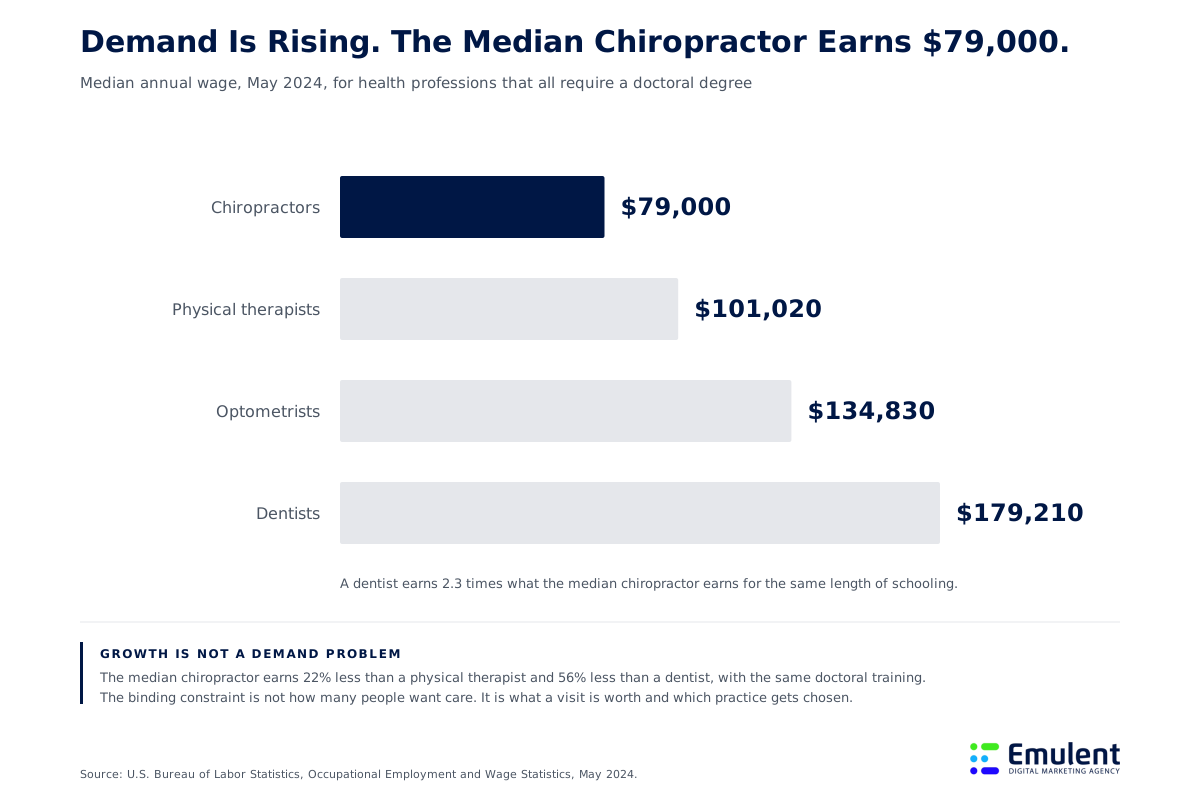
Demand is not the problem. The Bureau of Labor Statistics counts 57,200 chiropractors in 2024 and projects 62,600 by 2034, growth of 10% against 3% for all occupations, with about 2,800 openings a year. Patients keep coming, more chiropractors keep arriving, and the median income sits below every peer profession on the chart.
Now look at the money at the industry level. Census data puts total revenue for U.S. offices of chiropractors at $14.7 billion in 2020, $16.4 billion in 2021, and $17.7 billion in 2022. Two strong years, and both of them were catching up: patients returning after deferred care, plus medical prices climbing. Strip those one-time effects and growth settles into the mid single digits, roughly the pace at which medical care gets more expensive every year.
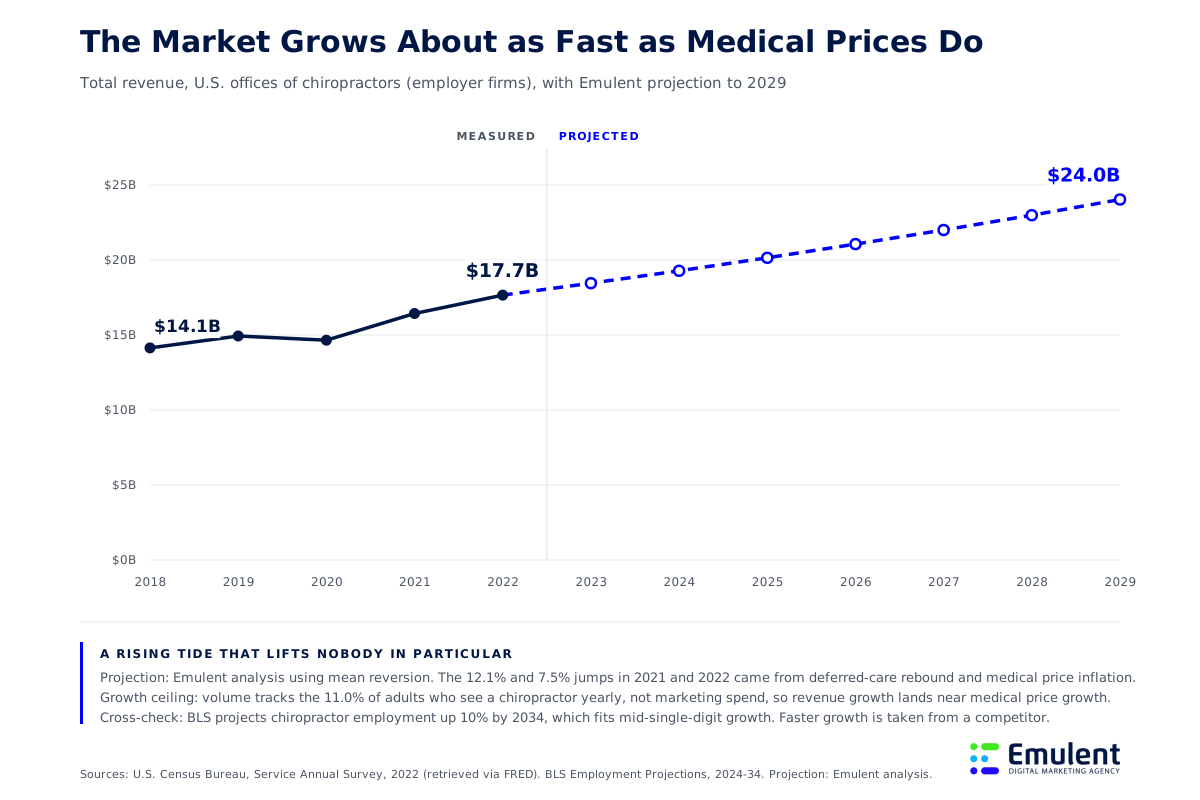
Projection: Emulent analysis based on mean reversion, assuming nominal growth settles near 4.5% a year because visit volume is capped by the share of adults who seek care for pain rather than by marketing effort, cross-checked against the BLS Employment Projections program’s forecast of 10% employment growth for chiropractors from 2024 to 2034.
Read the two charts together and the position writes itself. A market growing at the rate of medical prices hands the average practice inflation, dressed up as growth. Every dollar of real growth above that line came out of a competitor’s schedule. That is why the tactic lists you find on page one, the ones that promise more channels and more content, keep failing: they treat growth as something you manufacture rather than something you take.
Your patient is in pain, not shopping
In 2022, 11.0% of U.S. adults used chiropractic care, and 85.7% of those adults used it for pain management. That single number should reorganize a practice’s marketing budget. The person searching for you is not browsing wellness content on a Sunday. Their back seized on Tuesday morning, they cannot pick up their kid, and they want relief this week.
Pain compresses the decision window. Behavioral research on urgent purchases has a name for what happens next: the consideration set collapses. People under physical stress stop hunting for the best option and take the first acceptable one, which means whoever clears a low bar of trust and has an opening soon. Nobody in acute pain reads your fourth blog post about spinal biomechanics.
So the assets that decide the outcome are the boring ones. Whether you appear when someone types two words into a phone. Whether your listing shows recent proof that other people in the same pain got better. Whether a human answers. Whether the next opening is Thursday or three weeks out.
“We have watched practices spend $4,000 a month on ads while their newest review was fourteen months old and their phone rolled to voicemail at lunch. They were paying Google to introduce their own patient to the practice down the street that answers its phone.” The Strategy Team at Emulent
The decision happens before your website loads
Reviews now rank first in the research phase, ahead of facility ratings and ahead of the doctor’s referral, which dropped to third. Even when a person already holds a referral from another provider, 83.5% still check the reviews before booking. The referral gets you into the comparison. It does not win it.
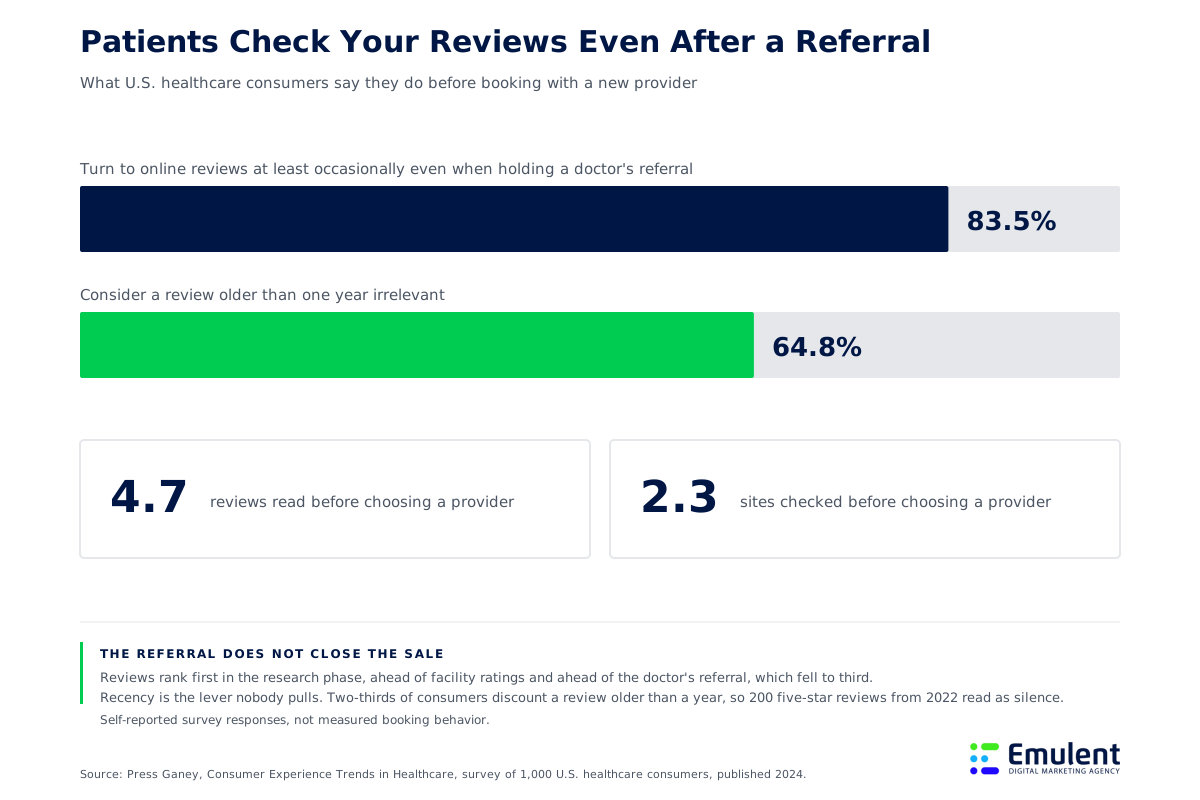
The number that changes what you do on Monday is the second one. Press Ganey’s 2023 survey of 1,000 U.S. healthcare consumers found 64.8% treat a review older than a year as irrelevant, and people read about 4.7 reviews across 2.3 sites before they choose. Two hundred five-star reviews from 2022 are wallpaper. Six from the last two months are evidence. Most practices have the wallpaper and think they have the evidence. These are self-reported survey answers, so treat the decimals loosely and the ranking seriously.
Here is our position, and it costs us money to say it: if the newest review on your Google profile is more than thirty days old, turn off your ads. Do not spend another dollar on chiropractic ppc until the review flow is running, because paid traffic drops a person in pain into a comparison you are structurally set up to lose. Fix the review ask at the front desk, at discharge, and in the text follow-up. Then buy attention.
Photos carry the same weight and get even less attention. A person deciding whether to let a stranger adjust their neck is buying reassurance about a physical, intimate act. Stock images of a smiling model on a table tell them nothing. Real brand photography of your actual rooms, your actual equipment, and your actual staff answers the question they are really asking, which is whether this place looks like somewhere a careful person works. We have written before about how professional team photos build instant trust, and the mechanism is costly signaling: real photos take effort, and effort reads as commitment.
The rest of the choice moment is plumbing. Your listing has to surface for the short searches, which is what local seo for healthcare actually buys you. Your site has to load fast on a phone held in one hand and put booking two taps away, which is the only job chiropractic web design has in this category.
Google answers the question. It still hands off the booking.
Pew Research Center tracked the real browsing behavior of 900 U.S. adults across 68,879 Google searches in March 2025. AI summaries appeared on 18% of all searches, but the distribution is what matters, and almost nobody is reading it correctly.
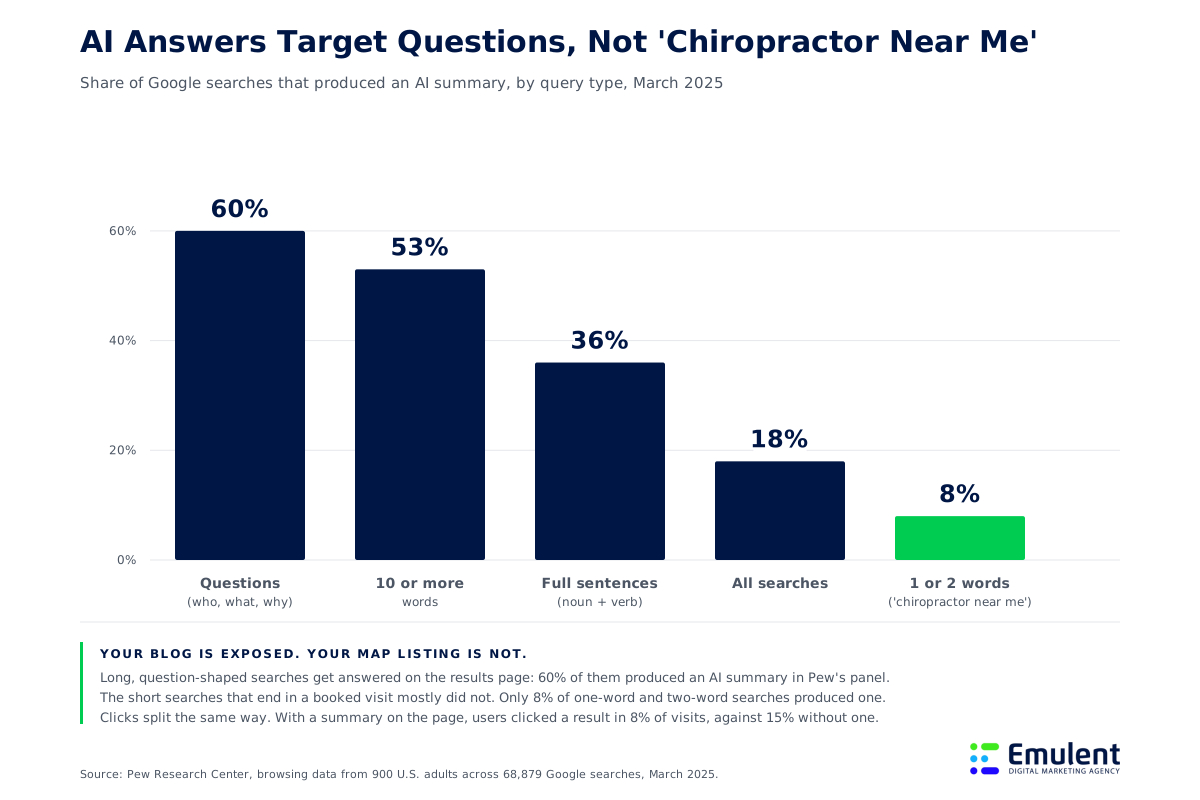
Question-shaped searches produced an AI summary 60% of the time. Searches of ten words or more, 53%. One-word and two-word searches, 8%. And when a summary appeared, people clicked a traditional result in 8% of visits against 15% without one, while clicks on the links inside the summary happened in 1% of visits.
Split that by what a patient types. “Why does my lower back hurt when I sit all day” is a question, so Google answers it and the reader moves on. “Chiropractor near me” is two words, so Google shows the map, and the person picks somebody and calls. The long informational content that agencies sell chiropractors by the yard is aimed squarely at the queries that no longer send clicks. The short local searches that end in a booked visit are almost untouched.
Educational content still earns its keep. The job it does has changed. Your explainer on sciatica is now a citation asset: it exists so the answer machine names your practice, cites your page, and so that ai seo work has something credible to point at. Judge it by whether you get named, not by sessions. Which is a specific case of a thing we have said for years: ranking first is a vanity metric if the ranking never produces a patient. Those systems also read your reviews to describe you, which makes how reviews affect ai search part of the same job as collecting them.
What we expect through 2029
We project AI summaries plateau near 45% of all Google searches rather than swallowing the results page, and the ceiling is set by what people type, not by what Google wants.
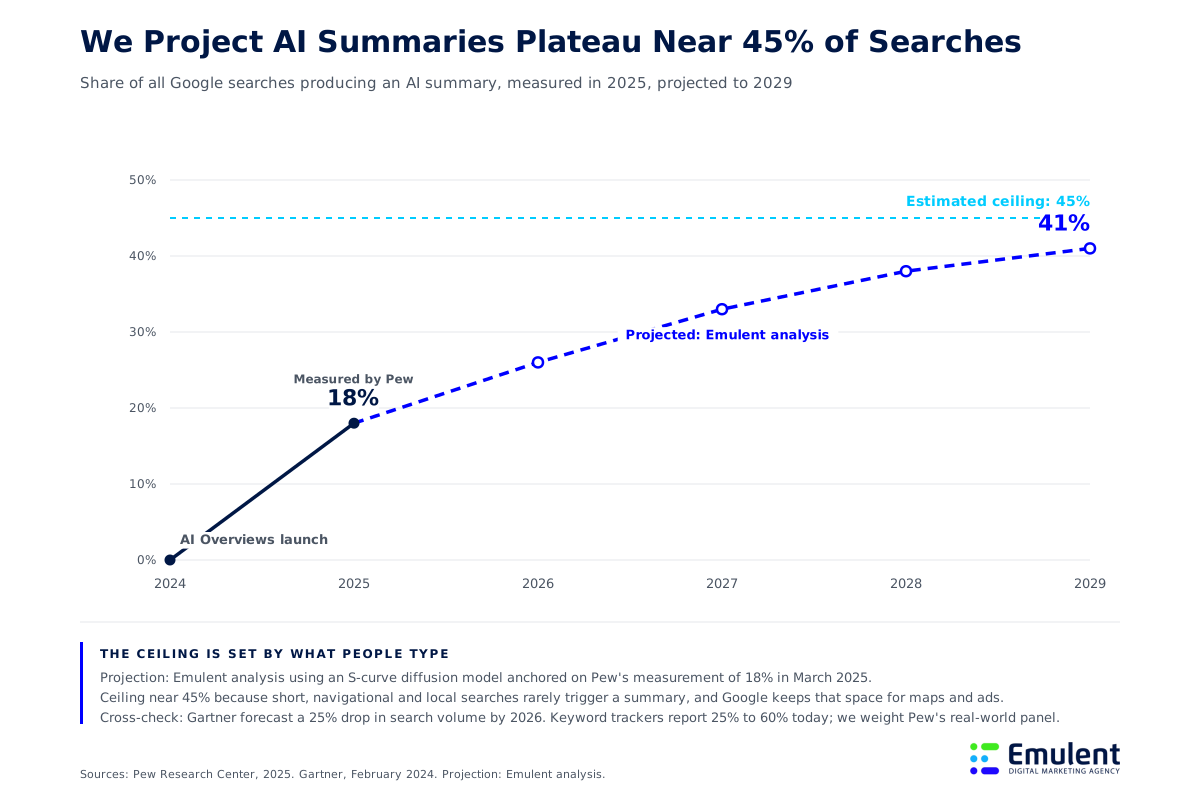
Projection: Emulent analysis based on diffusion of innovations (an S-curve of rollout and query-mix expansion anchored on Pew’s measured 18% in March 2025), assuming saturation near 45% because short, navigational and local queries rarely trigger a summary and Google keeps that space for maps and ads, cross-checked against Gartner’s February 2024 forecast of a 25% decline in traditional search volume by 2026.
Two honest caveats travel with that line. Keyword-tracking studies report AI summary prevalence anywhere from 25% to 60% today, far above Pew’s 18%, because they sample keyword sets that skew informational. We weight Pew because it measures what people actually did in a browser rather than what a keyword list predicts. And Gartner’s call is more aggressive than ours for local health queries, where somebody in pain still needs a phone number, a map pin, and an opening this week.
For a chiropractic practice, that produces a simple budget rule for the next three years. Defend the two-word search with everything you have, because it is where the booking happens and it is the part of the results page AI is least likely to take. Treat everything question-shaped as a bid to be named inside the answer.
Insurance will not fund your growth
Medicare covers exactly one thing a chiropractor does: manual manipulation of the spine to correct a subluxation. X-rays you order, exams, massage, therapeutic exercise, e-stim, extraspinal work, all of it is excluded by statute, not by a payer’s policy choice. And the one covered service is under a microscope: CMS put the improper payment rate for chiropractic services at 33.6% in 2024, about $178.3 million, with 95.5% of those errors coming from insufficient documentation.
So the growth line for a chiropractic practice runs through care that patients choose and pay for directly. Rehab programs, decompression, sports performance work, posture and movement coaching, maintenance plans that people buy because they value them. That is a pricing and persuasion problem, and it is the reason the marketing has to sell an outcome a person can picture rather than a code a payer will reimburse. A practice that cannot explain in one sentence why its $2,400 twelve-week program beats twelve $75 adjustments has an offer problem, and no amount of chiropractic seo will paper over it.
“Buyers do not resist paying out of pocket. They resist paying for something they cannot picture. The practice that can describe, in plain words, what week six feels like compared to week one gets the cash-pay patient. The practice that says ‘we take most insurance’ gets whoever is left.” Bill Ross, Founder, Emulent
The same logic is why we do not lock clients into long-term agreements. If the work is producing patients, the practice stays. If it is not, a contract only delays the conversation that should have happened in month three. Our reasoning is written up in full in why we don’t require long-term contracts, and we hold chiropractic practices to the same standard we hold ourselves to: prove the value monthly or lose the work.
The audit we run before spending a dollar
Before we touch a budget, we run the same seven checks on any practice. Each one has a threshold, and failing any of them means the money goes there first.
- Review recency. Is the newest Google review less than thirty days old? If not, the review request process is broken and paid traffic is a subsidy to your competitors.
- Photo evidence. At least twenty real photos on the Google profile, taken in the last twelve months, showing your rooms, your equipment, and your people. No stock, no vendor renders.
- Answer rate. Live human pickup inside three rings during business hours, and every missed call returned inside five minutes. Measure it for a week before you believe your own answer.
- Booking friction. Two taps from the map listing to a real opening in the next seven days, on a phone, without an account.
- Price transparency. One page that states what a first visit costs in cash. The patient who cannot find it assumes the worst and calls the practice that published it.
- Listing consistency. Name, address, phone, and hours identical across the profile, the site, and the health directories, including the ones you have never logged into.
- Answer-shaped content. Three pages built around the questions patients actually ask, written to be quoted by an answer engine, not to rank for a keyword nobody books from.
Only after those seven clear do we spend on demand generation, and then in that order: local presence first, reviews second, cash-offer pages third, paid amplification last. This sequence is the core of how we run digital marketing for chiropractors, and it is deliberately the opposite of the usual pitch, which starts with ads because ads are the fastest thing to invoice. Any chiropractic marketing agency that wants to launch campaigns before it has looked at your review dates and your missed-call log is working backward from its own start date, not your patient count.
What the fastest growing practices actually do
They accept that the market will hand them medical price inflation and nothing else, and they go take the rest. That means owning the two-word search in their zip code, keeping a steady flow of reviews written this month, showing real photographs of a real clinic, answering the phone, opening a slot this week, and selling a program a patient can picture and choose to pay for. It means treating the blog as a bid for a citation rather than a traffic engine, because Google now answers the question and hands off only the booking.
None of that is a growth hack. All of it is unglamorous, and all of it is measurable in the only currency that counts: new patients who show up, stay, and pay. If you want us to run the seven checks on your practice and tell you honestly which of them you are failing, that is a conversation we are happy to have, and we will tell you if the answer is that you should spend nothing at all until the front desk is fixed.