
The fastest-growing contract development and manufacturing organizations are not winning on price or square footage. A CDMO sells capacity, but the buyer is choosing confidence, and that choice now happens over a year or more of quiet evaluation before anyone picks up the phone. We studied the market data and the buyer behavior behind it, and the pattern is clear: the contract manufacturing organization that markets reliability, stays visible through a long courtship, and positions itself as a partner instead of a supplier captures the work that compounds. Here is what the numbers say, and what the leaders do differently.
Key takeaways from this growth study:
- The market rewards patience. The global CDMO market is on track to clear $375 billion by 2031 at roughly 6% a year, so steady presence beats short bursts.
- Confidence outsells capacity. Buyers have pushed on-time delivery and quality history up their priority list while cost slid down it.
- The decision is mostly made before the call. Around 70% of the buying journey is self-directed research, and buyers read three to seven pieces of content first.
- The courtship is long. A pharma or CDMO buying cycle runs 12 to 18 months, about twice the average B2B sale.
- Growth lives in depth, not breadth. With 86.9% of drug originators already outsourcing something, the runway is winning more of each program and longer supply terms.
- Emerging biotech is the prize buyer. Virtual and emerging biotechs are growing fastest and need a true partner, not a price list.
How big is the CDMO opportunity, and why does discipline win it?
The CDMO market keeps compounding. Outsourced drug development and manufacturing is forecast to grow from about $259 billion in 2025 to roughly $375 billion by 2031, a steady climb near 6% a year. Biologics, sterile injectables, and the surge in GLP-1 peptide demand keep pulling complex work toward specialist partners who can absorb the capital and regulatory risk.
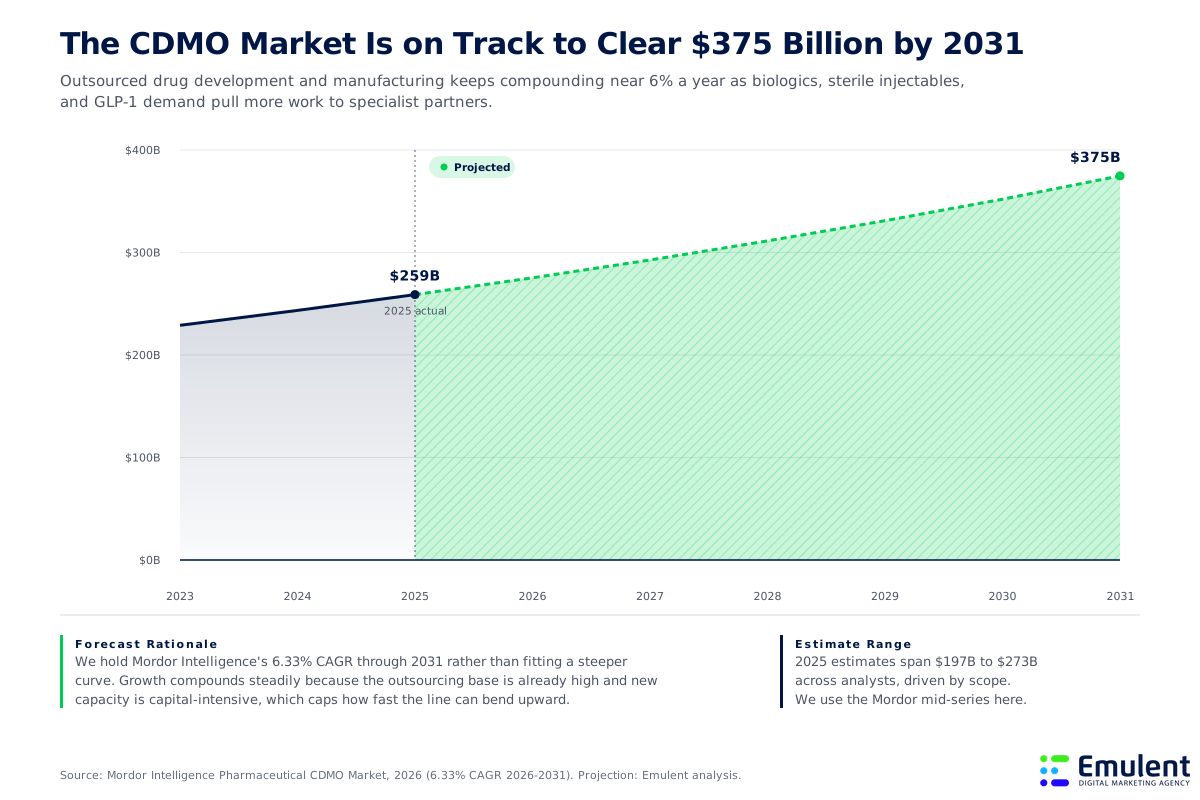
A steady curve is good news for the disciplined marketer and bad news for the impatient one. When a market grows in a straight line rather than a spike, share is won slowly and held through consistency. The CDMOs that build a visible, credible presence now will compound that advantage as the market doubles. Those that wait for a slow quarter to start marketing keep handing first position to competitors who never stopped. For most providers, that is the argument for treating pharmaceutical marketing as a standing investment rather than a campaign you switch on when the pipeline thins. The market will reward whoever shows up every month, and that consistency starts with understanding what a buyer is actually weighing when they compare you to the next provider.
Why does proven reliability beat raw capacity in a buyer’s mind?
Every CDMO claims capacity. That makes capacity a commodity, and a commodity cannot be the reason a buyer chooses you. Four years of benchmarking data show buyers re-ranking what matters most: reliable on-time delivery and demonstrated capacity to meet demand climbed the priority list, while lowest cost, staff headcount, and regulatory filing support slid down it. Supply shocks taught the industry that a missed batch costs more than a higher invoice ever would, so proof of delivery became the scarce asset.
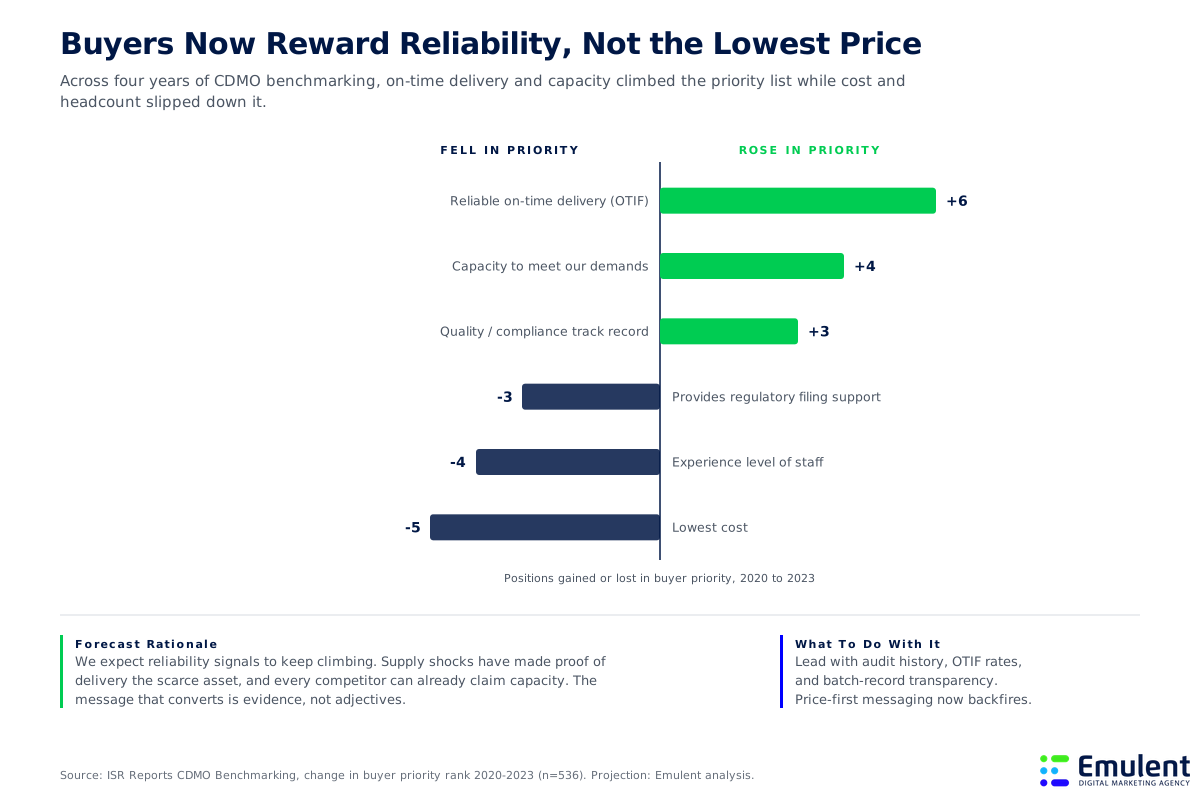
This reshapes how a growing CDMO should talk about itself. Adjectives like reliable and high-quality are worthless because everyone uses them. Evidence is what moves a buyer: your audit history, your on-time-in-full rate, your batch-record transparency, the deviation you caught early. This is the heart of standing out in a saturated market, where the only message a sophisticated buyer trusts is one backed by numbers they can verify. A provider that leads with price signals that price is all it has to offer, which works against it now that buyers read low cost as a risk flag.
The CDMOs that grow fastest stop selling square footage. They sell the audit they passed, the batch they shipped on time, and the deviation they caught before it became a recall. That is what a buyer is actually paying for. – Strategy Team, Emulent
Building that evidence into your brand positioning turns reliability from a claim into a reason to short-list you. But proof only helps if a buyer finds it, and most of them go looking long before they ever contact your sales team.
What does a CDMO buyer do before they ever call you?
By the time a pharma or biotech buyer reaches out, the decision is largely made. Buyers spend roughly 70% of the journey researching on their own, and in life sciences they read three to seven pieces of content before they speak to a representative. Six in ten engage with content before any rep contact at all. The short list forms in private, assembled from whatever a buyer can find and trust without your help.
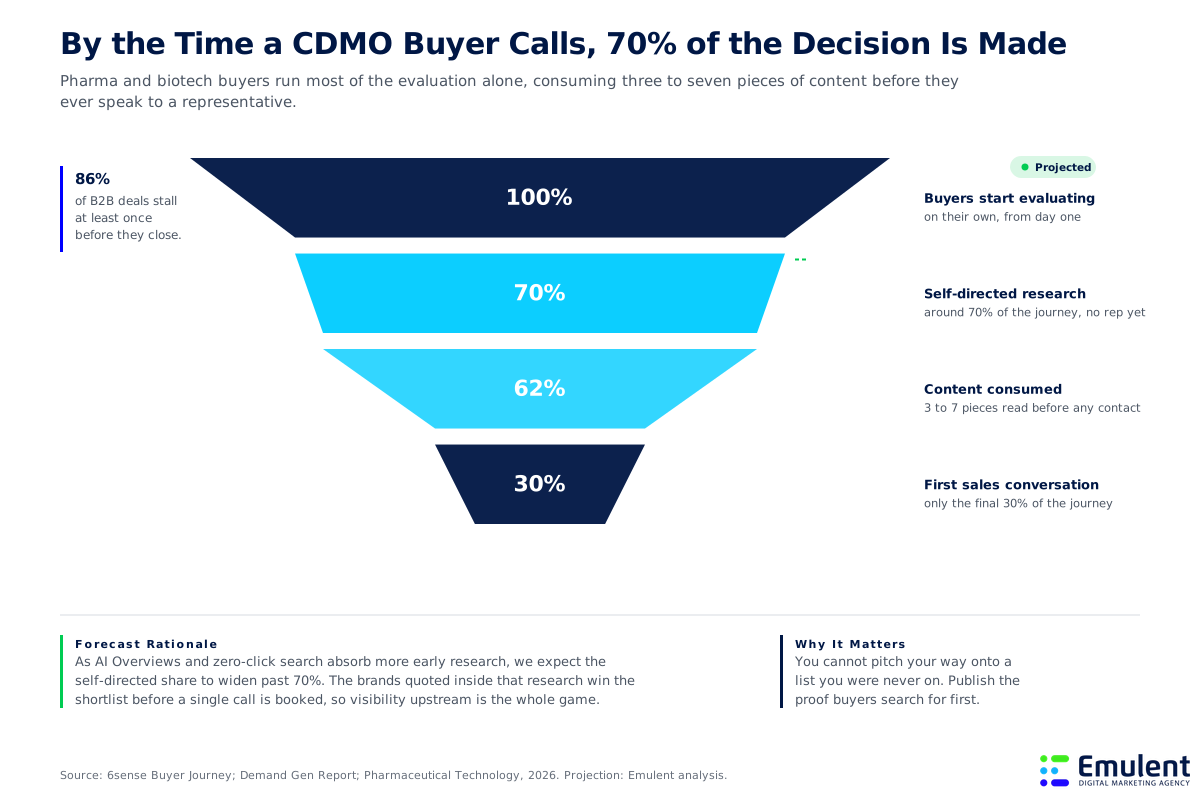
That means your content does the selling while you sleep. If your name is not in the comparison guides, technical explainers, and answer boxes a buyer reads in the first month, you are rarely in the running by month six. A serious content strategy for a CDMO answers the exact questions buyers research: how you handle tech transfer, what your quality system looks like, how you scale from clinical to commercial. The shift toward AI Overviews and zero-click search makes this more urgent, because buyers now get answers without clicking, and only the sources cited inside those answers shape the short list.
What the self-directed buyer needs to find first:
- Proof content. Audit results, OTIF data, and capability one-pagers that a procurement lead can forward without editing.
- Decision content. Honest comparisons and selection guides that help a buyer build the short list you want to be on.
- Technical depth. Articles and case detail that show you have solved the specific problem in front of them, written for scientists, not for search engines alone.
If your name is not in the white papers and answer boxes a buyer reads in month one, you are not in the running by month six. The short list forms in the dark, long before anyone fills out a form. – Strategy Team, Emulent
Showing up early in that quiet research phase only pays off if you can stay present through what comes next, because the gap between first contact and a signed contract is long.
How long should you plan to stay visible before a contract closes?
A CDMO deal does not close fast. Healthcare and pharma buying cycles run 12 to 18 months, roughly twice the general B2B average and far longer than software or financial services. Validation runs, facility audits, and committee sign-off can push a commercial supply decision past the top of that range, and B2B cycles have stretched about 22% since 2022 as buying committees grow and budgets face tighter review.
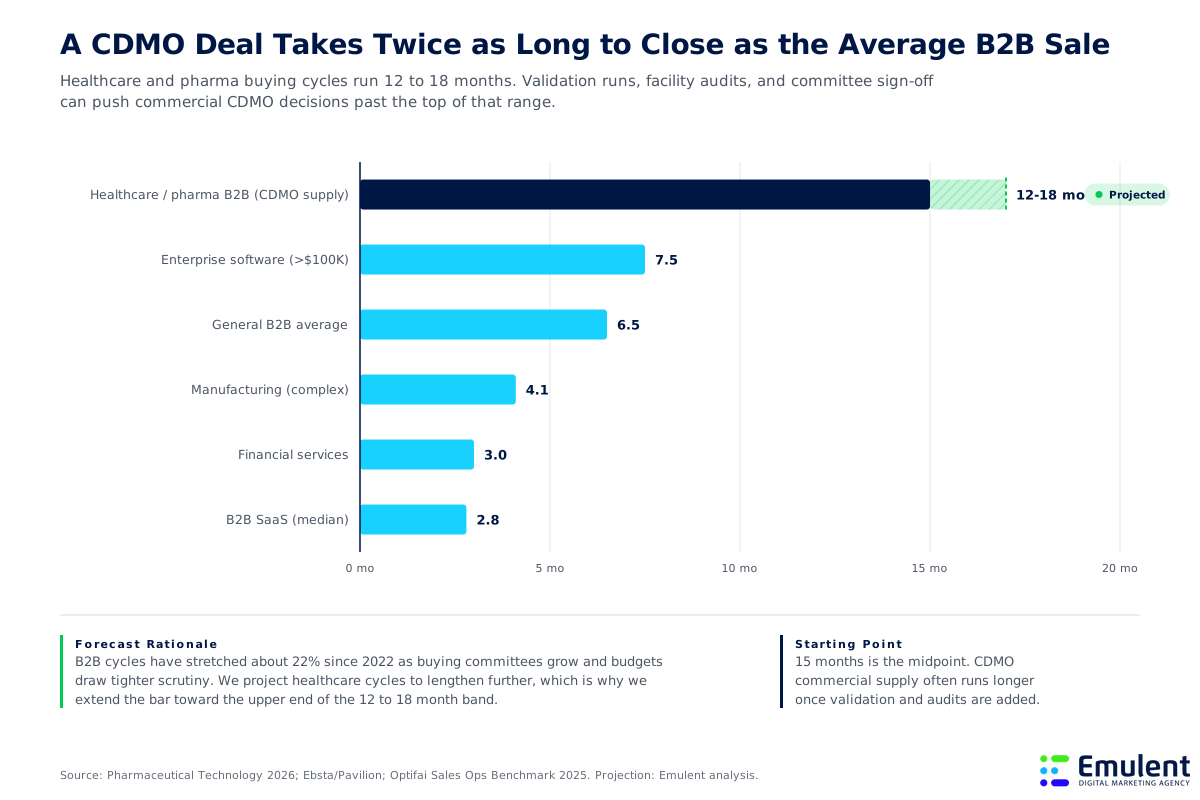
A long cycle is not a reason to spend less on marketing. It is a reason to spend steadily. A single proposal cannot carry a relationship across fifteen months, so the providers that win nurture the account the whole way: useful content at regular intervals, retargeting that keeps the brand in view, and follow-up that respects how slowly real evaluation moves. The math also changes how you value a lead, because a contract that takes more than a year to land often runs for years once signed. Reading those customer lifetime value benchmarks against your acquisition cost makes the case for patient spend obvious, and it is a core discipline of mature B2B marketing for any long-cycle business.
A fifteen-month buying cycle is not a reason to spend less. It is a reason to spend steadily. The brand that shows up every month with something useful is the one still standing when the budget unlocks. – Strategy Team, Emulent
Staying visible through that courtship earns you the contract. Keeping it, and growing it, depends on how you position the relationship after the first deal closes.
How do you move from approved vendor to long-term partner?
The growth no longer comes from getting outsourced at all. With 86.9% of drug originators already outsourcing at least one manufacturing activity, breadth is nearly maxed out. The runway is depth: winning more of each program and securing longer commercial supply. The fastest-growing demand reflects this, with emerging and virtual biotech buyers projected to grow near 11.6% a year, well above the wider market, alongside complex biologics and sterile injectables.
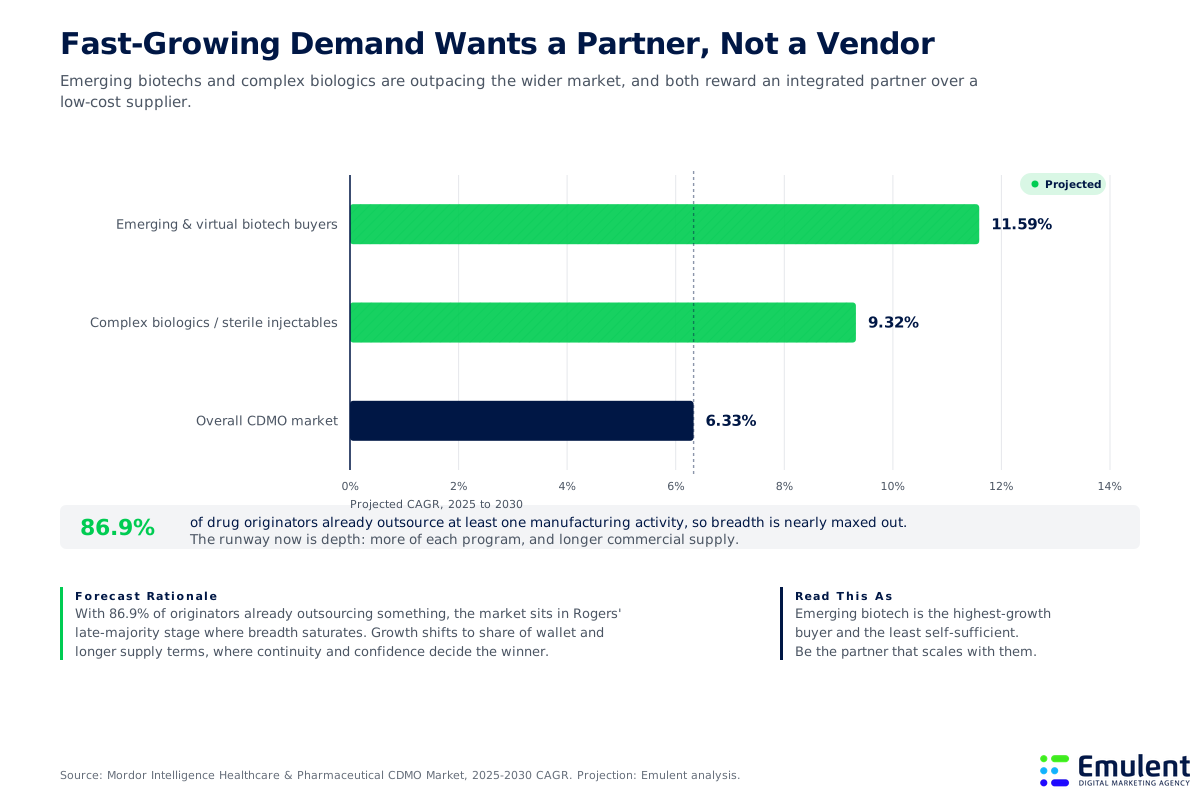
Those high-growth buyers are also the least self-sufficient. An emerging biotech rarely has internal manufacturing, so it is not shopping for the cheapest unit. It wants a partner who will still answer the phone at commercial scale and grow with its pipeline. Marketing built for biotech buyers and the wider life sciences audience should sell continuity and shared risk, not a rate card. The providers that win the next molecule are the ones that already feel like an extension of the customer’s own team. A clear-eyed competitive audit shows you where rivals still lead with capacity so you can claim the partnership position before they do.
Emerging biotechs do not want a price list. They want a partner who will still answer the phone at commercial scale. Marketing the relationship, not the unit cost, is how a vendor becomes the obvious choice for the next molecule too. – Strategy Team, EmulentHow fast-growing CDMOs reposition from vendor to partner:
- Lead with continuity. Show buyers how you scale a program from clinic to commercial without a handoff, so switching to you feels like reducing risk.
- Speak to the emerging buyer. Build content and messaging for biotechs that need a guide, not a quote, since they are the highest-growth segment.
- Earn the second contract early. Treat every current program as the audition for the next one, and market the relationship long before renewal.
Where Emulent fits
The CDMOs pulling ahead share a pattern: they market proof instead of capacity, they stay visible through a long quiet courtship, and they position themselves as the partner an emerging biotech cannot afford to lose. Doing all three well takes research into how your specific buyers evaluate providers, content that earns a place on the short list before any call, and a plan built for a fifteen-month cycle rather than a quarterly push. We help contract manufacturers and life sciences companies build exactly that, from positioning and competitive research through the content and search presence that shape decisions early.
If you want help turning your reliability, quality systems, and partnership model into marketing that wins long-cycle contracts, contact the Emulent team to talk through your pharmaceutical and life sciences marketing.