
U.S. e-commerce sales rose 9.8% in the year through Q1 2026, and U.S. containerboard production fell 4.4% over the same stretch. Those two numbers sit in the same market, and almost every article about the pulp and paper industry pretends only the first one exists. The manufacturers compounding revenue right now are the ones who read the second number correctly: the shipping boom is real, and it is no longer buying their tonnage automatically. Growth has become a share fight, and share fights are won on positioning long before they are won on price.
What this study found:
- Volume is not coming back. Total U.S. paper and paperboard production fell 3.7% in 2025 to 66.3 million tons, even as online orders grew nearly 10%.
- The e-commerce tailwind is decelerating. Online sales have climbed from 11.9% of U.S. retail in 2020 to 16.9% in Q1 2026, but the gains have slowed to about one point a year.
- Print is at a floor, not in a trough. Printing and writing capacity has collapsed 57% in a decade, to 7.7 million tons.
- Your buyer is gone before you call. 80% of B2B interactions happen in digital channels, and buyers spend only 17% of their buying time with supplier reps.
- Recycled content proves nothing anymore. Cardboard already recycles at 69% to 74%, so the claim every mill can make is the claim that stops working.
- Sustainability is not the headline. In McKinsey’s 2025 packaging survey, environmental impact ranked sixth of seven purchase factors, behind food safety and shelf life.
The Growth Story Everyone Repeats Is Wrong
Read ten pages on paper industry trends and you will get the same sentence: e-commerce is driving packaging demand, so pivot to boxes. The first half is true. The second half is a decade out of date, and the U.S. production data shows why.
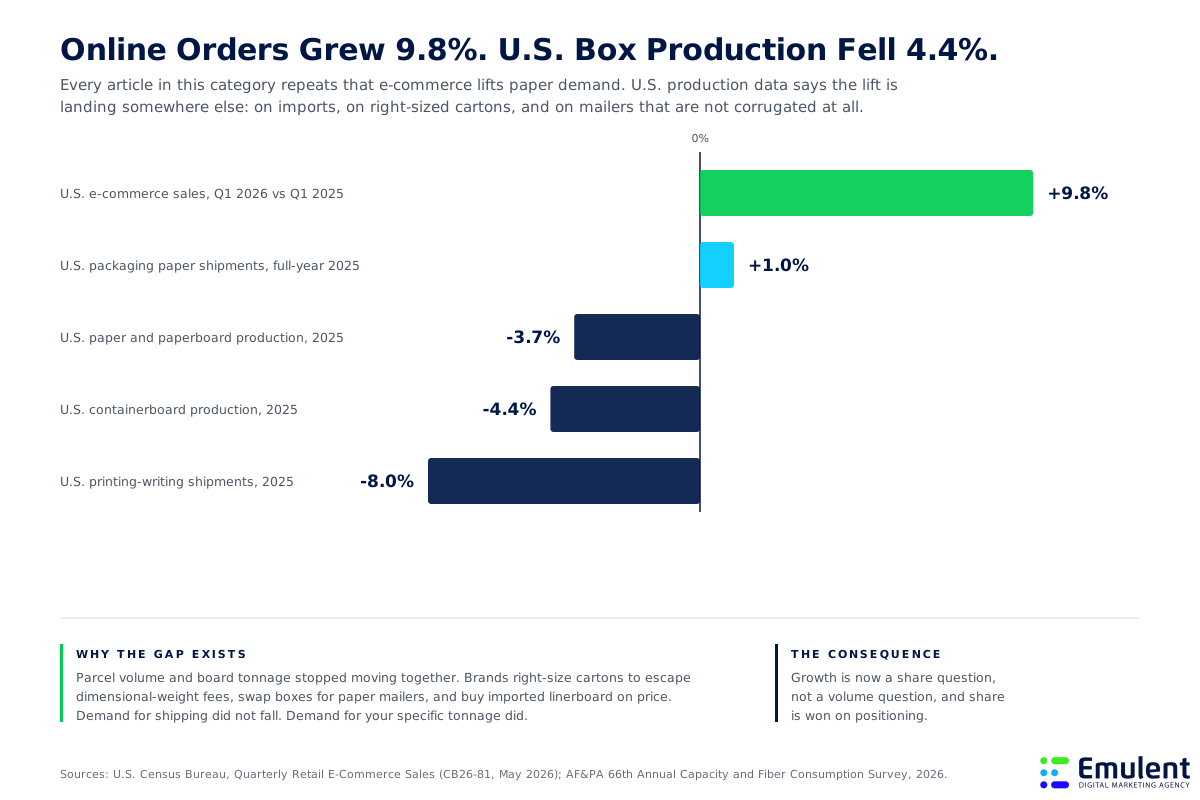
The Census Bureau put U.S. e-commerce sales up 9.8% year over year in the first quarter of 2026, more than double the 3.9% growth of total retail. Meanwhile the AF&PA capacity survey recorded total U.S. paper and paperboard production down 3.7% in 2025, containerboard production down 4.4%, and printing-writing shipments down 8%. Packaging papers were the only line that grew, and only by about 1%.
Those numbers do not contradict each other. Brands are shrinking cartons to duck dimensional-weight fees, replacing boxes with paper and poly mailers, and buying imported linerboard when the price is right. The parcel kept moving. The tonnage moved somewhere else. A mill that plans 2027 around “e-commerce will lift us” is planning around a tailwind that is blowing past its door.
The industry keeps calling this a demand problem. It is a preference problem. Boxes are still being shipped by the billion. Buyers just stopped preferring yours, and no amount of capacity solves that. – Emulent Strategy Team
Which raises the question of how much tailwind is actually left.
How Much E-Commerce Growth Is Left to Ride?
Less than the pitch decks assume. Online sales were 11.9% of U.S. retail in the first quarter of 2020 and 16.9% in the first quarter of 2026, a genuine structural shift. But the pace has settled into roughly one percentage point a year, a long way from the step-change of 2020.
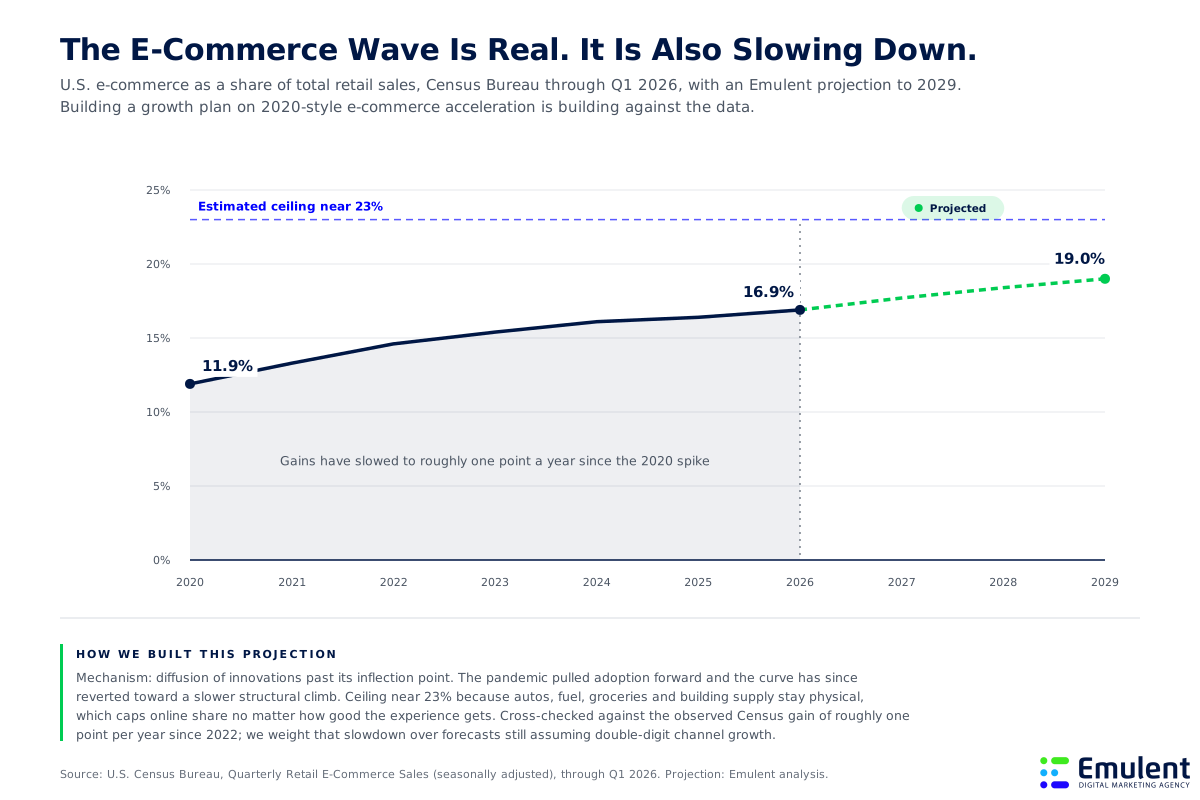
Projection: Emulent analysis based on diffusion of innovations past its inflection point, assuming a ceiling near 23% because autos, fuel, groceries and building supply stay predominantly physical, cross-checked against the observed Census gain of roughly one point per year since 2022.
We project the share reaches about 19% by 2029. That is still growth, and it still means more parcels. What it does not mean is a rising tide that lifts every mill. In a channel growing at one point a year, your revenue growth has to come out of a competitor’s order book. That is a completely different marketing problem than the one most manufacturers are funded to solve, and it explains why current manufacturing marketing trends point so heavily toward positioning and demand capture rather than trade-show volume.
Stop Selling Print. It Is Not a Trough.
U.S. printing and writing capacity has fallen from nearly 18 million tons in 2015 to 7.7 million tons in 2025, a 57% collapse, with 13.9% of it happening in 2025 alone. The mills still describing themselves as print suppliers are competing hard for a shrinking pool while their own converted machines run packaging grades their website never mentions.
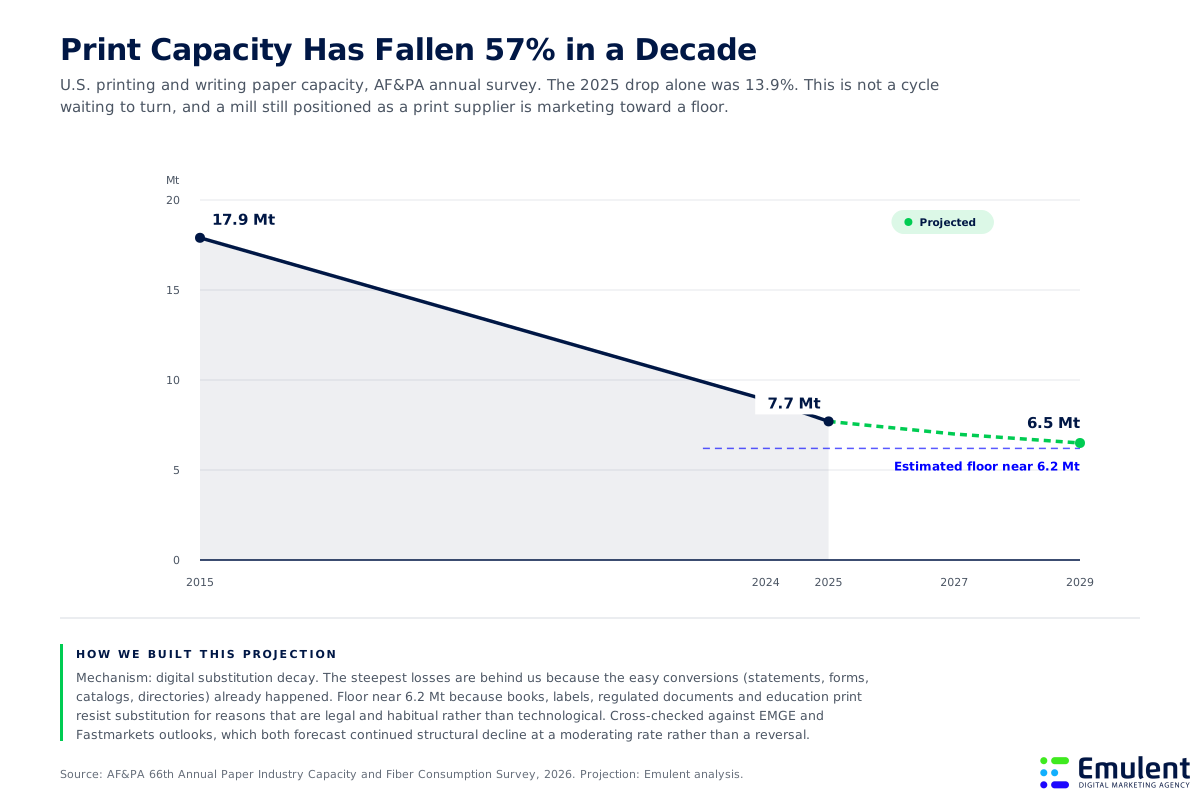
Projection: Emulent analysis based on digital substitution decay, assuming a floor near 6.2 million tons because books, labels, regulated documents and education print resist substitution for legal and habitual reasons rather than technological ones, cross-checked against EMGE and Fastmarkets outlooks that forecast continued structural decline at a moderating rate.
Here is the part that costs us money to say: if print is more than half your revenue and you have not started converting, marketing cannot save you this year. Buy the machine first. A brilliant campaign pointed at a shrinking grade just helps you lose money faster.
For everyone who has already converted, the failure is the opposite and entirely fixable. Capital moved to packaging. The brand did not. The site architecture, the product pages, and the search footprint still say print, so the packaging buyers those millions were spent to serve cannot find the mill. Converting a machine without converting the manufacturing brand strategy is buying a storefront and leaving the old sign up.
We have watched mills spend nine figures on a conversion and eleven dollars on telling anyone about it. The packaging buyer has never heard of you. Their search does not know you make board. That gap is not a marketing detail, it is the return on the whole investment. – Bill Ross, Founder, Emulent
Why Commodity Pricing Is a Messaging Failure, Not a Market Condition
Buyers treat board as interchangeable because manufacturers describe themselves interchangeably. Pull up twenty mill websites and you will read the same three promises: quality, service, capacity. When every supplier claims identical virtues, the buyer has exactly one variable left to compare, and it is price per ton.
Escaping that starts with publishing something a competitor cannot copy by editing their homepage.
- Reliability with a number on it. On-time delivery percentages, fill rates, and lead-time commitments. “99.2% on-time across 2025” is a claim a rival has to earn, not write.
- Technical depth buyers cite internally. ECT and burst data, moisture performance, runnability notes, converting guidance. Your spec sheet becomes the reference their engineer pastes into the approval memo.
- A named vertical. The mill known for cold-chain or for pharmaceutical cartons gets specified into projects a generalist never hears about.
- Proximity, quantified. Freight math and lead-time advantages, stated in dollars and days, matter more now than they did in 2019.
- A named process. Package your quality or fiber-sourcing method under a proprietary name so procurement can reference it in their own paperwork.
None of that is clever copywriting. It is proof, published where the buyer is already looking, which is the underlying logic of marketing in a saturated market. A mill that ships this work well tends to find its manufacturing website design doing more selling than its sales team, which is exactly what the buyer data predicts.
Your Buyer Already Ran the Evaluation Without You
Gartner’s research puts 80% of B2B supplier interactions in digital channels, with 67% of buyers preferring a rep-free experience and 73% actively avoiding suppliers who send irrelevant outreach. Buyers spend just 17% of their total buying time with supplier reps at all.
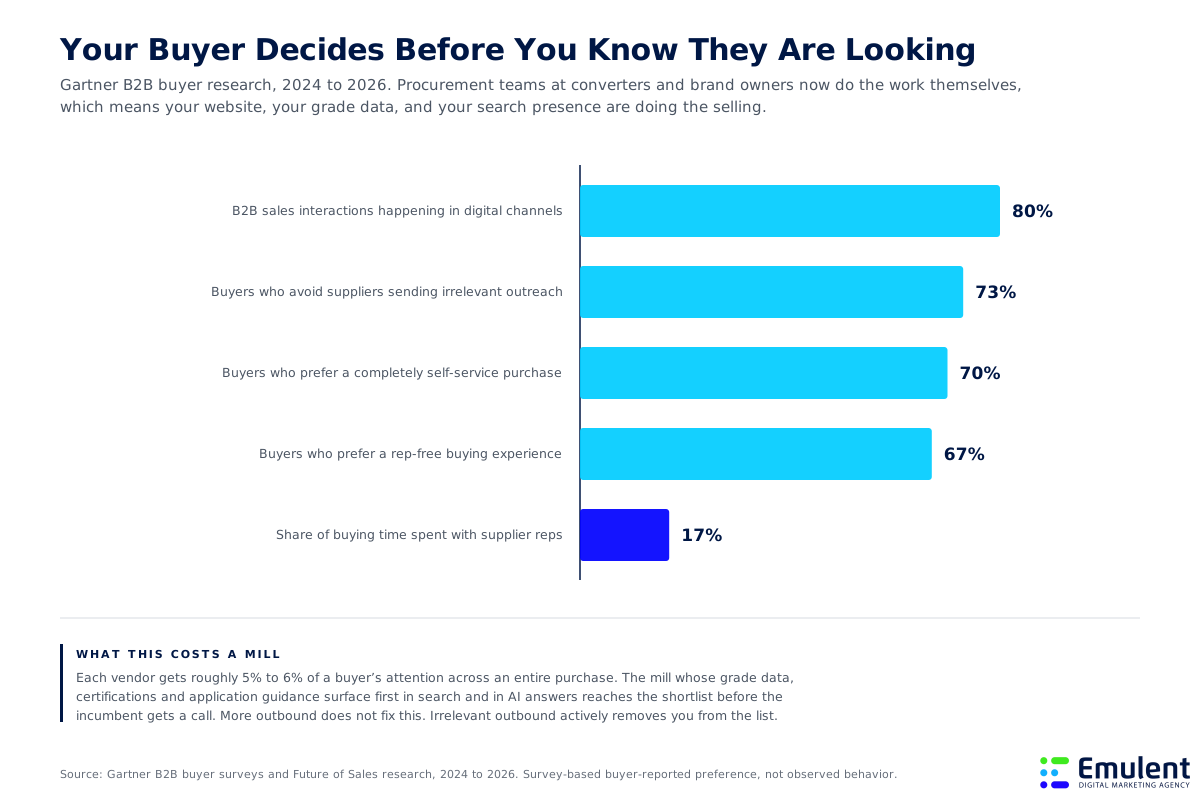
Treat that 17% carefully; it is buyer-reported preference from a survey, not a measured log of behavior. The direction, though, is hard to argue with, and it has been consistent across three years of B2B marketing trends data. When each competing vendor commands roughly 5% to 6% of a buyer’s attention across an entire purchase, the mill whose grade data and application guidance surface first in search results and AI answers is already on the shortlist while the incumbent waits for a call that is not coming.
This is why manufacturing SEO now behaves like a sales channel rather than a traffic exercise, and why serious mills have started treating AI SEO as the same job: when a packaging engineer asks an assistant which board grade to spec, your technical documentation is either the source it cites or it is not in the room. The mechanism underneath is plain enough. Buyers avoid sales conversations because sales conversations historically cost them time and gave them information they could have found themselves. Publish the information and you stop being the tax; you become the reference.
Every mill I talk to wants more sales calls. Their buyers want fewer. The mills that win give away the technical answer for free and let the buyer arrive already convinced, which is the least comfortable and most profitable thing you can do in this business. – Emulent Strategy Team
Circularity Sells, But Not the Way You Are Selling It
Sustainability messaging in this industry has collapsed into a single claim everybody makes: recycled content. AF&PA put the 2024 U.S. cardboard recycling rate at 69% to 74% and the overall paper rate at 60% to 64%. Those numbers are close to their practical ceiling, which means the claim is now universal, and a universal claim is not a differentiator.
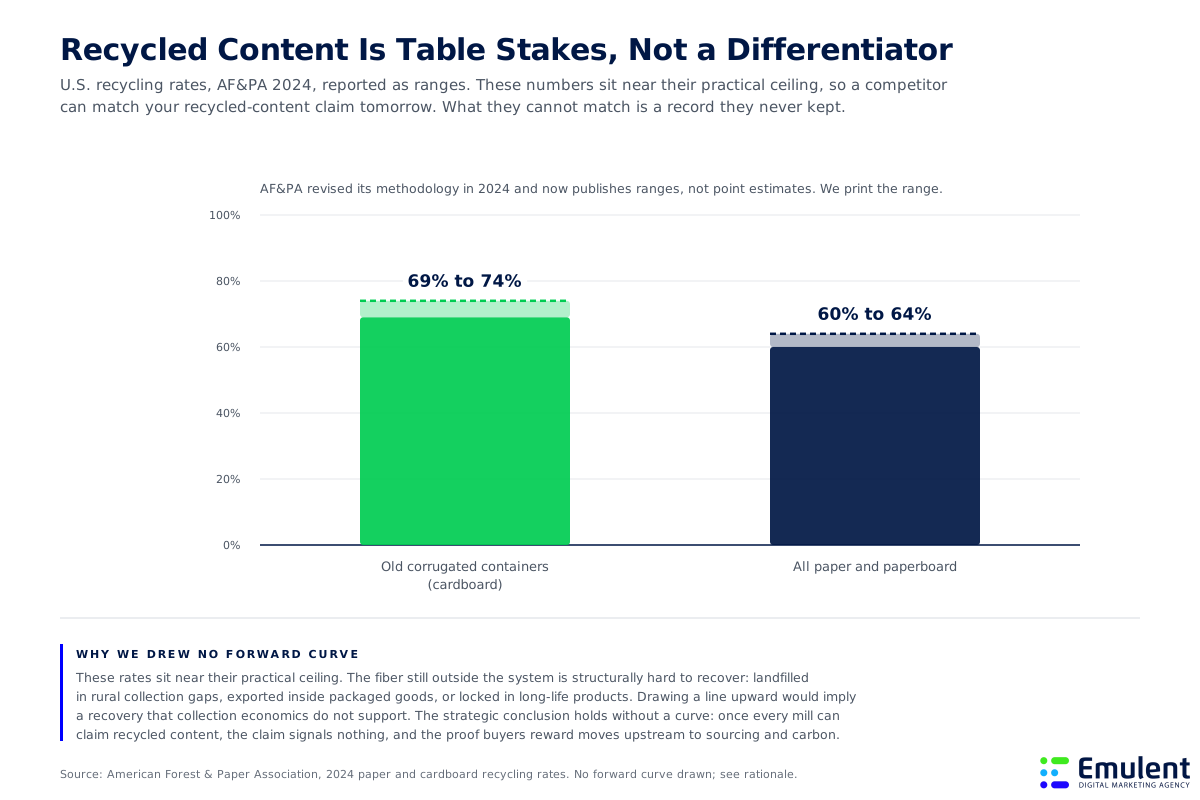
The buyer research says the same thing from the other direction. In McKinsey’s 2025 global packaging survey of more than 11,000 consumers, environmental impact ranked sixth of seven packaging characteristics, behind food safety and shelf life, and price grew more important than it was in 2023. Sustainability is not dead. It has moved from being the reason someone buys to being the reason a procurement team is allowed to buy.
That distinction changes what you publish. Lead with performance and reliability. Then hand the sustainability team the artifacts nobody else bothered to keep:
- Carbon intensity per ton, calculated and dated, not estimated in a brochure
- Chain-of-custody certification with the certificate number visible
- Fiber sourcing maps, including which forests and which management regime
- Water and energy trends over five years, including the years that went the wrong way
- A recycled-content figure by grade, not a company-wide average that hides the weak line
Buyers with ESG mandates are not looking for a story. They are looking for numbers they can paste into their own report and defend to their own auditor. The mill that hands them a defensible number wins the contract, and the story is what makes them stay. That work is closer to content strategy services than to a sustainability page, and mills that document their own operations honestly, including the mill floor itself through manufacturing brand photography, give buyers something a competitor’s stock imagery cannot answer.
What We Would Tell You to Do First
The sequencing matters more than the tactics, because most mills have the proof already and it is trapped inside quality systems no buyer will ever see.
- Decide which grades you are actually selling. Retire the legacy positioning in writing, on the site, before you spend a dollar on demand generation.
- Publish the proof. Reliability numbers, technical data, certifications, sourcing records. If it is not on a page a buyer can find, it does not exist.
- Rebuild the site around applications, not grades. Buyers search for their problem, not your basis weight.
- Get into the answer, not just the results page. Structure the technical content so search engines and AI assistants cite it.
- Go get named accounts. Only after the first four, and only armed with the ESG documentation their procurement team needs.
If you finish that list and your revenue still will not move, the problem was never marketing, and we would rather tell you that in the first meeting than bill you for a year finding out.
How Emulent Helps Pulp and Paper Manufacturers Grow
Our senior team works this exact problem: repositioning mills off declining grades, turning quality and sustainability records into published proof, and building the search presence that reaches buyers during the 83% of their evaluation you never see. It is the core of our B2B industrial marketing service. If you are in the middle of a conversion, a repositioning, or a share fight you did not expect to be in, talk to a marketing agency that will tell you plainly whether we can help. No long-term contracts, because results should keep you, not paperwork.