
The fastest-growing beauty brands in 2026 share a pattern, and it is not the one most marketing advice repeats. We studied where growth concentrates, how these brands turn attention into repeat buyers, and which habits quietly cap their upside. This growth study breaks down the marketing strategies that hold up after the trend cycle moves on, with forecasts and hard numbers behind each one.
Key takeaways
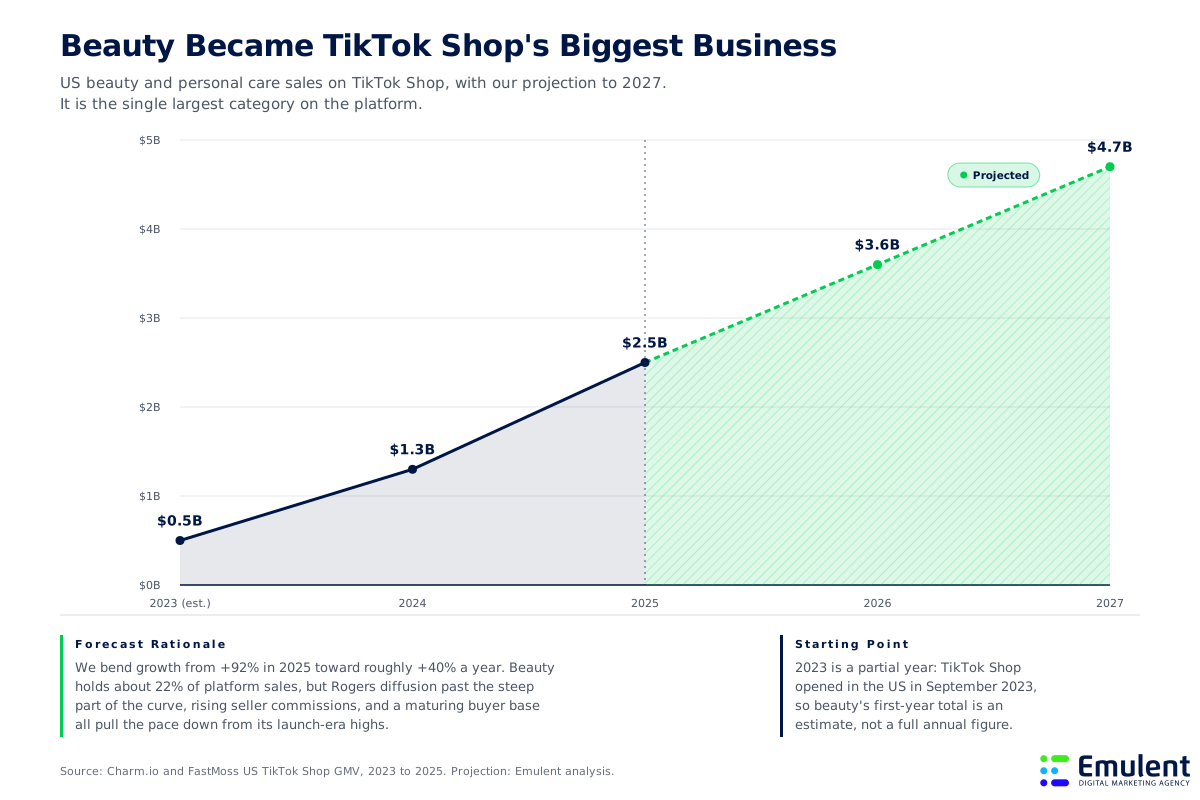
- Beauty is now the engine of social commerce. Beauty and personal care is the top category on TikTok Shop, and we project its US sales on the platform climb toward 4.7 billion dollars by 2027.
- Conversion beats reach. Discovery commerce converts shoppers at close to double the rate of a standard feed, so the brands that win treat selling surfaces, not view counts, as the goal.
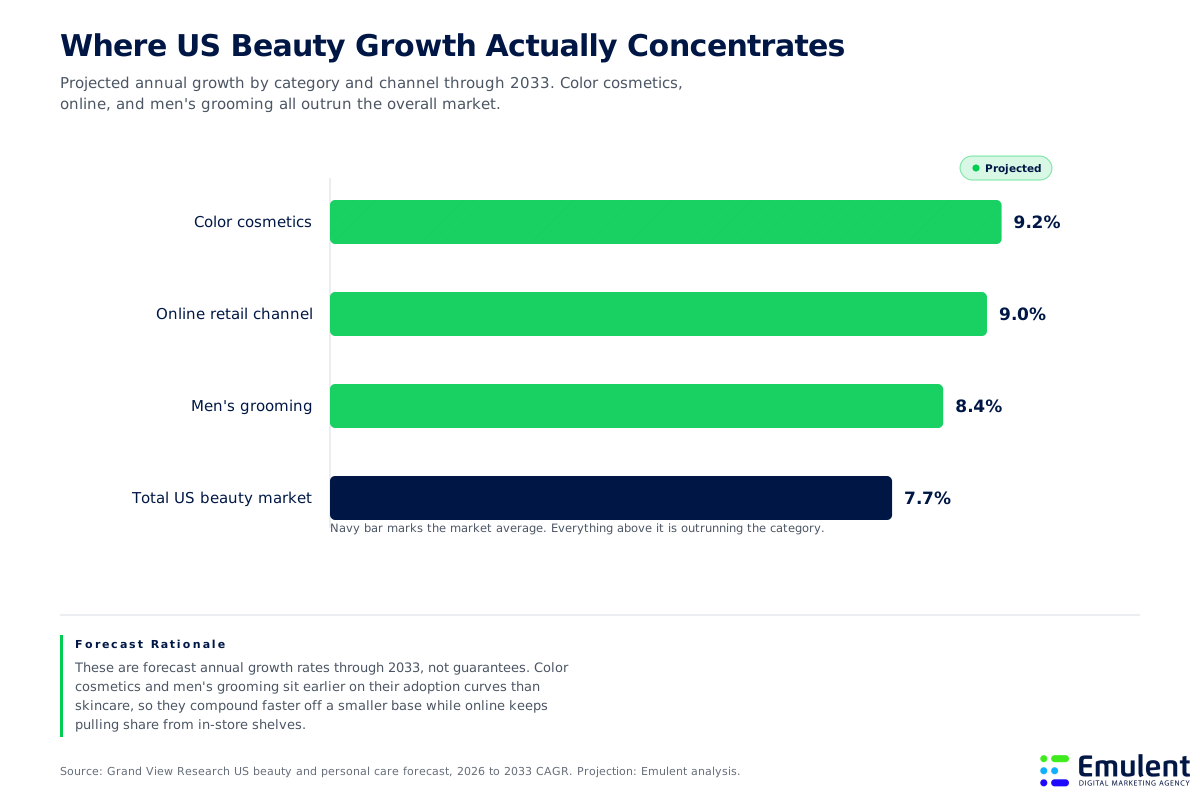
- Growth concentrates in a few categories. Color cosmetics, men’s grooming, and online sales are all growing faster than the beauty market overall, so picking the right category matters more than working harder in a slow one.
- Systems beat single viral hits. One product that blows up rarely builds a lasting brand. A repeatable creator-content engine does.
- Platform reach is rented, not owned. Rising creator costs and commission rates push the brands that last to also build assets they control, from their email list to their own store.
- The growth curve is bending. Social-commerce sales keep rising, but the yearly rate is slowing toward the mid-teens, so 2026 plans built on triple-digit growth are planning to fall short.
Which numbers actually tell you a beauty brand is growing?
Most growth reports celebrate views, earned media value, and total sales volume. Those numbers feel good and tell you almost nothing about whether a brand is healthy. A video can reach millions and sell nothing. A launch can post a big sales week and lose money on every order once discounts and returns are counted.
We track a shorter list. Repeat purchase rate tells you if people come back. Contribution margin tells you if each sale actually funds growth. The ratio of customer lifetime value to acquisition cost tells you if the math works as you grow. Branded search volume tells you if real demand is building beyond the algorithm, which is also where beauty SEO starts paying off. We have written before about why views are the wrong thing to measure, and beauty is the clearest case of it.
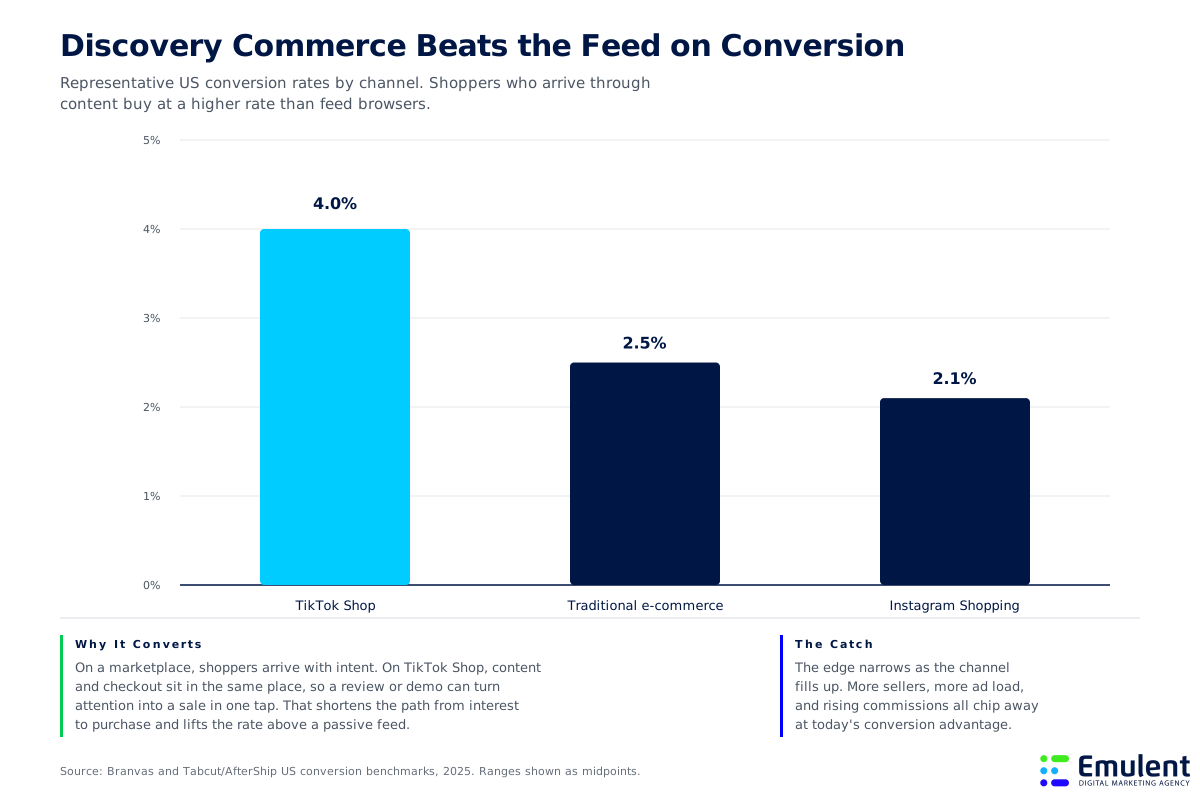
The reason this matters shows up at the cash register. Where a shopper buys changes how often that attention becomes a sale. Discovery-led commerce, where the content and the checkout sit in the same place, converts far better than a passive feed. The chart below compares typical conversion rates across the channels beauty brands lean on most.
When you measure repeat orders and margin instead of impressions, your whole strategy changes. You stop paying for reach that never returns and start funding the channels and products that compound.
A million views that don’t produce a second order is an audience you rented, not a business you built. We’d rather see a smaller number that comes back. – Strategy Team, Emulent Marketing
Why does one viral product rarely build a durable beauty brand?
A single product going viral is a great month. It is rarely a great business. Trends fade, dupes appear within weeks, and the same algorithm that lifted a brand can drop it just as fast. The brands that keep growing treat virality as the output of a system, not a stroke of luck they wait to repeat.
What does that system look like in beauty? A steady cadence of creator content. A clear hero product that anchors the catalog. A reason for the first-time buyer to come back. A feedback loop that turns the best-performing posts into the next round of creator briefs. None of it needs one video to carry the quarter.
You can see why the engine matters in the size of the prize. Beauty and personal care has grown into the largest category on TikTok Shop, and the brands capturing that growth are running content programs, not chasing one-off hits. The chart below shows how fast beauty sales on the platform have grown, along with where we project they head next.
Building brand development as a system, not a project is slower at the start and far steadier after. It is the difference between hoping for another good month and engineering a good year.
Virality is luck you can’t schedule. A content system is the thing that lets you get lucky on purpose, over and over. – Strategy Team, Emulent Marketing
What does the TikTok playbook make every beauty brand look like?
Open the beauty side of any feed and the videos blur together. Same get-ready-with-me format, same trending sound, same close-up swatch, same five products everyone is calling a dupe. The playbook works, which is exactly the problem. When every brand runs the identical motion, the content stops doing the one job a brand needs most, which is making you memorable.
Here is our position, and it runs against the common advice: copying the winning format is the baseline, not an advantage. The advantage is everything around the format that a competitor cannot paste over in an afternoon. A distinct visual identity. A point of view on ingredients or values that not everyone can claim. Product images that look like you and only you, which is where strong beauty brand photography earns its keep.
This is also where beauty branding does the heavy lifting. A recognizable color, a consistent voice, and packaging that reads in a half-second scroll are what let a shopper find you again after the trend that introduced you has moved on. Sameness is cheap to produce and expensive to escape. We would rather help a brand build assets that look deliberately different, because standing out in a crowded market is the whole game once everyone runs the same format.
Where does platform-led growth hide dependence you can’t control?
Fast growth on a single platform feels like strength right up to the moment the rules change. Commission rates rise. Subsidies that once made the math easy get pulled back. An algorithm tweak quietly cuts your reach. The growth was always there on loan, and the lender can call it in.
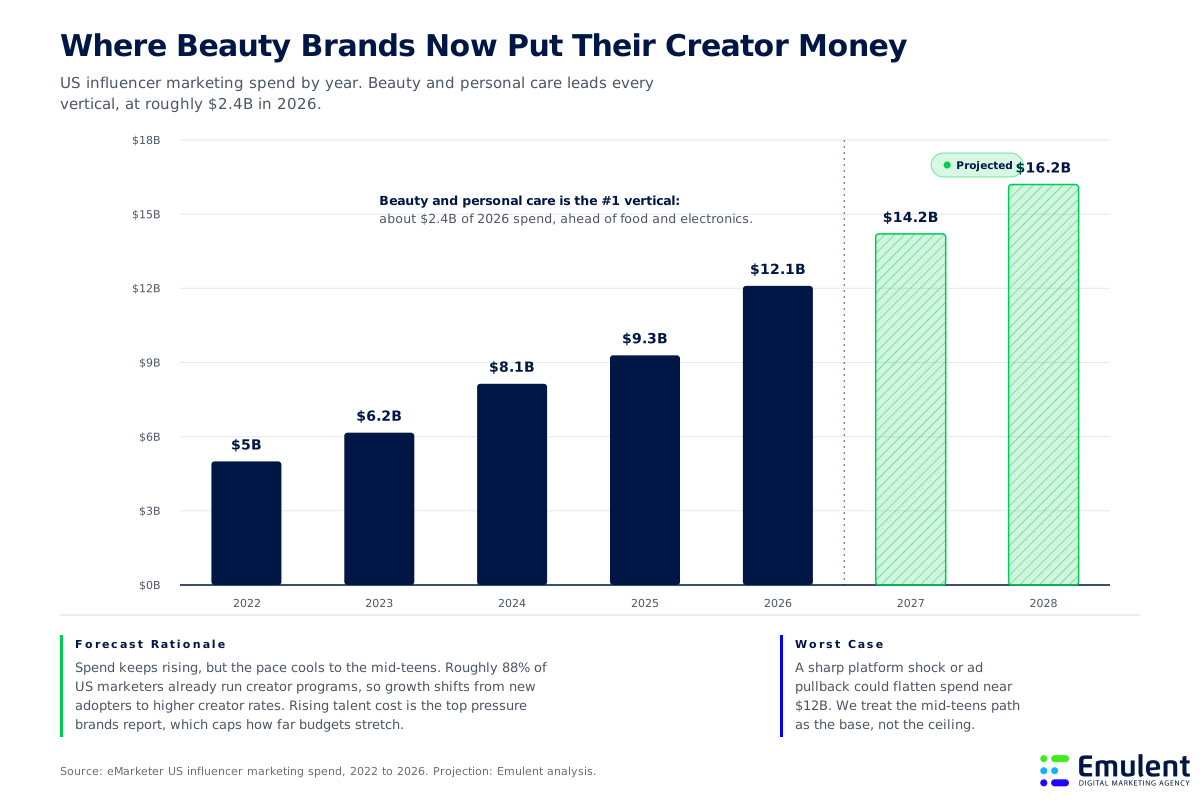
Spending tells the story. Brands keep pouring more money into creators every year, and beauty is the single largest vertical for that spend. The chart below shows the climb, along with where we project budgets head through 2028. That investment is fine on its own. The risk is treating rented reach as if it were a moat.
The brands that sleep well build assets they own next to the channels they rent. An email and text list no platform can throttle. A site that converts the traffic those creators send, where paid programs like beauty PPC can grow without paying a marketplace a cut of every order. For direct-to-consumer beauty, we usually point clients to Shopify as the storefront, then make the buying experience earn its keep through deliberate beauty web design. Rent reach when it is efficient. Just never confuse the rental for the asset.
If a platform can change your growth overnight, it owns your growth, not you. Renting reach is fine. Mistaking it for a moat is not. – Strategy Team, Emulent Marketing
What should a beauty brand deliberately not do in 2026?
Growth advice almost always adds. Add a channel, add a product line, add another platform. The fastest-growing brands we see are better at subtraction. They pick a small number of bets they can win and say a clean no to the rest.
Start with category. Beauty growth is not spread evenly, so where you plant matters as much as how hard you work. Color cosmetics, men’s grooming, and online sales are all set to outpace the broader market over the next several years. A brand fighting for share in a slow segment has to run twice as hard for half the result. The chart below shows where the growth actually concentrates.
The same discipline applies inside your own catalog. A clear hero product gives creators something specific to talk about and gives first-time buyers an obvious place to start. Twenty average products scatter attention and budget. One or two strong ones focus both. Saying no also protects your team’s time, your ad spend, and the clarity of your brand.
A real strategy is mostly a list of things you have chosen not to do. We help clients write that list, because a brand strategy that helps you say no is what keeps a small team from spreading itself into mediocrity.
How fast will social-commerce beauty really keep growing?
It is tempting to draw the last three years forward in a straight line and assume social commerce keeps doubling. It will not. The early triple-digit jumps came from a small base and from shoppers trying the format for the first time. Both of those tailwinds are fading as buying inside an app becomes normal rather than new.
The honest picture is still a good one. Social-commerce sales in the US keep climbing, but the yearly growth rate is settling toward the mid-teens instead of the headline numbers from the first wave. Nearly half of platform users already buy this way, so the room left to convert is narrower than it was. The chart below shows the curve continuing to rise while its slope gently flattens.
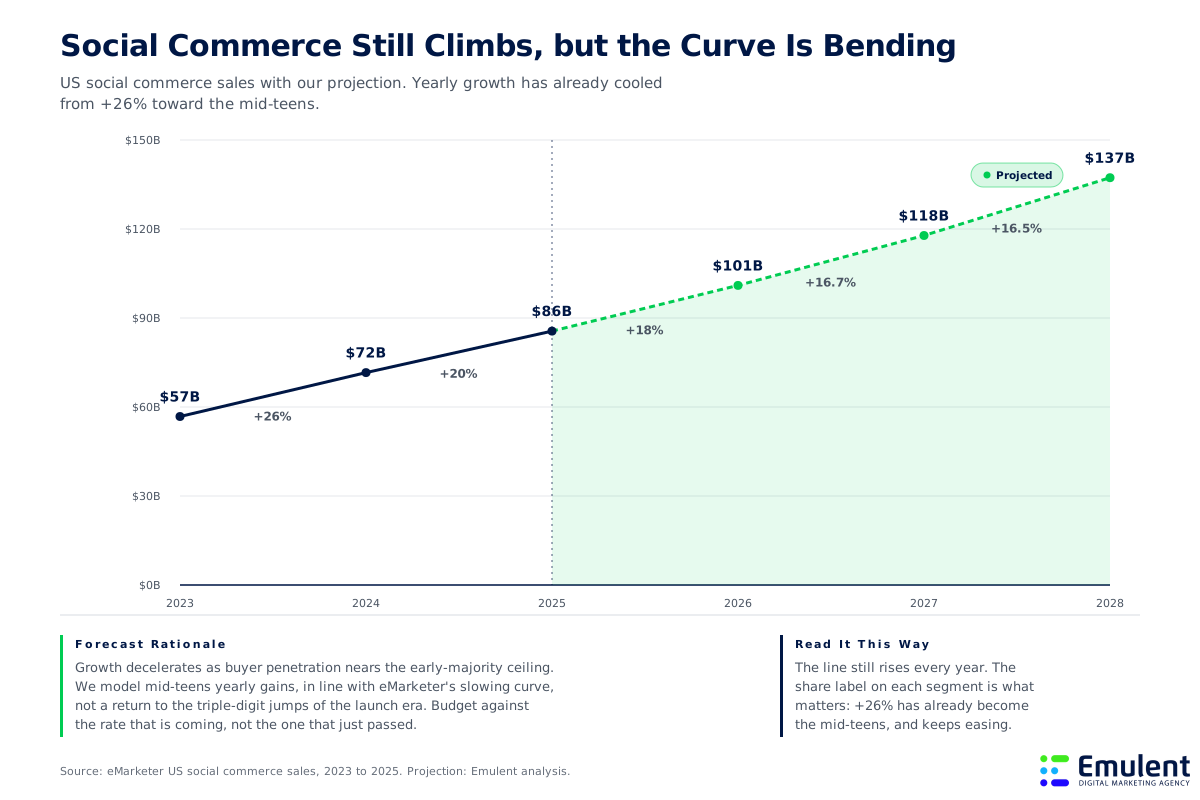
Why does the realistic number help you? Because planning around a fantasy sets you up to overspend and then panic when results land where they were always going to land. A brand that plans for healthy, decelerating growth invests at a pace it can hold, keeps its margin, and is still standing when competitors who bet on the hockey stick run out of cash. Steady and real beats spectacular and brief.
Planning a beauty brand around triple-digit growth in 2026 is planning to be disappointed. The honest number is good enough to win with. – Strategy Team, Emulent Marketing
Putting these beauty marketing strategies to work
The pattern across the fastest-growing beauty brands is not a secret format. It is a set of choices: measure repeat purchases over reach, build a content system instead of chasing one hit, look deliberately different, own the assets you can, concentrate on the categories and products where growth actually lives, and plan around honest numbers. None of those require a bigger budget than your competitors. They require a clearer one.
That is the work the Emulent Marketing Team does with founders and growth teams every day, turning these strategies into a plan a brand can run. Our beauty marketing agency builds the system behind the growth, not just the campaign on top of it. If you want help applying this growth study to your own beauty marketing, let’s talk.