
A website redesign is a conversion project with a design deliverable, and any team that treats it as a design project with a conversion hope is repainting a house with a cracked foundation. We have reviewed hundreds of redesign briefs, and the pattern repeats: pages of notes about colors, layouts, and competitor sites, and not one sentence naming the business number the new site is supposed to move. The design conversation is the fun part, so it goes first. It should go last. Everything that makes a redesign pay for itself, the baseline metrics, the revenue target, the measurement plan, gets decided before anyone opens a design tool, or it never gets decided at all.
This article lays out what a goals-first redesign looks like in 2026, with current data on why the old playbook stopped working: search clicks are collapsing under AI answers, half the mobile web still fails Google’s speed thresholds, and 96% of home pages ship with the same accessibility failures they shipped last cycle. The numbers below come from Pew Research, HTTP Archive, Utah State University’s WebAIM project, and a 2026 randomized field experiment. None of them are kind to the redesign-as-facelift approach.
“It Looks Dated” Is a Feeling, Not a Goal
The most common reason companies redesign is embarrassment, and embarrassment is a terrible project sponsor. An owner winces at their own homepage during a sales call, a new marketing hire wants to make a mark, a competitor launches something shiny. The emotional logic is loss aversion: the site feels like a liability, and spending money to make the discomfort stop feels like risk reduction. It isn’t. It is decorating.
“Most redesigns get bought to make the owner stop wincing at their own homepage. That is loss aversion doing the purchasing, and loss aversion buys polish. Your buyers never wince at your site. They either find the next step in ten seconds or they leave, and no color palette fixes a missing next step.” – Bill Ross, Founder, Emulent
Chasing website design trends compounds the problem, because trends reward the sites of the companies that set them and date everyone else’s within two years. We have made this argument about visual identity before: a logo is not a brand strategy, and a fresh homepage is not a growth strategy. Aesthetics matter, but they matter as a trust signal in service of a conversion path, never as the point of the project. If the current site converts well and loads fast, “dated” is a cheap problem. If it converts poorly, a beautiful version of it converts poorly in nicer fonts.
The Traffic Assumption Under Your Redesign Already Broke
Most redesign business cases quietly assume search traffic will keep arriving at historical rates, and that assumption failed in measurable terms between 2024 and 2026. Pew Research Center’s 2025 analysis of real browsing data from 900 US adults found that when Google shows an AI summary, users click a traditional search result on just 8% of visits, against 15% when no summary appears. They also end their browsing session outright more often, 26% of visits versus 16%. In Pew’s March 2025 window, 18% of searches already triggered a summary, and links inside the summaries themselves were clicked on roughly 1% of visits.
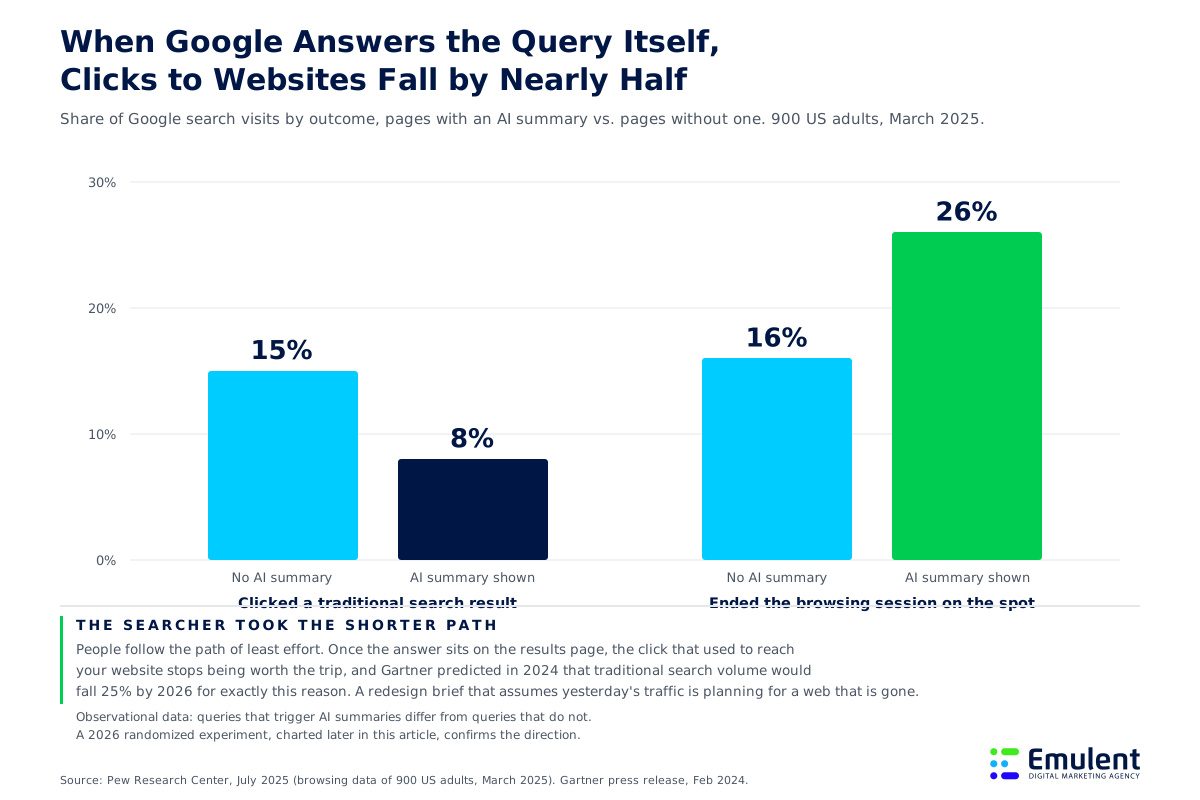
Gartner predicted in 2024 that traditional search engine volume would drop 25% by 2026 as AI chatbots absorb queries, and the Pew numbers show the mechanism doing its work: people take the path of least effort, and once the answer sits on the results page, the click stops being worth the trip. Pew’s comparison is observational, so treat the exact gap with care, but the direction is confirmed by randomized evidence we chart later in this piece.
For a redesign, this changes the goal math in two ways. First, the visits that still arrive are more precious, so conversion rate carries more of the growth load than volume does. Second, being cited by AI answers is now part of what a site’s structure must earn, which is AI SEO work, and it belongs in the redesign brief, not in a follow-up project after launch.
Write the Brief Around One Number
A usable redesign goal names a baseline, a target, a deadline, and an owner, in one sentence. “Raise demo requests from 22 per month to 35 per month within two quarters of launch, owned by the marketing director” is a goal. “Improve user experience” is a wish, and “modernize the brand” is a mood. The discipline sounds obvious, and almost nobody applies it: page one of Google is full of redesign guides that list goal-setting as step two of twelve and then spend eleven steps on wireframes. The goal is not a step. The goal is the project, and every design decision afterward is either evidence for it or clutter.
“If nobody in the kickoff meeting can say what the site converts at today and what it needs to convert at in six months, cancel the kickoff and go find those two numbers. A redesign brief without a baseline is a decorating budget with a launch date.” – The Strategy Team at Emulent
Pressure to work this way is rising from above, too. The Spring 2025 CMO Survey from Duke’s Fuqua School of Business, polling 281 US marketing leaders, found marketing’s strategic influence growing alongside sharper scrutiny to demonstrate return on spending. A redesign is usually the single largest line item a marketing team signs in a given year. Walking into a budget review with “the new site looks much better” is a resignation letter written in advance.
Two diagnostic questions sharpen the number. If the site already draws visitors who leave without acting, the redesign is a conversion problem, and we have written a full teardown of why your website gets traffic but doesn’t convert. And before setting the target, check what good looks like for your sector: our data on the average conversion rate by industry keeps teams from declaring victory at a number their market considers table stakes, or chasing one it considers fantasy.
Baseline the Site Before Anyone Opens a Design Tool
You cannot claim a redesign worked without a before picture, and the before picture is technical as much as it is behavioral. Record current conversion rate by page, organic entrances by template, Core Web Vitals field scores, and the top ten pages by assisted revenue, then freeze that snapshot. This is the unglamorous half of website design services done properly: the audit, the redirect map, and the measurement plan protect the value the old site earned while the new one is being built.
The performance baseline deserves its own line in the brief, because the industry-wide picture is worse than most owners assume. Per the HTTP Archive Web Almanac 2025, built on Chrome’s field data, only 48% of mobile websites passed all three Core Web Vitals in 2025, up from 32% in 2021. More than half the mobile web still fails, five years after Google made these thresholds a ranking signal. Home pages fare worst: 45% pass on mobile against 56% for secondary pages, because home pages carry the heaviest hero media, the exact assets redesigns love to add.
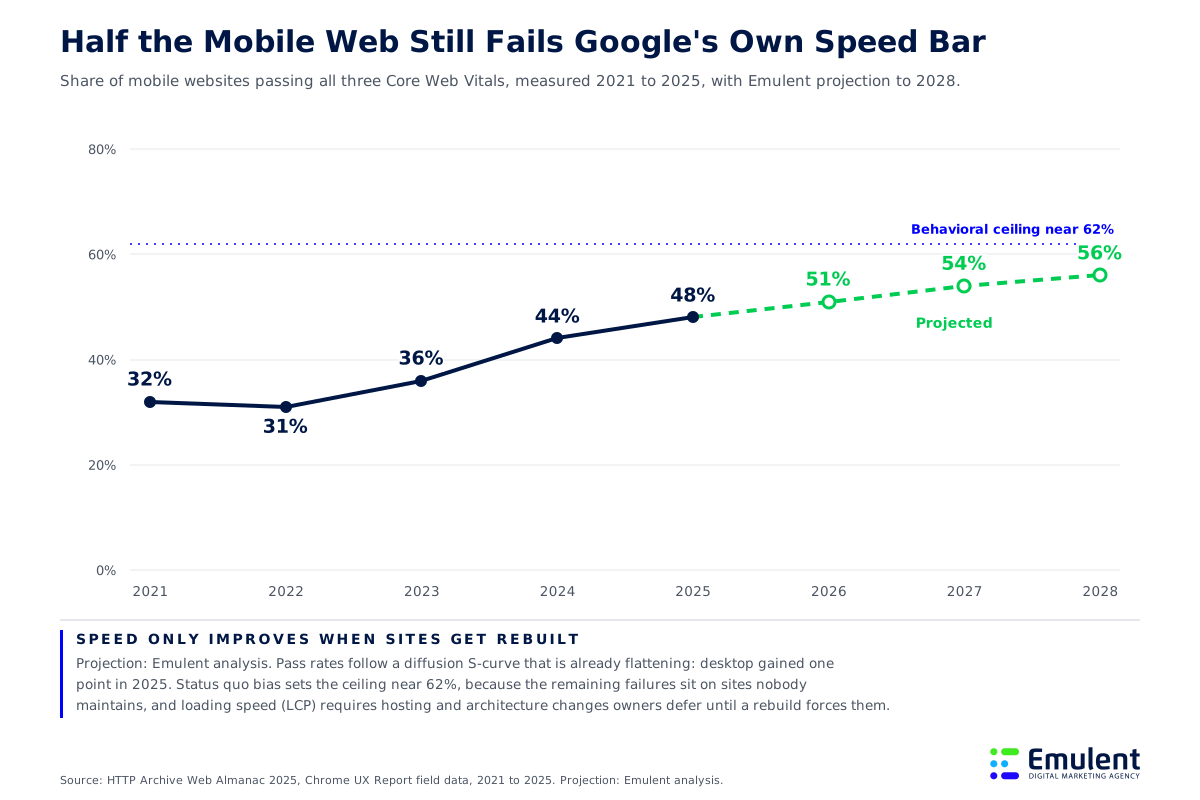
Projection: Emulent analysis based on diffusion of innovations and status quo bias, assuming a ceiling near 62% because the remaining failures sit on unmaintained sites and loading speed requires structural changes owners defer until a rebuild, cross-checked against the HTTP Archive Web Almanac 2025 trend, where the desktop curve gained a single point in 2025.
Our projection bends toward the mid-50s by 2028 rather than climbing forever, and the reason is behavioral. Sites get materially faster when they get rebuilt, and most never do; status quo bias holds the long tail in place, so the curve saturates well below 100%. The practical takeaway inverts the usual framing: passing Core Web Vitals stopped being a differentiator and became the entry fee. Write the pass into the redesign contract as an acceptance criterion, measured in field data after launch, not in a lab test the week of handoff. If the redesign is part of a larger rebrand, hold your brand development services partner to the same standard, because a brand system that cannot survive a 2.5-second loading budget is a print identity wearing a website costume.
The Failures Redesigns Keep Shipping
Redesigns have had eight consecutive years to fix the same six accessibility errors, and the web just posted its worst result since 2020. The WebAIM Million, Utah State University’s annual automated scan of the top one million home pages, found detectable WCAG 2 failures on 95.9% of home pages in 2026, up from 94.8% in 2025 and erasing six years of slow gains. Errors averaged 56.1 per page, a 10.1% jump in one year. The same six issues, led by low-contrast text on 83.9% of pages and missing image alt text, have topped the list for seven straight years. WebAIM points at rising page complexity, up 22.5% in a single year, and AI-assisted code generation as likely drivers of the reversal.
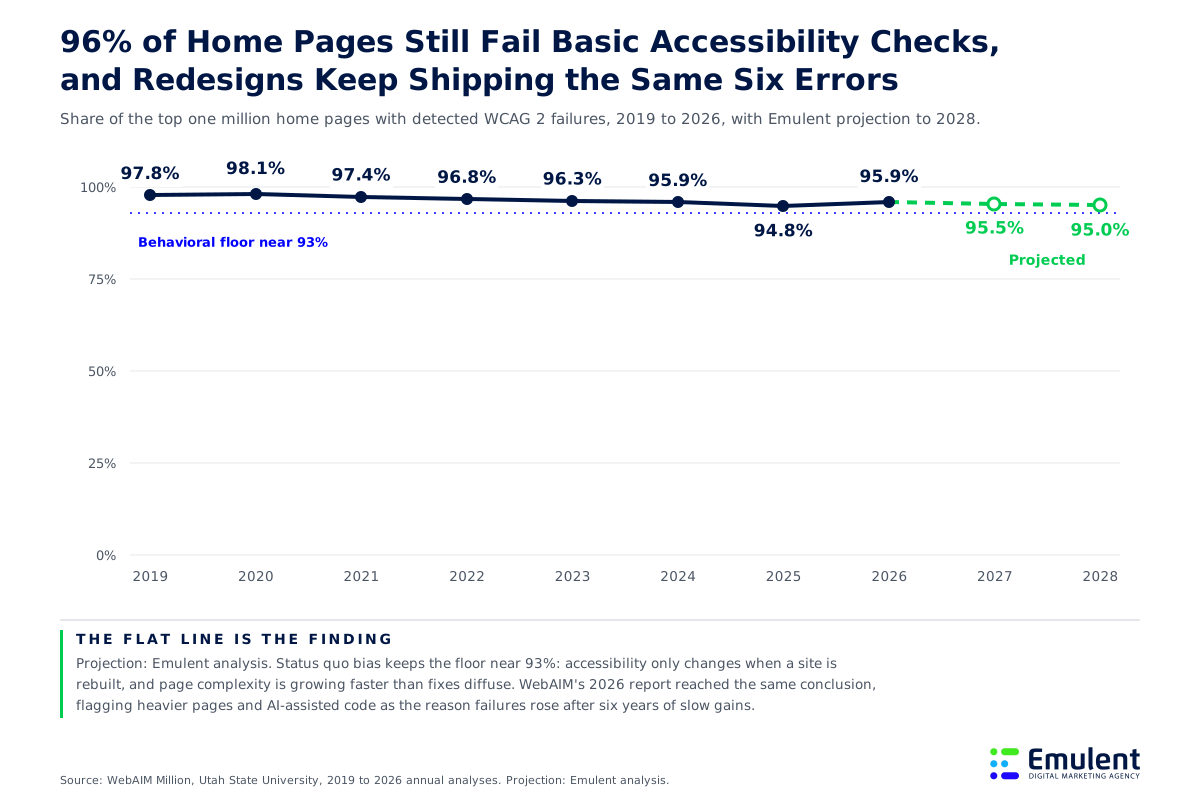
Projection: Emulent analysis based on status quo bias, assuming a floor near 93% because accessibility only changes when sites are rebuilt and complexity is growing faster than fixes spread, cross-checked against WebAIM’s own 2026 conclusion attributing the reversal to heavier pages and AI-assisted coding.
The flat line is the finding. Nearly a decade of audits, lawsuits, and awareness campaigns moved the failure rate about two points, because accessibility is a rebuild-time decision and most sites are never rebuilt. That makes your redesign the one moment the statistic is negotiable for your company. Budget it as a launch requirement with the six known error categories named in the acceptance checklist, and it costs a rounding error. Retrofit it after a demand letter arrives, and it costs a second redesign. Automated scans catch only a fraction of real barriers, so the true conformance picture is worse than the chart shows, which strengthens the case rather than weakening it: the bar for beating 96% of the web is on the floor.
Measure Revenue Per Visit, Not Visits
The post-launch scoreboard has to match the goal, and in 2026 that means retiring session counts as the headline metric. The cleanest evidence yet comes from a randomized field experiment by Agarwal and Sen, researchers at the Indian School of Business and Carnegie Mellon, who built a browser extension that randomly removed Google’s AI Overviews for some of 1,065 US desktop users in early 2026. With the AI answer left on the page, 72% of searches ended with no click to any website. Remove it, and zero-click searches fell to 54%. Organic clicks dropped 39.8% on affected queries while sponsored clicks held steady, and, the finding Google will enjoy least, user satisfaction did not improve. The paper is a working draft awaiting peer review, but random assignment means the effect is causal, not a correlation to argue about.
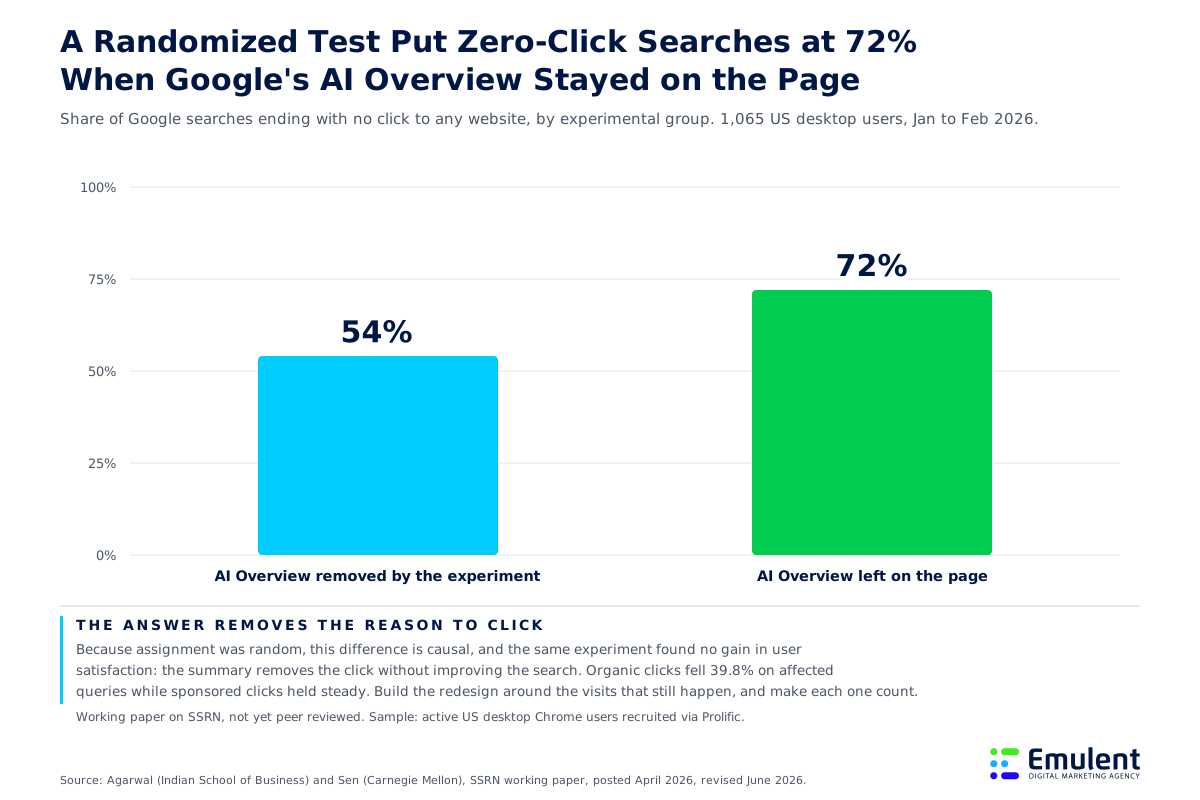
Traffic you never had a chance to receive cannot be a performance indicator. So judge the redesign on what happens after arrival: conversion rate, revenue per visit, lead quality, and assisted pipeline. We have argued for years that ranking #1 is nothing more than a vanity metric, and the zero-click data promotes that position from opinion to arithmetic. A ranking that produces an unclicked citation and a site that converts 4% of a shrinking visit pool are two different assets, and only one of them shows up in revenue. Set the reporting cadence before launch: a 90-day review against the frozen baseline, with the target number from the brief printed at the top of page one.
When the Right Call Is Not to Redesign
Some readers should close this tab and keep their current site, and we would rather say so than sell a project. If the site passes Core Web Vitals, converts at or above your industry benchmark, and the complaint is aesthetic, spend the budget on offers, photography, and content instead; the redesign will not return it. If conversion is the problem but it is concentrated on two or three templates, a targeted rebuild of those pages beats a full replatform at a fifth of the cost and none of the SEO risk. A full redesign earns its price when the goals demand structural change: a new information architecture, a platform the team cannot publish on, a merger, or field performance that patching cannot reach.
Teams that do proceed should work from a written scope with the goal sentence at the top. Our website redesign checklist covers the full sequence from baseline snapshot to post-launch review, and since schedule slip is where redesign budgets quietly die, our guide on how to minimize web design delays shows where the weeks actually leak: approvals, content, and photography, almost never the design itself.
Paint Is the Last Step
Repainting a sound house is maintenance; repainting a cracked one is concealment, and the crack in most underperforming websites is a missing goal, not a dated palette. Start with the number the site must move, freeze the baseline, write speed and accessibility into the acceptance criteria, and score the launch on revenue per visit in a search world that keeps more clicks for itself every quarter. Do those things and the visual refresh comes along for free, because clarity photographs well. Skip them and the most beautiful launch of the year is a coat of paint with an invoice attached.
If you want a second set of eyes on the goal before the project starts, that is the conversation we most like having. Contact Emulent and bring your current numbers; if the honest answer is that you should not redesign yet, you will hear it in the first meeting.