
“SEO not working” is one of the most common things we hear from business owners who come to us after a bad agency experience. They spent twelve months and thousands of dollars, and the number of leads did not improve. If you are asking why SEO doesn’t work, the most accurate answer is that it usually did not get a fair chance. The budget, the staffing model, the reporting, or the contract was set up to fail before the first keyword was researched. This article explains the common reasons these engagements break down, and it includes an honest look at the cases where the agency was not the problem, so your second attempt starts from a better position.
Key takeaways from this article:
- Underfunding predicts failure: Businesses spending under $500/month on SEO are 75% more likely to be dissatisfied with the results, and the average small business spends $497/month, right at that line.
- Attention is the hidden variable: A strategist carrying 40 accounts has about 3 hours per client per month, and closer to 90 minutes of actual strategy time once reporting and meetings are subtracted.
- Most clients leave right before results compound: 68% of SEO professionals report 6 to 12 months to ROI, and benchmark returns grow from about 5:1 at month 12 toward 22:1 by month 24.
- Reports show what was prioritized: If you cannot find revenue or leads anywhere in your old reports, no one was working toward them.
- Contract structure predicts outcomes: Ongoing retainer relationships have an 18% annual churn rate versus 42% for fixed-scope project work, and they last 2.3 times longer.
- Sometimes it was not the agency: Slow sales follow-up, uncompetitive pricing, and weak market fit can cause a campaign to fail even when it produced real demand.
Did SEO Fail, or Did the Agency Model Fail?
SEO as a channel keeps growing because it keeps producing returns. The global SEO services market is projected to reach $129.6 billion by 2030. What fails repeatedly is a specific delivery model: low monthly fees, junior execution, templated work, and reporting built to keep the invoice active rather than grow your revenue. The problem is structural, and the spend data makes that structure clear.
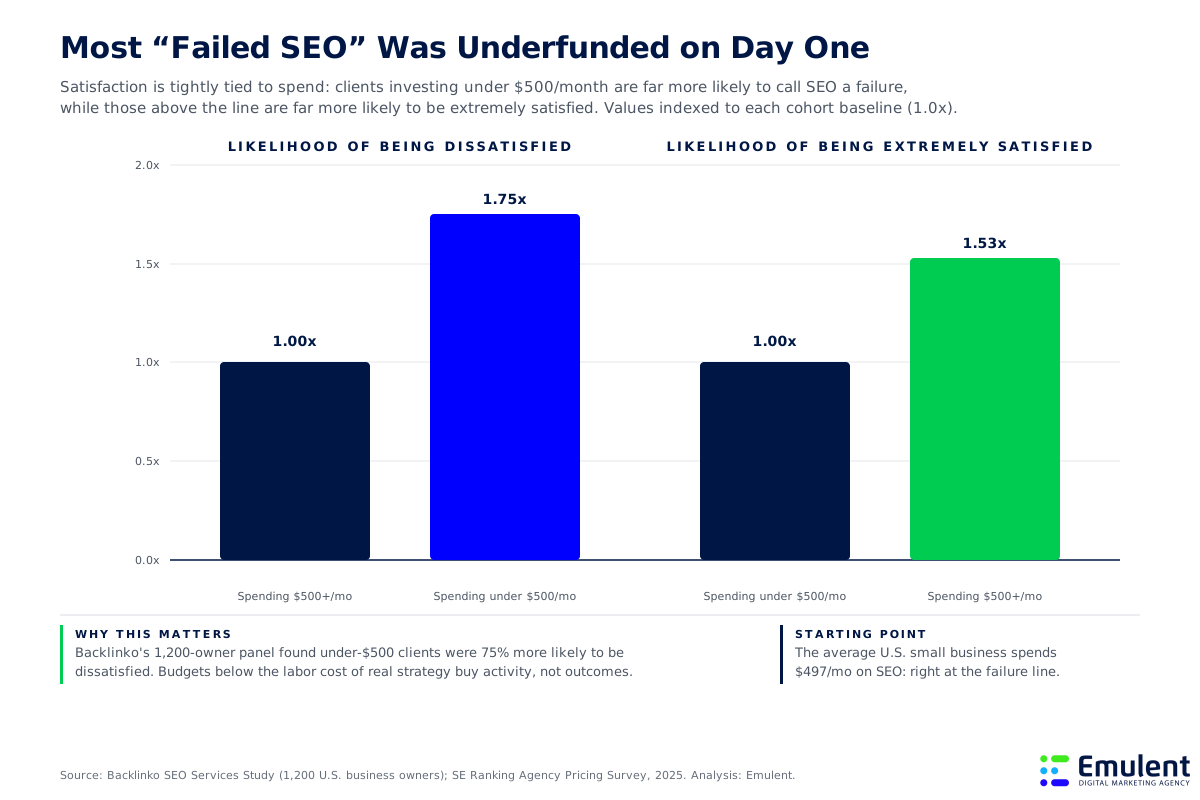
Backlinko’s survey of 1,200 U.S. business owners found that clients spending under $500/month were 75% more likely to be dissatisfied, while clients above that line were 53% more likely to report being extremely satisfied. At $400 a month, an agency can afford about two to three hours of qualified labor on your account. That pays for activity reports, not strategy. The agency understood that math when they signed you, and most clients did not.
The four structural failure modes we see most often:
- Junior delivery behind a senior pitch: The person who sold the engagement is gone after kickoff, and the work falls to staff who are learning on your budget.
- Hour-padding on templated tasks: Monthly title tag edits and directory submissions that fill a timesheet without addressing why you do not rank.
- Vanity reporting: Impressions, raw traffic, and rankings for keywords that do not lead to sales, presented as progress.
- Set-and-forget contracts: A 12-month lock-in removes the agency’s reason to keep performing after the first month, because the revenue is already secured.
When a prospect tells us SEO didn’t work, we ask one question first: what did the agency have to do each month to keep your business? If the answer is nothing, the campaign was in trouble from the start. – Emulent Strategy Team
Each of these failure modes comes back to one shared cause: too many clients spread across too little senior time. That ratio is worth examining on its own.
How Much Senior Attention Did Your Campaign Actually Get?
Agency economics depend on client-to-strategist ratios, and the ratio your old agency used determined how much real work your business received. Agency operations benchmarks put a healthy load at 8 to 12 clients per dedicated strategist. Surveyed agencies commonly target 20 accounts per account manager, and published staffing models for larger shops run 28 or more.
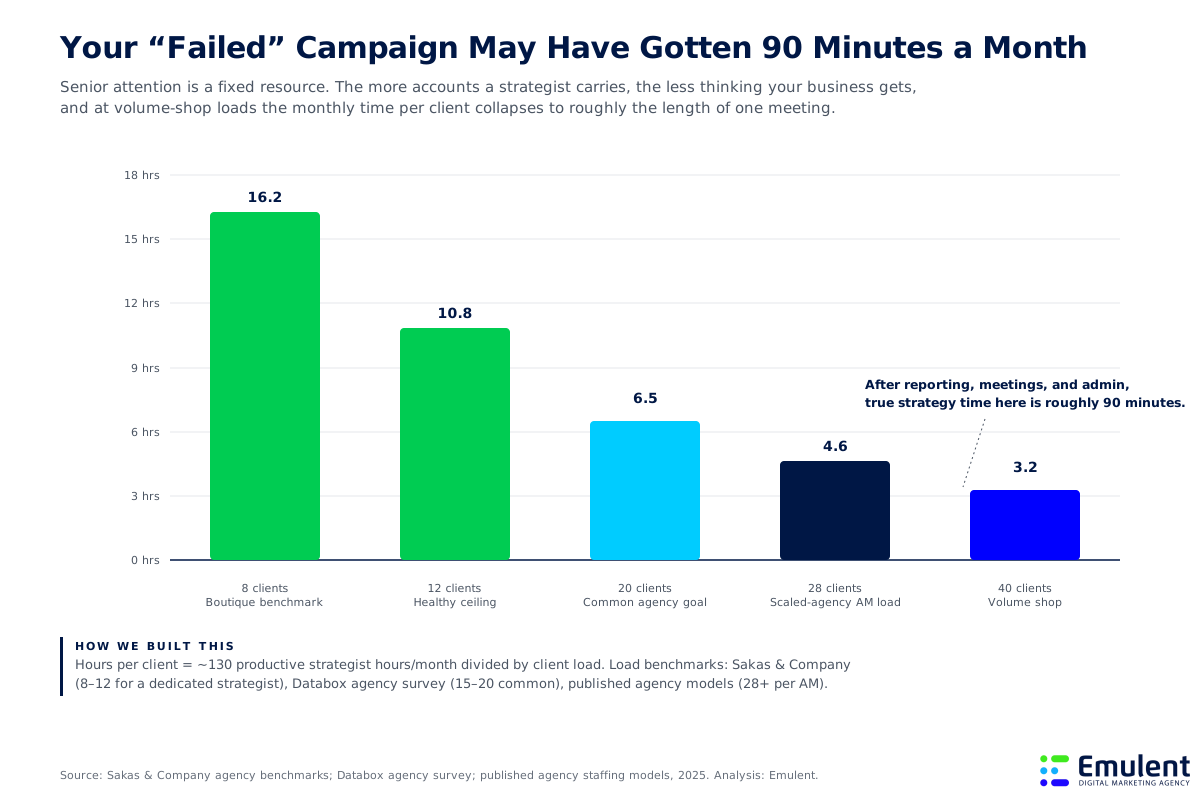
The math is simple. A strategist has roughly 130 productive hours in a month. At 8 clients, each business gets about 16 hours of senior time. At 40 clients, that drops to about 3 hours, and once you subtract report assembly, internal meetings, and your monthly call, the actual strategy work falls to around 90 minutes. Ninety minutes a month cannot compete with a rival whose strategist spends two days a week on their account. The campaign did not fail on its merits; it received far less attention than the competition.
Questions that reveal the attention math before you sign:
- Ask for the ratio directly: “How many accounts does the person doing my strategy carry?” A vague reply is itself a useful answer.
- Ask who attends your calls: If the strategist never joins, you do not really have one.
- Ask what changed last quarter: An account getting real attention has a record of decisions, tests, and changes someone can describe from memory.
Attention shapes the work, and the reports show you where that work was aimed. That is where most failed engagements can be diagnosed.
What Did the Old Reports Measure?
Before you blame the channel, pull the last six monthly reports from the failed engagement and search them for one word: revenue. If it never appears, no one was working toward it, and the result was decided at kickoff. Reporting is not paperwork. It is a record of what the agency treated as the goal.
This problem is not limited to agencies. In Ascend2’s marketing attribution survey, only 28% of marketers said their attribution strategy was very successful, and just 29% were highly confident in its accuracy. Many agencies operate inside that uncertainty. Rankings and impressions are easy to produce and impossible to deposit, which is why they fill the reports of campaigns that go nowhere. Our guide to modern SEO covers what measurement should look like when the program is built around business outcomes.
What a revenue-focused SEO report contains:
- Organic leads or sales: Form fills, calls, and transactions from organic search, with month-over-month change.
- Revenue or pipeline attribution: An honest estimate, with stated assumptions, of what organic produced in dollars.
- Decisions, not just data: What the numbers changed about next month’s plan.
- Losses alongside wins: Keywords and pages that declined, named plainly, with a response.
A report that never mentions money tells you something important. The agency worked toward the metric they could control instead of the outcome you hired them for. – Emulent Strategy Team
Reports also hide a second problem. They can make slow months look like dead months, which pushes businesses to quit at the worst possible time.
Did You Quit Right Before Results Compounded?
The timing question is uncomfortable. In a Semrush practitioner survey, 68% of SEO professionals reported 6 to 12 months as the typical time to ROI. Benchmark data from Backlinko and Ahrefs shows returns of about 5:1 to 10:1 in the first year, growing toward 22:1 by month 24 as content and authority build on each other. The shape of that curve matters more than any single number on it.
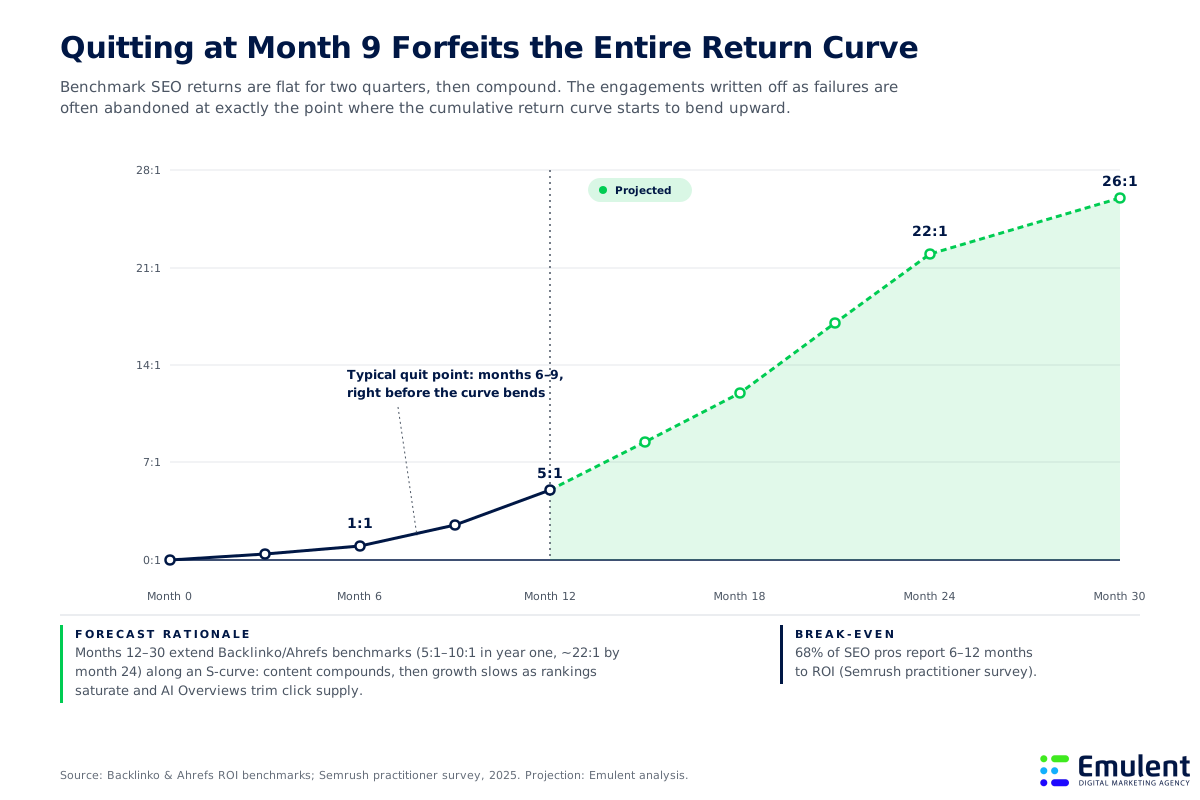
Returns stay nearly flat for two quarters, then rise sharply. Businesses that quit at month 6 to 9 paid for the flat part of the curve and left before the part where returns build. We projected the months past 12 along an S-curve rather than a straight line, because growth speeds up as topical authority compounds and then slows as rankings reach the top of the page and Google AI Overviews reduce the supply of clicks. The compounding is real, and so is the ceiling.
The timeline is never an excuse for silence. Early indicators, including indexed pages, long-tail rankings, and rising qualified impressions, should be visible by month 3 or 4. An agency that asks for blind patience past that point is using the curve as cover instead of climbing it. The way to hold both ideas at once, patience for the curve and no patience for non-performance, is the contract you sign next time.
Was It Actually the Agency?
The honest answer cuts both ways, and good advice includes the parts a client may not want to hear. Some campaigns we have reviewed produced real, qualified demand that the business then lost. If round two starts without fixing these issues, it will end the same way, with a better agency taking the blame.
Business-side causes worth ruling out before you blame SEO:
- Sales follow-up speed: Leads contacted within minutes convert at several times the rate of leads contacted the next day. If forms sat in an inbox overnight, the campaign worked and the process failed.
- Pricing and offer strength: Traffic cannot fix a quote that is 30% above every competitor or a service page that gives visitors no reason to choose you. A clear reason to buy has to exist before search can amplify it.
- Market fit and demand: Some offerings have very little search demand. If 200 people a month search your category in your market, no agency can deliver 500 leads from it.
- Conversion path friction: Broken forms, slow mobile pages, and hard-to-find phone numbers waste the demand SEO produces.
About one engagement in five that we review shows an agency that did its job. The rankings were there, the traffic was qualified, and the leads were lost in a slow inbox. Fixing that costs far less than replacing the agency. – Emulent Strategy Team
Once the business-side causes are ruled out or repaired, the remaining question is how to choose a partner whose incentives keep them performing. The data points to one clear answer.
How Should You Vet Round Two?
The single most useful change for your second attempt is removing the contract that let a failing engagement run for twelve months. Put your next agency on a month-to-month retainer they have to re-earn with every report. The industry’s own churn data shows how strongly structure predicts outcomes.
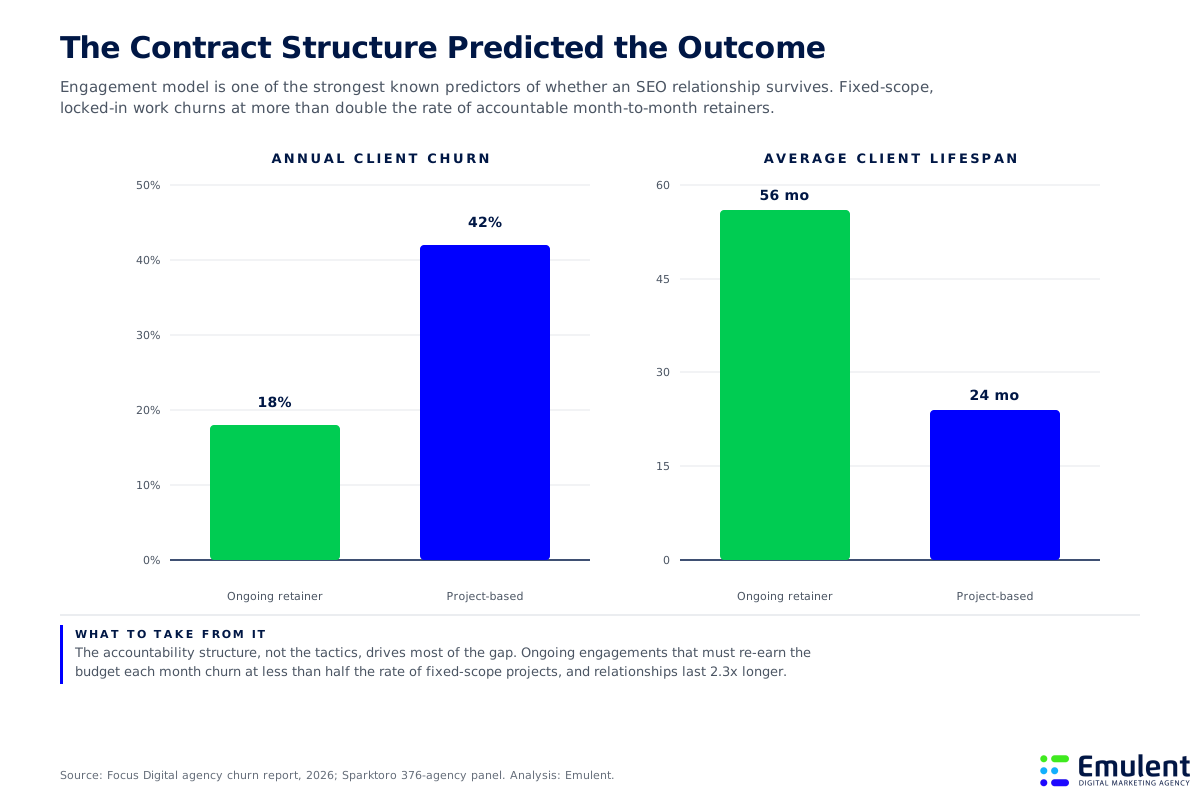
Ongoing retainer relationships have an 18% annual churn rate against 42% for fixed-scope project work, and they last 56 months on average against 24. The accountability cadence drives the difference. An agency that can lose you in 30 days behaves differently than one holding a signed year. If you have an internal marketer who will manage the relationship, our breakdown of how SEO agencies boost ROI for in-house marketers covers how to structure that partnership.
The vetting checklist for your second agency:
- Month-to-month terms after a defined ramp: A 90-day initial commitment is reasonable. A 12-month lock-in says something about their confidence in retention.
- Named senior strategist with a stated client load: Get the ratio in writing and meet the person before signing.
- Revenue-first reporting from month one: Agree on the lead and revenue metrics before kickoff, and reject sample reports built on rankings alone.
- A clear view of where search is heading: Ask how they are adapting to AI-altered results. Their answer should reference current SEO trends, not an outdated playbook.
- References from clients in month 8 or later: Anyone can produce a happy month-two client. Ask for one who has passed the flat part of the curve.
Ready to Make Round Two Different?
The Emulent Marketing Team works the way this article describes: senior strategists with deliberately small client loads, reporting that starts with revenue, and month-to-month terms we have to re-earn. We will also tell you, before you spend a dollar, if the problem in round one was never the agency at all. If you want help with SEO, schedule a no-pressure consultation with the Emulent Team and we will review your old reports with you at no charge.