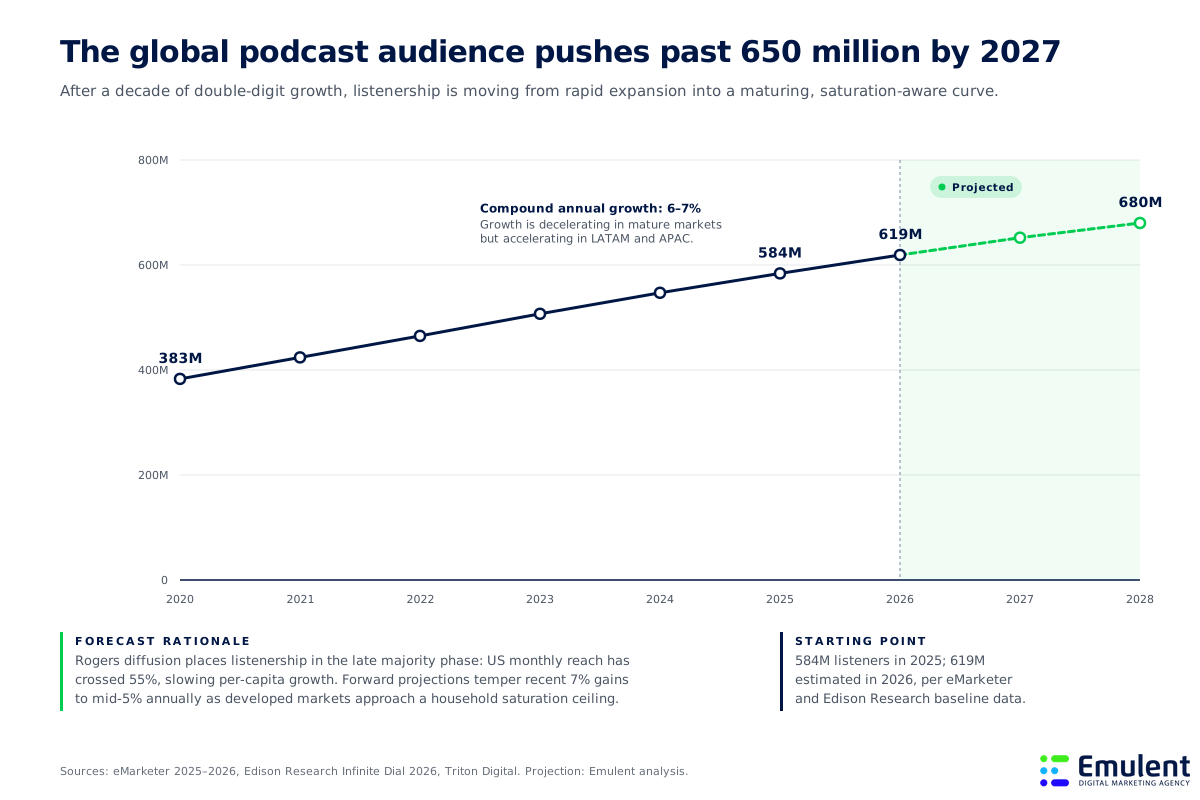
Author: Bill Ross | Published: May 23, 2026 | Updated: May 23, 2026 Key takeaways from this report Global podcast listenership has compounded at roughly 7% per year since 2020, a pace that quietly turned the format from a side channel into a primary attention channel. eMarketer and Edison Research baseline data put the global audience at 584 million listeners in 2025 and 619 million in 2026, with the trajectory bending toward 680 million by 2028. The interesting story is not the topline number; it is the shape of the curve. Mature markets, including the US, are already past Rogers’ late-majority threshold, which is why per-capita growth is decelerating even as absolute counts climb. The runway for the next two years sits in Latin America, Southeast Asia, and parts of Europe where internet-user penetration of podcasts still trails 30%. For marketers in B2B marketing who want measurable expansion, that geographic distribution matters more than headline subscriber counts.
The teams winning the next two years are the ones who stop chasing total reach and start matching show selection to where their buyer actually spends listening minutes. Bigger audience does not mean bigger return if the wrong listener hears you. – Strategy Team at Emulent Marketing
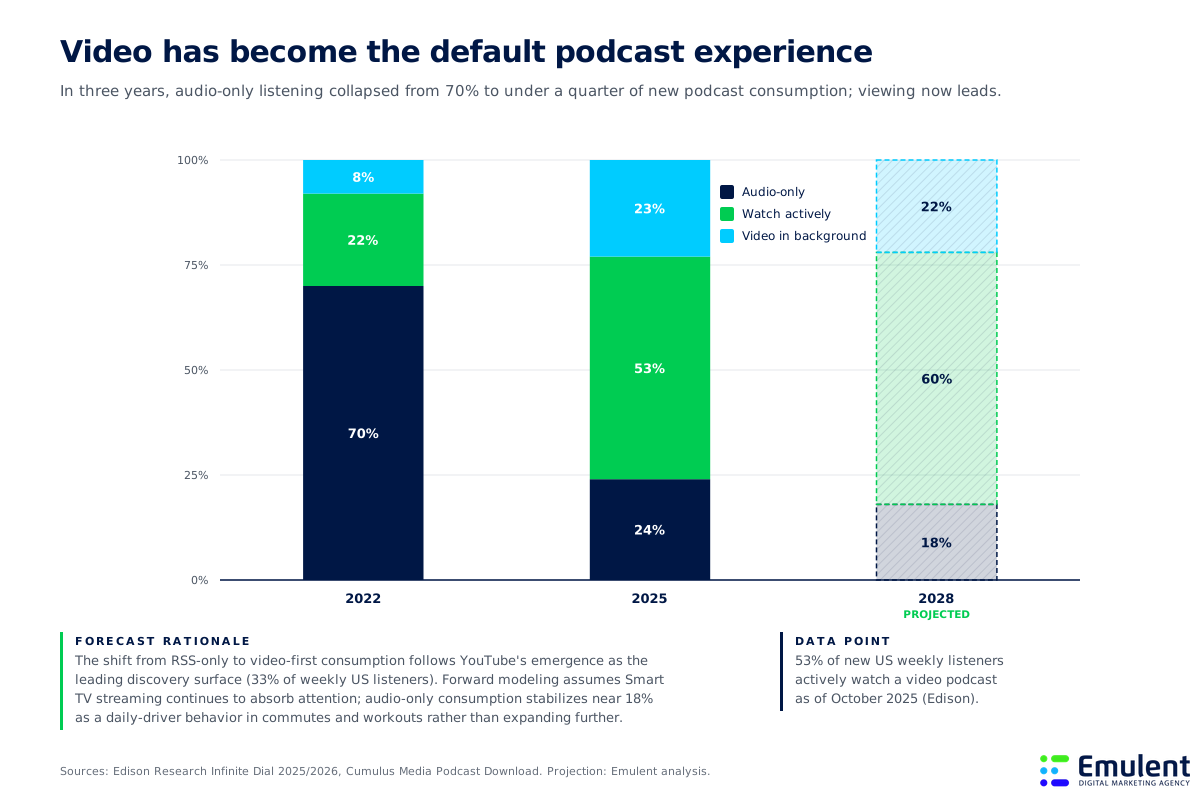
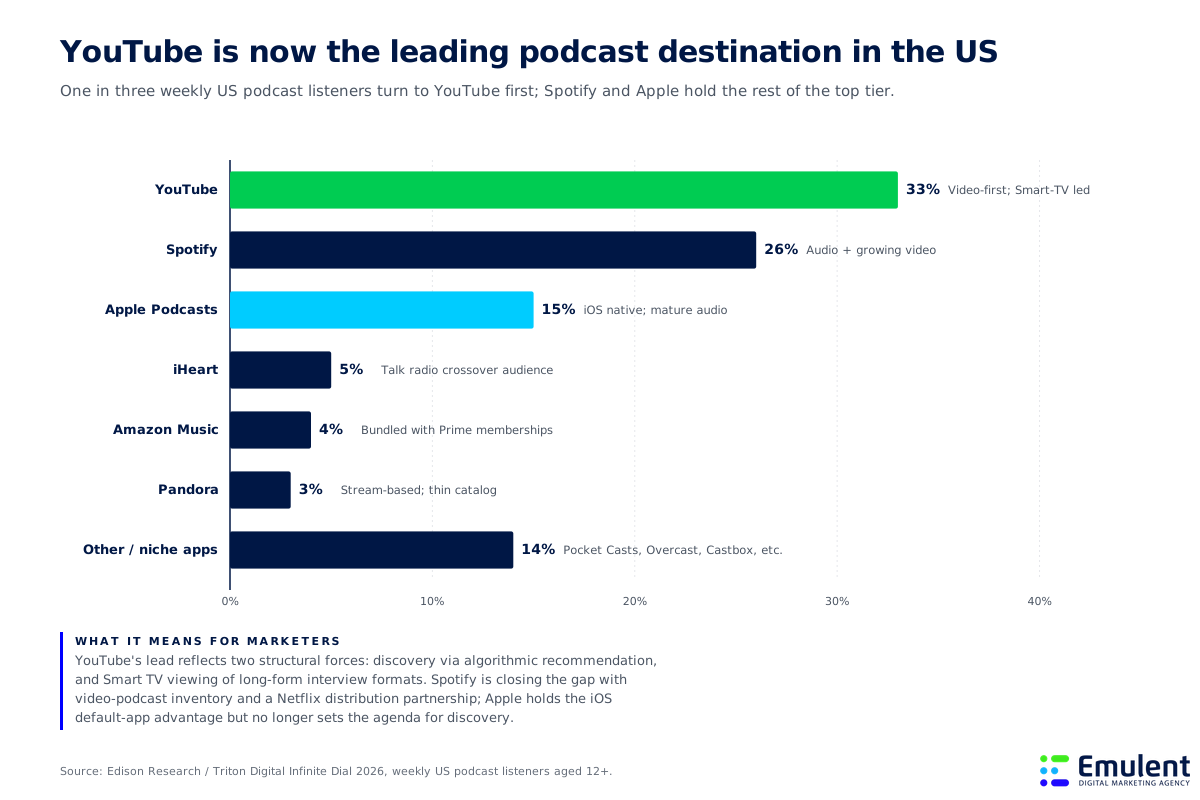
This deceleration in audience growth pairs with a parallel shift in how people consume the content, which is where video takes the stage. Three years ago, audio-only listening accounted for roughly 70% of new podcast consumption among US weekly listeners. By late 2025, that figure had collapsed to 24%. Active video watching now sits at 53%, with another 23% playing video in the background. The pattern is not a fad. It is a structural shift in how listeners discover, sample, and stay with shows. What changed was the surface area. YouTube and Spotify both invested in long-form video, smart TV apps made 45-minute interview shows comfortable on the couch, and short clips on TikTok, Reels, and Shorts became the new top-of-funnel for show discovery. The format is no longer competing with radio for ear time; it is competing with cable news, late-night TV, and YouTube creators for living-room attention. What this shift forces marketers to plan That production shift bleeds into brand video production decisions across the marketing org, because the same studio infrastructure now supports the show, the sales reel, and the recruiting video. Where listeners watch matters as much as how they watch, which is the next question. The platform map shifted faster than most media plans caught up to. Edison Research and Triton Digital’s Infinite Dial 2026 puts YouTube at 33% of weekly US podcast listeners as the most-used service, with Spotify at 26% and Apple Podcasts at 15%. The remaining quarter splits across iHeart, Amazon Music, Pandora, and a long tail of niche audio apps. That YouTube number is the headline, but the more useful signal sits underneath it. YouTube is also the leading discovery surface, which means a meaningful share of “Spotify listeners” and “Apple listeners” first found the show on YouTube. For SEO and content teams, that turns YouTube into a search everywhere optimization problem rather than a social media problem. Titles, descriptions, chapter markers, and thumbnails all act as ranking signals.
If your show is not on YouTube with proper metadata, you are running a podcast strategy that ignores its single largest discovery surface. We see clients regularly recoup three months of audio production cost in a single YouTube clip that finds the right audience. – Strategy Team at Emulent Marketing
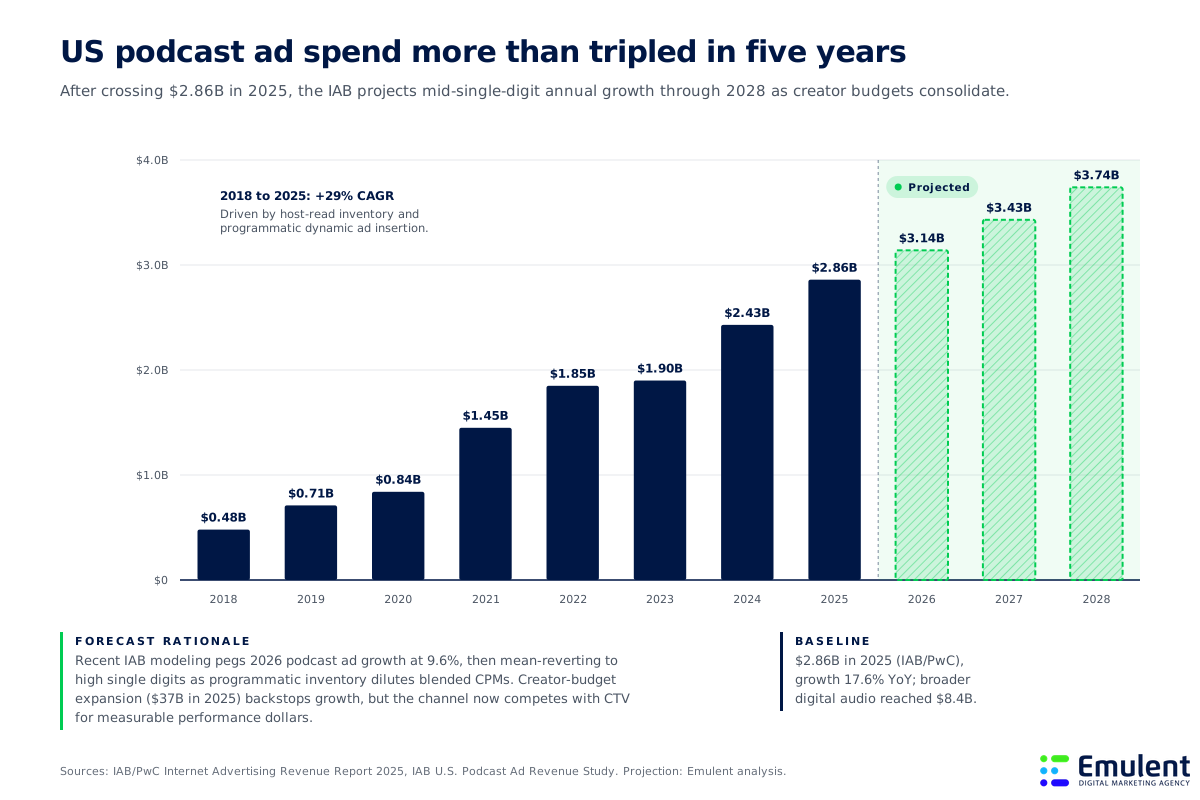
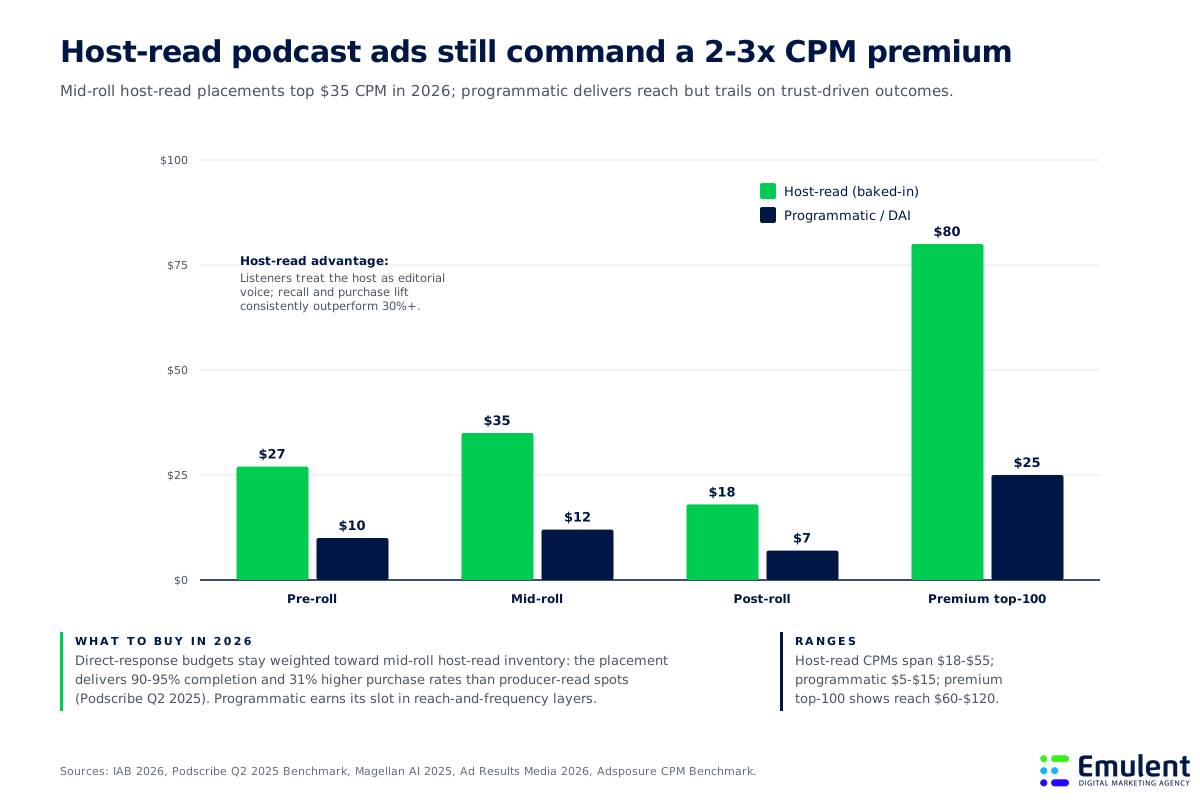
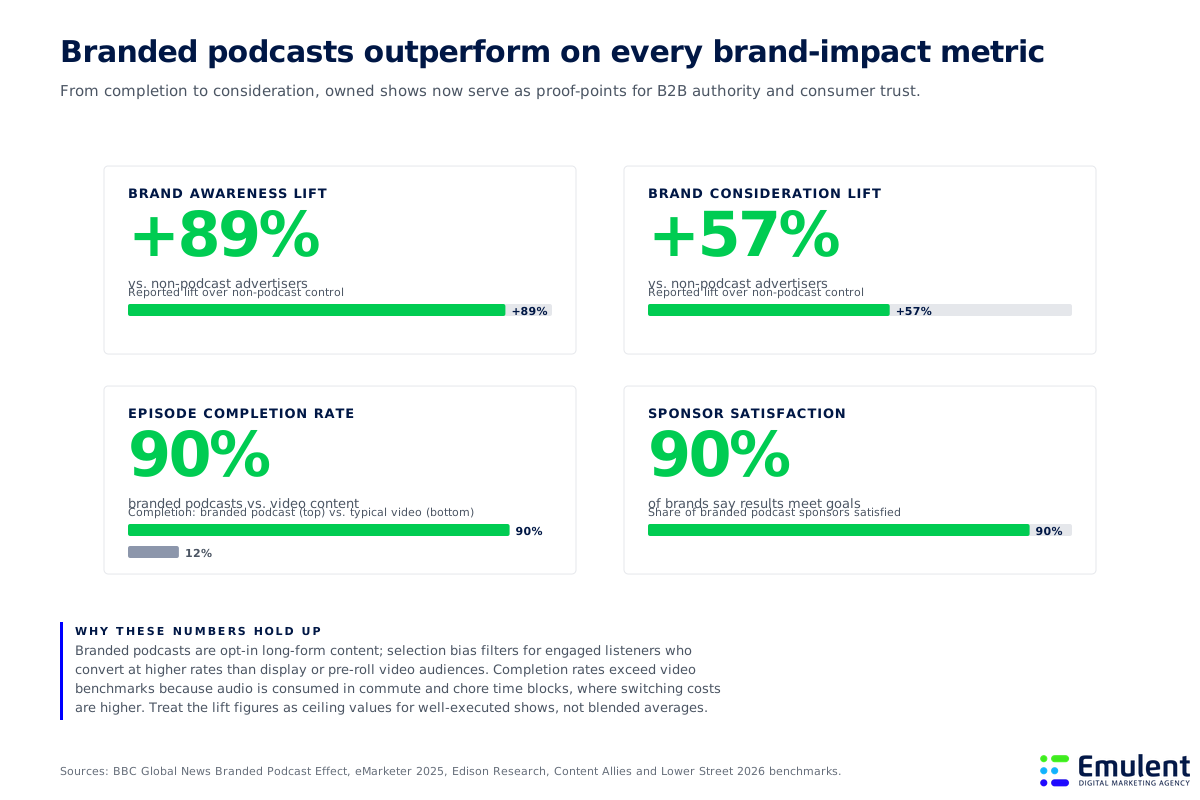
Apple Podcasts still owns the iOS default-app advantage, and Spotify is closing the YouTube gap with video-podcast inventory and a Netflix distribution partnership. Where listeners consume the content directly shapes how marketers pay for access, which is the advertising story. The IAB and PwC put US podcast advertising revenue at $2.86 billion for 2025, a 17.6% gain over 2024. That marks a decade-long run from $105.7 million in 2015. The 2026 forecast calls for 9.6% growth, which pushes the channel through the $3 billion mark for the first time. Our baseline projection settles into high single digits through 2028, reaching roughly $3.74 billion. Two forces pull on that line in opposite directions. On the upside, creator-economy budgets reached $37 billion in 2025 and are tracking toward $44 billion in 2026, and a meaningful share of that money looks for long-form content homes. On the downside, programmatic dynamic ad insertion now serves a larger share of inventory, and blended CPMs trend lower as a result. The net effect is steady but slowing growth, not a hockey stick. Connected TV is the biggest competitive risk. CTV spend grew 25% in 2025, and accountability metrics there have matured faster than in podcasting. Podcast inventory keeps its premium for now because of host-read trust, but that premium has to be earned campaign by campaign, not assumed. If the topline is steady, the more important question becomes how to spend across the format and placement options inside the channel. The 2026 CPM landscape is wider than most planners assume. Programmatic audio sits in the $5 to $15 range. Direct-sold mid-roll spots run $25 to $40. Baked-in host-read on mature shows reaches $35 to $55. Top-100 premium inventory clears $60 to $120. The right buy depends entirely on what the campaign is trying to prove. The host-read premium is not random. Podscribe’s Q2 2025 benchmark report found host-read ads outperform producer-read spots by 31% in purchase rate. Mid-roll placements clear 90-95% completion rates because listeners are committed to the episode by minute 15. Programmatic, by contrast, is cheaper, easier to scale, and built for reach-and-frequency layers rather than direct response. A practical framework for 2026 podcast media buys Buying inventory on someone else’s show is one path. Building the show itself is the other, which raises the branded-podcast question. Branded podcasts have crossed from experiment to standard content investment in B2B and consumer categories alike. Roughly 3,100 active branded shows operate as of 2026, and 90% of companies investing in their own show report they are satisfied with the result. The performance gap against video content benchmarks is wider than most teams expect. Three numbers drive the case. Branded podcasts deliver an 89% brand awareness lift and a 57% brand consideration lift over non-podcast control audiences. They hold 90% episode completion rates versus roughly 12% for typical video content. Selection bias accounts for some of that gap, since people who choose to listen to an hour-long branded conversation are pre-qualified to care about the topic. But selection bias is not a bug; it is the feature B2B marketing teams pay for.
A branded podcast is the rare content investment where the audience self-selects into your authority. We tell clients to think of episodes the way they think about white papers: not many people read them, but the ones who do are sometimes the only ones who matter. – Strategy Team at Emulent Marketing
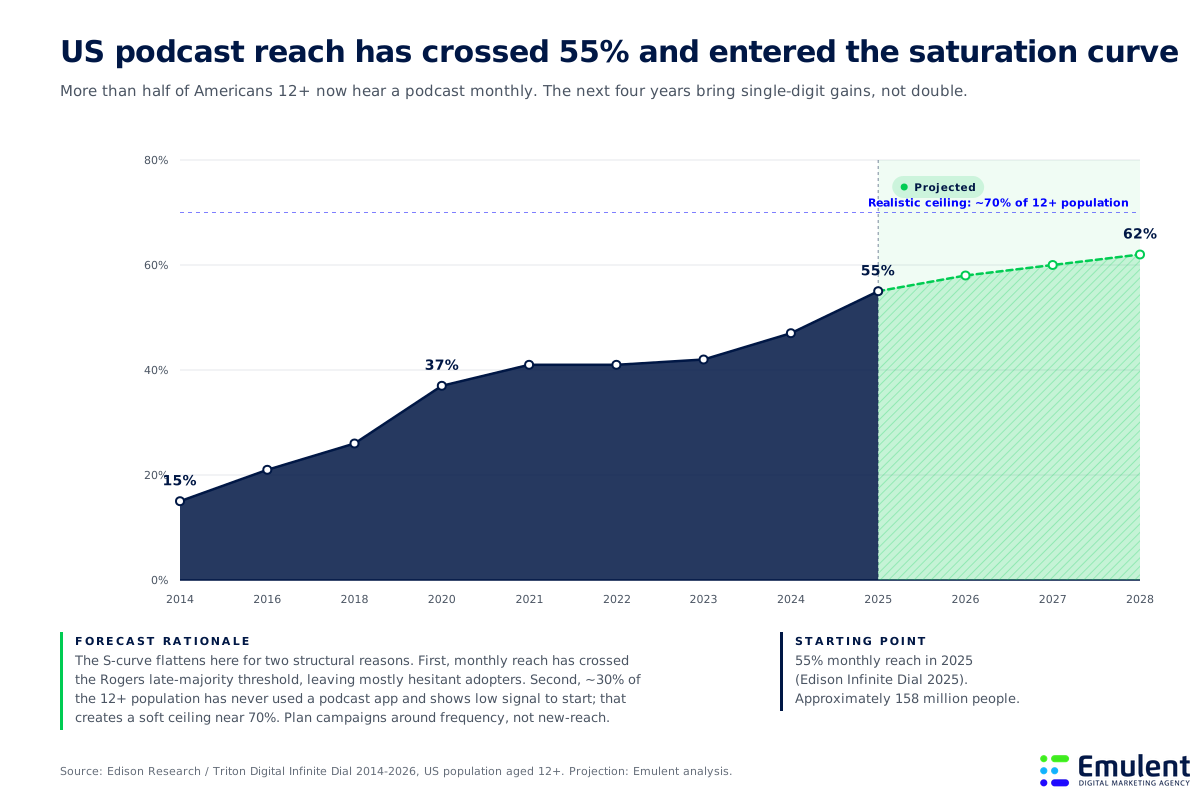
The economic case gets sharper for shows that double as content marketing strategy anchors, where a single 45-minute conversation cascades into blog posts, LinkedIn clips, sales enablement, and YouTube cutdowns. The economics work because one production session feeds eight to twelve content units. That branded-content opportunity only matters if marketers understand where the broader audience curve is heading next, which is the saturation story. Roughly 158 million Americans aged 12 and over listened to a podcast in the past month as of 2025, putting monthly reach at 55% of the 12+ population. That is the highest figure Edison Research has recorded. It also marks the point where the curve transitions from adoption to maturity. Our projection puts 2028 monthly reach at roughly 62%, with a realistic ceiling near 70% before pure non-adopters cap further growth. The implication for media plans is clear: new-reach campaigns lose efficiency every quarter, while frequency-and-loyalty campaigns get easier to justify. Two more practical implications follow. What the saturation curve forces marketers to change The 55% threshold also explains why the platform fight on YouTube and Spotify matters so much. With fewer net-new listeners coming into the format each year, every platform is fighting for share of the same audience rather than welcoming new arrivals. The 2026-2028 podcast window rewards marketers who treat the channel as a planned media discipline rather than a side project. Video production capability, host-read inventory selection, branded show economics, and a saturation-aware reach strategy together replace the “just start a podcast” playbook that worked from 2018 to 2022. The Emulent Marketing Team helps brands build podcast strategies that connect production, distribution, paid amplification, and measurement into one program, so the show contributes to pipeline rather than sitting in its own silo. If you are planning your 2026-2028 podcast marketing investments and want a partner who can help connect the show, the audience, and the business case, contact our digital marketing agency to talk through the program.
Audio and Videeo Podcasting Trends and 2026-2028 Marketing Projections
 Audio and video podcasting moved from emerging channel to standard line item in nearly every B2B and consumer media plan over the past five years. With US monthly reach now past 55%, YouTube sitting on top of discovery, and IAB ad spend pushing past $2.86 billion, the 2026-2028 window calls for a clearer head than the gold-rush headlines of 2020. We put together the numbers, the platform shifts, and the forecasts marketers need to plan the next two years with discipline.
How big is the podcast audience in 2026, and where is it heading?
Why has video become the default podcast format?
Where are weekly listeners actually consuming podcasts?
What does the US podcast ad market look like through 2028?
How should marketers price podcast inventory across formats?
When does a branded podcast outperform a paid ad placement?
What happens to podcast strategy when US monthly reach crosses 55%?
Conclusion