
When a slowdown hits, the marketing budget is usually the first line item an executive team reaches for. It feels safe to cut because the pain shows up later, in lost share and weaker pipeline, long after the quarter closes. The data tells a different story. Brands that hold or grow their marketing presence through a downturn recover faster and take ground from competitors who go quiet. The decision facing most teams right now is not whether to spend, but how to split a flat budget between defensive moves that protect the floor and offensive moves that build the next two years of growth.
Key takeaways from this article:
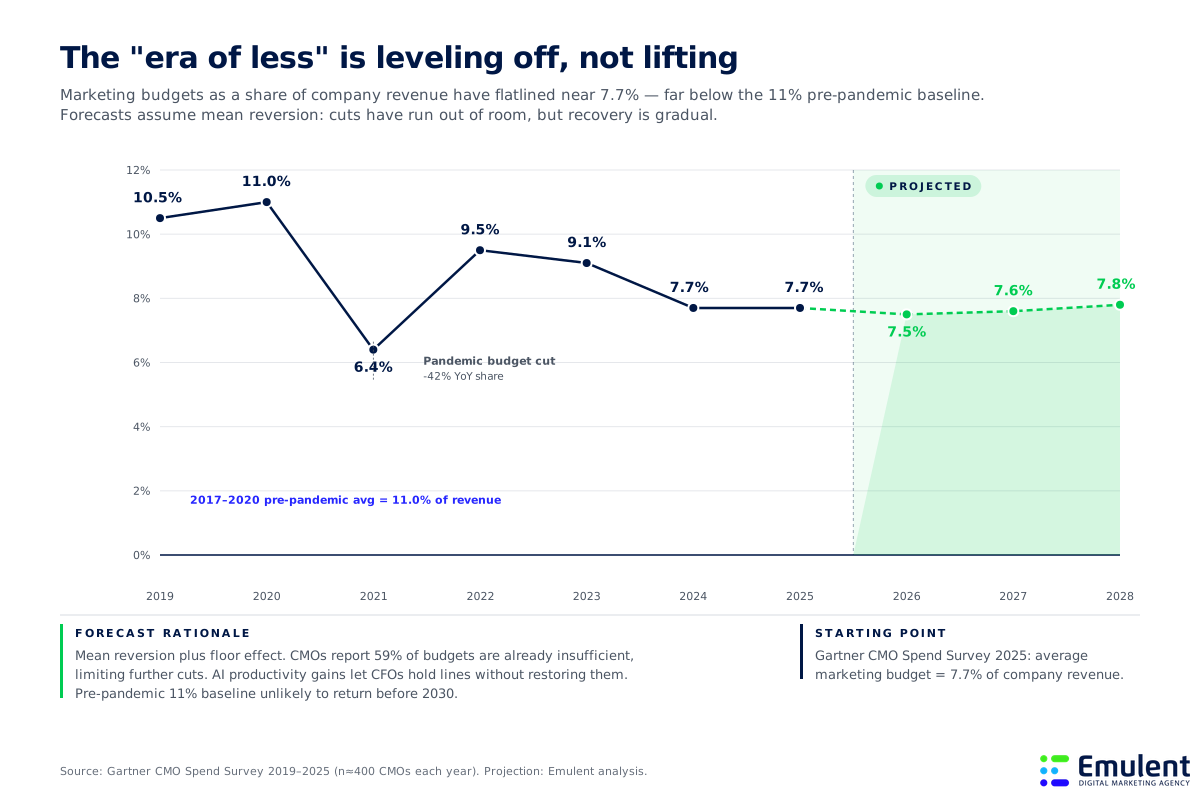
- Budgets have flatlined, not recovered. Marketing spend sits at 7.7% of company revenue, well below the 11% pre-pandemic baseline, and our projections show only a slow climb back.
- History rewards the brands that stay visible. Companies that maintained or increased advertising through the 1981-82 recession grew sales 275% over five years versus 19% for those that cut.
- Where you sit matters. Service-heavy sectors like IT and hospitality slashed budgets in 2025, while manufacturing and pharma raised theirs to capture share.
- The brand-versus-performance mix has tipped too far. Brand investment fell to 31% of the media mix against the 60% effectiveness research recommends.
- Share of voice converts to market share. Brands that increased spend in a downturn gained more than twice the market share of cutters in the recovery that followed.
- AI is reshaping the spend, not shrinking it. Paid media and martech are gaining share while agency and labor budgets absorb the cuts.
Why does cutting marketing in a slowdown feel safe but cost so much?
A marketing budget is one of the few large costs a finance team can reduce without triggering an immediate operational failure. Cut the ad spend and the website still loads, the product still ships, and the lights stay on. That is exactly what makes it dangerous. The cost of the cut arrives on a delay, and by the time it shows up in the numbers, the budget conversation has moved on.
The current backdrop makes the temptation stronger. Marketing budgets have settled at 7.7% of company revenue for two straight years, a level that sits far below where teams operated before the pandemic. The chart below tracks the full arc, including the sharp pandemic-era drop and a forecast that points to stabilization rather than a return to old highs.
What the flatline signals for planners:
- The floor has held, but the ceiling has dropped. Cuts ran out of room because 59% of CMOs already report budgets too thin to execute their strategy, so most teams are working from a constrained base rather than a recovering one.
- Efficiency replaced expansion. AI productivity gains let finance teams hold spending flat without restoring it, which means the pressure to do more with the same dollar is now permanent rather than temporary.
- Pre-pandemic levels are not coming back soon. Our projection puts a return toward 8% out past 2027, so any plan that assumes a budget rebound is planning on a number that is unlikely to appear.
Our strategy team sees the same pattern in client planning cycles every quarter. The teams that thrive treat 7.7% as the real number and build a sharp plan around it, rather than waiting for a budget recovery that the data says is not coming. – Emulent Strategy Team
Working from a flat base changes the question. It is no longer about how much to spend, but about what the spending is supposed to do. That is where the historical record becomes useful, because it shows what happened to companies that faced the same choice in earlier downturns.
What does the historical record say about spending through a downturn?
The most-cited evidence comes from a McGraw-Hill study that tracked 600 business-to-business companies across 16 industries through the 1981-82 recession and the years that followed. The companies that maintained or increased advertising grew sales 275% over the five-year window. The companies that cut or eliminated advertising grew just 19%. The gap is not a rounding difference. It is the difference between a brand that compounded its position and one that stalled.
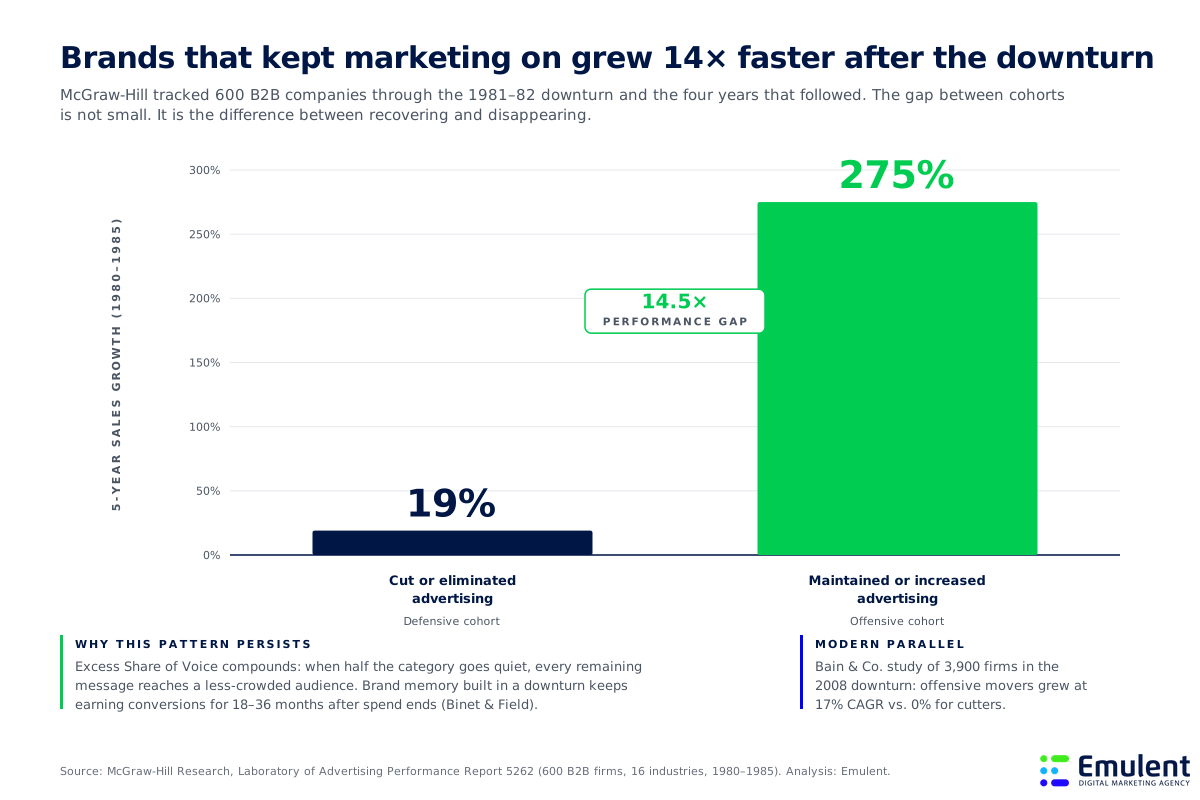
This is not a relic of one recession. The same pattern shows up across decades. Kellogg doubled its advertising budget during the Great Depression while rival Post pulled back, and Kellogg grew profits roughly 30% and became the category leader it remains today. A Bain study of nearly 3,900 companies in the 2008 downturn found offensive movers grew at a 17% compound rate while cutters grew at zero.
Why the advantage compounds rather than fades:
- A quieter category amplifies every message. When competitors go dark, the brands still talking reach a less crowded audience, so each dollar of reach lands harder than it would in a normal market.
- Brand memory keeps working after the spend stops. The mental availability built during a downturn keeps generating consideration for 18 to 36 months, which means the payoff outlasts the campaign that created it.
- Recovery starts from a stronger position. Brands that held their presence enter the rebound with awareness already in place, so they capture returning demand instead of paying to rebuild from scratch.
The catch is that this evidence describes averages, and averages hide which industries actually followed the playbook. The 2025 data shows a sharp split between sectors that retreated and sectors that pressed forward.
Which industries cut and which leaned in during 2025?
The slowdown did not land evenly. Some sectors made deep cuts to marketing as a share of revenue, while others raised their commitment. The pattern is not random. It tracks how reversible the spending feels and how long the sales cycle runs.
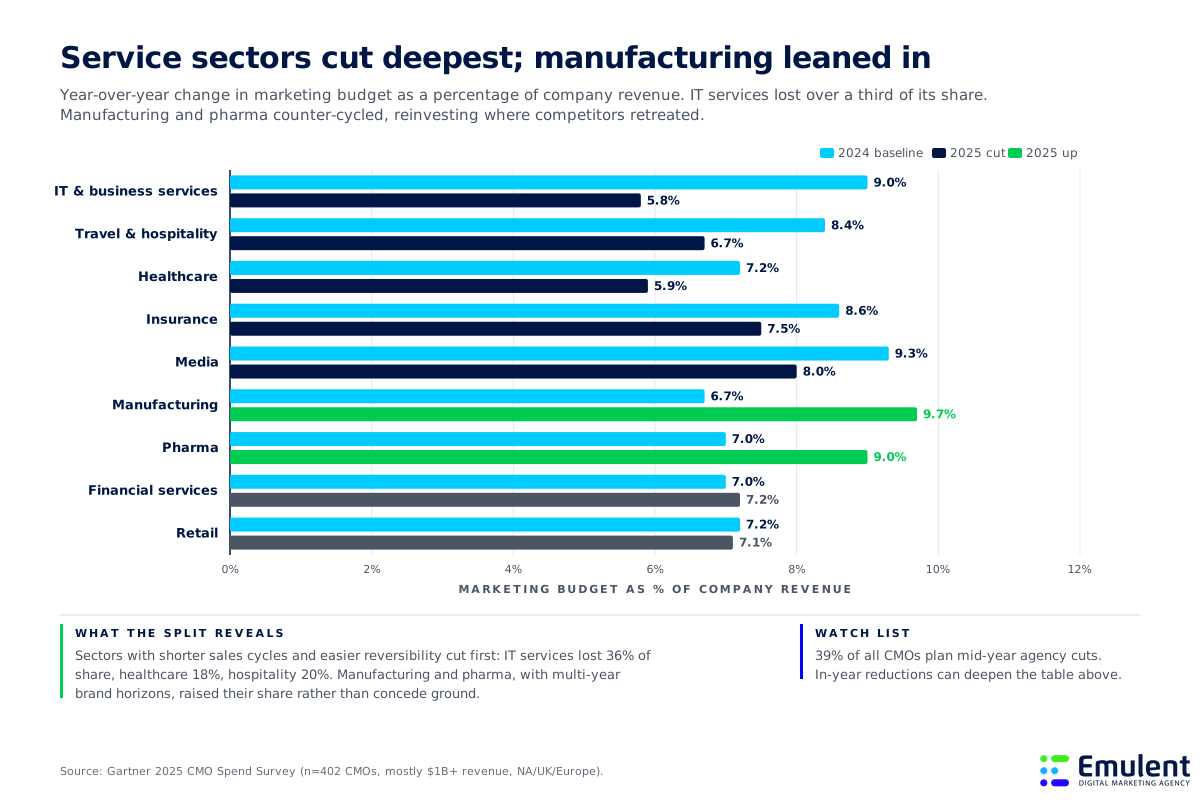
IT and business services took the steepest cut, dropping from 9.0% of revenue to 5.8%, a loss of more than a third of its marketing share. Travel and hospitality fell from 8.4% to 6.7%, and healthcare from 7.2% to 5.9%. These are sectors where leaders could pull back quickly and assume they would rebuild later. Manufacturing moved the opposite way, climbing from 6.7% to 9.7%, with pharma close behind at 9.0%. Both operate on multi-year brand horizons where going quiet carries a visible cost.
What separates the cutters from the investors:
- Sales-cycle length shapes the instinct. Short-cycle sectors cut first because the lost demand seems recoverable, while long-cycle sectors protect spend because a gap in visibility today shows up as a pipeline hole many quarters out.
- Reversibility invites the cut. Channels that can be switched off and back on, like performance media, get trimmed first, which is why service businesses that lean on them feel safe reducing budget.
- Counter-cycling is a deliberate share grab. Manufacturing and pharma raised budgets specifically because competitors retreated, turning a slowdown into an opening to take ground that is expensive to win in a normal market.
The industry split is the clearest signal in the 2025 data. The sectors raising budgets are not braver, they are simply measuring the cost of silence over a longer window. Any business with a sales cycle longer than a quarter should be reading the manufacturing column, not the IT column. – Emulent Strategy Team
One more thing to watch sits underneath these numbers. With 39% of CMOs planning mid-year agency cuts, the gaps shown here could widen before the year ends. That pressure connects to a deeper imbalance in how budgets get split between long-term brand work and short-term performance.
Has the budget tilted too far toward performance?
Decades of effectiveness research from Les Binet and Peter Field, built on nearly a thousand case studies in the IPA Databank, point to a split of roughly 60% brand building and 40% sales activation as the mix that maximizes long-term profit. Brand work builds the memory structures that make future demand cheaper to capture. Activation harvests demand that already exists. Both matter, but they work on different clocks.
The market has drifted hard in the wrong direction. The brand share of the media mix fell from around 50% in 2019 to roughly 31% by 2024, leaving a wide gap below the recommended level. Slowdowns make this worse, because activation produces a number you can show a finance team this quarter while brand investment pays off on a delay.
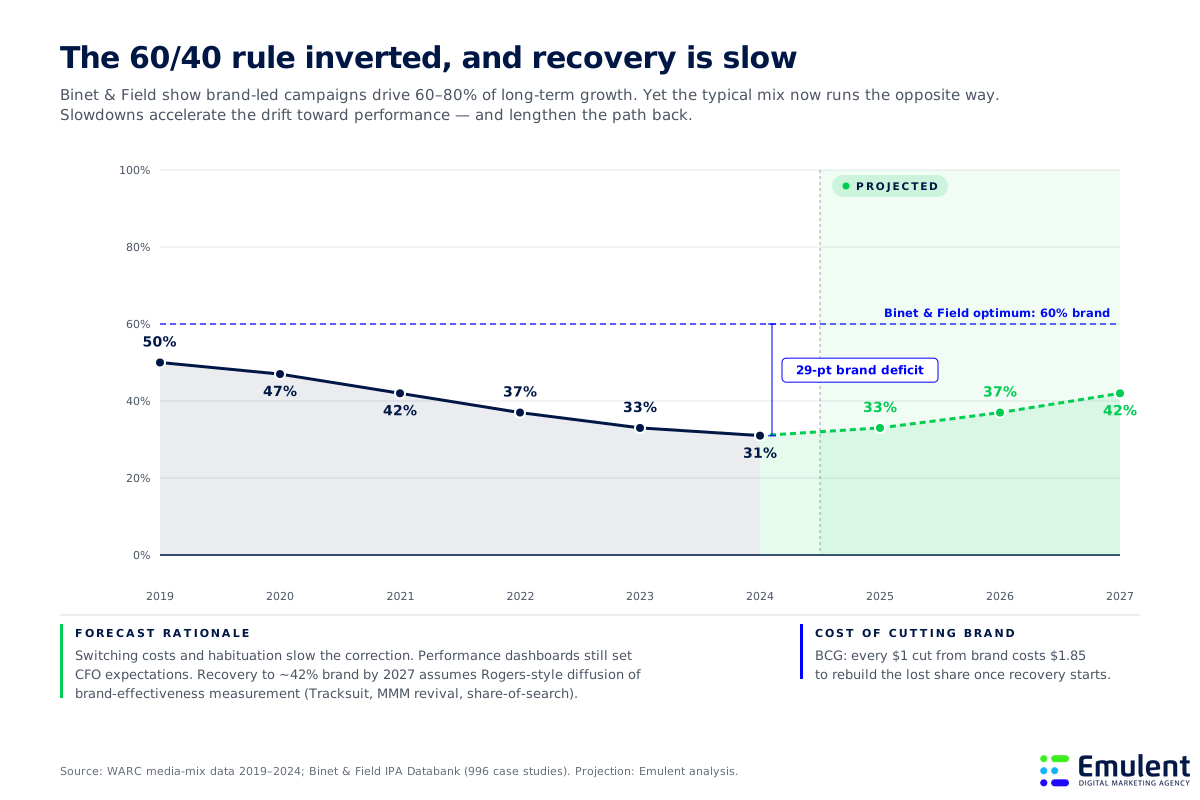
The recovery in our forecast is slow on purpose. Switching costs and habituation hold teams in place, and performance dashboards still set the expectations that finance leaders carry into budget meetings. Pulling the mix back toward balance is a gradual process that depends on better brand measurement reaching more teams.
What an over-tilt toward performance actually costs:
- Activation gets less efficient over time. Without brand investment feeding it, performance media has to work harder for each conversion, so the channel that looked cheapest slowly becomes the most expensive.
- The rebuild costs more than the saving. BCG found that every dollar cut from brand costs $1.85 to rebuild the lost share once recovery starts, which turns a short-term saving into a long-term loss.
- Pricing power erodes quietly. A brand that stops investing in awareness loses the ability to command a premium, and that erosion does not show up in a dashboard until customers start treating the category as a commodity.
If brand investment is the lever most teams have underused, the obvious question is what it actually buys. The clearest answer comes from the relationship between share of voice and market share.
How does share of voice convert into market share?
The link between how loud a brand is and how much of the market it holds is one of the most durable findings in marketing. When a brand’s share of voice runs ahead of its market share, it tends to grow. When it falls behind, it tends to decline. A downturn is the cheapest moment to build that excess share of voice, because competitors pulling back lower the cost of being heard.
The PIMS database, drawn from more than 4,000 brands, puts numbers on the payoff. The chart below shows the cumulative market share gained in the recovery, sorted by what each brand did with its budget during the downturn, with the later years projected using a standard decay model.
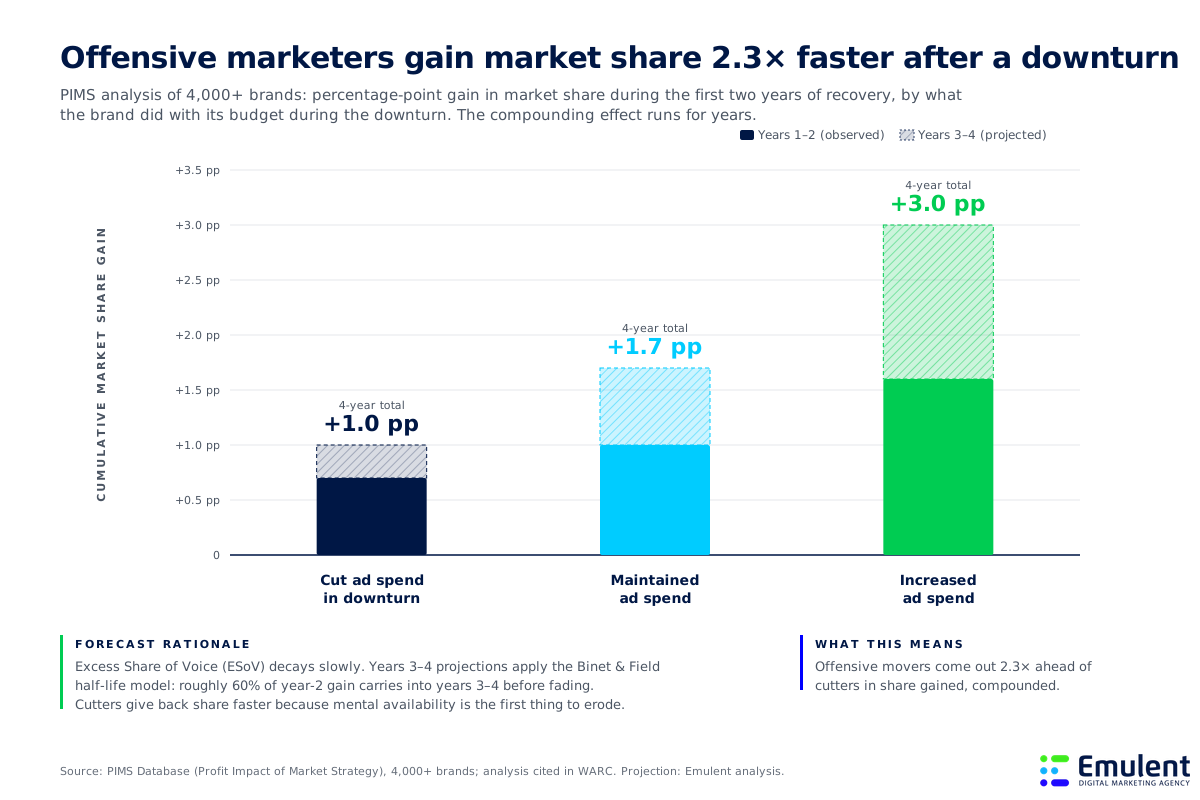
Brands that increased spend during the downturn gained 1.6 percentage points of market share in the first two years of recovery, against 1.0 point for those that maintained and 0.7 for those that cut. Projected forward, the offensive movers come out roughly three times ahead of the cutters once the gains compound. The advantage is not a one-time spike. It is a position that keeps generating returns.
Why the gap keeps widening after the recession ends:
- Excess share of voice decays slowly. The visibility advantage built in a downturn carries roughly 60% of its peak effect into the following years, so a brand that pushed hard keeps benefiting long after the spending normalizes.
- Mental availability erodes first for cutters. The brands that went quiet lose their place in the customer’s consideration set faster than they expect, which is why their share gains fade rather than hold.
- Recovery rewards the brand already in the room. When demand returns, customers reach for the names they remember, and those names belong to the brands that refused to disappear.
Knowing that share of voice pays off does not settle the practical question, which is where a flat budget should actually go. The 2025 allocation data shows how the smartest teams are answering it.
Where should a flat budget actually go in 2026?
A flat budget forces hard choices about composition. The 2025 data shows CMOs concentrating spend on channels they can measure quickly and redirecting money away from categories that AI now handles more cheaply. Paid media holds the largest share at 30.6%, with martech and internal labor tied at 22% and agencies close behind at 21%.
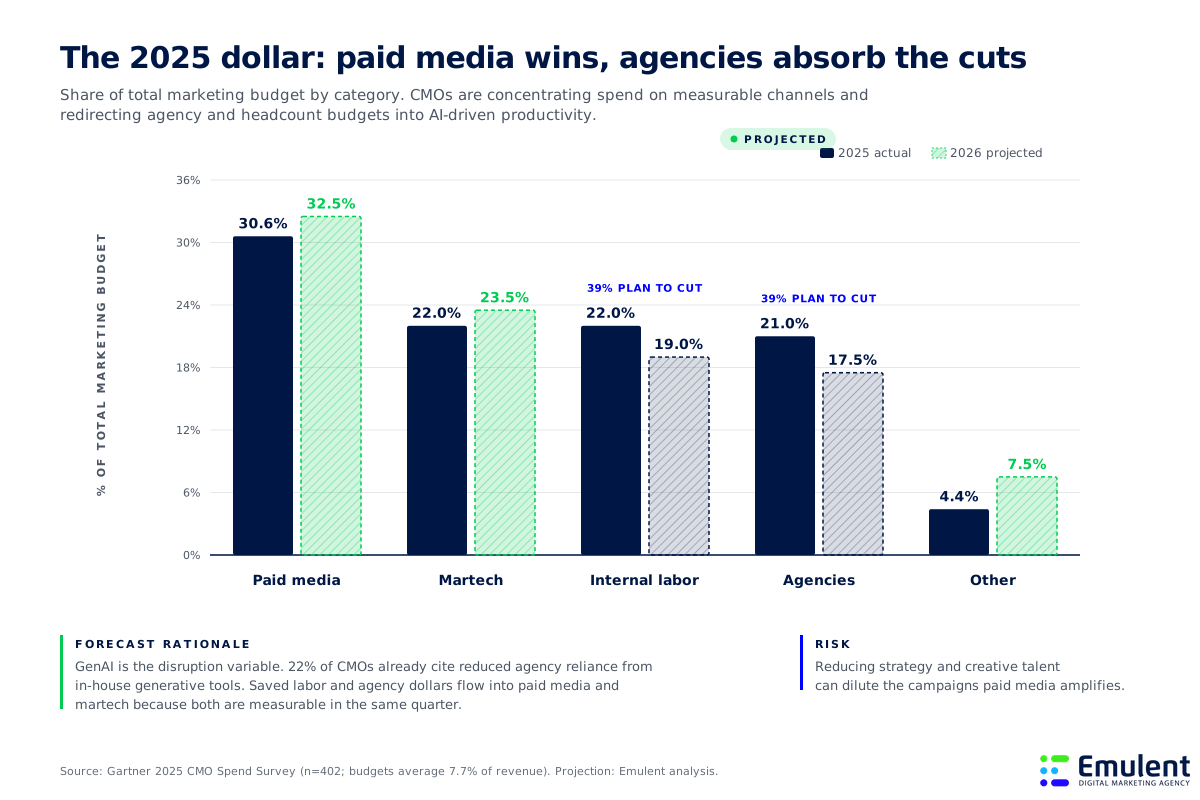
The projected shift for 2026 tells the real story. Paid media and martech are set to grow their share, while agencies and internal labor absorb the cuts. With 39% of CMOs planning to reduce both agency and labor budgets, and 22% citing reduced agency reliance because of in-house generative tools, the dollars saved are flowing toward channels that report results inside the same quarter.
How to allocate a flat budget without starving growth:
- Protect a brand floor inside the performance tilt. Cutting all brand work to fund activation feels efficient but quietly raises the cost of every future conversion, so carve out a defensible brand share even when the pressure runs the other way.
- Use AI to extend reach, not just to trim cost. The teams winning with generative tools are redeploying the savings into more reach and faster testing, while the teams that simply pocket the savings end up with a smaller, weaker program.
- Guard the strategy and creative talent that makes media work. Paid media amplifies whatever message it carries, so reducing the people who craft that message dilutes the spend that depends on it.
The 2026 allocation is not a story about doing less. It is a story about redeploying. The risk we watch for is teams cutting the strategic talent that makes their paid media worth running, then wondering why the channel stopped performing. – Emulent Strategy Team
The composition of the budget connects every theme in this article. A flat base, a performance tilt, an industry split, and the share-of-voice payoff all point to the same conclusion. The slowdown is not the moment to disappear. It is the moment to spend with more discipline than the competitors who are pulling back.
How Emulent helps you spend through a slowdown
Marketing through a slowdown is a balancing act between protecting what you have and investing in what comes next. The brands that get the balance right do not spend the most. They spend with the clearest sense of what each dollar is supposed to do, and they hold their nerve while competitors retreat. Our team builds that plan with you, grounding budget decisions in the same data and effectiveness research that runs through this article rather than guesswork or gut feel.
If you want help building a marketing budget that defends your position and takes ground while the market is quiet, contact the Emulent team for a no-pressure conversation about where your spend should go next.