
Pest control marketing has quietly become one of the most competitive corners of home services. The U.S. structural pest control industry crossed $13.4 billion in 2025, national consolidators are growing nearly twice as fast as the market, and the price of a single lead can swing from $25 to $80 depending on the channel. We studied the numbers behind the fastest-growing operators and found a repeatable pattern: they sell recurring plans, they build pest-specific pages that match local search intent, and they buy leads where the math works. Here is what the data shows and how to apply it to your own pest control marketing program.
Key takeaways from this growth study:
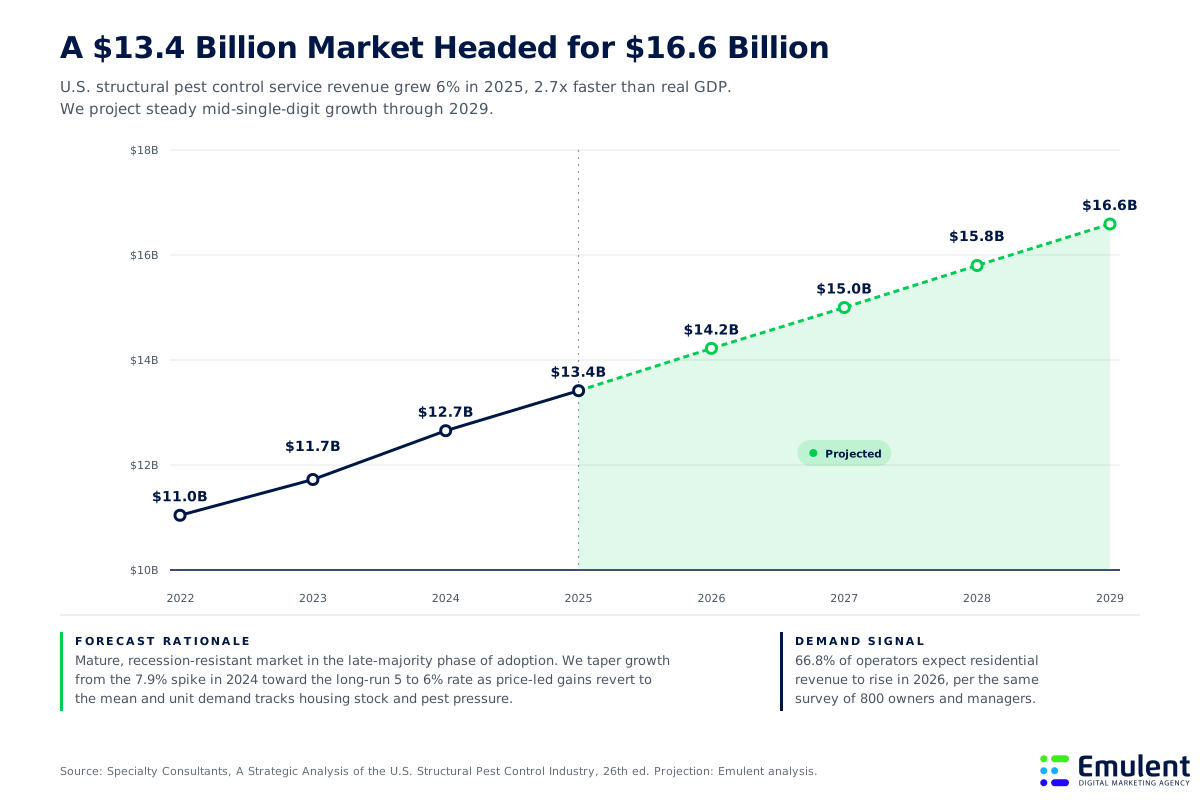
- The market is compounding: U.S. pest control service revenue grew 6% in 2025 to $13.4 billion, and we project roughly $16.6 billion by 2029.
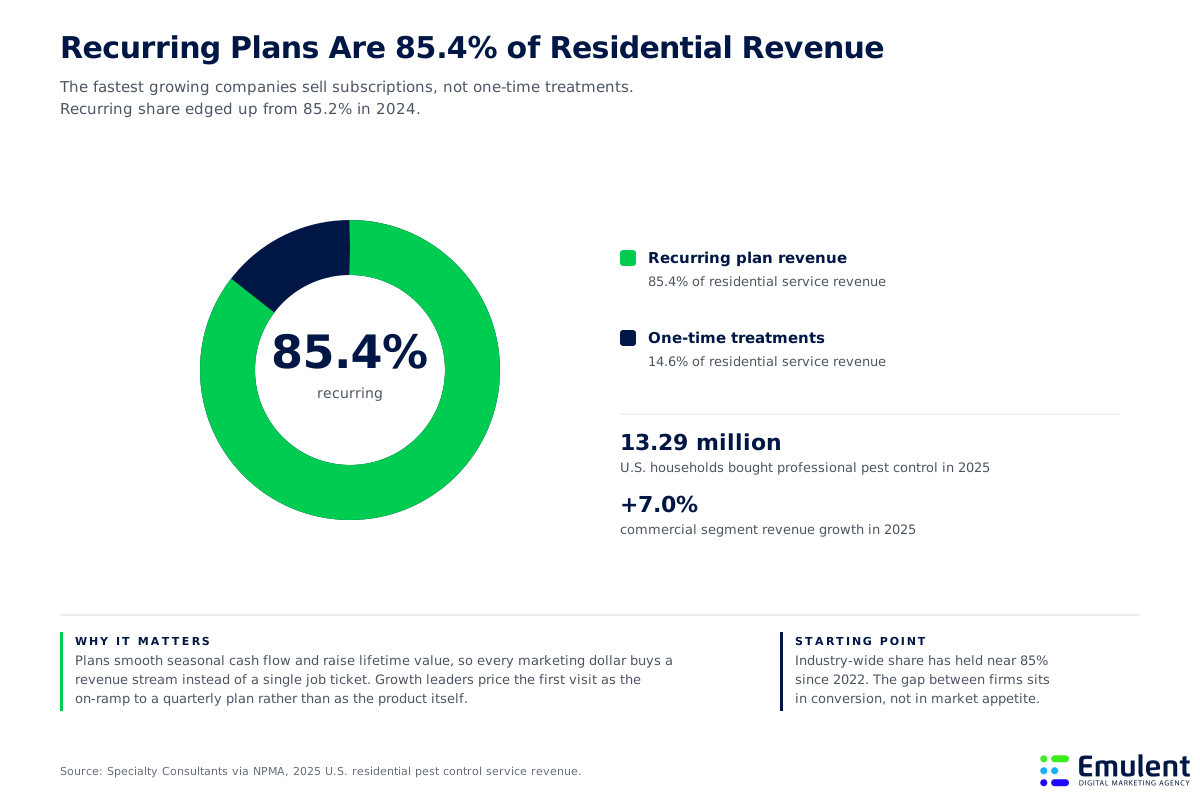
- Subscriptions dominate: recurring plans account for 85.4% of residential service revenue, so growth comes from converting one-time jobs into plans.
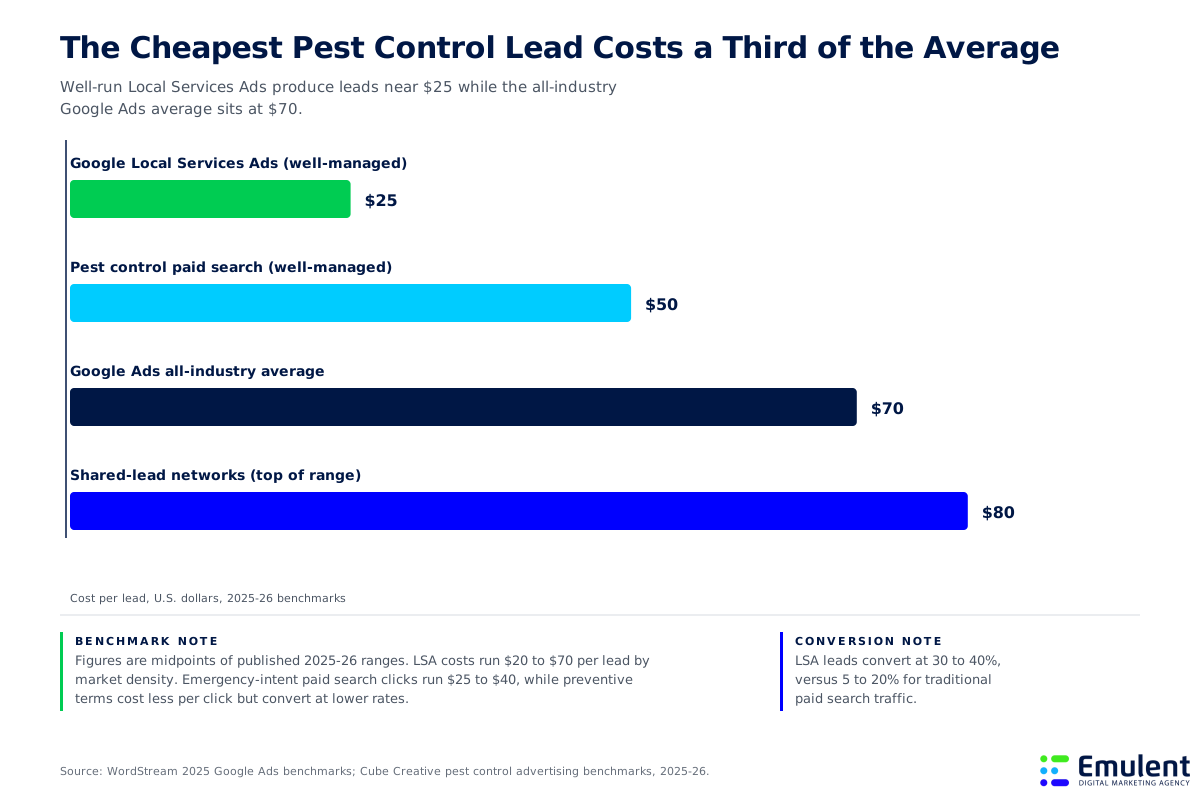
- Lead costs vary by a factor of three: well-managed Local Services Ads produce leads near $25 while shared-lead networks reach $80.
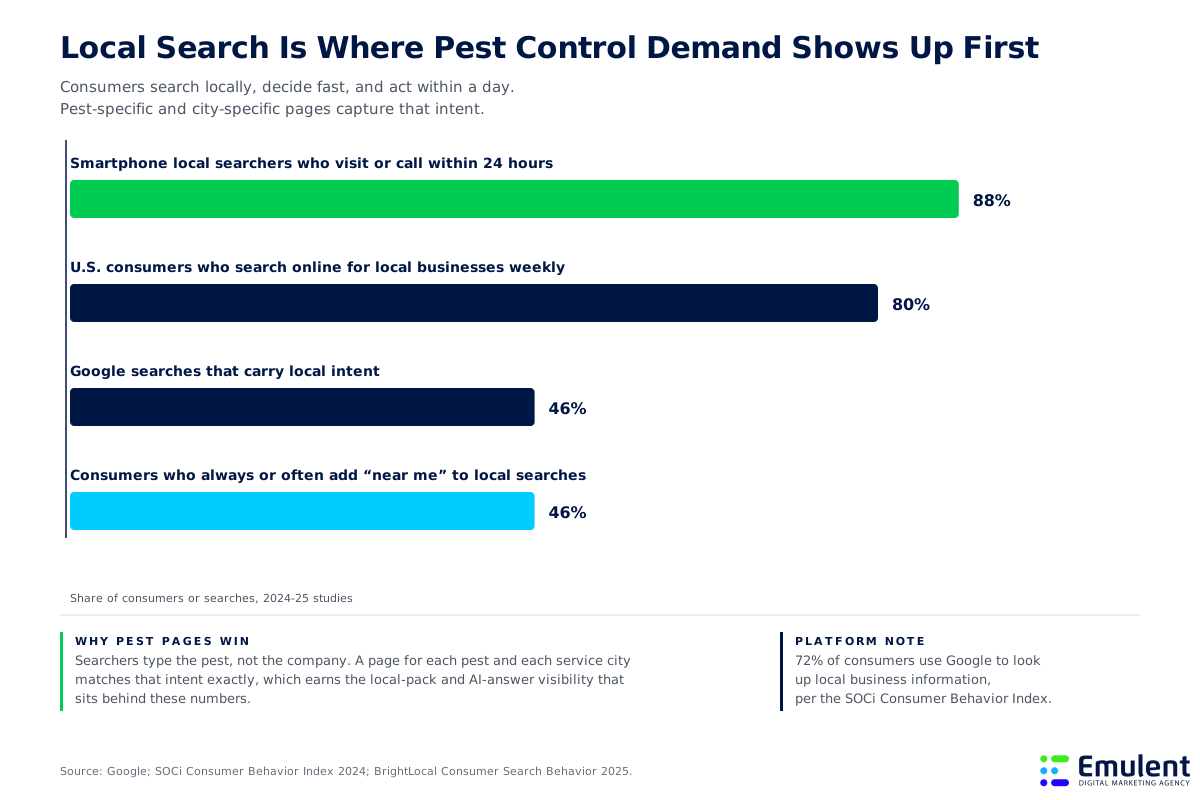
- Local intent is the demand pool: 46% of Google searches carry local intent, and 88% of smartphone local searchers act within a day.
- National brands are taking share: Rollins grew 11% in 2025 against 6% industry growth, which raises the bar for local visibility.
- Speed converts: leads contacted within five minutes convert at far higher rates, so your response process matters as much as your media spend.
How Fast Is the Pest Control Market Growing, and Who Is Capturing the Gains?
The U.S. structural pest control industry generated $13.416 billion in service revenue in 2025, a 6% increase over 2024 and more than 2.7 times the pace of real GDP. That follows gains of 6.2% in 2023 and 7.9% in 2024, a run that makes pest control one of the steadiest growth categories in home services. Demand is structural: warmer seasons extend pest pressure, housing stock keeps aging, and two-thirds of operators expect residential revenue to rise again in 2026.
We project the market will reach roughly $16.6 billion by 2029. Our model tapers growth from the 2024 spike back toward the long-run 5 to 6% rate, because much of the recent acceleration came from price increases rather than new units, and price-led growth reverts to the mean as customers shop their renewals. This is a mature, late-majority market, so the forecast follows housing stock and pest pressure rather than an adoption curve that is still climbing.
What this growth pattern means for operators:
- Rising demand is not evenly distributed: 16,565 firms compete for it, and 81.4% operate from only one or two locations, so visibility decides who captures the increase.
- Pricing power has limits: the next phase of growth comes from winning new households and keeping them, which favors operators with strong acquisition systems.
- Stability attracts capital: private equity and consolidators keep buying into the category, which keeps marketing pressure high even in smaller metros.
A growing market only rewards the companies positioned to absorb it, and the operators absorbing the most share what we call the subscription trade.
Why Does Recurring Revenue Decide Which Pest Control Companies Grow Fastest?
Recurring plans now account for 85.4% of U.S. residential pest control service revenue, up from 85.2% in 2024. Nearly 13.29 million households bought professional service in 2025, and the overwhelming majority pay on a quarterly or monthly schedule. The industry-wide share has held near 85% since 2022, which tells us the market’s appetite for plans is already proven. The gap between fast growers and everyone else sits in conversion: who turns a one-time ant call into a year-round contract.
Fast growers treat the first treatment as an on-ramp rather than a product. The one-time job recovers the cost of acquiring the customer, and the plan delivers the profit. A $150 ant treatment that becomes a $45-per-month plan turns a $25 lead into a customer worth more than $500 a year, which changes how much you can afford to spend on marketing. Operators stuck in one-time work face the opposite math: every season starts from zero, and every lead has to pay for itself on a single ticket.
“The fastest growing pest control companies we work with do not run better ads than their competitors. They run the same ads against better unit economics, because a plan-first sales process lets them outbid everyone else for the same customer.” – Emulent Strategy TeamHow growth leaders structure the subscription trade:
- Price the first visit as a discount with a commitment: a reduced initial treatment paired with a 12-month plan converts better than a full-price single job followed by an upsell call.
- Build plan tiers around pest seasons: quarterly general pest, plus add-ons for mosquitoes, termites, and rodents, give technicians a natural reason to expand each account.
- Make cancellation a save opportunity: a retention offer at cancellation costs far less than replacing the customer through paid channels.
Plans only compound when new customers keep entering the funnel, which brings us to where those customers actually come from and what each one costs.
Which Channels Produce Pest Control Leads at the Lowest Cost?
Lead economics in pest control split sharply by channel. A well-managed Google Local Services Ads account produces leads in the $20 to $30 range, while pest control paid search runs $40 to $60 per lead, the all-industry Google Ads average sits at $70, and shared-lead networks charge up to $80 for a contact your competitors also receive. The spread matters because the channels also convert differently: LSA leads close at 30 to 40%, against 5 to 20% for traditional paid search traffic.
The mistake we see most often is treating these channels as substitutes when they serve different jobs. LSA captures emergency, bottom-funnel demand at the lowest cost, but it only covers a slice of the queries people actually type. Paid search reaches high-value intent that LSA misses, like termite inspections and commercial contracts. Organic search is slower to build, yet it is the only channel where your cost per lead falls as volume grows, and it protects you when auction prices climb in peak season.
How to assign each channel a role in your budget:
- Local Services Ads carry residential emergencies: keep response time under 15 minutes and review velocity high, because both now drive LSA ranking more than bid amounts.
- Paid search defends high-ticket services: reserve it for termite, bed bug, and commercial terms where job value supports a $40 to $60 lead.
- Organic content compounds: shift budget share toward search as you grow, since rankings earned this year keep producing leads next year at no added media cost.
“Paid channels rent attention by the click. The operators who pull away from their market pair that rented attention with pages they own, so every season of ad spend leaves behind a stronger organic asset.” – Emulent Strategy Team
Owning those pages starts with understanding how people actually search for pest help, and the data on local search behavior points to a specific page architecture.
How Do Pest-Specific Pages Turn Local Searches Into Booked Jobs?
Nobody searches for a pest control company by name when they find a wasp nest. They search for the pest and the place: “wasp removal,” “termite inspection cost,” “exterminator near me.” The behavioral data explains why this matters so much. About 46% of Google searches carry local intent, 80% of U.S. consumers look online for local businesses weekly, and 88% of smartphone local searchers visit or call a business within 24 hours. Demand shows up as a pest-plus-location query, decides fast, and acts the same day.
The fastest growing operators answer that behavior with a page for every pest and every service city. A dedicated cockroach page for each city you serve will outrank a single generic services page for nearly every pest query in that market, because it matches the search word for word, earns links and reviews tied to that topic, and gives Google a clear answer to surface. Our local SEO services work in home services keeps proving the same point: specificity wins the local pack, and the local pack wins the call.
The same architecture now feeds AI-generated answers. Google AI Overviews and assistants like ChatGPT pull from pages that answer one question thoroughly, so a page about carpenter ant treatment in your city is far more likely to be cited than a homepage that mentions twenty services in passing.
What a winning pest page architecture includes:
- One page per pest, per city: cover identification signs, treatment approach, pricing context, and plan options so the page satisfies the full query.
- Proof attached to the topic: reviews, photos, and case examples that mention the specific pest strengthen relevance signals more than generic testimonials.
- A consistent local foundation: an accurate Google Business Profile, matching name and address data, and steady review flow; our 20-point local SEO checklist covers the full sequence.
“Pest-specific pages are the closest thing to a structural advantage a local operator can build. A national brand can outbid you in an auction tomorrow. It cannot publish two hundred locally relevant pages about your service area without years of effort.” – Emulent Strategy Team
That structural advantage matters more every year, because the competition at the top of the market is pulling away.
How Can Local Operators Out-Market National Advertising Budgets?
Rollins, the parent company of Orkin, grew revenue 11% in 2025 and 10.3% in 2024, against industry growth of 6% and 7.9% in the same years. Consolidators compound organic growth with acquisitions and national ad budgets, and we expect that gap to hold near its current width through 2026. The share shift is real: national brands are buying their way deeper into local markets, including the markets where single-location operators built their customer base.
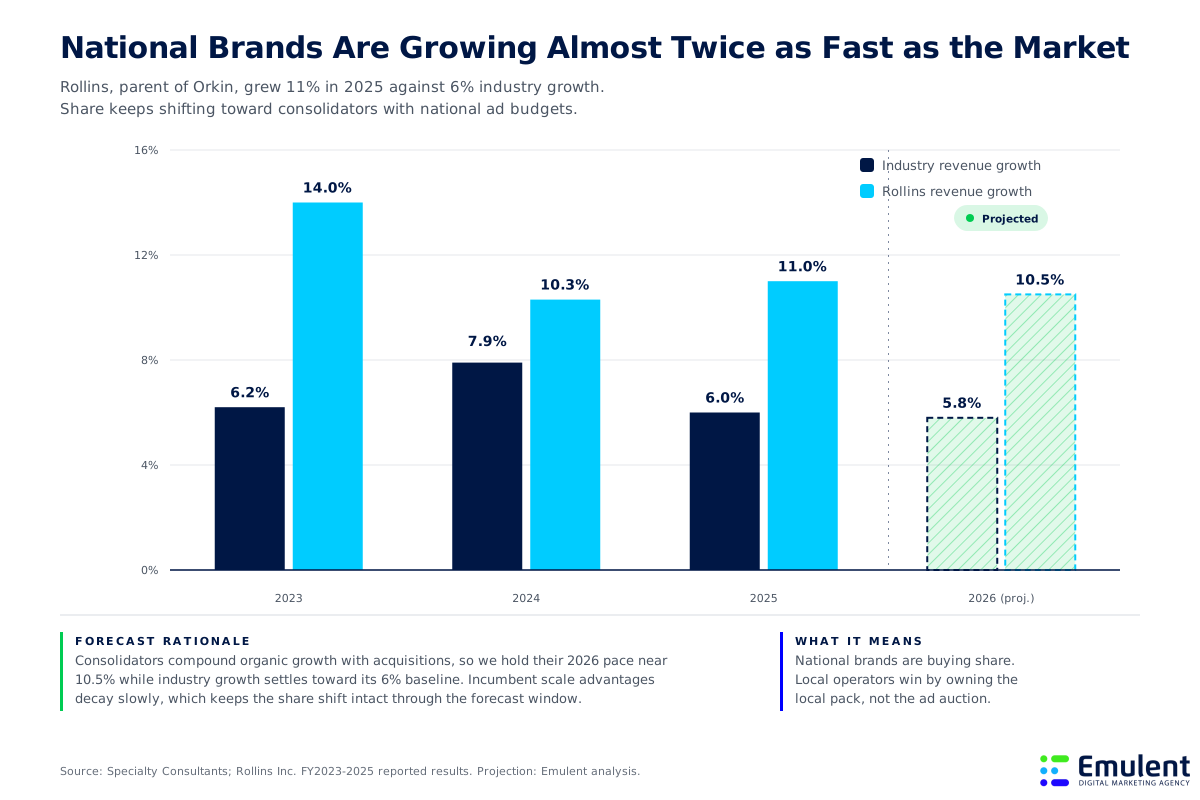
The encouraging news is that the battleground has moved to surfaces national budgets cannot simply buy. The local pack ranks businesses on proximity, relevance, and review strength, not ad spend. LSA ranks on response speed, review quality, and acceptance rate. AI answers cite the most specific local content. Each of these rewards operational excellence and local depth, which are exactly the assets a focused local operator can build faster than a branch office of a national chain. The broader pattern across home services marketing trends shows the same shift: trust signals and content depth are displacing raw media weight.
Where local operators hold the advantage:
- Review velocity: a steady stream of recent, detailed local reviews outranks a larger but slower national profile in both the local pack and LSA.
- Response speed: leads contacted within five minutes convert at rates national call centers rarely match, and Google’s local systems reward that speed directly.
- Community proof: sponsorships, local photography, and neighborhood-level content create relevance signals a national brand cannot replicate from headquarters.
- Niche depth: pest-specific and city-specific pages, built over time, form a content moat that survives every auction price increase.
The playbook holds together as one system: recurring plans raise what a customer is worth, efficient channels lower what a lead costs, and owned local content widens the gap between the two.
How the Emulent Marketing Team Can Help
We help pest control operators put this growth study to work: building the pest-and-city page architecture that wins local search, structuring Local Services Ads and paid search around real lead economics, and shaping offers that convert one-time treatments into recurring plans. Our team brings senior-level strategy to every engagement, so you work with the people doing the work. If you want help with pest control marketing, contact the Emulent Team for a no-pressure conversation about where your next stage of growth will come from.