
Orthopedic marketing has quietly split into two camps. One camp still treats the referral network as the only growth lever and the website as a digital brochure. The other camp, the practices adding surgeons and locations year after year, treats the patient’s own research journey as the primary acquisition channel. We studied the patterns behind the second camp, layered in current market data, and found three strategies that separate the fastest growing orthopedics and sports medicine practices from everyone else: an athlete-first positioning that pulls in everyday patients, a direct line to people researching surgery alternatives, and a deliberate decision to make individual surgeons, not the practice, the brand.
Key takeaways from this growth study:
- Self-guided research is now a top-three patient channel. Roughly one in four joint replacement patients finds their surgeon through their own research, with no physician or personal referral involved.
- Reviews outrank word of mouth. 84% of patients check online reviews before choosing a provider, and 61% now weight those reviews above recommendations from friends and family.
- The athlete halo is backed by a growing market. The U.S. sports medicine market reached $3.21 billion in 2024 and is on pace to top $5 billion by 2030 at an 8.2% annual growth rate.
- Surgery alternatives are a category, not a niche. Global orthobiologics, the regenerative treatments patients search for when they want to avoid the operating room, reached $6.77 billion in 2024 and should approach $9 billion by 2030.
- Surgeon-level visibility beats practice-level branding. Patients pick a person, not a logo, and the fastest growing practices build search presence, review volume, and content around each named surgeon.
- Even referred patients vet you online first. 40% of patients have changed or canceled care plans after reading negative reviews, which means referral volume leaks wherever digital proof is thin.
How Does the Athlete Halo Turn Sports Positioning Into Everyday Patient Volume?
The athlete halo is the most misunderstood strategy in orthopedic marketing. Practices assume that positioning around sports medicine narrows their audience to competitive athletes, a small slice of the population. The growth data says the opposite. When a 52-year-old with knee pain sees that a practice treats college athletes or sponsors the local high school football program, the mental shortcut is immediate: if surgeons can get a running back to playoffs in eight weeks, they can certainly handle my meniscus. Sports positioning works as a credibility signal for the entire patient base rather than a filter that excludes it.
The market behind that signal keeps expanding. Grand View Research puts the U.S. sports medicine market at $3.21 billion in 2024, growing at an 8.2% compound annual rate through 2033. Demand is being fed from below: federal data shows youth sports participation climbed to 58% of children ages 6 to 17 in 2024, moving toward a 63% national target for 2030, and the Aspen Institute reports families now spend an average of $1,016 a year on a child’s primary sport, up 46% since 2019. More kids playing more organized sports, with more money behind their training, produces a steady pipeline of injuries, prevention visits, and parents choosing a practice for the whole family.
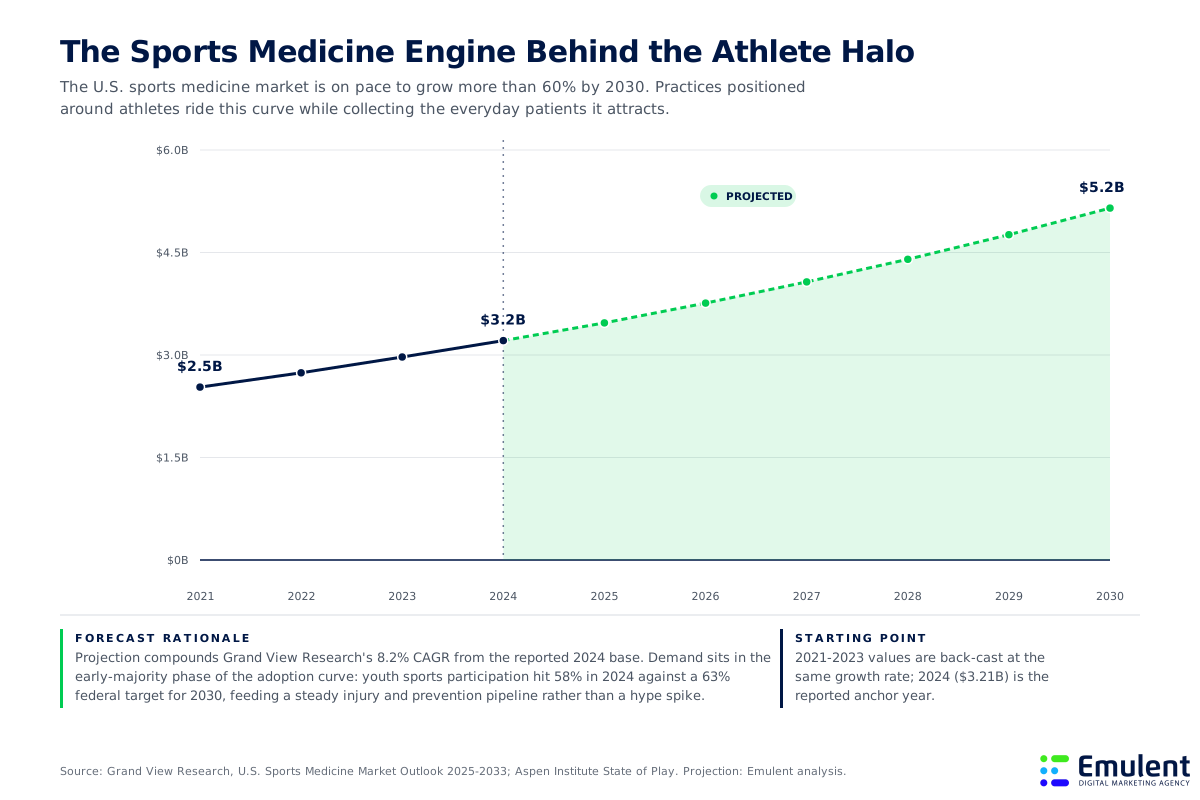
Our projection compounds the reported 8.2% growth rate forward rather than fitting a line to noisy annual data, and we deliberately did not project a steeper curve. Sports medicine sits in the early-majority phase of adoption: the dramatic awareness gains already happened, so growth from here comes from participation volume and treatment intensity, both of which the youth sports data supports.
The athlete halo only works when it shows up where patients research. A banner at the stadium builds awareness, but the practices growing fastest turn every team partnership into search content, surgeon profiles, and recovery stories that a 50-year-old googling knee pain at midnight actually finds. – Emulent Strategy Team
That midnight search is exactly where the next finding picks up, because the path from symptom to surgeon no longer runs reliably through a primary care office.
Where Do New Orthopedic Patients Actually Come From Now?
For decades the answer was simple: the referring physician. That channel still matters, but it no longer carries the weight practices assume. A 2024 survey of hip and knee replacement patients published in the Journal of Orthopaedics found that 50.2% arrived through a physician referral, 27.7% through family or friends, and 24.5% through self-guided research. Read that last number again. One in four patients undergoing a major elective surgery chose their surgeon with no gatekeeper at all, just a search bar, a review profile, and a practice website.
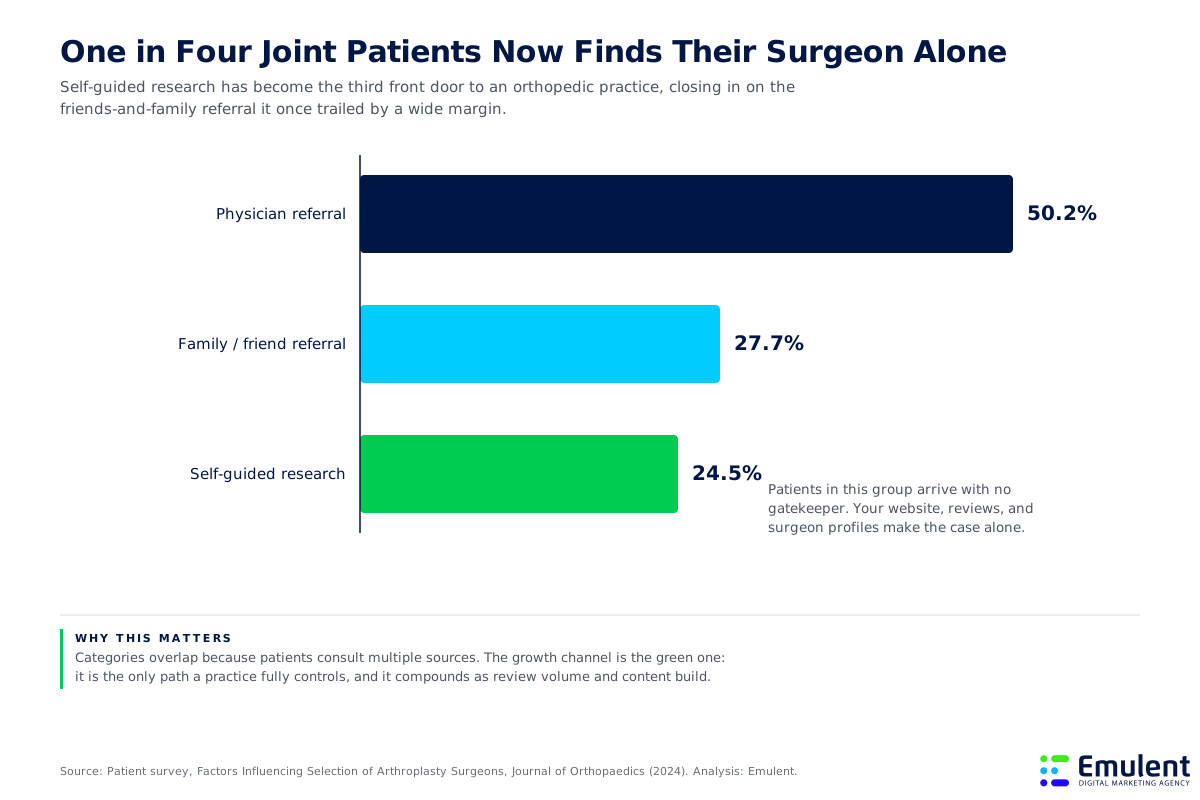
The strategic implication is bigger than the percentage. Physician referrals and word of mouth are channels you influence indirectly and slowly. Self-guided research is the only channel a practice fully controls, and it compounds: every review earned, every condition page published, and every surgeon profile completed keeps working for years. The fastest growing practices we studied treat this channel as their primary investment, supported by local SEO services that put each location and each surgeon in front of nearby searchers at the moment of symptom onset, not the moment of referral.
Practices that ignore this channel pay twice. They miss the 24.5% who never ask for a referral, and they quietly lose a share of the 50.2% who do get referred, because referred patients verify the recommendation online before they call. What they find during that verification step is the subject of the next section.
What Do Patients Check Before They Trust a Referral?
A referral letter starts the decision. It does not finish it. Survey data from rater8 shows 84% of patients check online reviews before choosing a new provider, up from 72% in a comparable 2021 survey, and 61% now prioritize those reviews over recommendations from friends and family. The behavior has teeth: 40% of patients have changed or canceled care plans after reading negative feedback. A strong referral pipeline with a weak review profile is a leaky bucket, and the leak is invisible because the patient never tells the practice why they booked elsewhere.
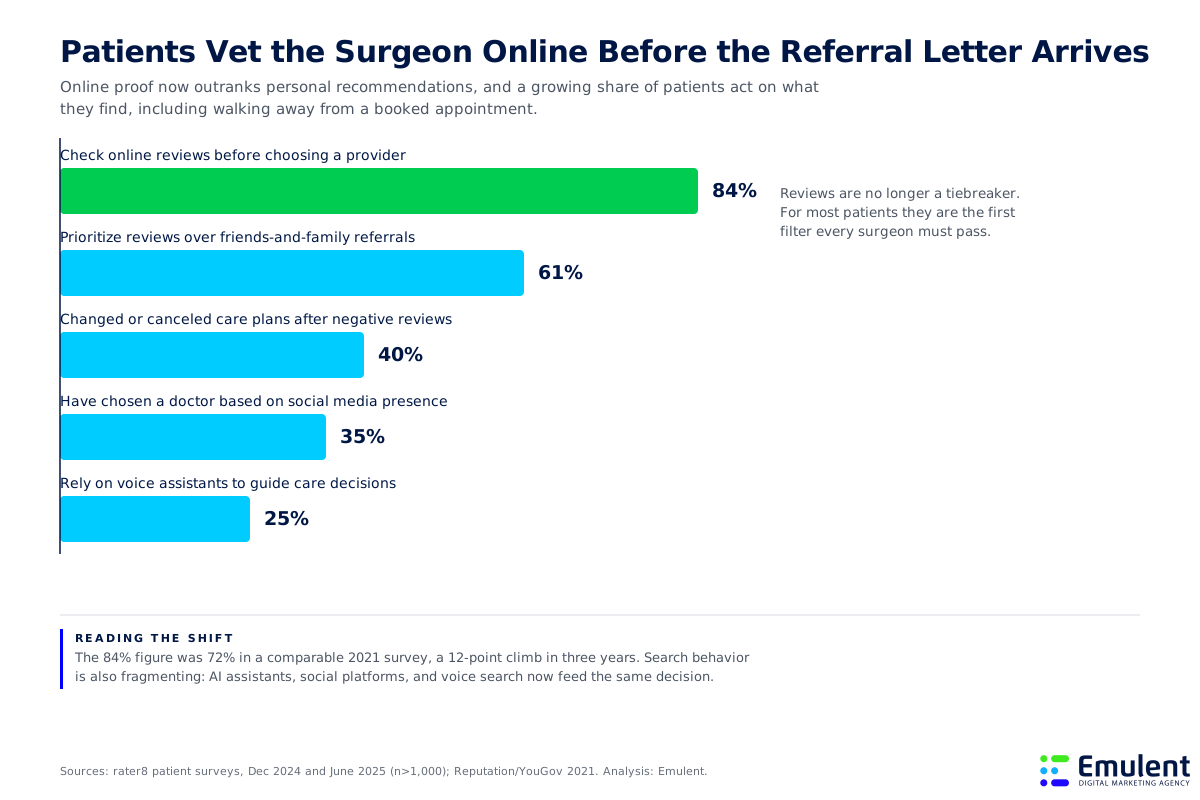
The research surface is also fragmenting. The same survey series found 35% of patients have chosen a doctor based on social media presence and 25% lean on voice assistants, and patients increasingly ask AI tools to compare and rank providers before they ever reach a website. Showing up in Google AI Overviews and in AI assistant answers requires structured, surgeon-level content that machines can read and cite, which is why we treat AI SEO services as a core part of orthopedic visibility rather than an add-on.
What the fastest growing practices do with this data:
- Automate review requests at the visit level. Volume matters as much as sentiment; patients expect to read multiple recent reviews before they trust a provider, so a trickle of feedback is almost as damaging as bad feedback.
- Respond to every review, positive and negative. Nearly half of patients say a provider who responds earns more trust, and responses are read by the silent majority who never write anything.
- Build review depth for each surgeon, beyond the location profile. A practice profile with 400 reviews hides a new partner with 6; patients searching the surgeon’s name see the 6.
- Publish recovery-stage content for each procedure. Patients verifying a referral want to see what week three after a rotator cuff repair looks like, in plain language, from the surgeon who will perform it.
We tell orthopedic groups to audit themselves the way a referred patient does: search the surgeon’s name on a phone, read the first ten results, and ask whether you would book. Most practices fail their own test within ninety seconds. – Emulent Strategy Team
Notice that every behavior in that audit centers on a person rather than an institution. That pattern points to the most contrarian finding in this study.
Should the Practice or the Surgeon Be the Brand?
Most orthopedic groups invest their marketing budget in the practice brand: the logo, the tagline, the group website. The fastest growing practices invert that. They make individual surgeons the brand and let the practice function as the trusted platform underneath. The patient research data explains why. People do not search “best orthopedic group near me” and stop there; they compare named surgeons, read reviews attached to those names, weigh fellowship training and bedside manner, and book a person. The arthroplasty survey cited above found board certification and fellowship training among the top factors in surgeon selection, and those are attributes of an individual, not a group.
Surgeon-level branding also compounds in ways practice-level branding cannot. A surgeon who owns the search results for their name plus their specialty becomes the cited expert when local media needs a quote, the recognizable face when a team partnership gets announced, and the name patients repeat to friends. The practice captures all of that demand. The risk practices fear, that a visible surgeon leaves and takes the audience, is real but manageable: groups that build visibility for every surgeon on a shared platform diversify that risk while multiplying total search coverage. Groups that build visibility for no one avoid the risk by forfeiting the reward. This is a positioning decision before it is a tactical one, and it deserves the same rigor as any brand strategy and development engagement: defined audiences per surgeon, a content lane each surgeon can credibly own, and a publishing system that does not depend on any single person’s spare time.
Patients hire a surgeon and tolerate a brand. The groups that accept this build ten surgeon brands on one platform and win ten times the search surface of competitors still polishing a logo. – Emulent Strategy Team
Surgeon-level content has one more advantage: it is the natural home for the topic patients research hardest and practices write about least, which is how to avoid surgery.
How Do You Capture the Patient Researching Surgery Alternatives?
Here is the uncomfortable truth behind the second strategy in this study: a large share of your future surgical patients begin their journey trying not to become one. They search for injection options, PRP, physical therapy outcomes, and “knee replacement alternatives” months or years before they accept an operation. Most practice websites ignore these searches because they do not map directly to a billable surgery. Competitors who answer them honestly earn the relationship early, and when conservative care runs its course, the surgery goes to the practice that guided the patient all along.
The category is large and growing. Grand View Research values the global orthobiologics market, which covers regenerative treatments like viscosupplementation, PRP, and bone graft substitutes, at $6.77 billion in 2024, compounding at 4.74% annually toward roughly $9 billion by 2030. Sports soft-tissue applications are the fastest growing segment at close to a 9% annual rate, which ties this trend directly back to the athlete halo: the same patients drawn in by sports positioning are the ones asking for non-surgical options first.
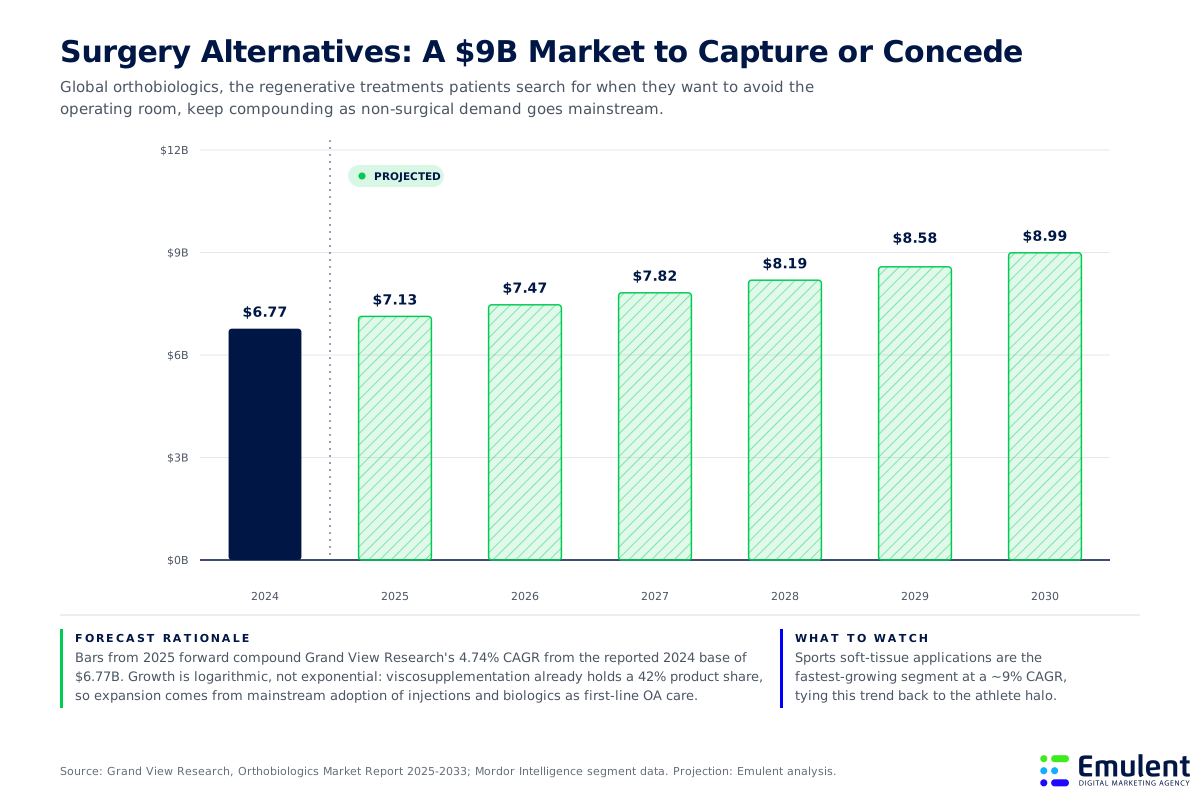
Our projection here is intentionally conservative. Viscosupplementation already holds about 42% of product share, so this market grows by mainstreaming rather than explosive new adoption, and we modeled it that way. The marketing opportunity does not require the market to boom. It requires a content strategy that meets the alternatives-seeking patient with honest comparisons: who is a candidate for injections, what the evidence shows, when conservative care stops being the right call. Practices that publish this honestly convert better, not worse, because the patient who eventually books surgery arrives pre-sold on the surgeon’s judgment. Broader healthcare marketing trends show the same pattern across specialties: education-first content wins the patients that promotion-first content never reaches.
How Can the Emulent Team Help Your Orthopedic Practice Grow?
The three strategies in this study share one requirement: a marketing partner that understands how patients research care instead of only how ads get bought. As a healthcare marketing agency, we build surgeon-level visibility programs, athlete-halo positioning, review and reputation systems, and search strategies that capture patients across Google, AI assistants, and social platforms. If you want help putting any of this to work in your healthcare marketing, contact the Emulent team and we will map the fastest path to growth for your practice.