
Law firm marketing has split into two camps. A small group of firms is compounding revenue at more than 40% a year, while the rest of the legal market averages single-digit growth or none at all. We pulled the latest industry research on legal marketing, lawyer marketing budgets, and how clients now find attorneys, then charted the gaps. The pattern is hard to miss: the fastest growing firms treat marketing as a system, not a line item.
Key takeaways from this study:
- The growth gap is a spending gap. High-growth law firms invest 16.5% of revenue in marketing and grow at a 41.7% median rate. No-growth firms invest 5% and stay flat.
- Referrals still start the journey, but they no longer finish it. 98% of prospective clients research a firm online even when someone they trust referred them.
- AI is now the second-most-used research source. ChatGPT use in attorney research tripled from 9% to 28.1% in two years, and we project it nears half of legal consumers by 2028.
- Trust signals work as a stack, not as separate tactics. Reviews, attorney visibility, and situation-specific content reinforce each other or fail separately.
- Practice area sets your economics. Personal injury leads run $150 to $500 each, while family law leads run $75 to $300, so the winning channel mix differs sharply.
- The auction keeps getting pricier. U.S. legal ad spend passed $2.5 billion in 2024 and is on track to clear $3.5 billion by 2028, which makes owned channels more valuable every year.
What Separates High-Growth Law Firms From Everyone Else?
The Hinge Research Institute tracks professional services firms that sustain at least 20% compound annual growth over three years. In its latest legal edition, those high-growth law firms posted a 41.7% median growth rate, 5.2 times the industry average, and they did it while staying profitable. The clearest dividing line in the data is investment: high-growth firms commit roughly 16.5% of revenue to marketing, while no-growth firms commit about 5%.
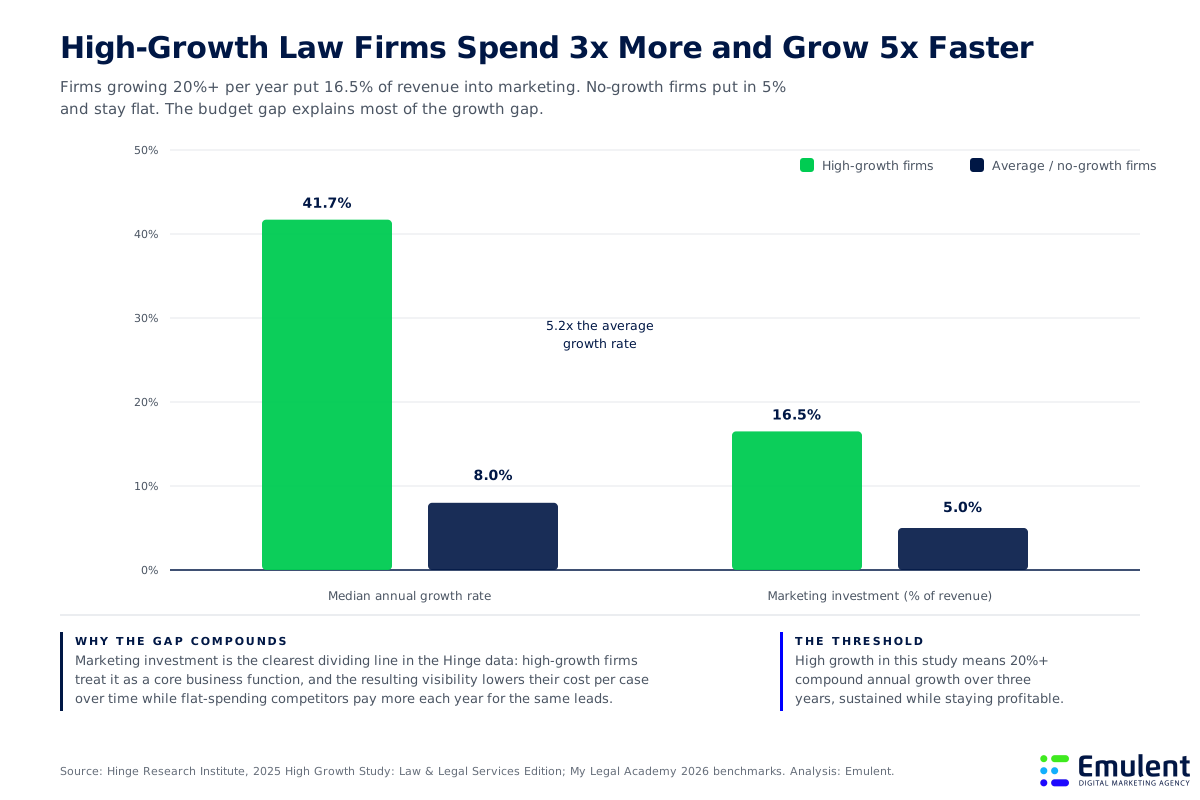
The budget itself is only half the story. The same research shows these firms generate a far larger share of leads from digital channels and outsource specialized work like SEO and strategy instead of asking a marketing coordinator to cover everything. That structure matters because visibility compounds. A firm that builds rankings, reviews, and a recognizable brand pays less for each new case over time, while a firm that buys attention one click at a time pays more each year for the same result. If your firm sits in the average column, the fix starts with treating law firm marketing as a core business function with a real budget and clear ownership.
What high-growth firms do differently with that budget:
- They fund a system, not a tactic. SEO, paid search, reviews, and content each get a defined role and a defined share of spend instead of competing for scraps.
- They buy senior expertise. High-growth firms are far more likely to outsource SEO, design, and strategy to specialists rather than stretch internal staff thin.
- They measure cost per signed case. Tracking stops at the lead for most firms; the fastest growers tie every dollar to retained matters.
Where that money goes is shaped by one big behavioral shift, so the next question is where clients actually look for lawyers now.
Is the Referral Era Really Over?
Not exactly, and the firms that grow fastest understand the nuance. People still ask friends, family, and other attorneys for names. What changed is what happens next. Google remains the anchor, used by 86.7% of consumers researching attorneys, but iLawyer Marketing’s consumer studies show ChatGPT jumped from 9% of legal consumers in 2023 to 28.1% in 2025, passing Facebook, Yelp, and YouTube to become the second-most-used research source.
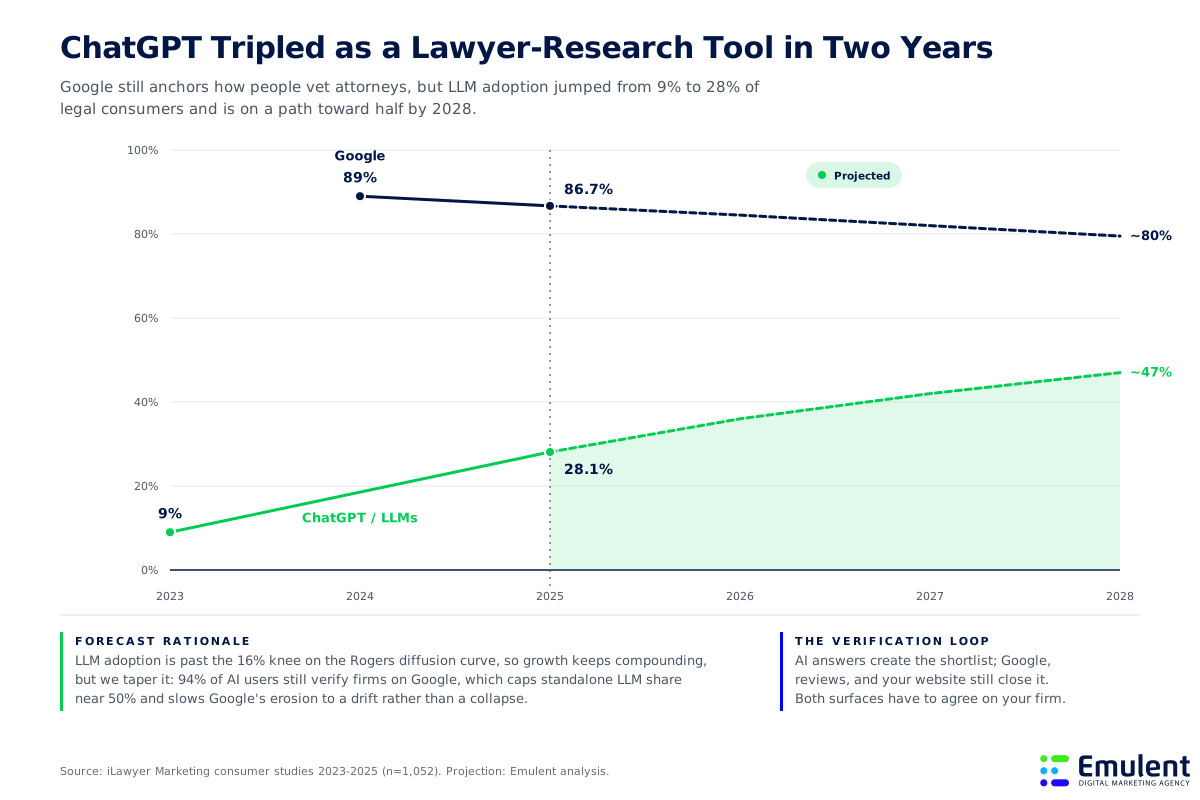
Our projection bends rather than rockets. LLM adoption is past the point on the diffusion curve where growth compounds, yet 94% of people who use ChatGPT for attorney research say they verify what they find on Google. That verification loop caps standalone AI share near half of consumers by 2028 and slows Google’s decline to a drift. The practical takeaway: you now have to win on two surfaces at once. AI platforms build the shortlist from structured data, peer recognition, and consistent public information, while Google, reviews, and your website close the decision. Showing up in Google AI Overviews and in LLM answers calls for different work than classic rankings, which is why we built a dedicated AI SEO practice for firms making that shift.
“The referral didn’t die. It turned into a search query. Every name a client hears becomes a Google search and, increasingly, a ChatGPT prompt, and whatever those two surfaces say about you is the referral now.” – Emulent Strategy Team
If every recommendation gets verified online, the obvious follow-up is what clients are checking when they get there.
What Does the Trust Stack Look Like in Practice?
We call the verification pattern the trust stack: the layered set of signals a prospect checks before contacting a firm. The data shows how unforgiving it is. 98% of consumers research a firm online even when they were referred, 78% read reviews as a primary evaluation step, and 71% rule out firms rated below three stars. Review behavior cuts both ways: 88% of consumers favor businesses that respond to their reviews, which makes silence a visible choice.
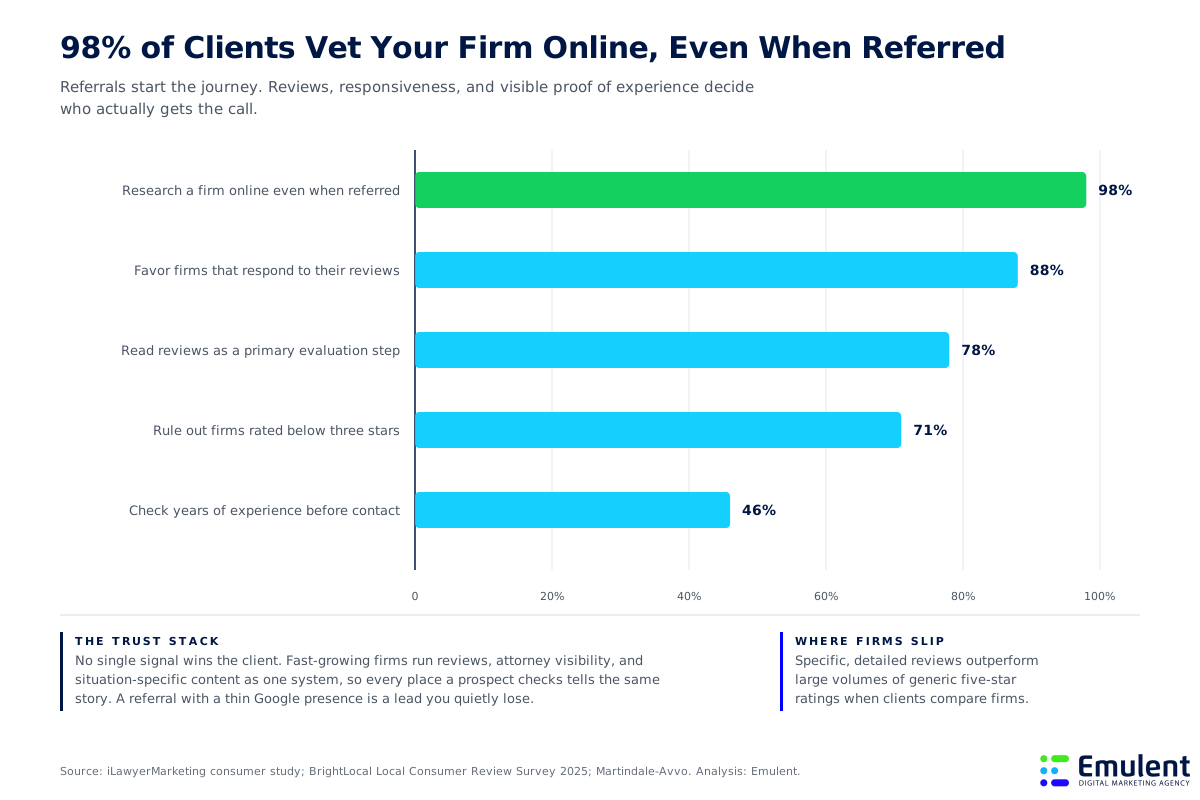
The fastest growing firms run these signals as one system. A detailed review mentions a specific case type; the website has a page about that exact situation; the attorney who handled it is visible with credentials, video, and a current photo. Each layer confirms the others, and the same consistency feeds AI platforms, which surface lawyers based on third-party validation and structured public data. One interesting wrinkle from the research: specific, detailed reviews outperform large volumes of generic five-star ratings, because clients are reading for their own situation, not counting stars. Firms that want a model for keeping every public-facing signal consistent can borrow from our brand experience system, which treats each client interaction as part of one story.
The three layers every trust stack needs:
- Review depth, not just volume. Ask satisfied clients to describe their situation and outcome, then respond publicly to every review, positive or negative.
- Attorney visibility. Individual lawyer pages with credentials, results, and video give both humans and AI platforms a verifiable record of who does the work.
- Situation-specific content. A page for each legal scenario you handle converts better than broad practice-area pages and earns the citations AI answers rely on.
“Most firms treat reviews, bios, and content as three separate chores owned by three different people. Growth firms treat them as one argument for hiring the firm, told three ways.” – Emulent Strategy Team
How much each layer matters, and what it costs to compete, depends heavily on what kind of law you practice.
How Do Growth Tactics Change by Practice Area?
Averages hide the most useful finding in legal marketing data: the economics of client acquisition vary so much by practice area that the same playbook can be brilliant for one firm and ruinous for another. Per-lead pricing across paid channels and lead providers runs $150 to $500 for personal injury, $75 to $300 for family law, and $40 to $150 for bankruptcy, with mass tort reaching $1,000 or more. The benchmark average cost per lead for legal search ads sits near $111, but almost nobody competes at the average.
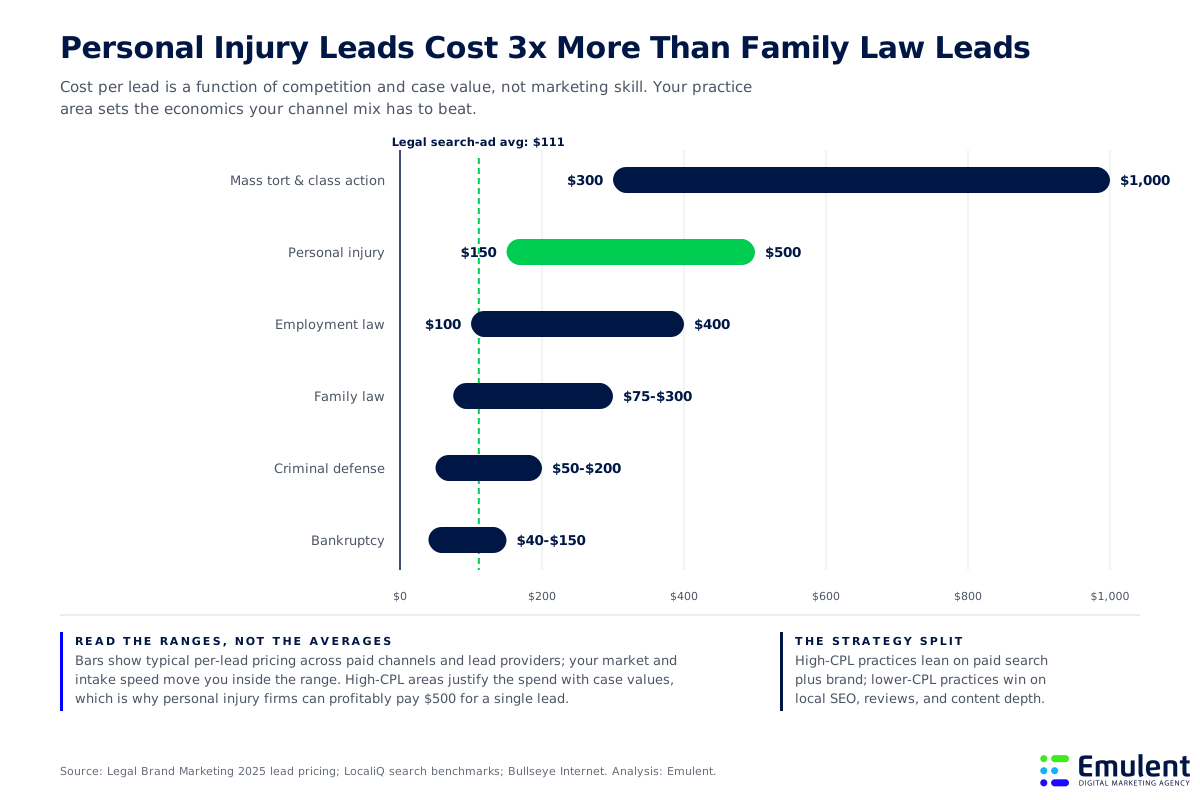
High case values explain the high prices. A personal injury firm can pay $500 for a single lead and still see a strong return, which is why personal injury lawyer marketing leans on aggressive paid search, brand advertising, and intake speed, with some PI firms spending 20% or more of revenue on marketing. Family law works differently: cases are local and emotionally charged, so family law marketing wins on local SEO, empathetic content, and review depth rather than outbidding everyone on clicks. Business and corporate practices barely touch consumer channels at all; corporate law firm marketing is built on attorney reputation, published expertise, and referral nurturing, where one article read by the right general counsel outperforms a thousand clicks.
How the playbook shifts by practice type:
- Personal injury and mass tort: paid search and LSAs for speed, brand investment to lower long-run acquisition costs, and intake that answers in minutes, since 80% of legal consumers move on if they wait two days for a response.
- Family, criminal, and estate practices: dominance in the local map pack, situation-specific pages, and a steady review engine that reflects sensitive, well-handled cases.
- Business, employment, and corporate practices: named-attorney authority content, LinkedIn distribution, and referral cultivation backed by a credible digital footprint.
“The most expensive mistake in legal marketing is borrowing a strategy from a different practice area. A PI budget behind a family law firm just buys expensive clicks from people who needed someone else.” – Emulent Strategy Team
Whatever your practice area, you are bidding into the same rising market, and that market is getting more expensive on a schedule.
How Much Should You Budget as Competition Rises?
U.S. legal advertising passed $2.5 billion in 2024 across 26.9 million ads, and industry projections put the market above $3 billion by 2026. Extending that trajectory at a slightly slower pace, we project spend clears $3.5 billion by 2028. The mechanism matters more than the headline number: ad platforms are auctions, so every new dollar your competitors add raises the price you pay for the same click. A flat budget is a cut in real terms.
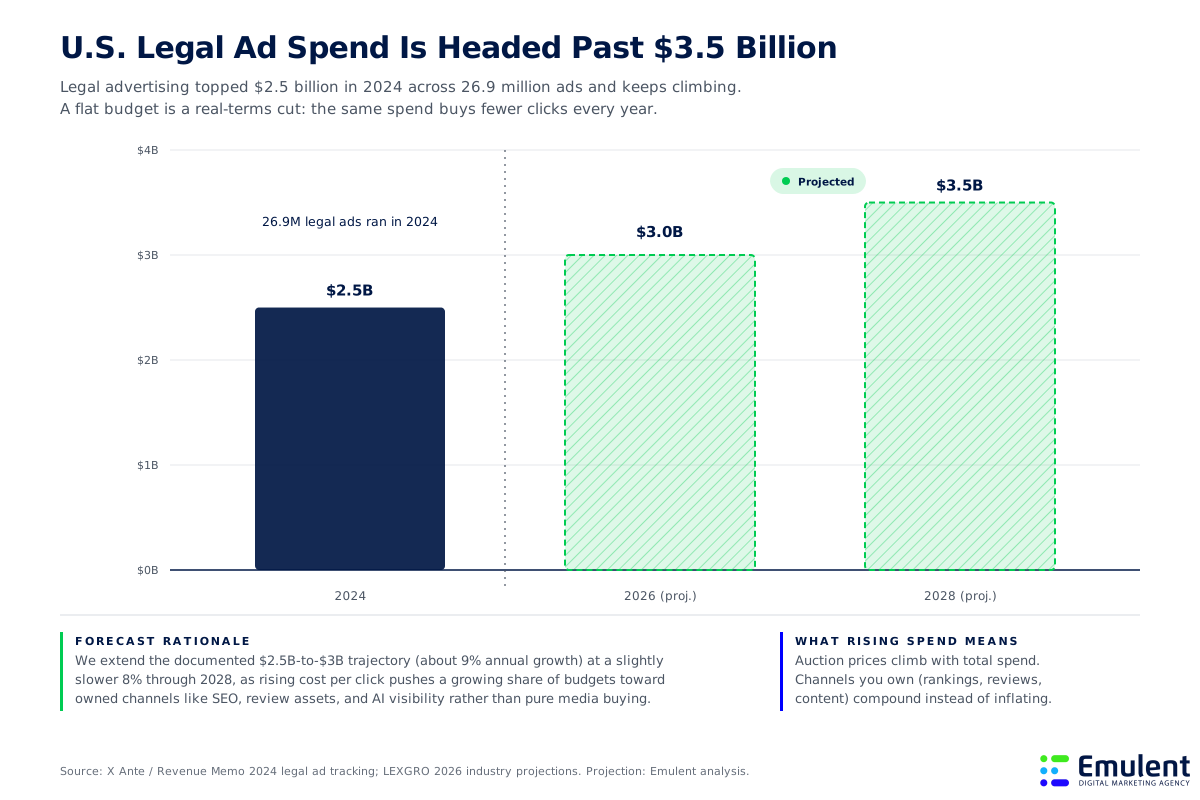
This is the quiet reason high-growth firms over-invest in channels they own. Rankings, review assets, situation-specific content, and AI visibility compound in value while auction prices inflate, so the share of new cases arriving at near-zero marginal cost grows each year. Survey data backs the urgency: 69% of small firms and 79% of larger firms planned budget increases this cycle, which means holding still is choosing to lose ground. A practical split for growth-focused firms is 70% of spend on proven channels, 20% on emerging channels like AI answers and video, and 10% on experiments, rebalanced quarterly against cost per signed case. Firms that pair that discipline with a strong content strategy get a second benefit: the same pages that rank on Google become the sources LLMs cite when they recommend lawyers.
Budget moves to make before next quarter:
- Set spend by growth goal, not habit. Steady-growth firms land at 7% to 10% of revenue; aggressive growth or a new market calls for 10% to 15% or more.
- Shift share toward owned assets each year. As CPCs rise, every point of budget moved from rented clicks to durable rankings and reviews improves blended acquisition cost.
- Fix intake before adding spend. More than a quarter of firms never respond to online leads at all; faster response is the cheapest growth available.
How Can Emulent Help Your Firm Join the High-Growth Cohort?
The firms in the top growth tier are not lucky; they fund marketing properly, build a trust stack that survives verification on Google and in AI answers, and match their channel mix to the economics of their practice area. Our team helps law firms do exactly that, from strategy and budget design through SEO, AI visibility, content, and review systems, with senior specialists doing the work. If you want help with law firm marketing, contact the Emulent Team for a no-pressure conversation about where your firm stands and what it would take to grow faster.