
Hospital marketing now decides which health systems grow and which ones watch volume drift away. We studied where the fastest-growing hospitals put their budgets heading into 2026 and found three repeatable patterns: they concentrate spend on a short list of high-yield service lines, they run reputation like a front door instead of a vanity metric, and they build community presence that ad dollars alone can’t buy.
Key takeaways from this growth study:
- Digital owns the budget: U.S. healthcare and pharma digital ad spend will hit $24.8 billion in 2025, compared with $7.9 billion for traditional channels, and the gap will continue to widen through 2028.
- Growth sits outside the hospital: Sg2 projects outpatient volumes to rise 18% and ASC surgical volumes to rise 23% over 10 years, while inpatient discharges grow just 5%.
- Reviews are the new referral: 84% of patients check online reviews before choosing a provider, and 61% weigh them more heavily than friend and family recommendations.
- Four stars is the floor: 70% of patients require at least a 4-star average rating before they will book.
- Community trust converts: consumers who see a hospital as a strong community partner are 24 points more likely to choose it when everything else is equal, and 15 points more likely even when it’s less convenient.
- Local search still belongs to hospitals: Google removed AI Overviews from provider-finding queries in 2025, so map rankings and complete profiles keep driving new-patient volume.
Where Is Hospital Marketing Money Actually Going?
The budget question answers itself once you see the spend data. U.S. healthcare and pharma digital ad spending reached an estimated $24.8 billion in 2025, up more than 13% year over year, while traditional channels held roughly $7.9 billion. eMarketer expects the split to reach $26.2 billion versus $6.9 billion in 2026, and 2025 marked the first year social media spending passed linear TV in the category. Linear TV’s share of total healthcare ad spend, above 30% in 2021, falls to about 12% by 2027.
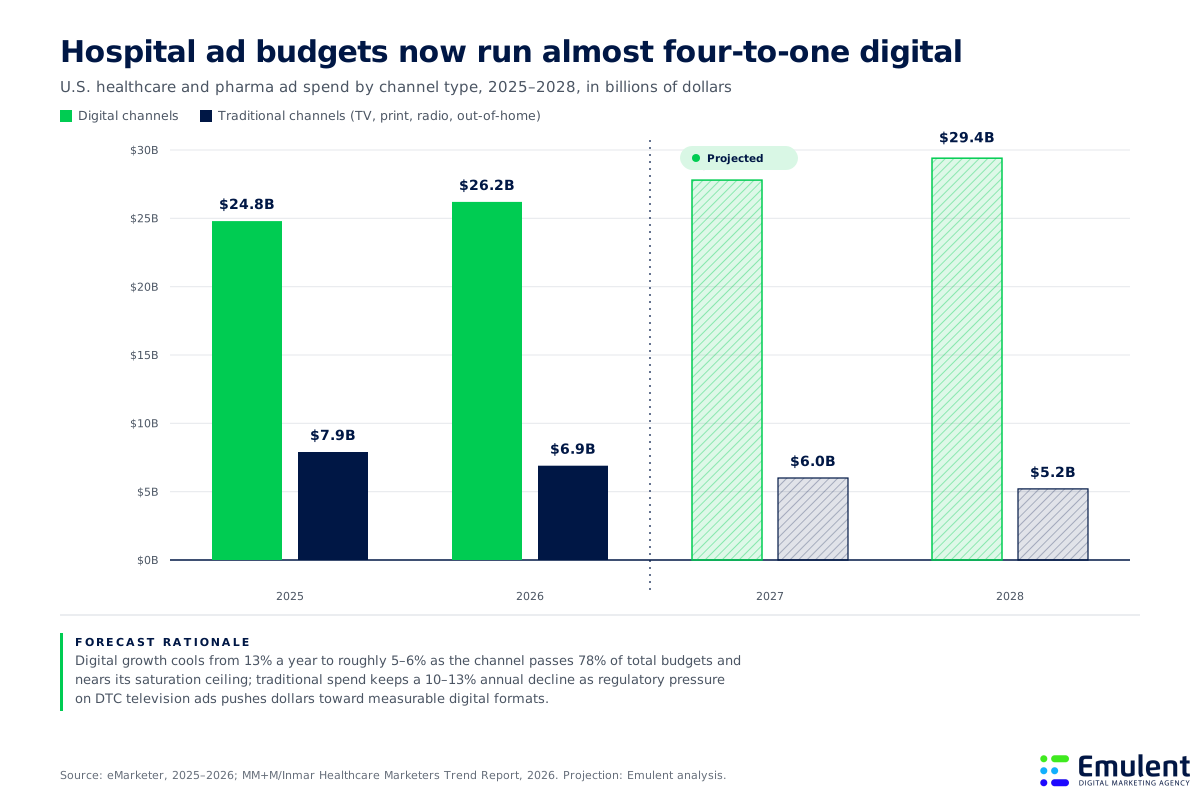
Here’s what separates the fastest-growing systems from everyone else: they didn’t just move money to digital, they moved it to channels they can attribute to a service line and a booked appointment. Search, paid social, and connected TV with response tracking let a marketing team prove that an orthopedics campaign produced surgical consults, which protects the budget in the next planning cycle. Systems still anchored to broad-reach brand TV can’t make that case, so their budgets shrink first when margins tighten. Our healthcare marketing trends report tracks these budget shifts in more detail.
“The hospitals growing fastest don’t spend more than their competitors. They spend where a dollar can be traced to a procedure. Once finance can see that line, marketing stops being a cost center and starts being a growth lever.” – Emulent Strategy Team
Knowing the money is going digital only answers half the question. The harder call, and the one growth leaders get right, is which service lines that money should chase.
Which Service Lines Should Get the Marketing Budget First?
Fast-growing hospitals concentrate marketing where demand is projected to rise and where the care happens in settings they can actually capture. Sg2’s 2025 Impact of Change Forecast projects 18% growth in adult outpatient volumes over the next decade against just 5% growth in inpatient discharges. ASC surgical volume is expected to climb 23%, with gastroenterology, ophthalmology, orthopedics, and spine leading the shift. The 65-and-older population grows 32% in the same window, and CMS added 573 codes to the ASC-approved list in its 2026 payment rule, which pulls even more surgical volume out of the hospital.
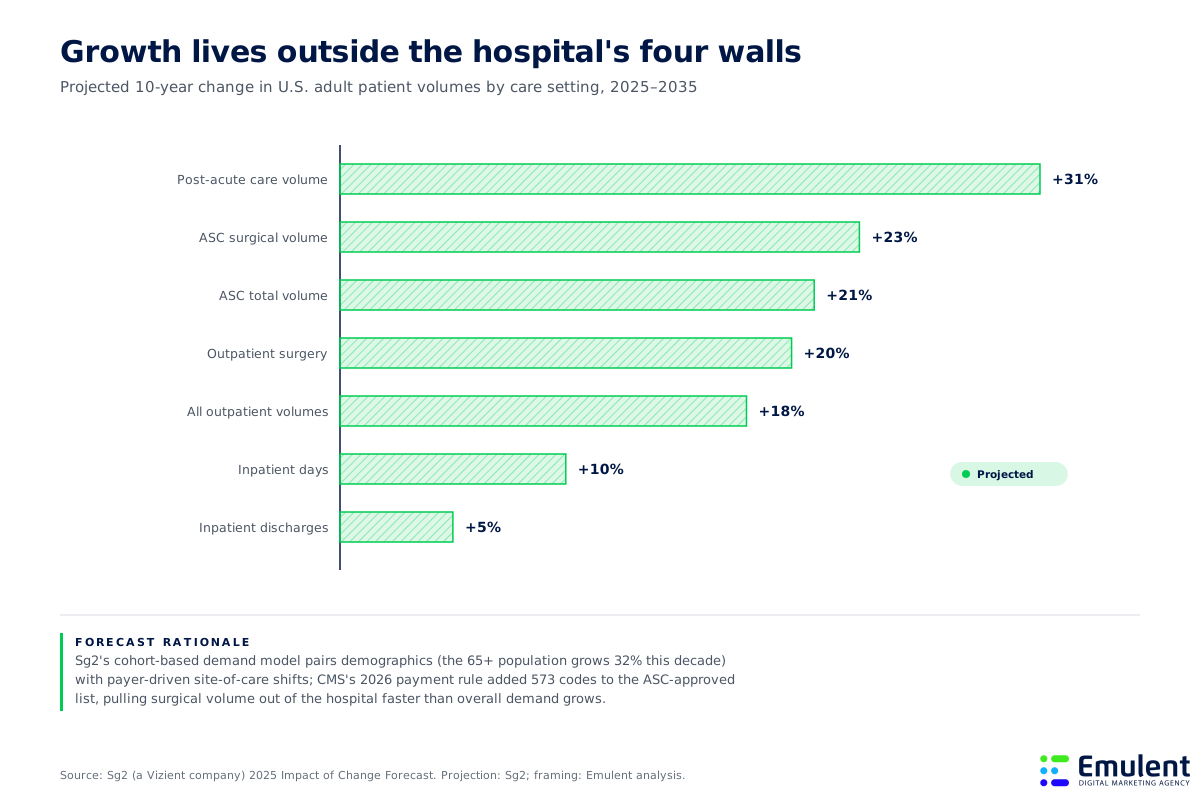
Why does concentration beat spreading the budget evenly? Service-line campaigns compound. A hospital that owns the orthopedics conversation in its market builds physician profiles, patient education content, and review volume that all reinforce each other, and that authority is expensive for a competitor to dislodge. A hospital that splits the same budget across nine service lines builds nothing defensible in any of them, and pays full acquisition cost on every patient forever. A focused content strategy around two or three priority lines is how that authority gets built.
The four filters we use to rank service lines for marketing investment:
- Projected demand: Does independent forecasting (Sg2, market claims data) show the line growing in your market over five to ten years?
- Contribution margin: Will an incremental case fund its own acquisition cost and then some?
- Capacity to absorb growth: Can the line actually take new patients within two to three weeks, or will marketing fill a queue that drives bad reviews?
- Competitive gap: Is there a visibility or reputation opening a competitor has left undefended?
Picking the right service lines wins the search impression. What happens next depends on a layer most hospitals still under-manage: what patients find when they look you up.
How Do Ratings, Reviews, and Physician Profiles Steer Hospital Choice?
Patients now screen hospitals the way they screen any major purchase, before they ever call. In rater8’s 2025 national survey, 84% of patients said they check online reviews before choosing a new provider, and 61% said reviews carry more weight than referrals from friends and family. RepuGen’s 2025 survey adds the thresholds: 70% of patients require at least a 4-star average, 57% want to see six or more reviews before they trust a rating, and 40% treat reviews older than a year or two as outdated. Roughly four in ten patients have canceled or switched after reading negative feedback.
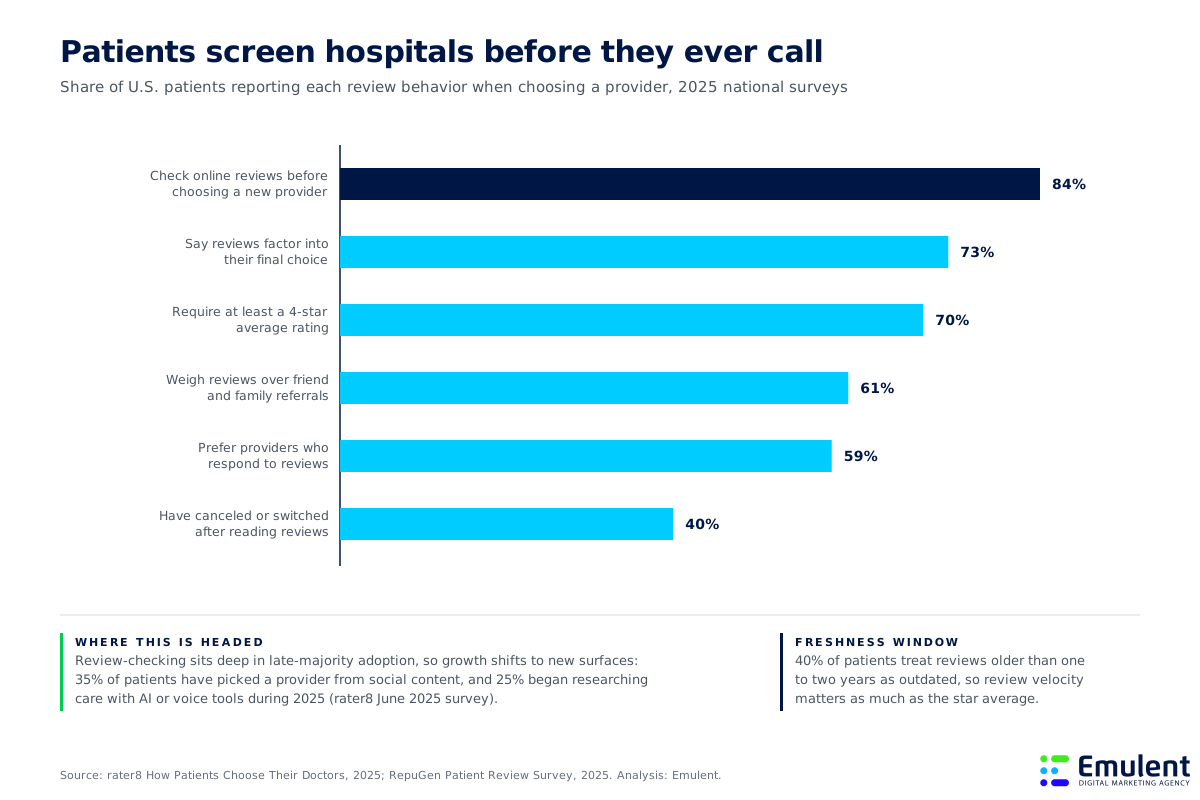
The unit of reputation has also changed. Patients don’t choose “the hospital,” they choose Dr. Patel or Dr. Nguyen, which means every physician profile is a landing page with its own rating, photo, bio, and review history. A system with 400 physicians has 400 front doors, and the fastest-growing hospitals manage them that way: automated review requests after visits, response protocols for negative feedback (59% of patients prefer providers who respond), and profile data kept consistent across Google, Healthgrades, and their own site. Skip this layer and the service-line campaign above leaks patients at the final step, with a search ad pointing at a 3.6-star profile.
“Most hospitals treat reviews as a scorecard they read once a quarter. Growth systems treat them as a conversion asset with a freshness date. The star rating gets you considered. Review recency and physician responses get you booked.” – Emulent Strategy Team
Ratings persuade patients who are already comparing options. The deeper advantage, and the hardest one to copy, is being the hospital a community already trusts before the comparison starts.
Can Community Trust Outperform Paid Media?
The newest evidence says yes, and by a wide margin. Jarrard’s 2026 Community Impact Survey found that consumers who strongly agree a hospital is a good community partner are 26 points more likely to trust it to do the right thing, 37 points more likely to defend it publicly, 24 points more likely to choose it when everything else is equal, and 15 points more likely to choose it even when it’s less convenient to reach. No ad campaign produces a 15-point lift that overrides distance. The opportunity is wide open: nearly six in ten Americans call a hospital’s role beyond medical care critical or very important, yet only 29% strongly agree their local hospital actually is a good community partner.
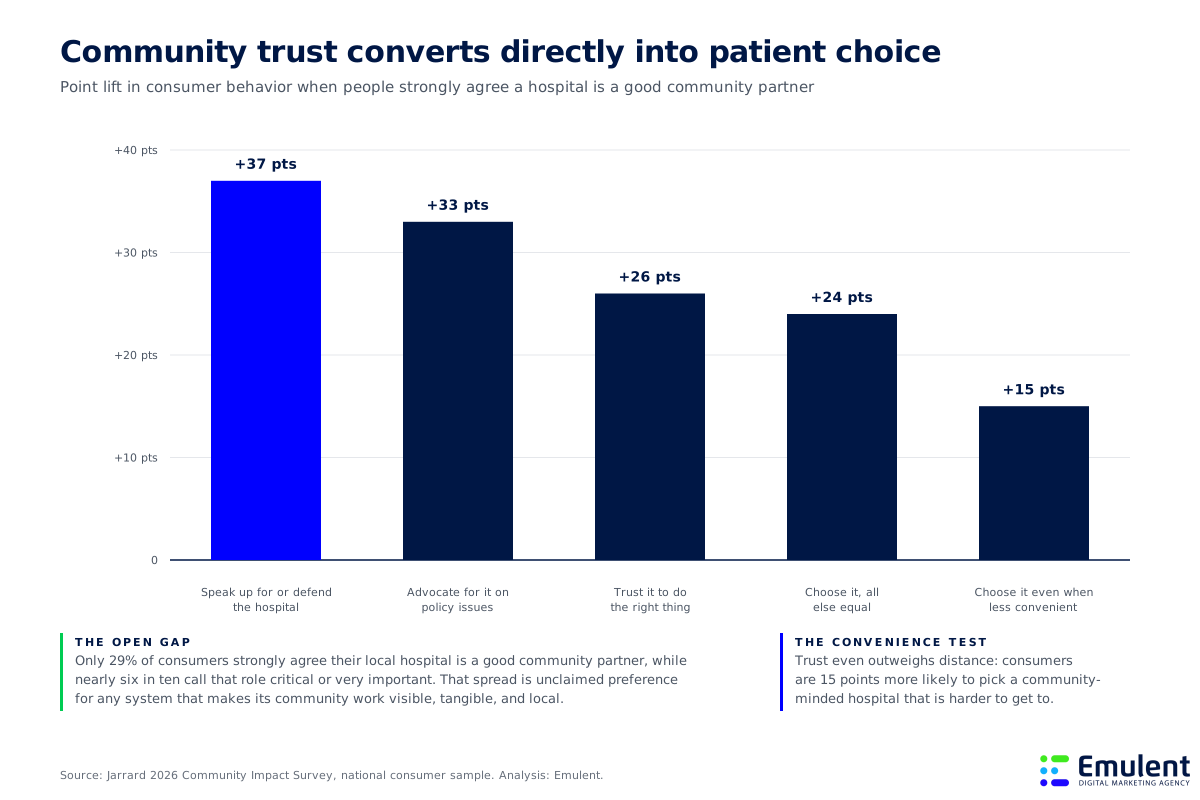
Community trust also has a digital expression that paid media can’t replicate. BrightEdge’s tracking found Google removed AI Overviews from provider-finding queries like “cardiologist near me” entirely by late 2025, handing those searches back to the map pack and organic listings. That makes location pages, complete Google Business Profiles, and review velocity the digital proof of local presence, and it makes local SEO services one of the highest-return line items in a hospital budget right now. The system that sponsors the youth sports league, publishes the community health report, and ranks first in the map pack is telling one consistent story across both worlds.
Community presence plays that fast-growing hospitals make visible:
- Publish the impact, not just the program: Community benefit work that nobody sees earns none of the 24-point preference lift; tell the story on your site, profiles, and local press.
- Win the map pack per location: Every campus, urgent care, and clinic needs its own complete, review-rich profile, since provider-finding searches now resolve locally.
- Put physicians in the community: Local talks, school partnerships, and employer screenings build the personal trust that 85% of Americans still place in their doctors.
- Listen before you message: Survey respondents define a good partner by responsiveness to community needs, so community input should shape the marketing calendar, not just decorate it.
“Ad spend rents attention. Community trust owns preference. When a patient picks the hospital that’s farther away because they believe in it, marketing has done something a media budget can’t do alone.” – Emulent Strategy Team
How the Emulent Marketing Team Can Help
We help hospitals and health systems put these patterns to work: ranking service lines by projected demand and margin, building the reputation engine across physician profiles and reviews, and turning community presence into compounding local search visibility. As a Hospital Marketing Agency that does Hospital Brand Photography, Hospital Branding, Hospital Web Design, Hospital PPC, and Hospital SEO, we bring senior strategists to every engagement, not a handoff to a junior team. If you want help with your hospital marketing, schedule a free digital marketing consultation with the Emulent Team, and we’ll walk through where your next stage of growth is most likely to come from.