
We wanted to know how the top retail brands are growing in 2026, so we pulled the primary data behind the popular predictions and checked whether the numbers hold up. A clear pattern came back. The brands pulling ahead spend less energy chasing every new channel and more energy keeping the customers they already earned. Below are six shifts we see shaping retail marketing this year, each paired with a chart your team can use.
The Six Shifts at a Glance
- Online’s climb has flattened. E-commerce sits near 17% of U.S. retail and is gaining share slowly, not doubling. Plans built on a steep online curve will miss.
- Repeat customers carry the growth. Most retail revenue now comes from people buying again, and keeping a customer costs a fraction of winning a new one.
- Retail media money is pooling at the top. Spend keeps rising, but nearly all of this year’s new dollars flow to two companies.
- AI has become table stakes. When most shoppers and most competitors use the same tools, the tools stop being an advantage.
- Social selling passed $100 billion. The channel is real money now, yet trust still limits how many people buy inside the apps.
- Customer trust is a growth lever. Shoppers expect careful data handling, and few brands meet that bar, which leaves room for the ones that do.
Can Online Sales Keep Carrying Your Growth Plan?
For a decade, the safe bet was that online would take a bigger slice of retail every year. That bet is getting risky.
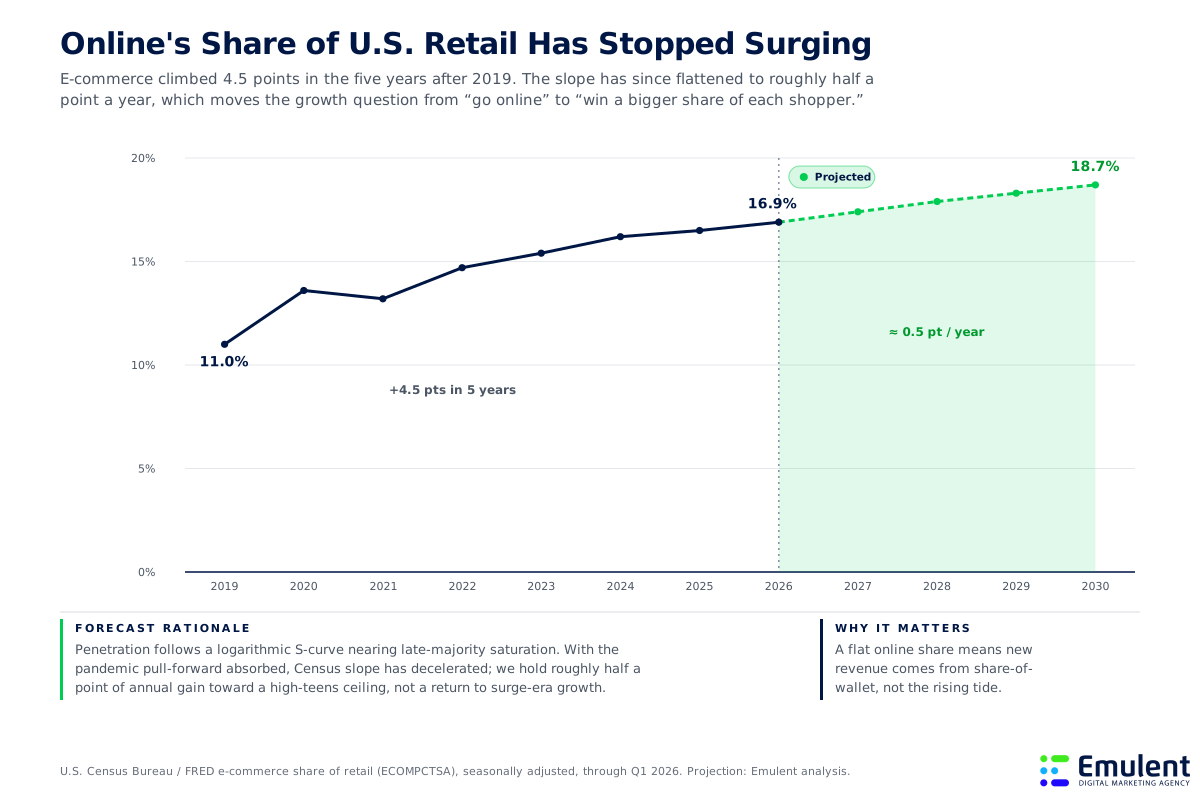
Online’s share of U.S. retail reached 16.9% in early 2026, up from roughly 11% before the pandemic. The jump was real, but look at the slope: the steep climb of 2020 and 2021 has settled into gains of about half a point a year. Our projection puts online near 18.7% of retail by 2030, a steady rise, not another surge. Most forecasts still draw the line shooting upward. The primary data does not support that.
Why this matters: if you plan as though online sales will double their share again, you will overspend on paid channels that are close to their ceiling and underfund the in-store experience and the retail web design work that turns browsers into buyers. The brands growing now treat their site as the hub that connects every channel, and they keep investing in retail SEO so shoppers find them at the moment of intent. Skip that, and you pay to send traffic to a store that cannot convert it.
We tell every retail client the same thing: build for the share of online you can actually win, not the hockey-stick chart from five years ago. The plateau is the opportunity, because most of your competitors are still planning for a boom that already happened. – Emulent Strategy Team
Where Does Durable Retail Growth Actually Come From?
If online share is climbing slowly, the next question is obvious: where does the growth come from? For most brands we study, the answer is the customers they already have.
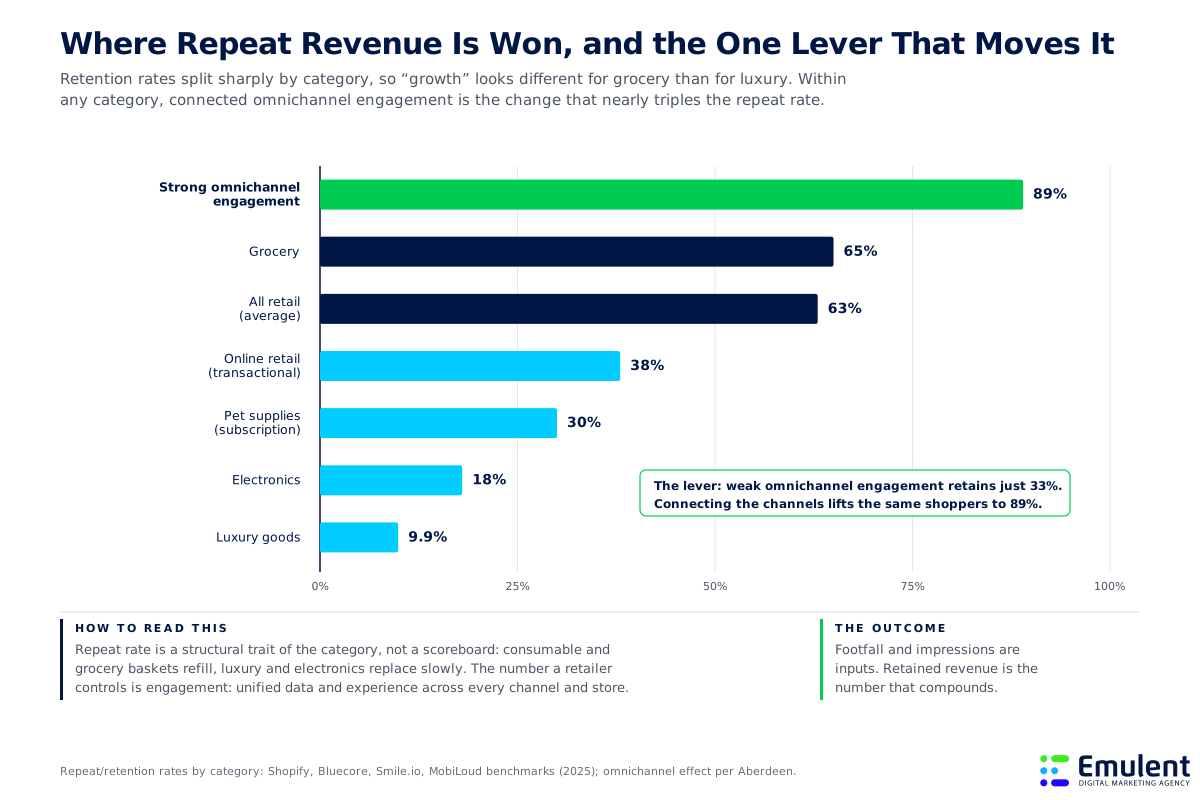
Winning a new customer costs five to twenty-five times more than keeping one, and customer acquisition costs have climbed 222% over the past eight years. Around 65% of retail revenue now comes from repeat buyers. Repeat rates vary widely by category: grocery holds about 65%, transactional online retail sits near 38%, electronics around 18%, and luxury under 10%. The lever that moves all of them is engagement across channels. Shoppers with weak cross-channel connection return at a 33% rate, while strong omnichannel engagement pushes that to 89%.
Why this matters: a 5% lift in retention can raise profit anywhere from 25% to 95%, and that growth compounds instead of resetting each quarter. The brands pulling ahead put budget into loyalty and lifecycle marketing, and the current trends in customer loyalty programs point the same way. Chase rankings and raw traffic instead, and you are tracking a vanity metric that looks good in a report while the real number, repeat revenue, stays flat. Skip retention work, and you rent your growth from ad platforms at prices that keep rising.
The fastest way to grow a retail brand in 2026 is to stop losing customers you already paid to acquire. We have watched a 5% bump in repeat rate do more for profit than a full quarter of paid acquisition, and it costs less to build. Retention is the growth strategy hiding in plain sight. – Emulent Strategy Team
Should You Join Every Retail Media Network?
Retention keeps customers close. Paid retail media is how brands reach new ones, and the money there is growing fast, but it is not spreading evenly.
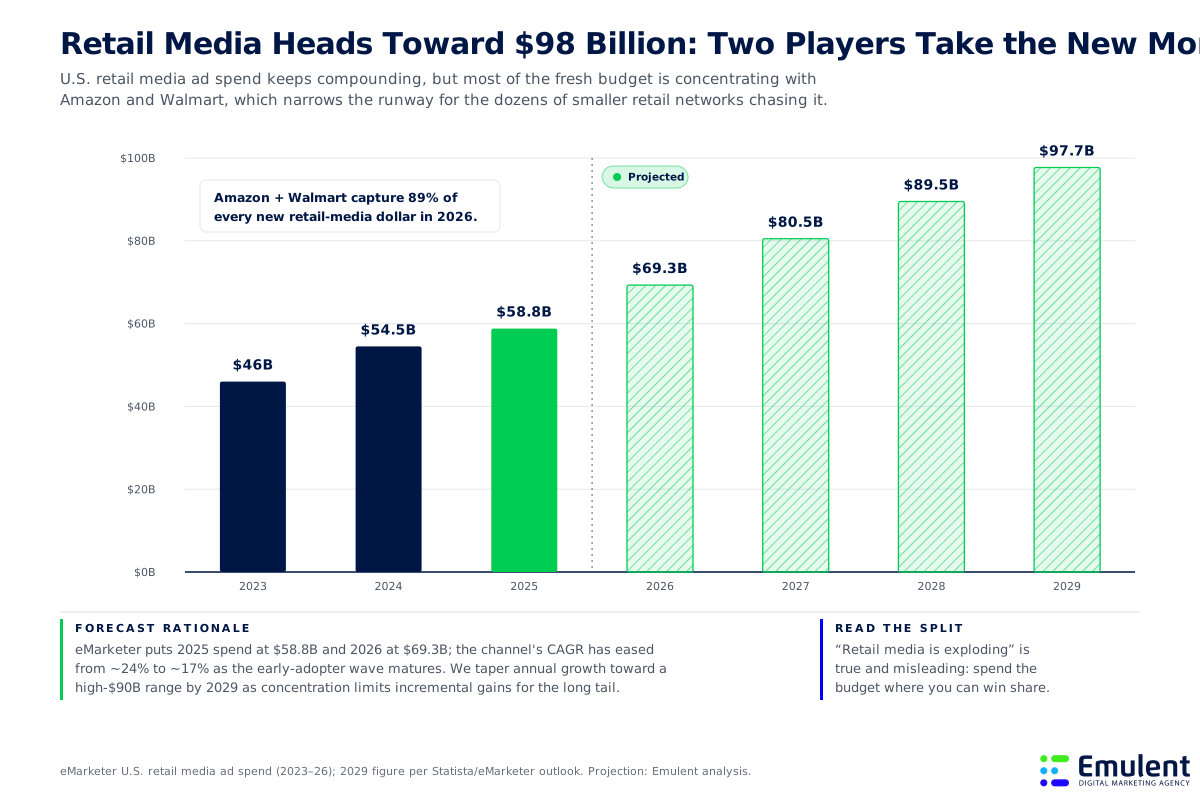
U.S. retail media spend reached about $69 billion in 2026 and is heading toward $98 billion by 2029. The headline growth hides a sharp concentration: nearly 89% of the new dollars added in 2026 go to just two companies, Amazon and Walmart. Meanwhile the average brand now spreads spend across roughly six networks, a number the industry expects to climb toward eleven.
Why this matters: running campaigns on eleven networks means eleven sets of minimums, eleven dashboards, and eleven reporting formats, with most of your budget landing where returns are thin. Saying no to most of those networks and going deep on the two or three that actually sell your products is the sharper play. That same focus is why we do not require long-term contracts: it keeps us honest about spending your money only where it works. Spread your budget across every network instead, and you fund a wall of dashboards while learning very little.
If Every Competitor Uses the Same AI, What Sets You Apart?
Reaching shoppers is one thing. Standing out to them is another, and that is where AI changes the math.
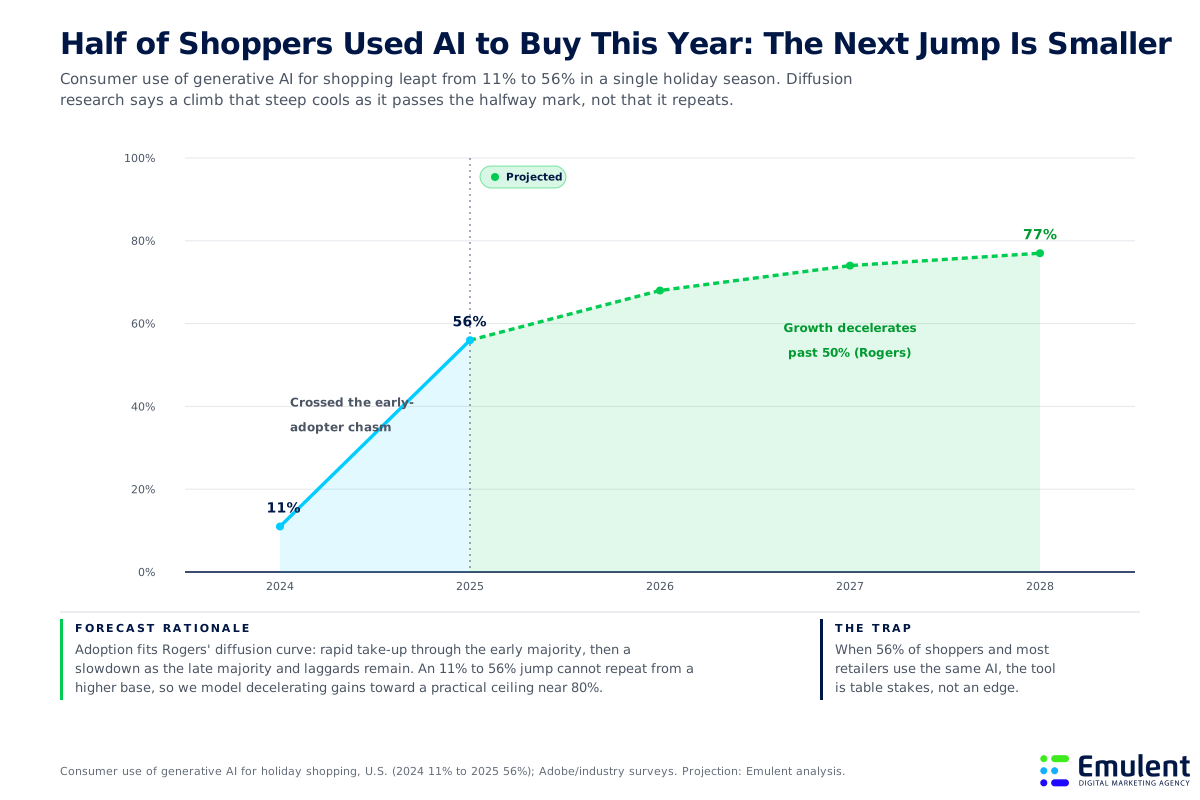
Shopper use of generative AI jumped from 11% during the 2024 holidays to 56% a year later. We expect the next moves to be smaller, around 68% in 2026 and 77% by 2028, the classic shape of a technology that has crossed into the mainstream. On the business side, roughly 78% of companies already use AI somewhere in their work. That is the catch. When nearly every shopper and nearly every competitor uses the same models, the model itself stops being an edge.
Why this matters: AI will write product copy and answer service questions for you and for everyone you compete with, so the advantage moves to the things a model cannot copy. A real point of view, a recognizable brand, and original photography are what make a shopper choose you over an identical listing. We cover this in our work on differentiation in a saturated market, and it shows up in steady investment in retail branding and distinctive retail brand photography. Lean only on the same tools as everyone else, and you blend into a shelf of look-alike results.
AI raised the floor for everyone at once. That sounds like a threat, but it hands an advantage to brands with a clear identity, because the one thing the models cannot generate is a reason to trust you. We spend our time on that reason. – Emulent Strategy Team
Is Your Social Presence a System or a Set of One-Off Posts?
Differentiation needs a place to show up, and for retail that place is increasingly social, where buying and browsing now blur together.
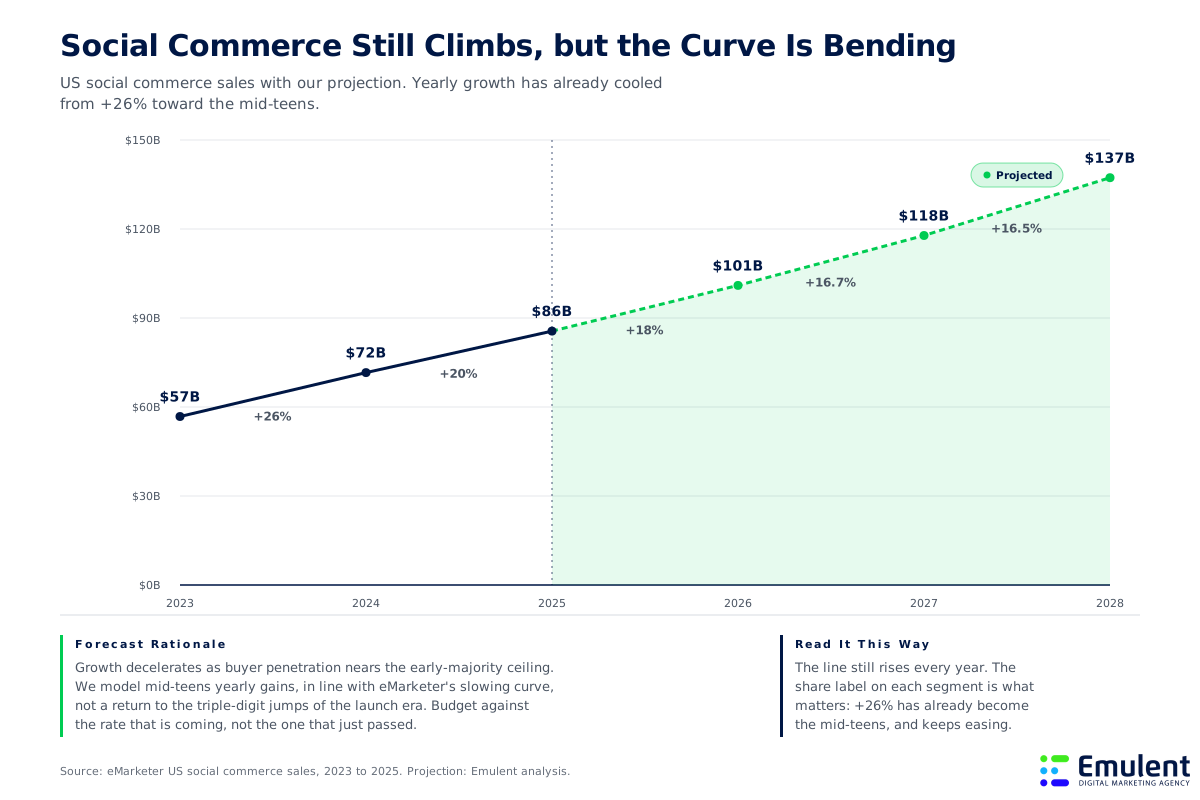
Social commerce crossed a milestone in 2026, passing $101 billion in U.S. sales after 18% growth, and its share of retail e-commerce climbed to about 7.5%, on track for 9.3% by 2029. TikTok Shop alone more than doubled to nearly $16 billion. Yet a trust gap remains: only around 13% of shoppers complete a purchase inside the app, with the rest still preferring to check out on a site they know.
Why this matters: brands that win on social treat it as a system with content, community, and measurement working together, feeding the same owned site and email list that hold the relationship. The ones that struggle chase a viral post, get a spike, and watch it fade. That systems view is the heart of how we think about brand development as a system, not a project, and it connects to broader search everywhere optimization as shoppers hunt for products across feeds, apps, and search at once. Post at random instead, and you trade steady compounding for a brief spike that disappears.
Who Controls the Customer Relationship, You or the Platform?
Each shift so far points back to one question of ownership. When the channel owns your customer, every change to its rules is a change to your revenue.
Shoppers are clear about what they want: 87% expect brands to handle their data responsibly, yet only 46% believe brands actually do. With third-party cookies fading, the data a brand collects directly, through purchases, email, and loyalty, has become the asset that holds everything together. Brands that own that relationship can reach customers no matter how a platform changes its algorithm or its ad prices. Brands that rent it stay exposed.
Why this matters: that 41-point gap between what shoppers expect and what they experience is an opening. Handle data with obvious care, explain what you collect, and make the value exchange fair, and trust becomes a reason to come back. Treat customer data as something to harvest, and you join the crowd shoppers already doubt. The brands growing fastest in 2026 act like the customer relationship is theirs to earn and keep, not something to lease from a feed.
Owning the customer relationship is the quiet advantage behind every other trend on this list. Retail media, social, AI, all of it sits on platforms you do not control. Your data, your audience, and your brand are the parts that travel with you, so that is where we tell clients to plant their flag. – Emulent Strategy Team
What This Means for Your 2026 Plan
The six shifts point in one direction. Growth in 2026 looks less like a sprint toward the next channel and more like a system that keeps customers, sharpens what makes a brand distinct, and concentrates spend where it pays. Online is leveling off, repeat revenue is carrying the load, paid media is consolidating, AI is raising the floor for everyone, social is real but trust-bound, and owned relationships are the ground the rest stands on. The brands growing fastest are the ones building that system on purpose.
If you want a partner to build it with you, our team works on exactly this as a retail marketing agency, from brand and content through retention and measurement. Tell us where your retail brand wants to grow this year, and we will map the plan with you: start a conversation here.