
The fastest-growing garage door companies are not outspending their competitors. They are out-answering them, holding three map slots, and turning $265 repair calls into $4,672 replacement projects. We pulled the current benchmark data on lead costs, ticket values, resale returns, and local click share, then charted what the growth actually runs on. Most of what page one calls a garage door marketing strategy is a tactic list. This is the economics underneath it.
What the numbers say:
- Speed beats spend: 78% of buyers hire the first company that responds. Answering in 5 minutes instead of 30 makes you 21x more likely to qualify the lead.
- The upsell is worth seventeen repairs: An average repair ticket runs $265. The Cost vs. Value replacement project runs $4,672 and returns 268% at resale.
- Three map slots take 44% of local clicks: More than organic (29%) and paid (19%), in a category where the pack is unusually easy to hold.
- Leads cost $46 to $173, depending on channel: And the cheap ones close smaller tickets, which is the part nobody tells you.
- The market compounds at 5.9% a year: Garage door service is a $4.78 billion market, so growth is available, but it flows to whoever is easiest to find and fastest to answer.
Growth Is Available, and It Is Being Redistributed
Garage door service is a $4.78 billion market in 2025, on pace for $7.16 billion by 2032 at a 5.9% compound annual growth rate, with North America holding 36.5% of it. Repair and maintenance make up roughly 46% of service revenue, and that mix holds because homeowners facing high mortgage rates fix what they own instead of moving.
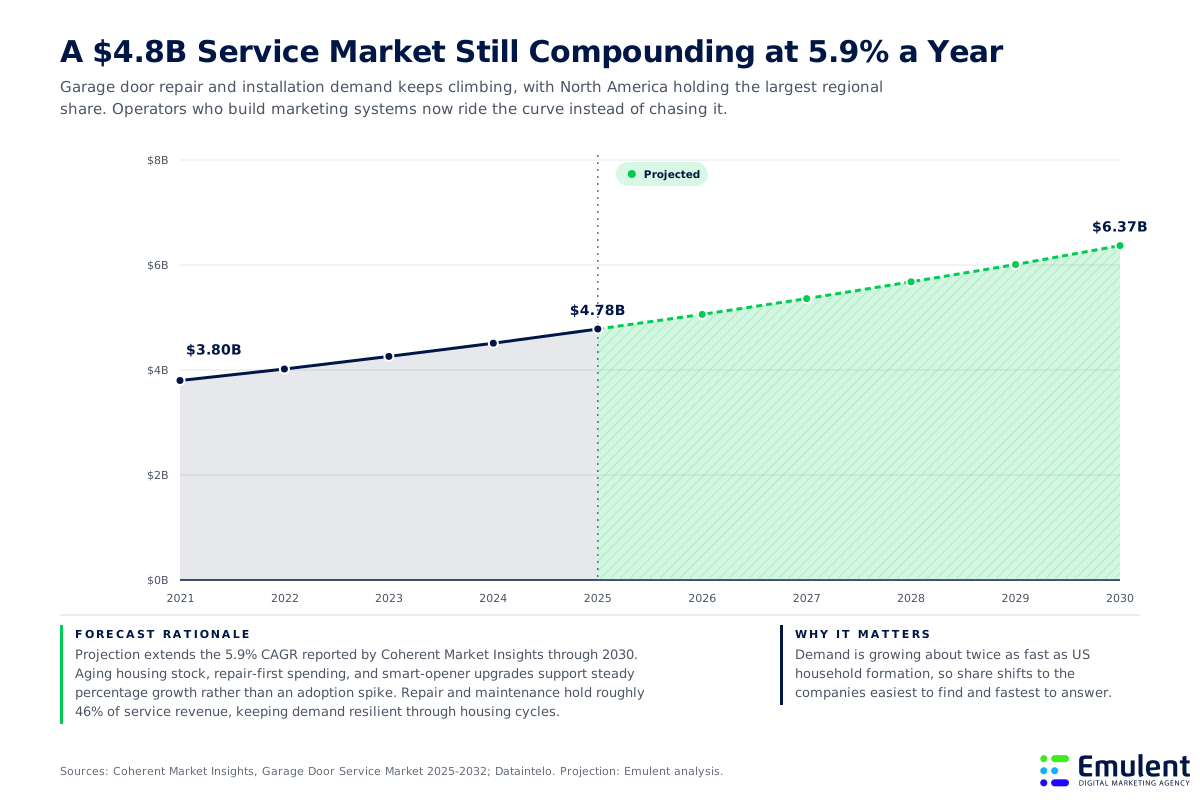
Projection: Emulent analysis based on the source-reported 5.9% CAGR, assuming steady percentage growth rather than an adoption spike because replacement demand is paced by a 15 to 30 year door replacement cycle, cross-checked against the Coherent Market Insights 2025-2032 forecast.
Nobody is building new garages fast enough to explain that curve. Demand is growing about twice as fast as US household formation, which makes this a redistribution rather than an expansion. Somebody’s phone is ringing more and somebody else’s is ringing less. A rising market hides a weak marketing program for roughly two years, because revenue drifts up and owners credit their own decisions for it. Then the drift stops, and the shops with no visibility find out they were riding a tide. Our garage door industry marketing trends report tracks the same split across the category.
The Same-Day Decision: Whoever Answers, Wins
Garage door demand is more urgent than almost any other trade. A snapped torsion spring traps the car. A door stuck open at 9pm is a security problem the homeowner will not sleep through. Nobody in that state opens three tabs and builds a comparison spreadsheet. They call, and 78% of buyers hire the first company that responds.
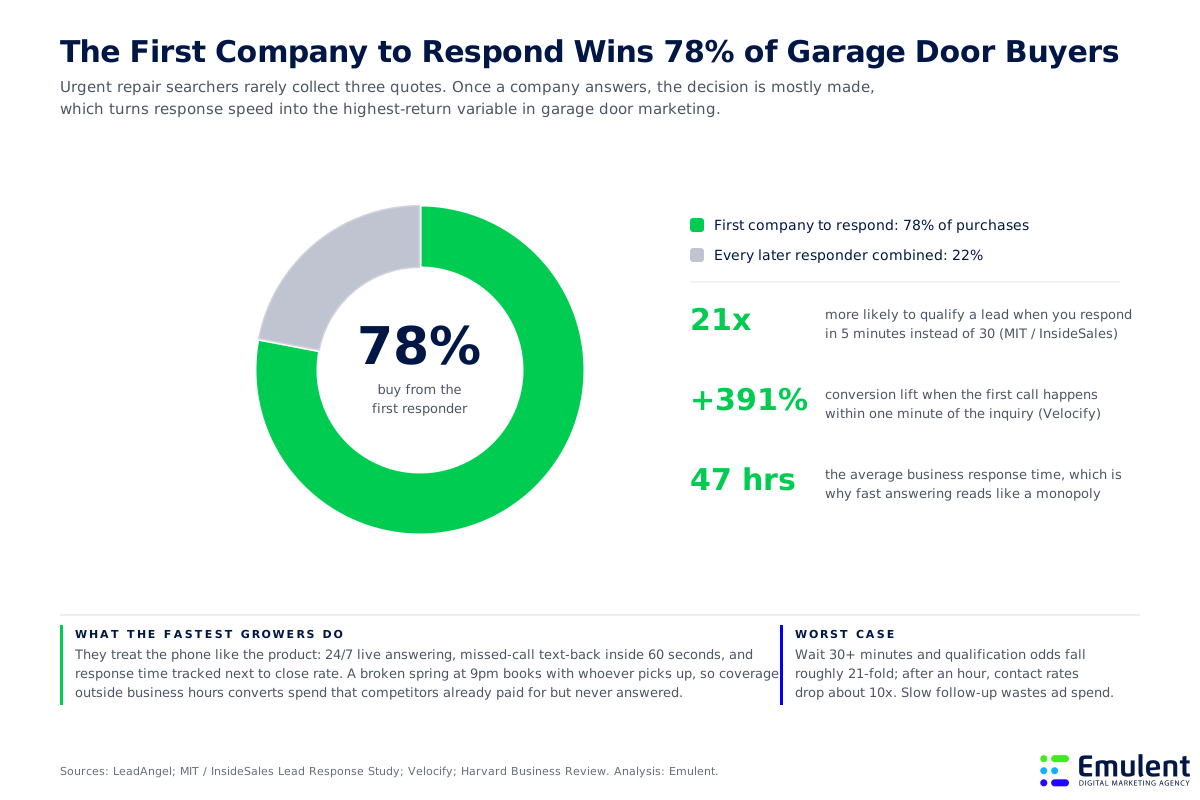
The research is blunt. Contact a lead within 5 minutes instead of 30 and you are 21x more likely to qualify it. Call back inside one minute and conversion climbs 391%. The average business, meanwhile, takes about 47 hours to answer an inbound inquiry. That gap between what buyers do and what companies do is the cheapest growth lever in this trade, and closing it costs less than a month of ads.
The mechanism is loss aversion under time pressure. A homeowner with a broken door is not shopping for the best garage door company. They are trying to stop a problem that is actively costing them access, security, and sleep. The first competent voice on the phone ends the loss. Everyone who calls back tomorrow is selling to a person whose emergency is already over.
“Owners ask us where to put the next $2,000 of budget. Half the time the honest answer is nowhere. Put it into live after-hours answering and a missed-call text-back, then call us in ninety days. You do not have a lead problem. You have a leads-you-already-paid-for-and-never-answered problem.” – Emulent Strategy Team
What the system looks like in practice:
- Live answering after hours, not voicemail. Spring failures ignore business hours, and the 9pm caller is the least price-sensitive buyer you will get all week.
- Missed-call text-back inside 60 seconds. An automatic text holds the buyer while a dispatcher calls back. It costs a few dollars a month.
- Speed-to-contact reported next to close rate. If you cannot state your average response time in minutes, you are not managing the variable that decides most of your jobs.
- “Today” in the ad copy, the profile, and the top of the site. Match the urgency of the search, or a slower company with better copy takes the call.
The Map Pack Monopoly Nobody in This Category Has Claimed
Three Google map listings absorb 44% of clicks, calls, and direction requests on local searches, ahead of traditional organic results at 29% and paid ads at 19%. Businesses inside the top three earn roughly 126% more traffic and 93% more conversion actions than the ones ranked fourth through tenth. Position three and position four live in different economies.
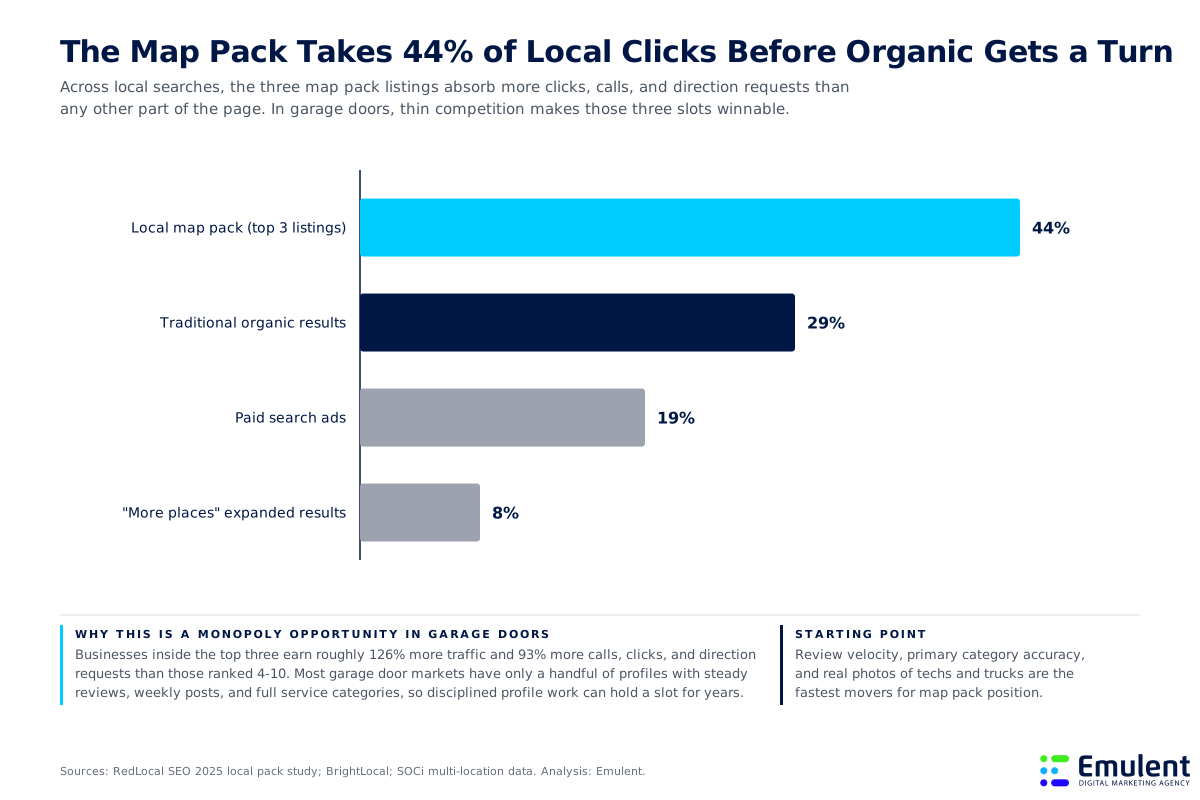
Garage doors differ from every other home service in one way that matters. Plumbing and HVAC packs are crowded with franchise networks and private-equity rollups spending real money to hold those slots. Garage door packs, in most metros, still contain a profile that has not posted in a year, carries 40 reviews, and lists the wrong primary category. The barrier to entry is attention, not budget. Steady google map seo services can take a slot in this category and keep it, which is not a sentence we would write about plumbing.
“A ranking is a vanity metric right up until it sits in the map pack, because that is the only ranking a homeowner touches with their thumb before they dial. I do not care what position 6 does for a garage door client. I care about three slots and a phone that gets picked up.” – Bill Ross, Founder, Emulent
The work that moves pack position fastest, in order:
- Review velocity, not review total. A steady drip of recent reviews naming your services and cities outperforms a large stale pile. An SMS after each job produces 15 to 25 a month.
- Primary category precision. “Garage Door Supplier” and “Garage Door Repair” surface different results, and the wrong pick quietly forfeits rankings you already earned.
- Real photos of real technicians. Stock imagery of a stranger’s garage tells a homeowner nothing about who is walking into their house. We treat brand photography as lead generation, not decoration, and the reason professional team photos build instant trust is that the buyer is deciding whether to let you inside their home.
- Every service and every suburb, listed. Full profile coverage expands the queries you can appear for at zero media cost.
Reviews now do double duty. They feed the map pack, and they feed the AI answers that summarize local options before a homeowner ever sees a listing, which is the argument in our piece on how reviews affect AI search. Our 20 point local SEO checklist runs the full sequence in order.
Repair-to-Replacement Laddering: Where the Growth Actually Comes From
Zonda’s Cost vs. Value Report put garage door replacement at a 268% return at resale in 2025, the highest of all 28 projects tracked and the top project in all nine US regions. The return climbed from 93% in 2022 to 103% in 2023 and 194% in 2024, while the average job cost rose only $370 over those three years. The gain came from the resale side, not from installers raising prices.
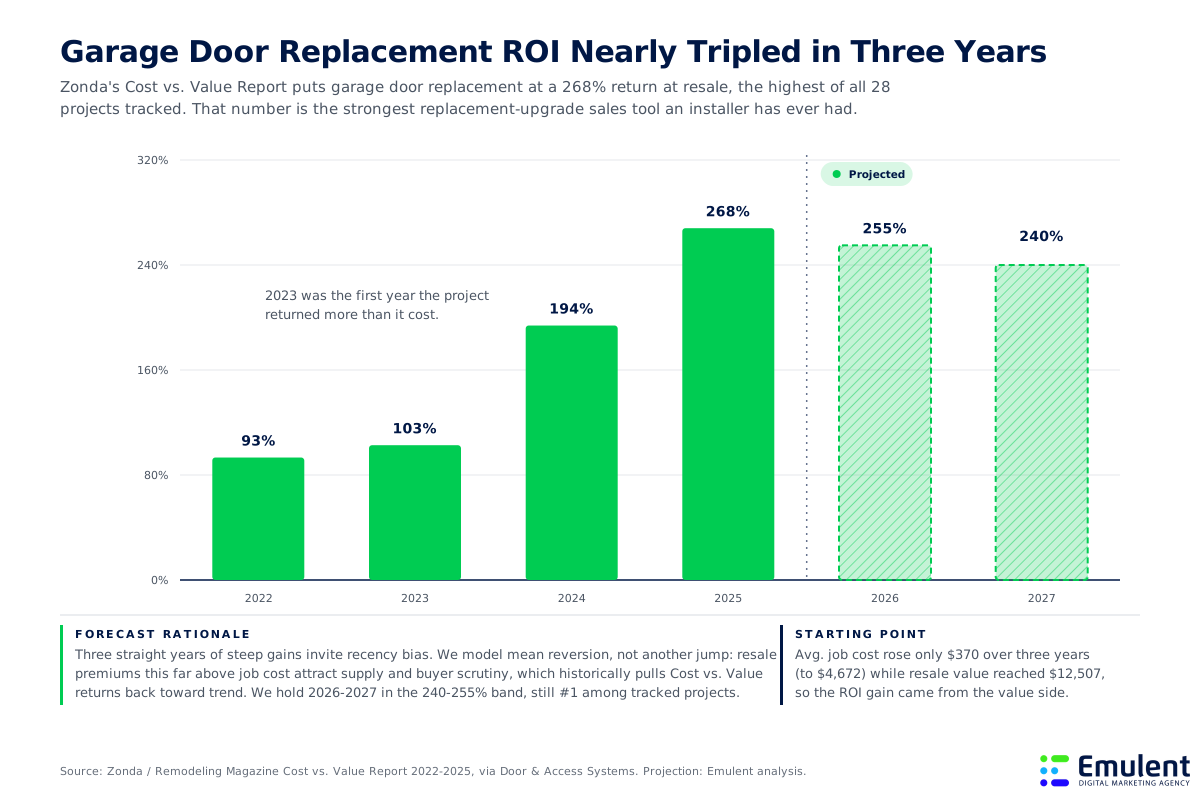
Projection: Emulent analysis based on mean reversion, assuming a soft decline toward the 240% range because resale premiums this far above job cost draw supply and buyer scrutiny, cross-checked against the job-cost creep Zonda reports in the 2025 Cost vs. Value Report.
That statistic is a sales asset sitting unused in most trucks. A technician looking at a 17-year-old door with a second failed spring can quote the repair, then say the replacement returns more than two and a half times its cost at resale according to third-party remodeling data. That is not an upsell. It hands the homeowner the best-returning project in residential remodeling at the exact moment they are already thinking about the door.
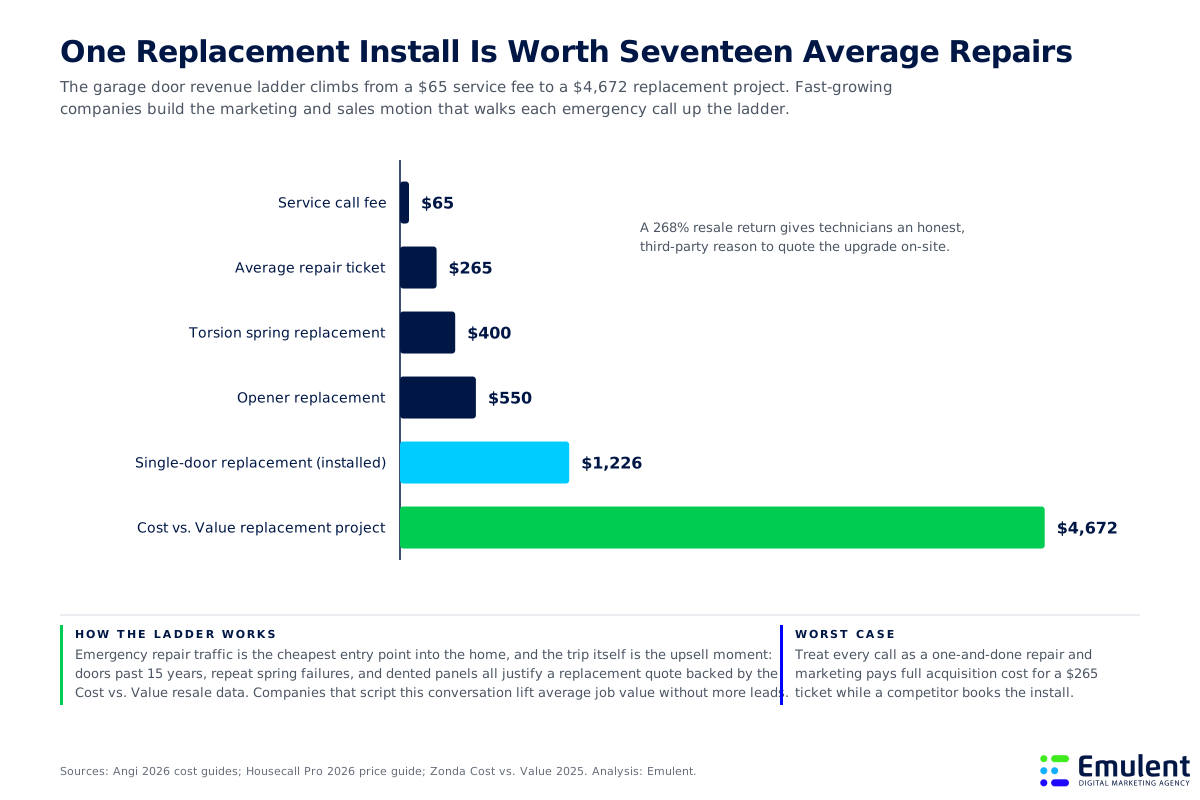
The ladder makes the math impossible to ignore. Average repair ticket: $265. Torsion spring: about $400. Opener: about $550. Installed single door: $1,226. The Cost vs. Value project: $4,672. One replacement is worth roughly seventeen average repairs. A company that never scripts this conversation pays full acquisition cost for a $265 job, then watches a competitor book the $4,672 install eight months later on a door it already stood in front of.
“Every garage door owner we meet measures cost per lead. Almost none of them measure revenue per truck roll. Same leads, same ad spend, and the two P&Ls look nothing alike, because one company trained the conversation that happens in the driveway and the other did not.” – Emulent Strategy Team
Where the Paid Budget Goes, and What It Actually Buys
Benchmark data from January through April 2026 puts garage door leads at about $46 on Google Local Services Ads, $66 on branded search, and $173 on non-branded Google Ads. The instinct is to shift everything into the cheap channel. That instinct costs money, because the channels buy different customers.
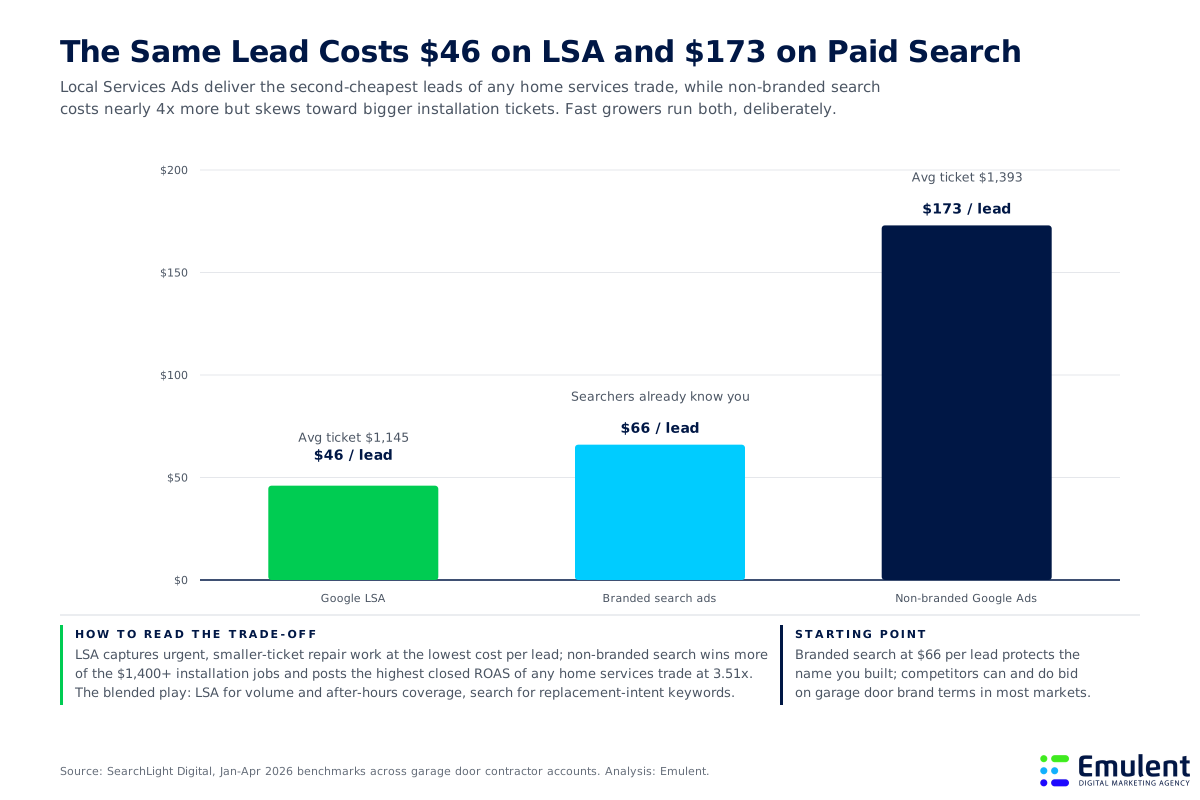
LSA leads close at an average ticket of $1,145 and skew toward urgent, smaller repair work. Non-branded search leads close at $1,393, carry more replacement intent, and post the highest closed return on ad spend of any home services trade at 3.51x. A $173 lead that closes a $1,393 install beats three $46 leads that close $265 repairs, and a dashboard tracking only cost per lead will never show you that. For context outside this trade, see our benchmarks on cost per lead by industry and average conversion rate by industry.
The blend that works:
- LSA for volume and after-hours coverage. Pay-per-lead pricing, the Google Guarantee badge, and lead disputes make it the lowest-risk place to start.
- Non-branded search aimed at replacement keywords. The big tickets live here. Bid accordingly and stop judging it against LSA on cost per lead alone.
- A small always-on branded campaign. At $66 a lead it is the cheapest insurance in paid media, because competitors bid on the name you paid to build.
- A site that can hold the click. A slow, dated site makes every channel above more expensive. If yours has not been touched since 2016, fix the website design before you raise a single bid.
What We Would Tell You to Stop Doing
Three line items eat garage door marketing budgets and return close to nothing.
Blog volume. Nobody reads “10 Signs Your Garage Door Needs Repair” and books an appointment. One real page per service and per city out-earns forty blog posts, and those pages do not need refreshing every quarter.
Organic social. Homeowners do not follow garage door companies. They discover one at the moment of failure. Posting three times a week to 260 followers is a hobby with a content calendar attached.
Ads running on top of a broken phone. If nobody answers after hours and you have fewer than a hundred recent reviews, do not spend another dollar on media. You are paying to generate calls that reach voicemail and buyers who weigh your 40 reviews against a competitor’s 300. Fix the answering and the reviews first. That advice costs us ad management revenue, and we give it anyway, because the alternative is billing you to fill a bucket with a hole in it.
Working With Emulent
We build home services marketing programs in the order this study lays out: answer first, take the three map slots, ladder the repair into the replacement, then buy paid volume once the foundation can hold it. Senior strategists do the work, and we refuse long-term contracts, because results should keep you here instead of paperwork. If you want marketing for garage door companies built on these economics rather than a tactic checklist, talk to a marketing agency that will tell you what to stop doing first.