
The fitness market spent four years on a rollercoaster, and the numbers have finally settled enough to read. Here is what separates the brands still climbing from the ones waiting for a surge that is not coming.
Lockdowns emptied gyms. Home equipment sold out. Workout apps topped the download charts, and then the correction came for all of it. Now the data has cooled into something you can actually plan against. We pulled membership counts, hardware and subscription revenue, wearable adoption, creator spend, and two competing app forecasts, then looked for the habits shared by the brands that kept growing through the whole cycle.
Those habits look almost boring next to the tactics filling most marketing round-ups. The brands winning in 2026 measure outcomes instead of applause. They invest in what people keep using. They build a voice that does not blend in. They treat a customer as a system to keep, not a sale to book once. And they plan around the revenue people actually pay, not the headline a research firm prints. Five charts tell that story, and each one points to a move you can copy.
Outcomes beat the numbers that only look good
US gym membership did not just recover. It set a record. Membership climbed from 64.2 million in 2019 to about 77 million in 2024, and roughly a quarter of the population aged six and up now holds one. That is real growth, and the temptation is to read it as a runway for the same double-digit jumps to keep coming. The math says something quieter. When a quarter of a country already belongs to a gym, the pool of easy first-time joiners shrinks, and growth bends toward the pace of the population itself. We model the next four years adding low single-digit millions a year and slowing, not a repeat of the near thirteen-million climb the recovery delivered from 2019 to 2024.
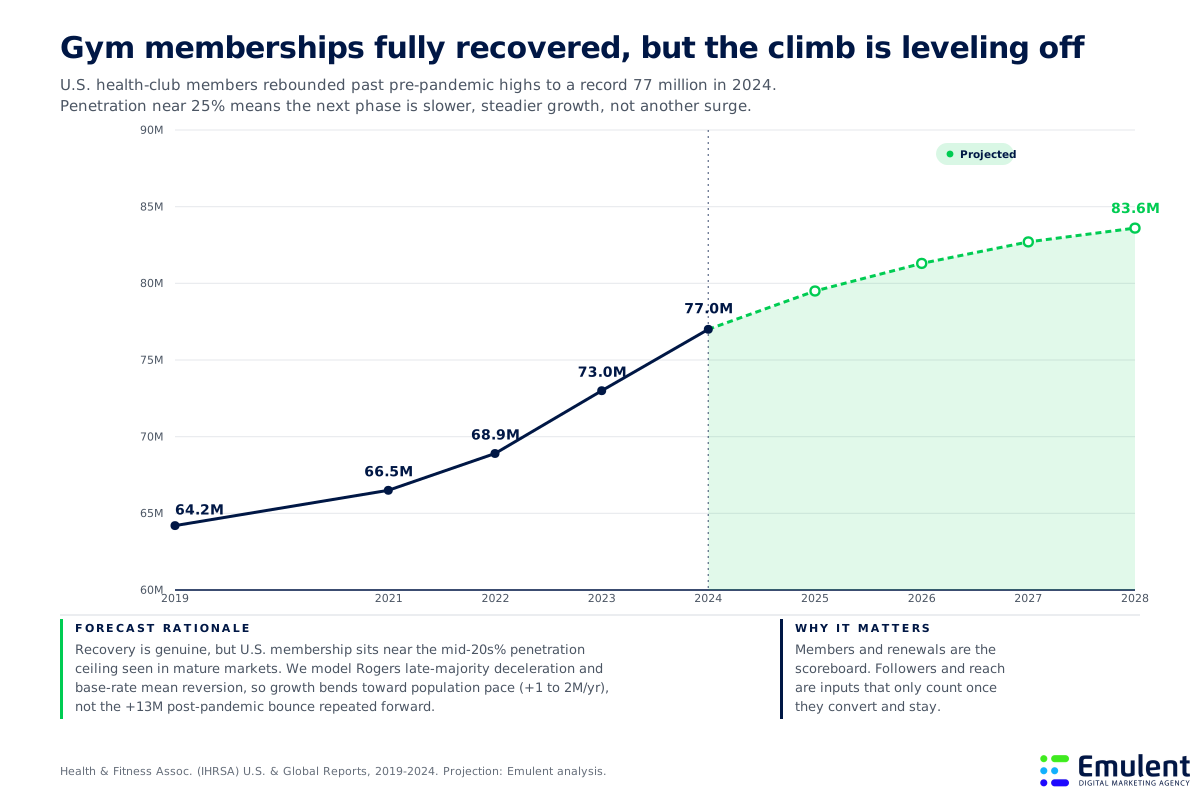
That ceiling changes what a marketing number should mean. A follower count, a reach figure, a video view: each one counts a moment of attention that may never become a paying, returning member. Members and renewals are the scoreboard. The brands growing now track the whole path, from a first visit to a signed membership to a twelfth month of attendance, and they spend against the steps that actually move someone forward. Search is one of those steps, since most memberships still begin with someone typing a need into Google, which is why durable fitness SEO earns its place ahead of one more attempt to go viral.
A view is a maybe. A renewal is a fact. We push every client to report the facts first, because a number you cannot bank is a number that flatters the deck and starves the business. – The Strategy Team at Emulent Marketing
Substance beats hype
Plenty of fitness technology arrived with a press release and left without a trace. Virtual-reality workouts, the metaverse gym, a connected mirror in every living room: each drew a funding round and a magazine cover, then faded. One device quietly won. Global smartwatch users grew from 97.6 million in 2020 to roughly 563 million in 2025, and about 92 percent of owners use the watch to track health or fitness. That is an adoption curve with weight behind it, the kind that shows up in daily habits instead of headlines.
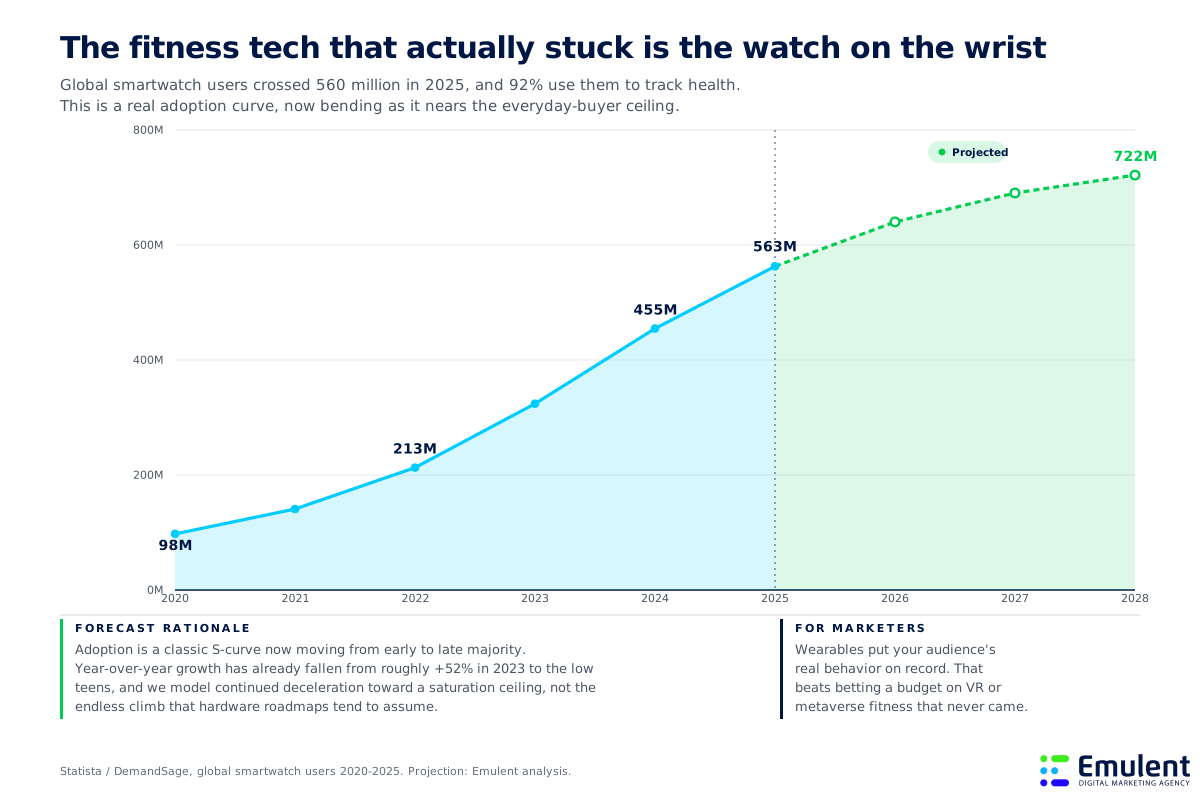
The curve is also bending. Year-over-year growth has already cooled from around 52 percent in 2023 into the low teens, the signature of a product moving from early adopters to the late majority as it nears the everyday-buyer ceiling. We model continued deceleration toward saturation, not the endless climb a hardware roadmap likes to assume. For a fitness brand the takeaway is direct: meet the behavior people already have. A member who lives by the watch on their wrist wants their progress, their classes, and their next session to appear where they already look. A site and app experience built around that real behavior beats a budget aimed at the technology that never landed, which is the practical reason fitness web design sits much closer to retention than most brands treat it.
Differentiation beats sameness
Open any guide to growing a fitness brand and you will read the same advice: short-form video, micro-influencers, user-generated clips, a referral program. None of it is wrong. It is just no longer rare. Brand spend on creators roughly quintupled from 6.5 billion dollars in 2019 to an estimated 33 billion in 2025, and fitness was one of the earliest heavy adopters. When a tactic goes from edge to default, the advantage shifts to whoever stands out inside it.
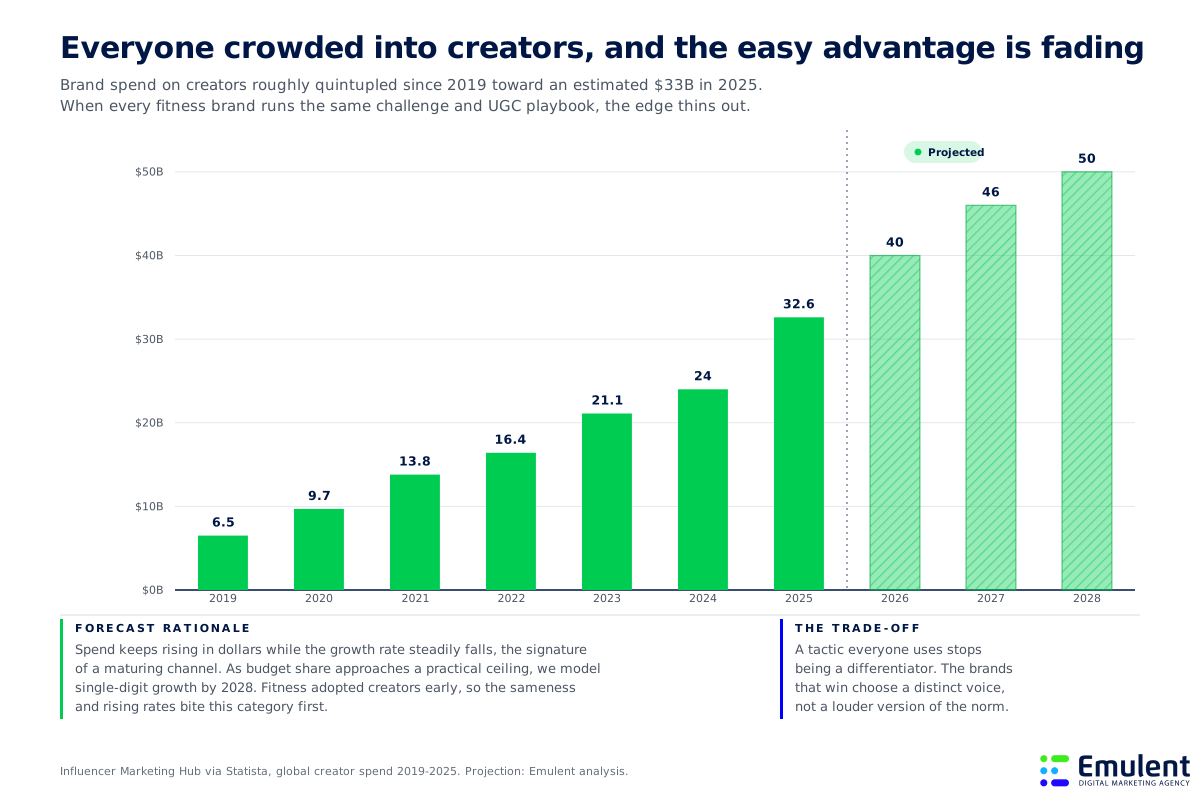
The spend keeps rising while the growth rate steadily falls, which is what a maturing channel looks like as budget share nears a practical ceiling. We model single-digit growth by 2028. The brands that keep winning in a crowded channel are the ones a viewer recognizes in a half-second of scrolling, before the logo even appears. That recognition starts with a deliberate fitness branding decision about voice and look, then gets carried by original fitness brand photography and fitness brand videography instead of the same stock-feeling clips every competitor posts the same week. A louder version of the identical message does not separate you from the pack. A distinct one does.
When everyone runs the same playbook, the playbook stops being an advantage and becomes the price of entry. The growth is in the half-second a stranger recognizes you, and that half-second is built on purpose, not by accident. – The Strategy Team at Emulent Marketing
Systems beat one-off projects
No company shows the cost of mistaking a spike for a trend better than Peloton. Hardware revenue rocketed to 3.15 billion dollars in 2021, then fell by roughly two-thirds as the one-time buying rush ended. The part of the business that held was the part nobody put on a magazine cover: the subscription. Recurring revenue climbed every single year through the boom and the bust, and it passed hardware for good in 2023.
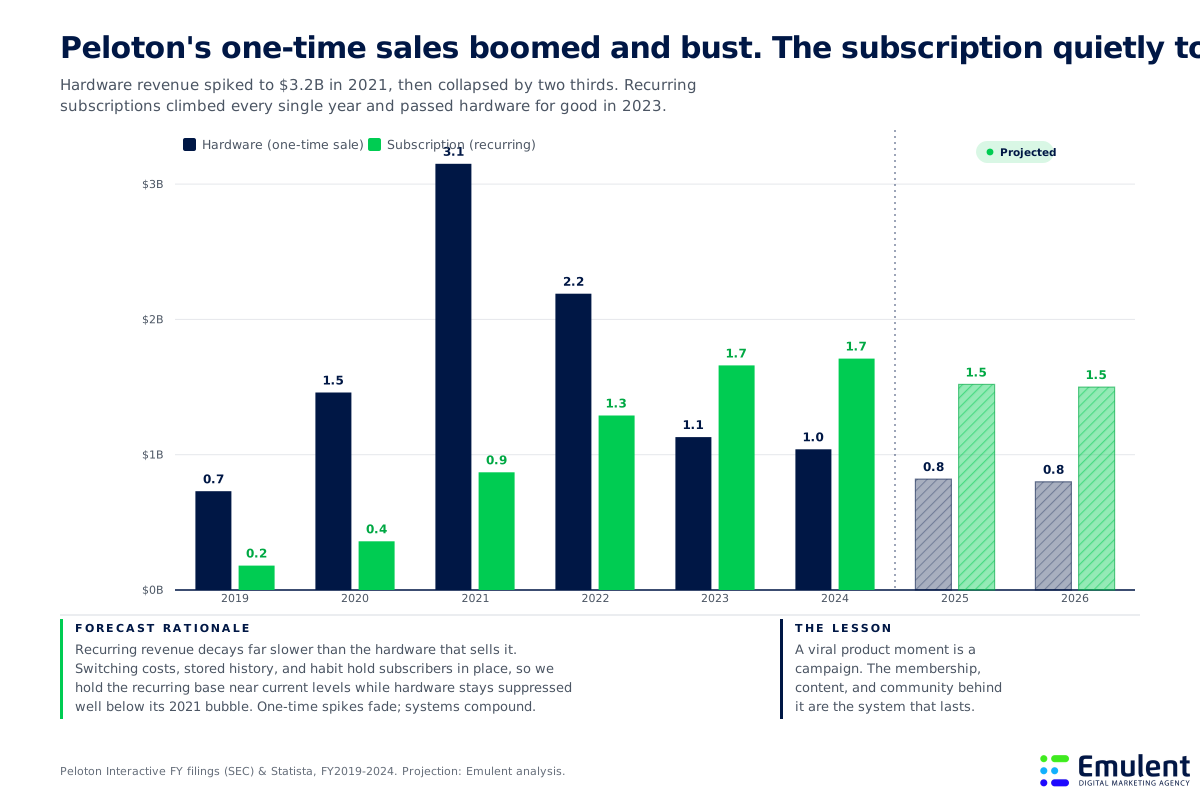
That split is the whole lesson in one picture. A one-time sale is a campaign. It books revenue once, then asks you to find the next buyer all over again. A subscription is a system: switching costs, stored workout history, and daily habit hold members in place, so the revenue compounds instead of resetting. We model the recurring base holding near current levels while hardware stays well below its 2021 bubble, because systems decay far more slowly than the products that sell them. For most fitness brands the equivalent is the machine that turns a first purchase into a membership, a membership into a renewal, and a renewal into a referral. Paid acquisition has a real role feeding the top of that machine, and fitness PPC pays back best when it pours into a system designed to keep people, not into a single sale that ends at the checkout.
Grounded realism beats the headline forecast
The future of fitness gets sold in big round numbers, and the fitness-app market is the clearest case. Search the size of the market and you will find headline projections pointing to roughly 30 billion dollars by 2030. Look instead at what consumers actually pay, the business-to-consumer revenue, and the picture flattens to growth of about 2 percent a year, landing near 10 billion. Both figures are real. They count different things. The headline counts every install, ad dollar, and platform fee across the whole category. The lower line counts the money real people hand over for the product.
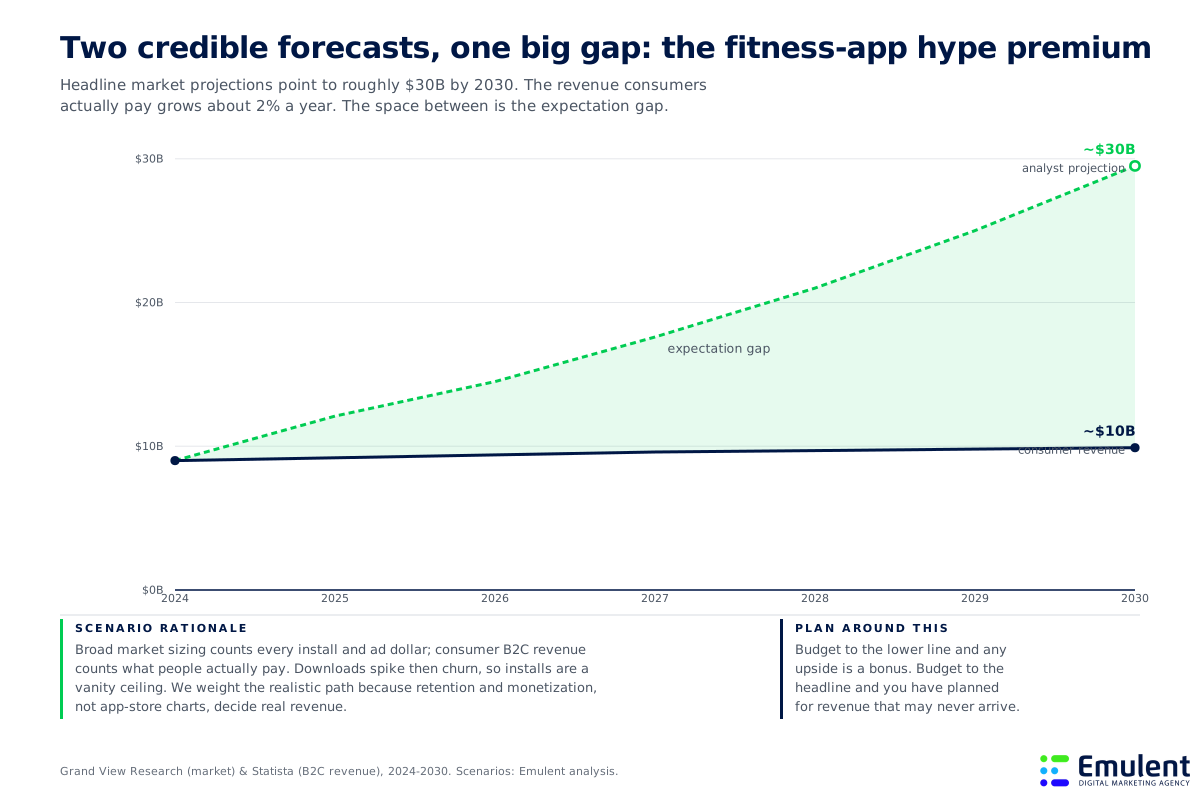
The gap between those two lines is where budgets go to die. Plan against the 30-billion headline and you have staffed and spent for revenue that may never arrive, since downloads spike and then churn, which makes installs a vanity ceiling rather than a forecast. Plan against the consumer line and any upside becomes a bonus instead of a shortfall. We weight the realistic path on purpose, because retention and monetization decide real revenue, not app-store rankings. The same discipline applies to every projection a fitness brand builds a plan on: anchor to the dollars customers pay, and treat the broad market figure as the ceiling of what is possible, not the floor of what is promised.
Budget to the line you can defend. We would rather a client be pleasantly surprised by upside than caught short by a forecast that counted downloads as if they were dollars. – The Strategy Team at Emulent Marketing
What the five charts agree on
Read together, the charts point one direction. Membership has recovered, but the easy growth is spent, so outcomes matter more than applause. Wearables won while flashier technology faded, so substance beats hype. Creator spend has gone mainstream, so a distinct voice beats a louder copy of everyone else. Peloton’s recurring revenue outlasted its hardware spike, so systems beat one-off wins. And the fitness-app forecasts split by a factor of three, so a plan anchored to real revenue beats one built on a headline. None of these is a trick. Each is a habit, and habits are what separate the brands still climbing in 2026 from the ones hoping the last surge repeats.
– The Strategy Team at Emulent Marketing
If you want a growth plan built on the durable line rather than the hopeful one, our team works with fitness brands on exactly this. See how our fitness marketing agency approaches it, or get in touch to talk through where your own numbers point.