
The financial services companies growing fastest in 2026 share a pattern, and it has little to do with spending more. They publish less generic content, measure outcomes their competitors ignore, and treat their website and audience data as assets they own rather than channels they rent. This study pulls adoption data from 100 US banks, digital ad-spend figures across the sector, and the shift toward AI answers in search to map what actually drives growth now, and what to expect through 2028.
Six findings shape the 2026 plan:
- AI is in production, not driving revenue yet. Roughly 47% of banks run generative AI in production, up from 10% in 2023, but close to 56% of that work targets internal efficiency rather than new revenue.
- Clicks and rankings are losing meaning. AI answers appear on a growing share of financial searches and cut organic click-through by about 58% when present, so fewer but higher-intent visitors remain.
- Most firms still do not measure return. More than half of banks do not track marketing ROI across campaigns, a blind spot that gets costly as traffic counts drift away from revenue.
- Sameness is the real risk. Content volume is set to climb several times over by 2027 while AI pushes most of it toward one voice, so distinctiveness decides who gets chosen.
- First-party data is collected but loosely governed. About 91% of marketers gather it; close to half manage it with immature controls, a trust and compliance exposure in finance.
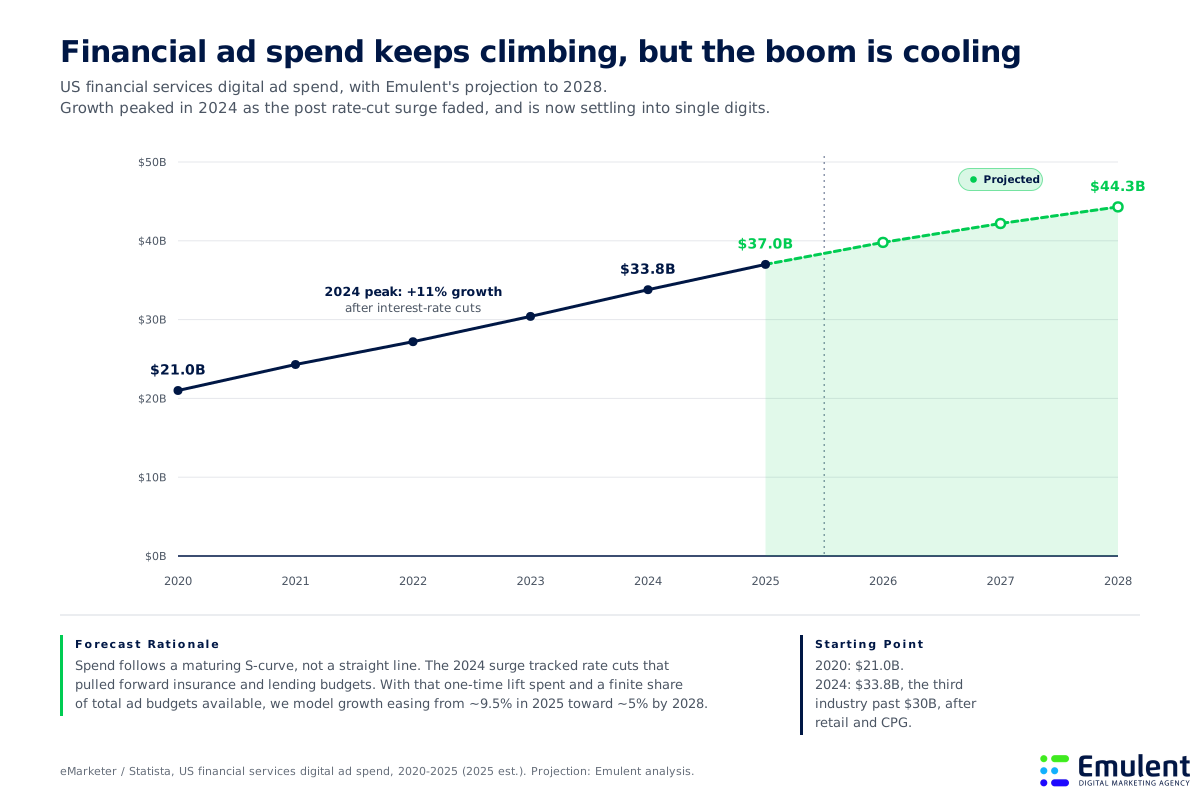
- Growth is moderating, not stopping. Sector ad spend keeps rising from about $34B in 2024 toward $44B by 2028, but the annual pace settles toward 5%.
What is AI actually doing in financial marketing right now?
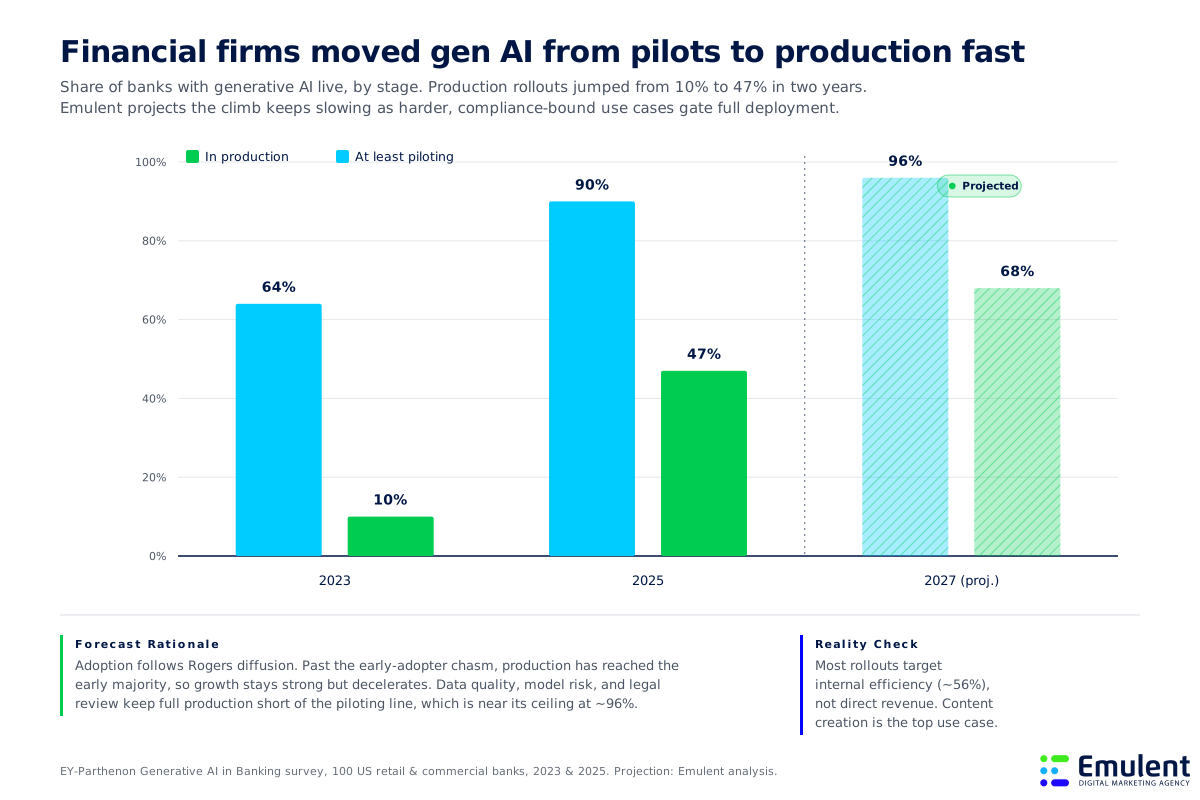
Adoption is real and fast. By 2025, around 77% of banks had launched or were testing generative AI, and 47% were running it in production, up from just 10% two years earlier. We expect production to reach roughly 68% by 2027 as the technology moves through the early majority. The part that gets skipped: close to 56% of that AI use targets internal efficiency, drafting, research, and content repurposing, not direct revenue. Confidence is modest too, with most bank marketers rating their own AI skills as limited. Below the noise, the value is narrower but concrete. AI speeds up compliant content production and early research, which frees teams for the work machines cannot do: strategy, relationships, and owning the client. A stronger financial services content marketing operation comes from sharper judgment, not just more output. The firms pulling ahead use AI as a research and content accelerator while keeping brand decisions human-led. Teams that hand strategy to the tool publish more and say less. That sets up a harder question: once all that content is live, what are you measuring to know any of it worked?
Where generative AI earns its place
- Content drafting and repurposing: turn one approved asset into many versions faster, so legal review becomes the limit instead of writing time.
- Early market research: summarize competitor moves and audience signals before a campaign is scoped.
- Personalization at scale: match message to segment while a person keeps control of the guardrails.
AI buys financial marketers speed, not a point of view. The teams winning with it spend the time it frees on judgment, not on publishing more of the same. – Strategy Team, Emulent Marketing
Are you measuring growth, or just counting activity?
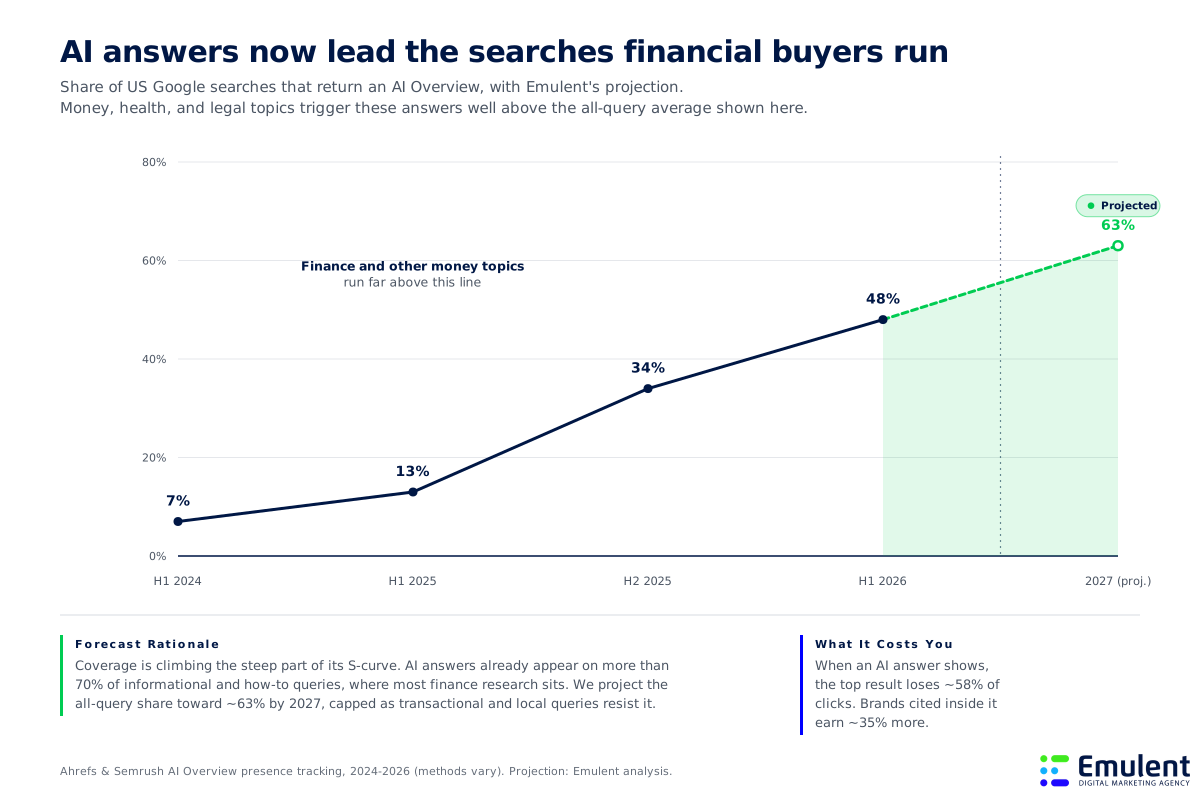
Most financial brands do not measure marketing return across their campaigns, and that gap gets expensive as the metrics they lean on start to mislead. AI answers now appear in close to half of US searches and run higher on money topics, cutting organic click-through by about 58% when they show. We project AI answers reach roughly two-thirds of all searches by 2027. The clicks that remain carry higher intent, while visibility shifts toward being cited inside the answer itself. Bank of America already holds around 32% of AI banking-answer visibility. Rankings and clicks were always proxies. The signal that matters to a CFO is funded customers: cost per funded account, applications sourced from search, retention, and whether AI tools name your brand. A page can rank first, lose the click to an AI answer, and still be cited as the source, which is the visibility worth tracking now. That reframes financial services SEO around citation and intent rather than position. When every competitor chases the same surface metrics with the same tools, the edge goes to whoever measures the thing tied to revenue.
The metrics worth reporting
- Cost per funded account: real spend divided by customers who opened and funded, not raw leads.
- Organic and AI-answer visibility: applications traced to search, plus how often AI tools cite your brand.
- Retention and lifetime value: what a customer generates over time, where financial growth compounds.
In finance, a first-page ranking that no one clicks is activity, not growth. Report cost per funded customer, and most channel debates settle themselves. – Strategy Team, Emulent Marketing
If every financial brand reads the same, why would anyone choose yours?
The sector is converging on the same playbook: similar content topics, similar tools, similar reassuring tone. AI accelerates that drift, and research from early 2025 shows consumers trust content they read as machine-made less than content they read as human. In a category that runs on trust, sounding like everyone else carries a real cost. The brands that break through take a position they can defend, speak to a specific audience, say something competitors will not, and back it with proof. Distinctiveness is what makes a considered, high-trust buyer choose you over a cheaper, blander option. A recognizable brand is built deliberately, which is why financial services branding works as a growth lever and not decoration. Distinctiveness also compounds only when you own the assets behind it, your data and your audience, so no platform can reprice them out from under you. For a closer look at how this plays out in crowded categories, Emulent covers brand differentiation techniques for saturated markets in depth. The point holds across the sector: more content does not separate you, a clear position does.
What makes a financial brand hard to copy
- A narrow position: one you are willing to let some prospects walk away from, so the right ones recognize themselves.
- First-party proof: your own benchmarks, client outcomes, and data that competitors cannot reproduce.
- A consistent voice and look: the same brand across the website, search results, and every channel.
Who really owns your growth, you or the platform?
About 91% of financial firms collect first-party data, but close to half manage it with immature controls. In a trust-dependent industry, personalization without governance becomes a liability your customers’ trust pays for when something leaks or misfires. The deeper issue is control. Rented channels, paid social and the like, keep raising costs and changing their rules, and your reach moves with an algorithm you do not set. Owned assets behave differently. Clean first-party data with clear governance, a website built to convert, and direct channels like email and your app keep working on terms you control, and they give you the transparency a black-box platform never will. Your website is the one place you fully own in the buyer’s journey, so financial services web design that turns visits into applications protects more growth than any single ad campaign. In a regulated sector, that ownership also lowers your exposure. With a finite budget, the question becomes sharp: where do you concentrate spend, and what do you cut?
The assets worth owning
- First-party data with governance: consented, well-managed data you can act on without borrowing trust.
- A conversion-focused website: the hub every channel points to, measured on applications, not visits.
- Direct audience channels: email and app relationships a platform cannot reprice or switch off.
Your data, your website, and your audience are the only assets a platform cannot take back or charge you more for. Everything else is rent. – Strategy Team, Emulent Marketing
What should financial marketers stop doing in 2026?
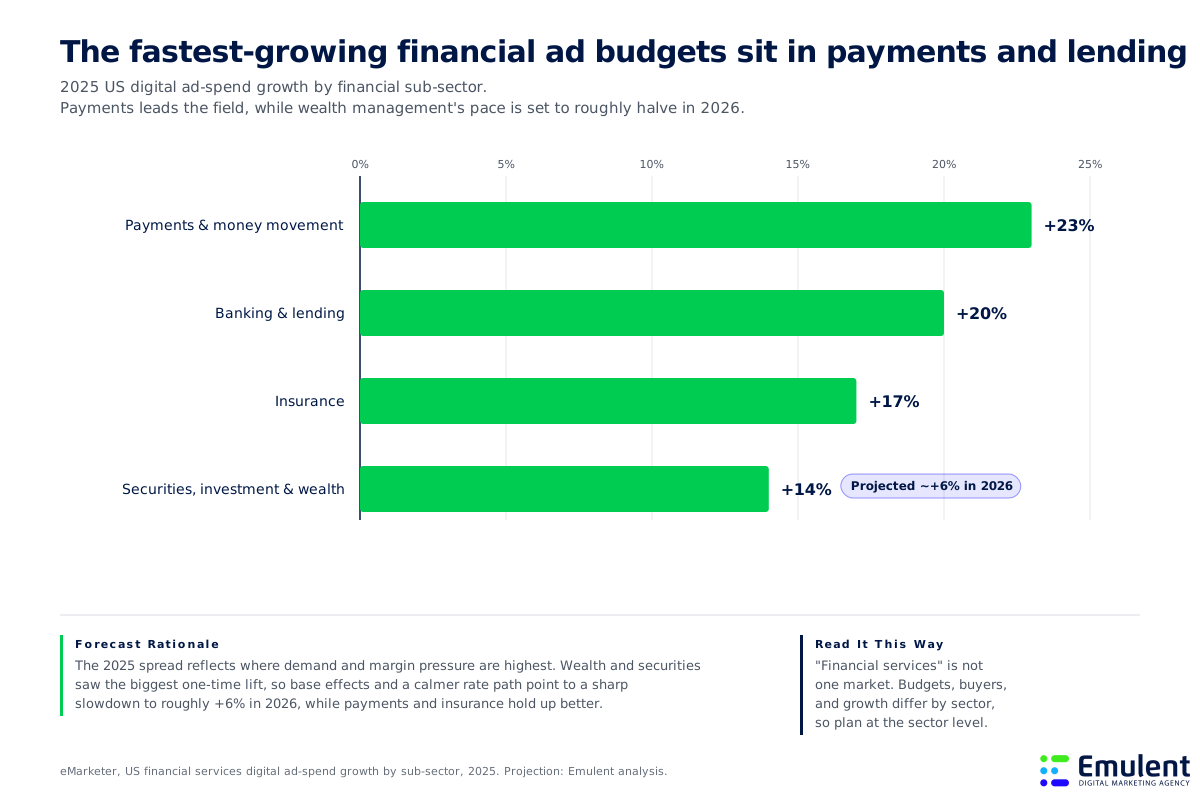
Financial services is not one market. Growth in 2025 ran from +23% in payments and money movement down to +14% in securities and wealth, and that wealth figure is set to roughly halve toward +6% in 2026. A single plan stretched across every sub-sector spends against averages that describe none of your buyers. At the same time, paid social returns are flattening as ad fatigue and rising costs eat into them. The move is to concentrate budget where demand and margin actually sit, and to stop spreading it thin out of habit. Saying no is what frees the budget to do anything well, and most financial marketing plans fail from overcommitting rather than from holding back. Plan at the sector level, fund the channels that convert for your specific buyer, and let the rest go.
Three things to cut first
- Undifferentiated social spend: broad campaigns with flattening returns and no clear tie to customers.
- Channels with no attribution: any spend you cannot trace to applications or funded accounts.
- Generic content competitors already own: topics where you will not rank or be cited, so the effort never returns.
Most financial marketing budgets fail by doing a little of everything. The strategic work in 2026 is deciding what to stop. – Strategy Team, Emulent Marketing
What should you expect from the next two years?
Steady growth, on a calmer curve. Sector digital ad spend keeps climbing from about $34B in 2024 toward $44B by 2028, but the annual pace settles toward 5% as the post rate-cut surge fades. AI keeps absorbing informational search, and adoption curves that looked exponential flatten as they near their ceilings. None of that argues for retreat. It argues for building systems that compound. Search visibility, brand equity, and an owned audience keep returning value long after the spend stops, while campaigns end the moment the budget does. The financial brands that pull ahead treat marketing as an operating system, not a series of one-off pushes: they measure leading indicators like applications and retention, diversify beyond any single channel, and plan against the slower curve ahead instead of extrapolating from the steeper one behind. The numbers point to a sector that rewards patience and discipline over the next two years, not a land grab.
How to build for the slower curve
- Compounding over campaigns: fund search, brand, and owned channels that keep returning after the spend ends.
- Diversified demand: reduce reliance on any one platform whose rules and costs you do not control.
- Leading indicators: track the early signals, applications and retention, that predict funded growth.
The 2026 takeaway for financial brands
The growth stories in this study run on discipline rather than budget. The firms ahead use AI to move faster without surrendering their voice, measure funded customers instead of clicks, own a position competitors will not take, and keep their data, website, and audience under their own control. That work suits firms ready to choose what to stop as readily as what to start. A financial services marketing agency partner earns its place by holding that line with you, turning these findings into a plan built for the curve ahead. If you want a second set of eyes on where your 2026 budget should concentrate, the Emulent team is ready to map it with you.