
The question we hear most from fashion founders and marketing leads is simple: how are the top fashion brands actually growing in 2026, and what should we copy? The honest answer is that the brands pulling ahead are not the loudest or the ones chasing every new app. They grow by reading the numbers behind the trends, picking a few channels they can own, and judging every tactic by what it adds to kept revenue. This study pulls current market data into five charts with grounded projections, then reads each one through the way we approach fashion brand marketing so you can make a few sharp calls this week instead of a long list of vague ones.
Key takeaways from this fashion brand growth study:
- The tide is flattening: Global fashion e-commerce clears $1 trillion in 2026, but our model has yearly growth cooling toward single digits by 2030. Plan for share gains, not a rising tide that lifts everyone.
- Discovery moved to the feed, and its growth is slowing: Social commerce now drives how shoppers find fashion, yet the growth rate is sliding from roughly 30% toward single digits. Blending in with everyone else is the real cost there.
- Count what you keep: About a quarter of online apparel comes back, at $21 to $46 lost per return. Sales volume and views are inputs; kept revenue is the score.
- Resale is a system, not a stunt: The secondhand apparel market reaches roughly $367 billion by 2029, and brand-run programs turn it into a retention engine that compounds.
- AI rewards substance: Half of fashion shoppers already use AI to decide. Clean, structured product information, not buzzwords, is what gets you surfaced.
- Own the customer: When ad prices, algorithms, and tariffs shift, the brands that own their store, email list, and first-party data keep control of their own growth.
Is the market still growing fast enough to carry you?
For years, an online fashion brand could grow simply by riding the channel itself as more shopping moved to the web. That tailwind is fading. Global fashion e-commerce passes $1 trillion in 2026, and the category is healthy, but the share of shoppers who buy fashion online sits near 28% and climbs only a point or two a year. When penetration nears its ceiling, yearly growth drifts back toward the slower pace of the wider apparel market.
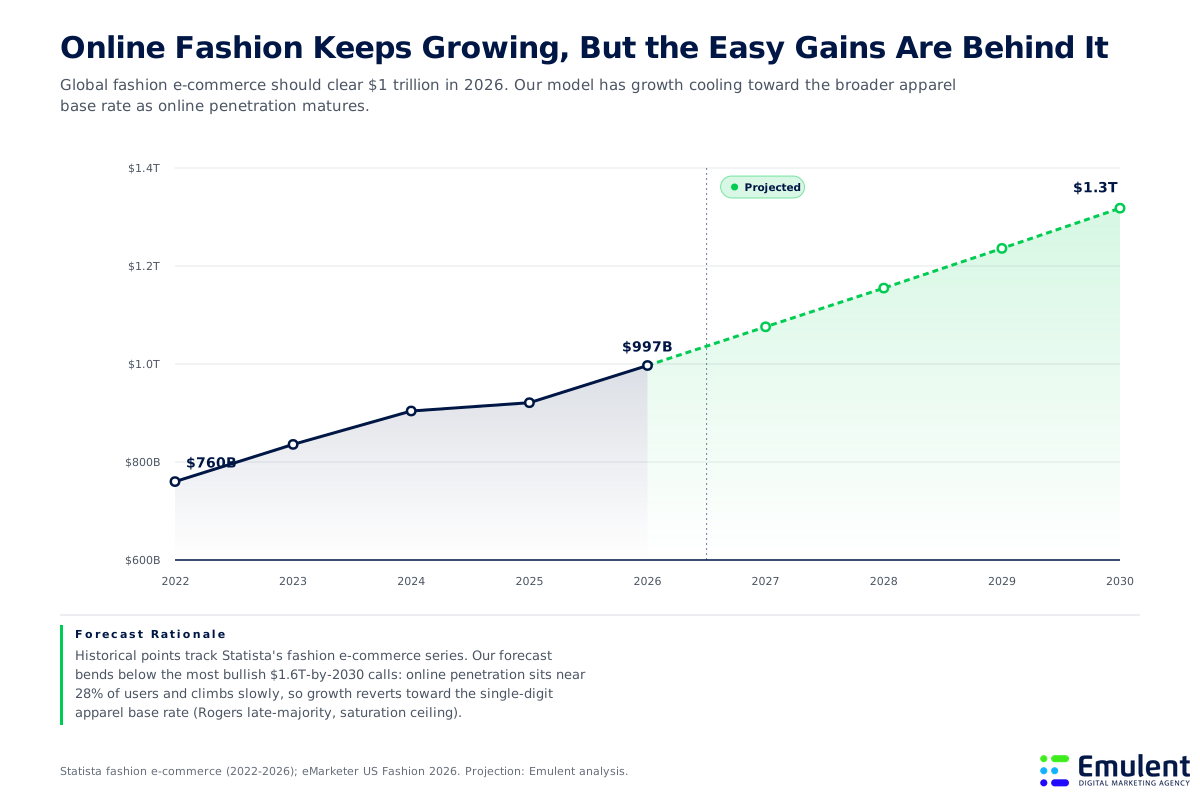
That matters for planning. Many reports quote a single far-off number near $1.6 trillion and leave it there, which makes the next five years feel like an escalator you only have to stand on. Our forecast bends lower on purpose, because the math of saturation pulls fast growth back to the mean. If you build a plan that assumes the easy gains continue, you will overspend on acquisition and under-invest in margin and retention. The brands growing now treat the flattening market as a signal to compete on share and on the value of each customer, which is exactly where a focused fashion marketing agency earns its place.
“We tell every fashion client the same thing: a growing category hides weak marketing, and a flattening one exposes it. Build your plan for the slower line, not the headline. If you beat it, that is upside you earned, not a tide you borrowed.” – Strategy Team, Emulent Marketing
If the market will not carry you, the next question is where shoppers actually find you, because that is where most fashion budgets now go.
Why does your brand look like everyone else on the feed?
Discovery has moved into social platforms, where a shopper can see a piece and buy it without leaving the app. Apparel and accessories are the most-bought social commerce category, so fashion sits at the center of this shift. The dollars keep climbing, helped by TikTok Shop. But read the second line on the chart: the year-over-year growth rate is cooling from roughly 30% toward single digits as more than 40% of US shoppers already buy this way.
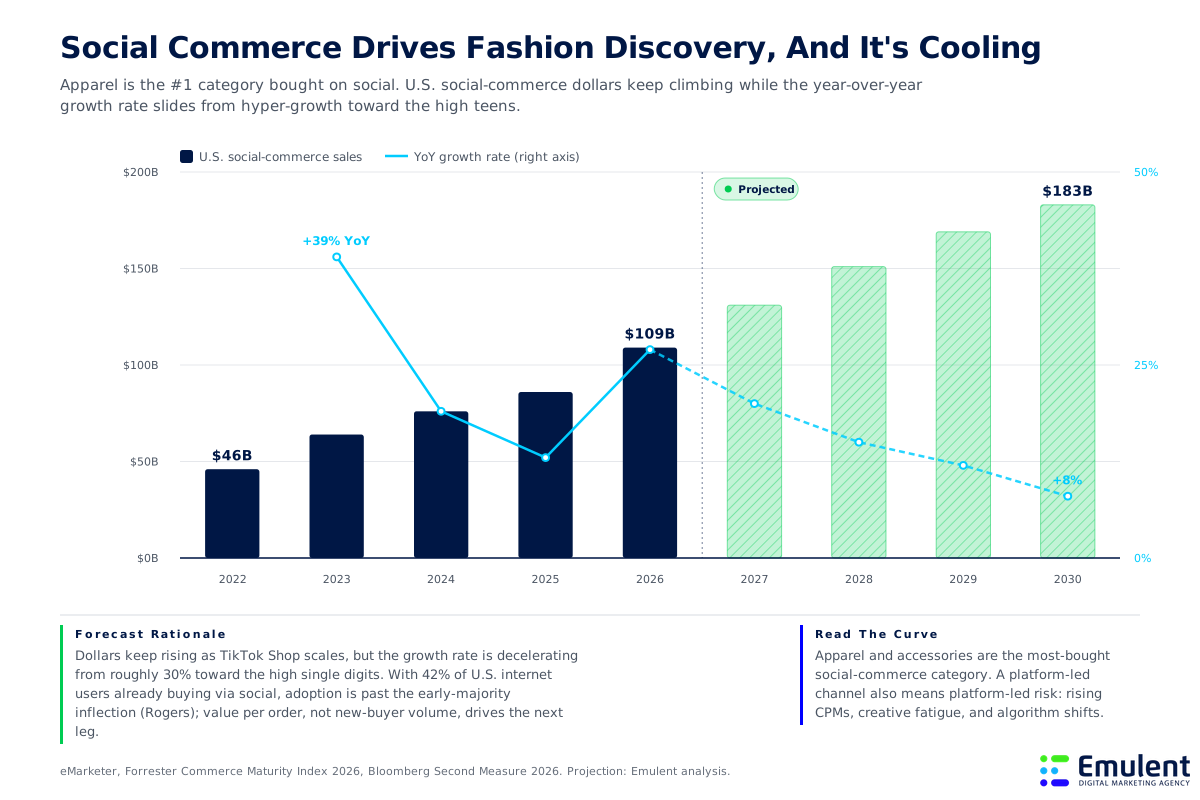
A maturing channel creates a trap. When everyone studies the same winning posts and hires the same creators, brands start to look, sound, and move alike. Sameness feels safe because it copies what is working, yet it quietly raises your acquisition cost, since shoppers cannot tell you apart and have no reason to pick you. The way out is a point of view that shows up in your visuals and your words, not just your discount.
Where fashion brands can break the pattern on social:
- A recognizable visual signature: A consistent look across product and lifestyle imagery makes your content identifiable in a half-second scroll. This is where fashion brand photography stops being decoration and becomes a reason to remember you.
- Motion that carries the story: Short video is the format the feed rewards, but the goal is a clip that only your brand could have made. Strong fashion brand videography turns a product demo into a piece of your identity.
- A stance, not just a sale: The fit you obsess over, the customer you design for, the thing you refuse to make. Naming it gives shoppers a reason to choose you over the next near-identical brand.
Real differentiation starts with a clear fashion branding position, and there are specific techniques for standing out in a crowded market that work even when the channel is full. The reason to do this work now is plain: as social commerce growth slows, the brands that look generic will pay more for every sale, while the distinct ones keep their costs down.
“Copying the feed is how you become forgettable at scale. We would rather a fashion brand be unmistakable to the right thousand people than invisible to a million. Distinct is cheaper than generic once the channel matures.” – Strategy Team, Emulent Marketing
Standing out drives more sales, but a sale only counts once the customer keeps the item, which is where most growth math quietly breaks.
Are you counting sales, or counting what you keep?
Here is the number most fashion content skips. Online apparel is returned far more often than almost anything else people buy online, at roughly a quarter of orders, while the same clothing bought in a store comes back about 6% of the time. Every return undoes the margin the sale was supposed to create, and the processing alone costs $21 to $46 per returned apparel order after shipping and handling.
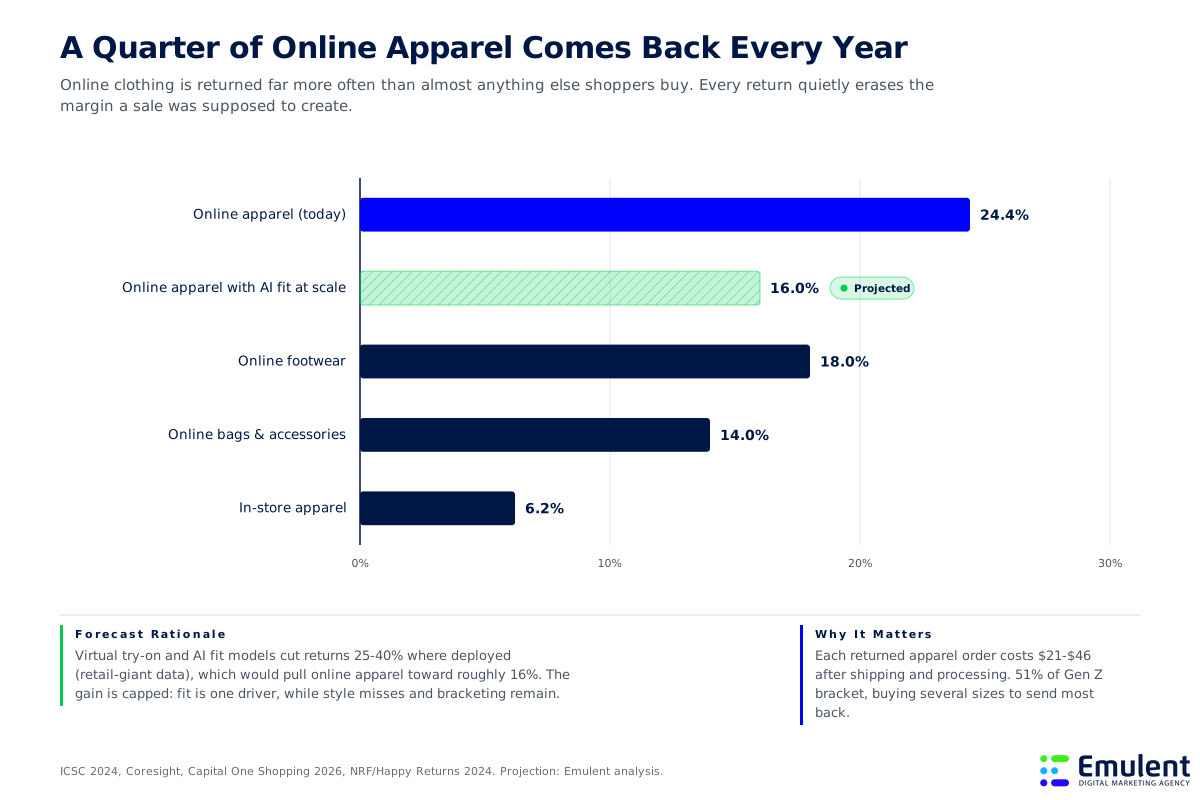
This is why we push back on growth stories built on gross sales, traffic, or video views. Those are inputs. A viral post that drives orders you have to refund, restock, and sometimes write off can leave you worse off than a quiet week. The number that pays your team is contribution margin, meaning what is left after the cost of goods, the ad spend, and the returns. A brand that obsesses over a ranking or a view count while a quarter of its product comes back is measuring the wrong thing, the same way views are the vanity metric for video.
Practical ways to protect kept revenue, not just sales:
- Sell the fit before checkout: Detailed sizing, fabric behavior, model measurements, and honest photography reduce the gap between what shoppers expect and what arrives. A well-built product page on your own fashion web design does more for margin than another round of ads.
- Track returns by style, not just overall: A single product line can quietly carry your whole return rate. Find it, fix the sizing or the copy, or cut it.
- Watch for bracketing: Just over half of Gen Z buy several sizes planning to send most back. Free, no-questions returns feel generous, yet they invite this behavior. Decide where your policy is a feature and where it is a leak.
“We have watched fashion brands celebrate a record sales week and then lose money on it after the returns landed. Growth that you cannot keep is not growth. Judge marketing by margin, not by the number that looks best in a screenshot.” – Strategy Team, Emulent Marketing
Protecting margin on every order is one half of durable growth. The other is building revenue that keeps working after the campaign budget runs out.
What keeps compounding after the campaign ends?
Resale is the clearest example of a fashion growth lane that runs as a system rather than a one-time push. The global secondhand apparel market has nearly doubled since 2021 and reaches roughly $367 billion by 2029, outpacing new clothing. What changed is that brands stopped treating resale as a threat from outside platforms and started running it themselves, with 94% of retail leaders saying their customers already buy secondhand.
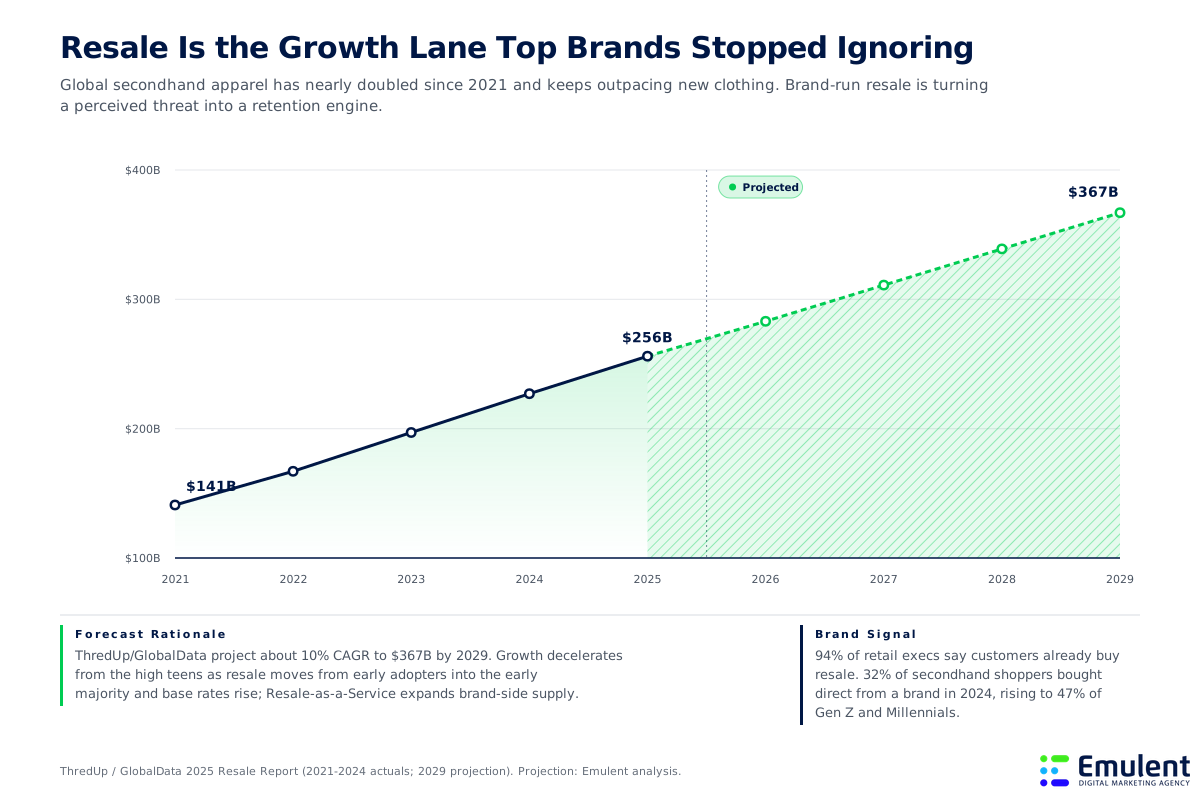
A brand-run trade-in or resale program is a system because each part feeds the next. A customer sends in last season’s piece, gets store credit, and comes back to spend it, which lifts repeat purchases. The trade-in also gives you data on which items hold up and resell well, which informs what you design next. Almost a third of secondhand shoppers already buy directly from a brand, rising to nearly half of Gen Z and Millennials, so the audience is there. This is the same reason we argue that brand development is a system, not a project: the value comes from the parts working together over time, not a single launch.
Search works the same way. A campaign stops the day you stop paying, while content that ranks keeps bringing in shoppers for months. Treating fashion SEO as an ongoing system rather than a one-off project is what turns it into compounding traffic instead of a temporary spike. The cost of skipping the system view is steep: brands that rely only on paid bursts have to buy their growth again every month, while brands that build resale, retention, and organic visibility own theirs.
“The brands we see winning are not running campaigns, they are running engines. Resale, email, and organic search each keep working long after the budget stops. We would rather build you something that compounds than rent you a spike.” – Strategy Team, Emulent Marketing
Systems like resale and search increasingly run on data and automation, which brings us to the technology everyone is talking about and few are using well.
Which AI actually moves revenue, and which just sounds good?
AI is moving into the space between your shopper and your product. About half of fashion shoppers now use AI to discover and decide, and apparel is one of the top categories people research this way. We expect that share to climb toward roughly two-thirds and then level off, because shopping for clothes is visual and tactile, and a real group of buyers will keep wanting to browse and feel before they commit.
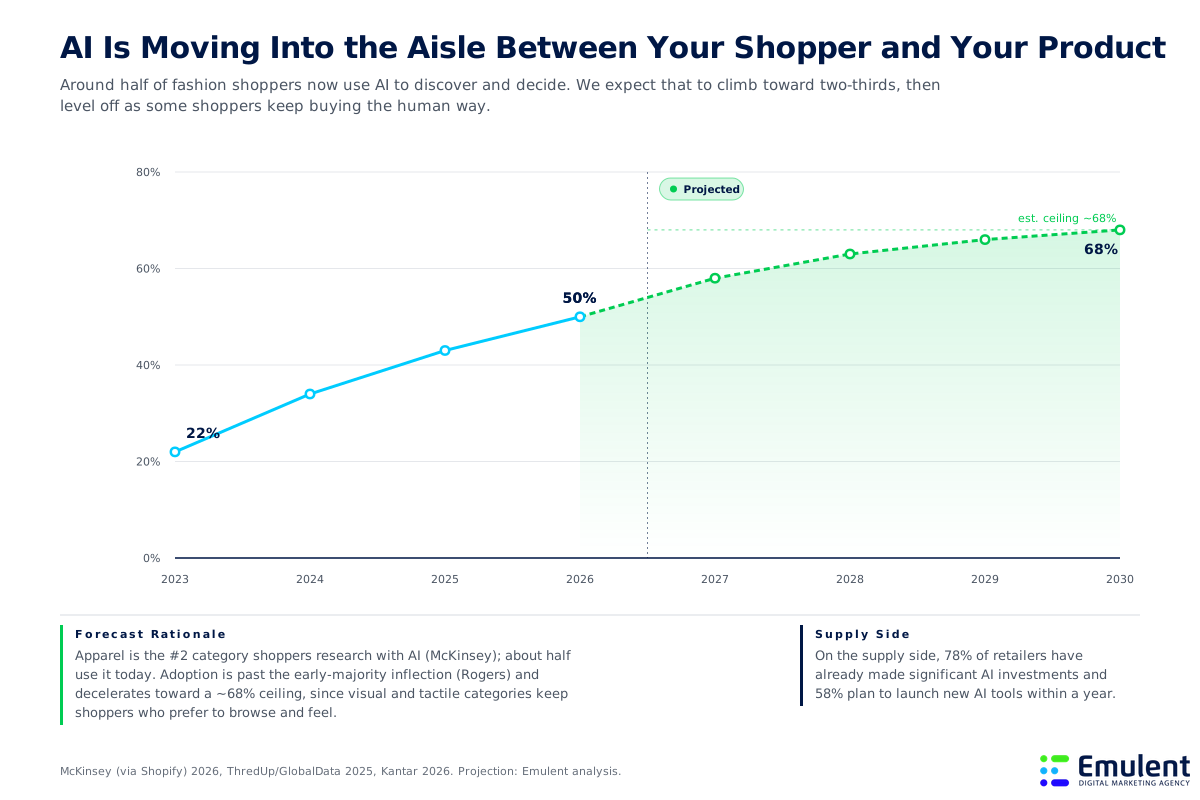
The useful split is between AI that moves revenue and AI that just sounds impressive. The version that pays is unglamorous. Fit and size tools cut returns by a real margin where brands actually deploy them, which protects the kept revenue we covered earlier. Clean, structured product information, meaning detailed size guides, fabric and care details, and clear descriptions, is what lets AI assistants surface your products when a shopper asks for a recommendation. The brands that feed the assistants good data get found; the ones that hide behind vague storytelling become invisible to it. Getting discovered through these tools is the heart of AI SEO, and it rewards substance over a press release.
Where AI earns its keep in fashion right now:
- Fit and sizing guidance: The clearest path to fewer returns and more confident buyers, with a direct line to margin.
- Structured product data: Detailed, accurate specs that let AI assistants and search recommend you instead of a competitor.
- Faster creative production: Turning one product shoot into many tailored assets, as long as quality and your brand identity stay intact rather than getting flattened into sameness.
The honest part is naming what AI does not fix. It will not invent a point of view, repair a weak product, or build trust on its own. Treat it as plumbing that makes good work scale, and the gains are real. Treat it as a strategy, and you get noise.
Who owns the customer when the platform changes the rules?
Every channel in this study sits on ground you do not control. Social platforms raise their ad prices and change their algorithms. Search results shift. Trade rules move, and the recent end of the low-value import exemption pushed some brands to raise prices by double digits almost overnight. A brand that rents its entire customer relationship from one platform is one rule change away from a margin problem it cannot solve.
What it looks like to keep control of your own growth:
- Own your store: Your website is the one storefront no platform can throttle or take away. It should carry your best content, your clearest product information, and your checkout, which is why your fashion web design is a growth asset and not just a brochure.
- Own your audience: Email and a real first-party customer list are the only channels where you decide who hears from you. Use social to meet people and your own channels to keep them.
- Know your real costs: Read the fine print on platform fees, ad rates, and tariffs so a sudden change does not surprise your margin. Control comes from seeing the costs clearly, not from hoping they hold.
“We never want a client to wake up dependent on a platform they cannot see inside of. Use the big channels, but own your store, your list, and your data. The brands that keep control of those keep control of their growth.” – Strategy Team, Emulent Marketing
Reading these five charts together points to one pattern. The brands growing in 2026 are not betting on the market to carry them, looking like everyone else, or chasing the number that screenshots well. They differentiate, they count what they keep, they build engines that compound, they use AI for substance, and they own the customer relationship.
How the Emulent team can help your fashion brand grow
We help fashion brands turn these signals into a plan they can run. That means building a brand position that stands out, photography and video that carry it, a website and product pages that protect margin, search and AI visibility that compound, and a clear view of the channels you own versus the ones you rent. We work without long lock-in, so the work has to keep earning its place.
If you want help growing your fashion brand and want a partner who reads the numbers and tells you the truth about them, contact the Emulent team to talk through your fashion marketing.