
The companies pulling ahead in security did not get there by shouting louder or buying a bigger booth. They made a set of quieter choices about where buyers look first, what makes a vendor believable, and which marketing work keeps paying off long after the invoice clears. This study brings together 2025 to 2026 buyer research, real channel economics, and search-behavior data, then projects where each trend points through 2028 and 2030.
Six perspectives run through the piece. Each one questions a habit that still drives most security marketing budgets, and each points toward a different decision than the default. None of these moves is exotic. They are the patterns that separate the fast-growing names from the ones spending more every quarter to stand in the same place.
Key takeaways from the study:
- AI is the new first step: The share of B2B buyers who start research inside an AI chatbot jumped from 29% to 51% in a year and is projected to reach about 70% by 2028.
- Proof beats adjectives: An AI mention, findable proof, and recognition move a vendor onto the shortlist far more than another “AI-powered” claim.
- A growing market is a crowded one: Spending on track to hit $352 billion by 2030 draws more vendors, which makes differentiation a pipeline lever, not a nicety.
- Pipeline is the metric: Organic search lands a customer near $560 against $982 for paid social, and the cheaper channel keeps getting cheaper.
- Systems compound, campaigns decay: An organic content system and a paid-only program cross near month ten, after which the system wins by a widening margin.
- Transparency now converts: An AI assistant skips the vendor it cannot read, so open pricing and proof feed the shortlist.
Buyers Start With an AI Answer Before They Reach Your Site
The first screen a buyer sees is changing. In a March 2026 survey of more than a thousand B2B software buyers, 51% said they now begin product research inside an AI chatbot rather than a search box. A year earlier that figure was 29%. Seventy-one percent use an AI assistant somewhere in the process, and the influence is real: 69% chose a different vendor based on what an AI told them, and 33% bought from a company they had never heard of before the model named it.
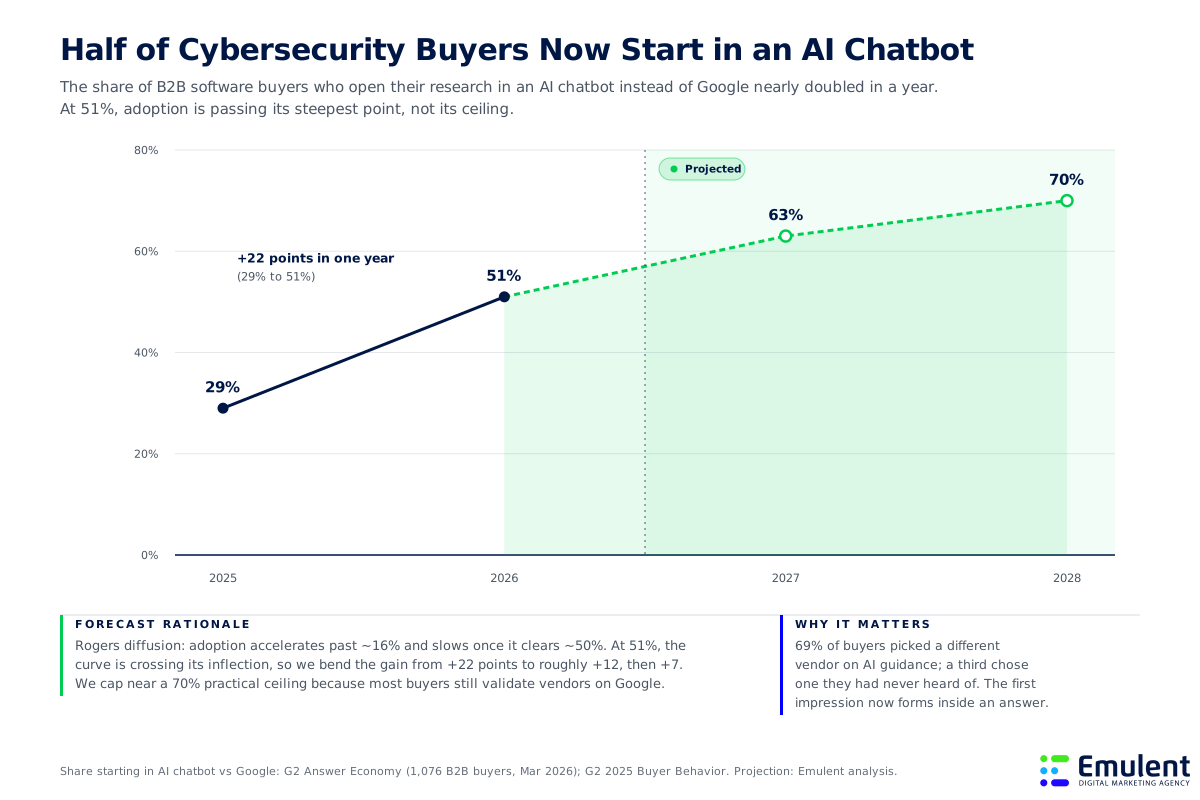
Here is the part most write-ups skip. Buyers have not abandoned Google. They still run roughly four of every five searches there, and AI Overviews now sit on top of those results, cutting organic click-through by about 61% on informational queries and pushing zero-click searches from 56% to 69%. So the picture is not a clean handoff from search to chat. It is a messier reality where an AI answer often comes first, a traditional search confirms it, and a peer or review site settles it.
That is why our projection bends rather than races. The AI-first share keeps climbing, but the gain slows past 50% and settles near 70% by 2028, because most buyers still cross-check a machine answer against a live result and a human. Plan for an AI-first first step, not an AI-only world.
What this changes for your site:
- Be the cited source, not only the ranked page: When an AI summarizes your category, the job is to be named and described correctly, which is a harder thing to fake than a keyword ranking.
- Get on the review sites: Presence on G2 and Capterra makes a domain about three times more likely to surface in a ChatGPT answer.
- Earn mentions, not just links: Brand mentions across the open web line up with AI citations far more closely than backlinks do.
Strong cybersecurity SEO in 2026 means being the source the model trusts, not only the page that ranks.
The old SEO question was “how do we rank for this term.” The 2026 question is “when an AI summarizes this topic, does it name us, and is what it says true.” Those are different jobs, and the second one is much harder to fake.
– Strategy Team, Emulent
Skeptical Buyers Trust Proof and Presence, Not Adjectives
Once a buyer has a shortlist, what actually moves a vendor onto it? The research points at trust signals, not slogans.
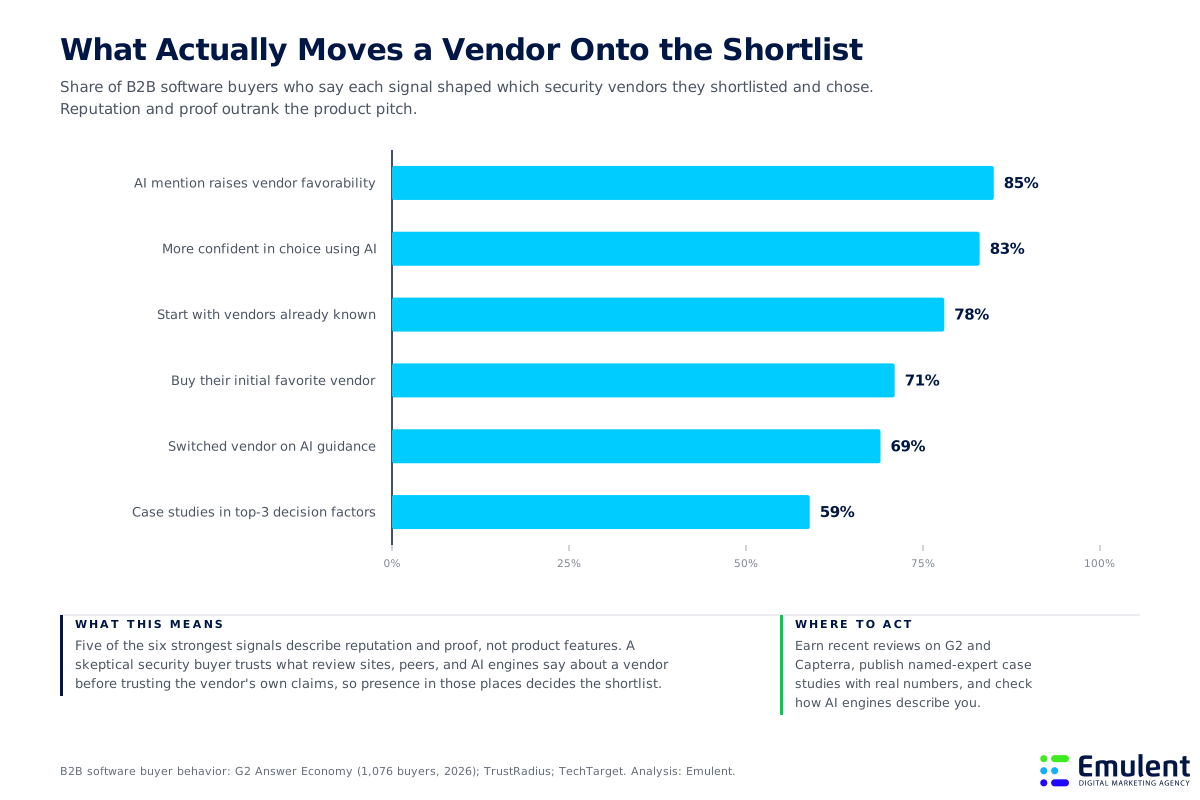
Buyers think more highly of a vendor an AI mentions (85%), feel more confident when proof is easy to find (83%), and lean toward names they already recognize (78%). Most buy their initial favorite (71%), and well over half put case studies among their top three resources (59%). Behind those numbers sit two structural shifts: security buying committees grew from four-to-six people in 2020 to six-to-ten in 2026, and 68% of buyers read three or more pieces of content before they will speak with a sales rep.
The takeaway for messaging is blunt. Every vendor now calls itself “AI-powered.” That phrase has stopped carrying information, because it no longer separates anyone from anyone. Specific proof carries information. “We cut alert volume 41% for a 2,000-seat hospital network in four months” tells a buyer something real. “Next-level protection” tells them nothing. The fastest-growing companies trade adjectives for named customers, real numbers, and outcomes a committee can verify.
How to make proof do the work:
- Lead with a number and a name: A page that opens with a named customer and a real result outperforms one that opens with a category description.
- Put case studies one click away: Surface them from the homepage rather than burying them in a resource library a committee will not dig through.
- Write claims a competitor could not honestly copy: If a rival could paste your sentence onto their site and it would still read as true, the sentence is doing no work.
A Bigger Market Means a Louder, More Crowded Room
The money flowing into security keeps rising. Global spending is on track to grow from about $175 billion in 2022 to a projected $352 billion by 2030, a compound rate near 9% a year.
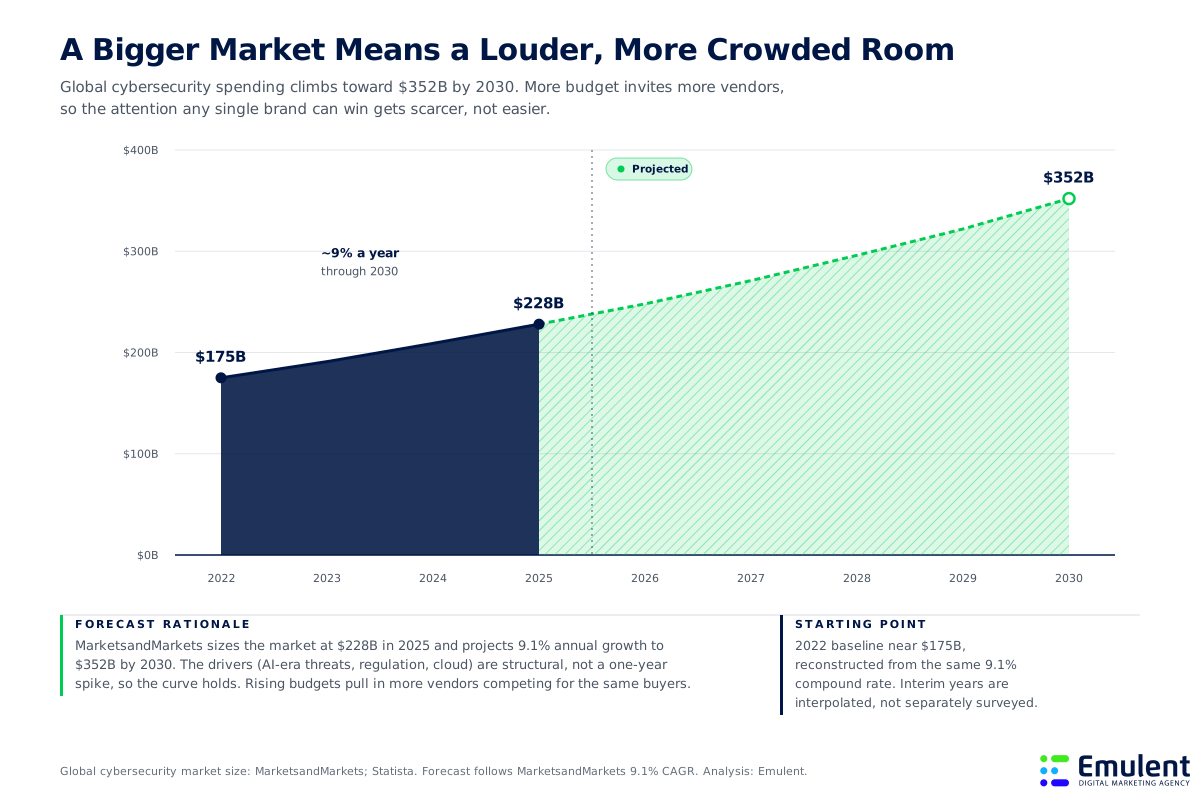
Growth is good news for the industry and a trap for the marketer who reads it as easy demand. More money draws more vendors, and more vendors means the category fills with companies whose websites read almost word for word the same. When attention is the scarce resource, sounding like everyone else is the real risk.
This is where brand stops being decoration and starts driving pipeline. A clear point of view, a named specialty, and a distinct voice do more for a committee’s shortlist than one more checkbox on the comparison grid. Differentiation is not a tagline exercise. It is the decision about which buyers you are unmistakably built for, said plainly enough that the right ones recognize themselves. That work belongs at the center of cybersecurity branding, not at the end of it.
If a prospect could swap your logo for a competitor’s and your homepage would still read as true, you do not have a brand. You have a category description.
– Strategy Team, Emulent
Pipeline Is the Scoreboard, and Rankings Are Just an Input
Channels are not equal in what they cost to land a customer, and the gap is widening.
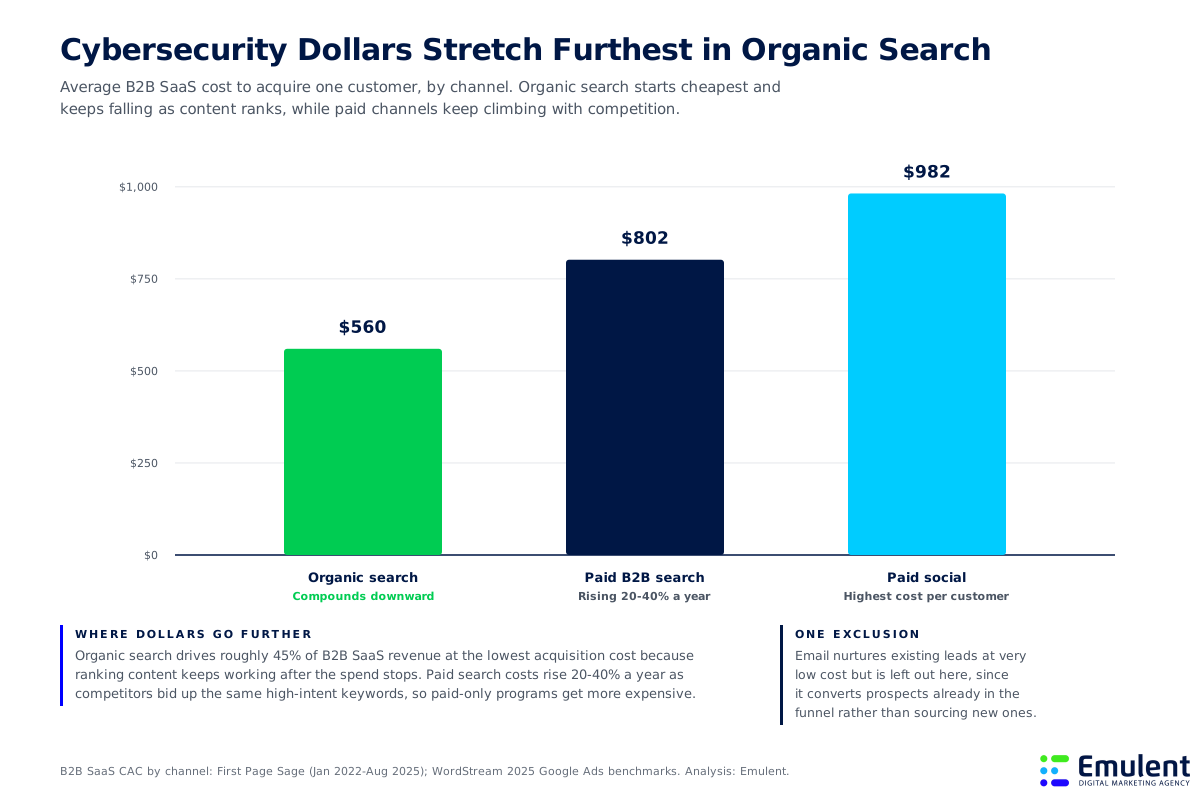
Organic search lands a customer at roughly $560, against about $802 for paid B2B search and $982 for paid social. The cost gap is only half the story.
What the channel economics reveal:
- Organic carries the revenue: It drives close to 45% of B2B software revenue and breaks even around month seven.
- Paid runs the other way: Paid acquisition climbs 20% to 40% a year as auction prices rise.
- Intent beats volume: A bottom-of-funnel comparison page converts near 7.5%, while a typical top-of-funnel blog post converts closer to 0.5%.
So the metric that deserves the spotlight is pipeline, not position. Rankings and traffic are inputs. The output is qualified pipeline and closed revenue. A page that ranks first and converts no one is a worse asset than a page sitting at position six that books demos every week. Judge a channel by what it adds to the pipeline, not by how it looks on a dashboard.
Traffic that does not convert is a cost, not a result. The cheapest way to make a marketing report look healthy is to count the wrong thing very well.
– Strategy Team, Emulent
Marketing Systems Compound While Campaigns Decay
The difference between the two compounds over time, and the math is visible.
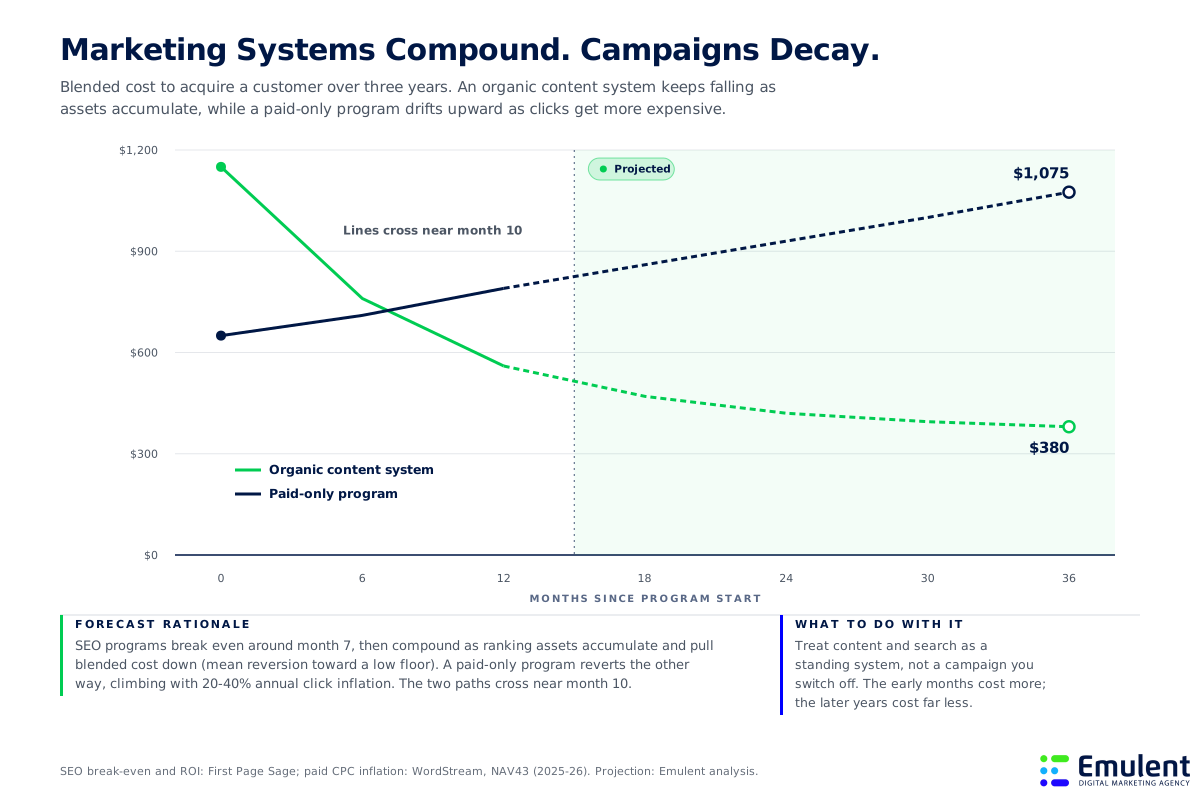
An organic content system starts expensive. Early on, blended cost per customer is high because the assets have not started ranking. As they do, cost falls and keeps falling toward a low floor. A paid-only program starts cheaper but drifts upward every quarter as click costs inflate. The two paths cross near month ten, and after that the system wins by a margin that grows.
A campaign is an event with an end date. A system is an asset that keeps working while you sleep. Pausing a content and search program is like switching off a compounding account: the asset holds some value, but it stops growing, and restarting means re-climbing the curve you already paid to climb. The companies growing fastest treat content and search as standing infrastructure, funded continuously, not as a push they switch on for a quarter and off for the next.
Why impatient teams lose money here:
- The early months cost the most: A system runs more expensive than a campaign at exactly the moment teams under pressure abandon it.
- The back half is where it pays: Teams that hold the line collect the part of the curve where cost per customer drops below anything paid acquisition can match.
- Restarting is not free: Switching off and on again means paying twice to climb the same curve.
Transparency Became a Conversion Lever
The AI-first first step rewrote an old trade-off. For years, hiding pricing behind “contact us” was a defensible way to control the conversation. In an AI-mediated search, it quietly costs deals. When a buyer asks an assistant to compare vendors, the model fills its answer with what it can read. A competitor whose pricing, positioning, and proof are public gets named and quoted. The vendor who hides that information gets skipped, because a model cannot recommend what it cannot see.
Openness now feeds the same systems that shape the shortlist. Transparent pricing, plain positioning, and published outcomes give the AI something accurate to repeat and give a six-to-ten-person committee something to trust while they research mostly without sales. Roughly 77% of buyers research before talking to a rep, and many are about 70% of the way through their decision before they ever raise a hand. By then, what is visible has already done the persuading.
In an AI-mediated search, the vendor who hides the most loses the most. The model cannot recommend what it cannot read.
– Strategy Team, Emulent
How to stay in control of your own demand:
- Publish what the buyer asks first: Pricing, positioning, and proof feed both the AI answer and the human committee.
- Own the channels you can keep: Your site, your content, your search presence, and your reviews stay yours, while rented attention can be repriced or cut off.
- Rent only at the margins: Paid platforms can supplement an owned base, but they should not be the foundation a competitor can outbid.
The Pattern Under All Six
Read together, these perspectives describe one shift. The companies winning in security are not outspending the field. They are out-positioning it with a clear brand, out-proving it with specific results, and out-compounding it with systems that get cheaper as competitors pay more. The strategies are not secret. The discipline to run them while the early numbers look unimpressive is the part most teams cannot copy.
At Emulent, we build security marketing programs around exactly these patterns: proof-led content, search and brand treated as compounding assets, and positioning that holds up when an AI assistant compares you to the field. If you want help turning these ideas into a working program, talk to our cybersecurity marketing agency team.
Sources: G2 buyer research and buyer-behavior reports (2025 to 2026); MarketsandMarkets cybersecurity market sizing (9.1% CAGR to 2030); First Page Sage and WordStream customer-acquisition and CPC benchmarks; NAV43 paid-search cost data; and Emulent analysis for all forward projections. Figures are directional and reflect B2B software and security benchmarks; individual results vary by segment, motion, and stage.