Skip links

2026 Construction Industry Marketing Trends To Take Advantage Of

Author: Bill Ross | Reading Time: 10 minutes | Published: December 1, 2025 | Updated: March 6, 2026

2026 Marketing Trends Emulent

Construction companies have often relied on referrals, repeat clients, and their reputation on job sites to grow, instead of focusing on marketing. While this approach still has value, it is not enough for companies that want to expand, take on new types of projects, or reach clients who search online. The top construction companies in 2026 approach marketing as seriously as they do estimating and project management. This guide looks at the latest trends in construction marketing and shows how your company can take advantage of them.

Why Are Construction Companies That Rely on Referrals Alone Starting to Struggle?

Referral-based business development is important and worth keeping. However, it has limits. It usually brings work from existing clients and contacts, but rarely enough to help you grow into new project types, markets, or client groups. If the economy slows down, a key referral retires, or a repeat client chooses a competitor, companies that depend only on referrals often do not have the marketing systems needed to adjust.

In 2026, construction companies facing the biggest business development problems are often led by principals who focus only on managing projects, not on building a digital presence or marketing systems. The companies that keep growing are doing both. Their marketing efforts now bring in qualified project leads that would not have come through referrals alone.

The gaps that passive business development creates for construction companies in 2026:

  • Invisibility during online research: Owners, developers, and general contractors now start their search for subcontractors and partners online. If your construction company does not have a strong website, a project portfolio, and shows up in local or industry-specific searches, you are likely to be left out before anyone even makes a call.
  • Lack of presence in competitive bids: Public bid opportunities, private developer RFPs, and construction manager at-risk solicitations are awarded to contractors with visible, documented capabilities and history.
  • Sharing Company Info: Companies that do not share their qualifications online or in professional materials are at a disadvantage compared to competitors who market themselves more effectively, even if those competitors have similar or fewer skills.
  • Referral network concentration risk: Relying too much on a few referral sources puts your business at risk if any of those relationships change. By building marketing channels that bring in new leads outside your referral network, you lower this risk and create more ways to find new projects instead of depending on just one source.
  • Difficulty attracting talent: Because there is a shortage of skilled workers in construction, it is important for companies to be visible as good employers. Companies that are seen as credible and visible attract better candidates for both field and office jobs than those that are not known outside their current clients and subcontractors.

How Is Digital Presence Shaping Construction Company Credibility and Client Acquisition?

A construction company’s website and online presence are often the first things potential clients, project owners, or public agencies see before reaching out. Usually, this research happens before any direct contact. What people find when they search for your company, or for contractors in your field, affects whether they consider you or choose a competitor with a stronger online presence.

In 2026, the construction companies with the best digital presence are not always the biggest or oldest. They are the ones who have invested in showing their expertise, project history, and skills through good websites, detailed project portfolios, and content that proves they know their markets. This builds trust in a way that a basic website or empty portfolio cannot, no matter how good the company’s real track record is.

Digital presence elements that produce the strongest credibility signals for construction companies:

  • Project portfolio with details and results: A portfolio that shows finished projects with details like scope, value, timelines, and good photos gives clients a clear idea of what your company can do. Organizing your portfolio by project type, market, and delivery method makes it easier for clients to find examples that match their needs.
  • Market sector pages that speak to owner needs: Construction companies working in different sectors, like healthcare, education, or retail, should create separate pages for each sector. These pages should address the unique concerns, rules, and priorities of each market. For example, a healthcare owner looking for a contractor will trust content that shows you understand infection control and working in active facilities, rather than a generic page that could fit any contractor.
  • Leadership and team profiles that build credibility: Owners and project leaders hire people as much as firms. Profiles of project executives, estimators, managers, and field leaders showing expertise, certifications, and experience help prospective clients see your team as professionals instead of anonymous vendors.
  • Safety record and quality management documentation: Experience modification rates, OSHA incident rates, and safety or quality certifications are standard prequalification criteria. Making this information visible on your website and in materials reduces friction and assures clients that your company meets risk standards before they ask.
  • Client testimonials and references with context: Testimonials referencing specific projects, challenges, and outcomes are more persuasive than generic endorsements. A testimonial from a healthcare real estate director describing how your team handled a complex, occupied hospital renovation tells future healthcare clients what they need to know.

“Construction companies consistently underestimate how much their digital presence affects their ability to win work outside their existing network. The decision to include or exclude a contractor from a shortlist often happens before a single phone call is made, based entirely on what the prospect finds when they search for the company online. A company with strong capabilities and a weak digital presence is losing opportunities to competitors who are less capable but better marketed.” — Strategy Team, Emulent Marketing.

How Is Content Marketing Building Authority and Generating Leads for Construction Companies?

Content marketing for construction companies is not just about posting lots of blogs. It is about creating a collection of helpful, specific, and trustworthy content that shows your company’s expertise in the projects and markets you serve. Companies that invest in this kind of content show up in search results when owners, developers, and facility managers look for information about their projects. This early visibility builds brand awareness and trust in ways that traditional business development cannot match.

The best construction marketing content answers the exact questions your target clients have. For example, commercial developers might be looking into delivery methods, school districts may compare design-build to design-bid-build, or healthcare systems might want to know about renovation costs. Your content should answer these questions, or else your competitors will.

Content types producing strong results for construction companies in 2026:

  • Project delivery method comparison guides: Guides comparing design-build, construction management at-risk, integrated project delivery, and traditional design-bid-build approaches, written for owner audiences rather than construction professionals, are among the most searched construction topics among prospective clients planning their first or second major capital project. These guides rank well in organic search for owner-focused queries and position your company as an advisor rather than simply a vendor competing for the low bid.
  • Market sector cost and timeline benchmarks: Publishing general cost ranges and construction timelines for specific project types in your market, with appropriate context on the factors that drive variation, gives prospective clients the preliminary information they need to assess project feasibility and decide whether to pursue it further. Owners who find this information on your website often contact you specifically because you provided useful guidance when competitors provided only a form to fill out, requesting a bid.
  • Case studies with construction challenges: Detailed case studies that explain not just the finished project, but also the specific problems you faced and how you solved them, show your problem-solving skills in a way that photos alone cannot. For example, a case study about handling a tough logistics problem on a tight urban site, or keeping a project on schedule despite unexpected ground conditions, tells future clients how your company handles tough situations.
  • Regulatory and code update content for target markets: Publishing content that addresses building code changes, energy efficiency requirements, ADA compliance updates, or sector-specific regulatory developments affecting construction in your target markets builds an audience of owners and facility managers who associate your company with construction expertise beyond the project itself. This content is particularly valuable for companies pursuing public sector, healthcare, or education work where regulatory compliance is a significant project driver.
  • Preconstruction and estimating process guides: Many first-time or occasional builders do not know what happens during preconstruction, how estimates are made, or what information they need to give for a good early budget. Content that explains your process, what owners can expect, and what details help you give a solid estimate shows your company is open and focused on clients, even before you talk to them.

How Is Local and Regional SEO Changing Construction Company Visibility?

Search engine optimization (SEO) for construction companies is different from local SEO for consumer businesses. The buyers are usually commercial clients, developers, public agencies, or corporate teams, not individual consumers. Their searches are more specific and technical, the decision process takes longer and involves more people, and the area covered can be much larger than just the local market.

Knowing these differences does not mean you should ignore local and regional SEO. Instead, use it wisely. Construction companies that show up at the top of search results for their specific project types and markets—like “commercial general contractor [city]” or “healthcare construction [region]”—are seen by the right decision-makers. To get this visibility, you need the same basic SEO work as any service business, plus detailed, technical content that construction buyers look for.

SEO investments producing results for construction companies in 2026:

  • Google Business Profile optimization for local commercial searches: Even if your company mainly does commercial work, keeping your Google Business Profile up to date helps you show up in local searches by project owners and developers. Profiles with project photos, correct service categories, accurate business info, and regular review responses do much better in search results than incomplete or outdated profiles.
  • Market sector and project type landing pages: Creating separate website pages for each project type and market sector you serve gives you more chances to show up in searches your clients use. For example, a page for “multifamily construction contractor [metro area]” and another for “tenant improvement contractor [city]” each reach different groups. This approach brings in more search traffic than one general contractor page that tries to cover everything.
  • Project location content for regional SEO: Sharing case studies that mention the city or region of each project helps your website show up in searches for those areas. If your company has worked in several states and you include location details in your content, you can build search visibility across all those places, not just near your main office.
  • Backlink development through industry groups: Getting links from groups like Associated General Contractors, regional construction associations, and local business organizations helps your website’s search ranking more than links from general business directories. Being active in these groups often leads to mentions and links naturally, without needing extra outreach.

“The construction companies we see consistently winning new client relationships from organic search are the ones that have built content around specific project types and market sectors rather than around general contractor capability statements. A project owner searching for a contractor with healthcare construction experience does not need to read about your company’s general capabilities. They need to see documented evidence that you have built the type of facility they are planning in the regulatory environment they operate in.” — Strategy Team, Emulent Marketing.

How Are Construction Companies Using Digital Advertising to Win Work Beyond Their Existing Network?

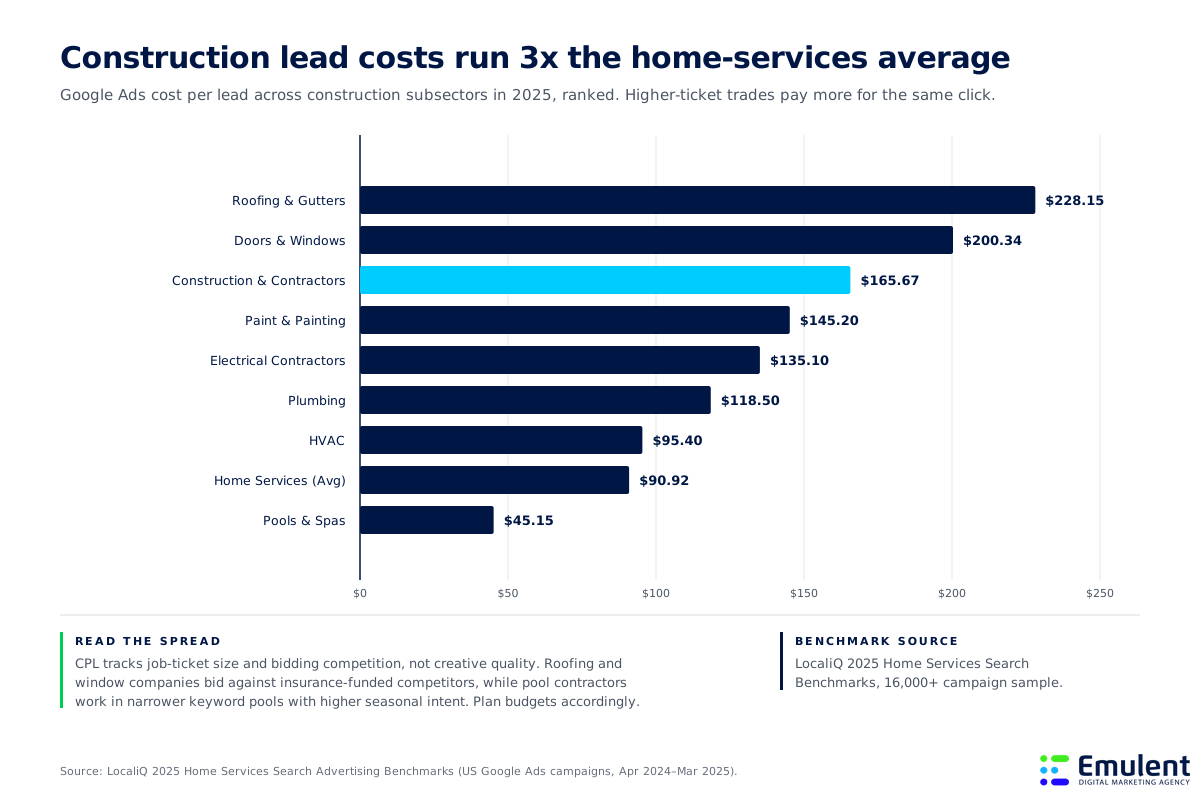
Paid digital advertising for construction business development is different from advertising to consumers or retail customers. The audience is smaller, more professional, and spends weeks or months researching before making decisions. Broad campaigns aimed at large areas usually do not work well. In 2026, successful construction companies use targeted ads, search ads based on intent, and promote detailed content that matches the long research process in construction.

Paid digital advertising approaches producing results for construction companies in 2026:

  • LinkedIn advertising targeting construction buyers: LinkedIn lets construction companies target ads by job title and industry, so you can reach development executives, facility managers, real estate directors, public project managers, and corporate real estate professionals. For companies working in commercial, healthcare, education, or institutional sectors, LinkedIn gives direct access to the decision-makers and influencers you want to reach, better than any other paid platform.
  • Google Search advertising for preconstruction research: Buyers who search for terms like “construction manager at-risk [city],” “design-build contractor [sector],” or “commercial renovation contractor [region]” are actively looking for project options and contractors. Paid search ads aimed at these specific, high-intent searches reach clients while they are building their shortlist, and the cost per click is low compared to the value of winning a project.
  • Retargeting campaigns for website visitors: Prospective clients who visit your website, look at your project portfolio, or download your content are actively researching. Retargeting ads that show them case studies, capability overviews, or project guides on LinkedIn, Google Display, and other channels help keep your company in their minds during the long decision process. In construction, staying visible through retargeting can be the difference between being chosen or forgotten when a project moves forward.
  • Sponsored content in construction industry publications: Digital advertising in outlets including Engineering News-Record, Construction Dive, Building Design and Construction, and sector-specific publications reaches project owners, developers, and design professionals who are actively engaged with construction industry content. These placements carry contextual relevance that general B2B advertising cannot match, and associate your brand with the credible information sources your target audience already reads.

How Is Social Media Functioning as a Business Development Tool for Construction Companies?

Social media for construction companies serves a different purpose than it does for consumer brands. The goal is not viral reach or mass engagement. It is building a consistent, credible presence with a defined professional audience, including potential clients, design partners, subcontractors, suppliers, and talent. Used well, social media functions as a continuous portfolio and capability demonstration that keeps your company visible to your professional network, which generates referrals, repeat business, and new project opportunities.

LinkedIn is the most direct business development social platform for commercial construction companies because it is where the decision-makers and influencers in most target client segments are most professionally active. Instagram and Facebook play a supporting role in visual project documentation, reinforcing brand quality for a broader audience, including prospective clients, community stakeholders, and potential employees. Companies that are active and consistent on both platforms maintain a visible professional presence that passive competitors cannot match.

Social media approaches producing business development results for construction companies:

  • LinkedIn project milestone and completion announcements: Sharing updates about project milestones, topping-out ceremonies, ribbon cuttings, and completions on LinkedIn reaches your company’s followers and the networks of team members who share these posts. These updates keep your work visible to past clients, design partners, and potential clients who may not have connected with you recently.
  • Behind-the-scenes construction documentation on Instagram: Posting content that shows the construction process—like time-lapse videos, milestone photos, skilled craft work, and team moments—helps build your brand and employer reputation. This kind of content attracts prospective clients in design and real estate fields who use Instagram for professional updates.
  • LinkedIn thought leadership from company leaders: When owners, presidents, or project executives share their views on market trends, project delivery, or industry challenges on LinkedIn, it builds their personal authority and the company’s credibility. Posts from personal profiles reach more people than company page posts, making leader activity on LinkedIn one of the best ways to grow your audience without paying for ads.
  • Subcontractor and supplier relationship content: Highlighting the skilled subcontractors and suppliers who work on your projects in your social posts builds a sense of community and shows clients that you have strong partnerships. These posts are often shared by the featured partners, helping your content reach their networks for free.

“The construction companies using LinkedIn most effectively are not treating it as a place to announce that they are open for business. They are using it to consistently demonstrate that they know how to build complex projects in specific market sectors, maintain strong professional relationships, and that their team has the expertise clients are looking for. That consistent demonstration of capability over time is what creates the inbound inquiries that principals often describe as coming out of nowhere but are actually the result of months of visible professional presence.” — Strategy Team, Emulent Marketing.

How Should Construction Companies Approach Employer Brand Marketing in a Tight Labor Market?

The construction industry’s workforce shortage has made employer brand marketing a top priority, not just an HR task. Companies that show they are good places to work—by sharing their culture, career growth opportunities, and project quality—attract better candidates for both field and office jobs. In a market where skilled workers have choices, companies that share a clear story about what it’s like to work for them are winning the competition for talent.

Employer brand marketing also benefits clients. When a company shows it can attract and keep skilled, dedicated people, it sends a message about the quality and stability of its project delivery. Prospective clients notice this, even if they do not say it directly, and it influences their choice of contractor.

Employer brand marketing approaches producing results for construction companies in 2026:

  • Employee spotlight content on LinkedIn and Instagram: Featuring individual team members, describing their career paths, their specific roles on notable projects, and their professional development within the company puts a human face on the organization and demonstrates career growth opportunities to prospective candidates who are evaluating whether your company is worth pursuing. These posts are among the most engaged content types for construction companies on both platforms because they resonate with both workforce audiences and professional networks that value seeing who is behind the projects.
  • Apprenticeship and career development program marketing: If your company has apprenticeship programs, mentorship, or clear career paths for staff, make these programs visible in your employer brand content. Younger construction professionals look for companies that invest in their growth, so showing these programs helps you stand out and attract more candidates.
  • Job site culture and safety content: Content documenting job site culture, safety recognition programs, team celebrations, and community involvement shows prospective candidates what daily work life looks like at your company. This type of authentic content is more influential in candidate decision-making than formal job postings or general company descriptions because it reflects the actual experience of working there rather than the idealized version the company wants to project.
  • Targeted recruitment advertising on LinkedIn and Indeed: Paid ads on LinkedIn can target construction professionals by trade, certification, experience, and location, reaching people who are not actively job hunting but might be interested in the right job. Indeed’s targeting lets you reach skilled workers and project managers with your employer brand before they start looking for jobs, so you face less competition for talent.

How Do You Measure Whether Construction Marketing Is Producing Real Business Development Results?

Measuring marketing for construction companies must consider the long sales cycle, the many steps in building client relationships, and the fact that some results cannot be tracked with standard analytics. For example, a principal might get a call from a developer who found them through Google months ago and has been following their LinkedIn posts, but may not remember every step. It is still important to track these paths as much as possible so you can invest in what works.

Metrics that give construction companies an accurate picture of marketing performance:

  • New relationship inquiry source tracking: Ask every new project inquiry how they heard about your company and record this information, whether in a CRM, a spreadsheet, or your proposal system. Over time, this shows which marketing efforts bring in new relationships. This real-world data is often more reliable than digital tracking, since many valuable leads come through paths that cannot be tracked online.
  • Website traffic by project type and sector page: Track which pages on your website—by market sector and project type—get the most visits and longest viewing times. This shows which target markets are interested in your services. If you see steady traffic growth on certain pages after adding new content, it means your content is reaching the right audience and making your company more visible.
  • Proposal invitation rate from new relationships: Track how many proposal invitations you get from clients you have not worked with before, and see how this changes as your marketing improves. An increase in these invitations is a clear sign that your marketing is helping you reach beyond your usual referral network.
  • LinkedIn engagement and follower growth: Track the job titles and companies of your LinkedIn followers and those who engage with your posts. This shows if your social media is reaching the right professional audience. If your followers include more developers, facility managers, and project owners in your target sectors, you are building a valuable audience for future business development, even before they contact you.

How the Emulent Marketing Team Can Help Your Company Win More Work

Construction companies that invest in planned marketing programs stop relying only on price and relationships. Instead, they start winning work by showing their expertise and capabilities. This change takes time, but after 12 to 24 months of steady digital presence and content marketing, you will have a pipeline of qualified leads that referrals alone cannot provide.

The Emulent Marketing Team helps commercial construction companies, specialty contractors, and service providers build websites, content programs, SEO strategies, LinkedIn programs, and digital ad campaigns that deliver real business development results. We know how construction clients make decisions and design marketing programs to fit those processes, not just use tactics from other industries.

Contact the Emulent team today if you want help building a stronger construction marketing program.