When potential customers land on your website, they face a decision: trust you or move on. Social proof in marketing bridges that gap by showing them that others have already made the choice to work with you. This psychological trigger turns skeptical visitors into qualified leads by demonstrating real experiences from real people. Understanding how to position customer testimonials, reviews, case studies, and other trust signals can transform your conversion rates and build a pipeline of prospects who arrive already convinced of your value.
What Is Social Proof in Marketing and Why Does It Drive Conversions?
Social proof marketing relies on the human tendency to follow the actions and opinions of others when making decisions. When someone sees that hundreds of people have chosen your product or that industry leaders endorse your service, their brain shortcuts the evaluation process. Instead of spending hours researching competitors, they think: “If all these people trust this company, I probably can too.”
This concept shows up everywhere in daily life. You pick the restaurant with a line out the door over the empty one next door. You choose the Amazon product with 4,000 reviews instead of the identical one with twelve. The same psychology applies to B2B purchasing decisions, just with higher stakes and longer sales cycles.
The six main categories of social proof include:
- Expert approval: Industry authorities, influencers, or recognized specialists recommend your solution
- Celebrity endorsement: Well-known figures in your field publicly support your brand
- User testimonials: Customers share detailed experiences about results they achieved
- Wisdom of the crowd: Large numbers of people using your product signal safety and quality
- Peer validation: People similar to your prospect report positive outcomes
- Certification marks: Third-party organizations verify your standards or achievements
The mechanism works because prospects arrive at your site with built-in skepticism. They’ve seen countless marketing claims and learned to filter most of them out. Social proof cuts through that noise because it comes from outside sources they perceive as neutral or even aligned with their interests rather than yours.
“Most marketing teams treat social proof as decoration instead of conversion architecture. When you study where prospects abandon your funnel and place specific proof types at those exact friction points, you stop losing qualified leads to uncertainty.” – Strategy Team at Emulent Marketing
How Do Different Types of Social Proof Impact Lead Generation Results?
Not all social proof carries equal weight for generating leads. The type you choose depends on your audience, industry, and where prospects sit in their buying journey. A tech startup targeting enterprise clients needs different validation than a plumbing business serving homeowners.
Customer testimonials work best when they:
- Include specific metrics: “We increased qualified leads by 47% in three months” beats “Great results!”
- Match your target persona: A testimonial from a Fortune 500 CFO won’t resonate with small business owners
- Address common objections: If prospects worry about implementation time, feature testimonials about smooth onboarding
- Show transformation: Before and after scenarios help prospects visualize their own success
Case studies function as extended testimonials but provide the depth that complex B2B buyers need. They walk through the problem, solution, and measurable outcomes in a format that mirrors how your prospect thinks about their own challenges. For B2B marketing contexts, case studies often perform better than short testimonials because decision-makers need to justify purchases to multiple stakeholders.
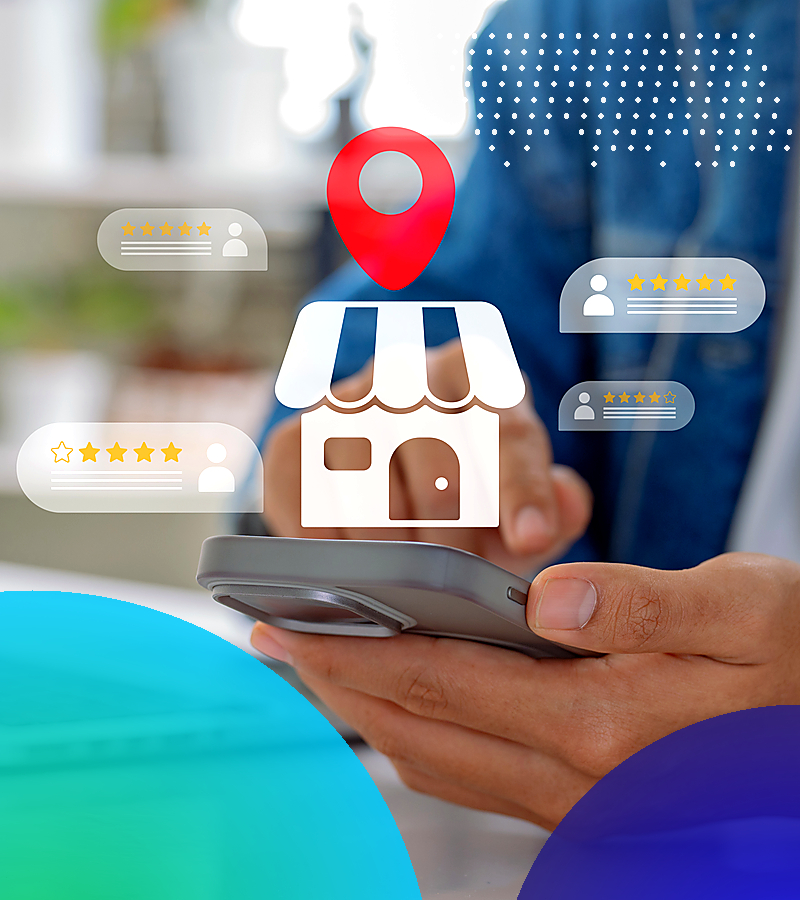
Reviews and ratings serve a different purpose. While testimonials highlight exceptional results, reviews demonstrate consistent quality across many customers. A 4.8-star rating from 200+ reviews tells prospects that most people walk away satisfied, reducing perceived risk. This matters especially for service businesses where outcomes can vary.
Comparison of social proof types for lead generation:
| Proof Type |
Best Use Case |
Typical Conversion Impact |
Implementation Difficulty |
| Customer Testimonials |
Service pages, landing pages |
15-25% increase |
Low |
| Video Testimonials |
Homepage, high-value offers |
30-40% increase |
Medium |
| Case Studies |
B2B sales cycles, bottom-funnel |
20-35% increase |
Medium-High |
| Star Ratings/Reviews |
Comparison pages, Google My Business |
10-20% increase |
Low-Medium |
| Trust Badges |
Contact forms, checkout pages |
8-15% increase |
Low |
| Client Logos |
Homepage, about page |
5-12% increase |
Low |
| User Numbers |
Above-the-fold sections |
12-18% increase |
Low |
| Expert Endorsements |
Thought leadership content |
25-45% increase |
High |
Social media proof operates differently than traditional testimonials. When prospects see active engagement on your posts or user-generated content featuring your product, they perceive a vibrant community rather than isolated positive experiences. This type of proof works particularly well for reaching younger demographics and companies with strong brand communities.
Where Should You Position Social Proof to Capture More Qualified Leads?
Placement determines whether your social proof converts browsers into leads or gets ignored. Most websites make the mistake of dumping all their testimonials onto a dedicated page that nobody visits. Smart placement means putting proof where doubt appears.
Your homepage needs social proof above the fold. Visitors decide within seconds whether to keep reading or bounce. A powerful testimonial or impressive client roster immediately signals credibility. Place it near your value proposition so prospects connect what you promise with evidence that you deliver.
Key locations for maximum lead generation impact:
- Homepage hero section: Brief testimonial or client count reinforces your main headline
- Service description pages: Testimonials specific to that service address service-specific concerns
- Contact form areas: Trust badges and security certifications reduce form abandonment
- Pricing pages: Testimonials about ROI or value justify the investment
- About page: Awards, certifications, and media mentions build organizational credibility
- Blog posts: Relevant case studies and examples support your points with proof
- Thank you pages: Post-conversion social proof can encourage referrals or upsells
Landing pages created for paid search campaigns require especially strategic social proof placement. You’ve paid to get someone to click, so maximize the chance they convert. Place a strong testimonial near your call-to-action button. The prospect reads your offer, sees that someone like them got great results, and fills out the form.
“We analyzed 200+ client websites and found that 73% buried their best testimonials where prospects would never see them. Moving just three strong pieces of proof to high-traffic, high-intent pages typically doubles form submissions within the first month.” – Strategy Team at Emulent Marketing
For law firm marketing, social proof placement needs extra care around ethical advertising rules. You can’t make guarantees or promises of specific outcomes, so testimonials need to focus on experience, communication, and process rather than results. Position these near your practice area descriptions and on attorney bio pages where prospects evaluate whether they want to reach out.
Which Social Proof Strategies Work Best for Different Business Models?
B2B companies and B2C businesses need different approaches to social proof because their prospects have different decision criteria and buying processes. A consumer might impulse-buy based on positive reviews, while a procurement team needs documented ROI and case studies that address compliance concerns.
B2B social proof tactics that generate qualified leads:
- Industry-specific case studies: Detailed walkthroughs showing measurable business outcomes
- Executive testimonials: Quotes from C-level leaders carry more weight than individual contributors
- Integration partnerships: Logos showing you work with tools your prospects already use
- Compliance certifications: SOC 2, ISO, or industry-specific credentials reduce risk perception
- Analyst recognition: Gartner, Forrester, or G2 badges signal market validation
- White papers and research: Original data positions you as a trusted authority
Service businesses face a unique challenge: prospects can’t touch or see your product before buying. Home services companies combat this by showing work-in-progress photos, before-and-after transformations, and video testimonials where customers walk through their property pointing out the completed work. This tangible proof helps bridge the gap between promise and reality.
Performance comparison across industries:
| Industry |
Most Effective Proof Type |
Average Conversion Lift |
Implementation Priority |
| Professional Services |
Case Studies |
32% |
High |
| Home Services |
Photo Galleries + Reviews |
28% |
High |
| Legal Services |
Client Testimonials |
24% |
High |
| Healthcare |
Patient Reviews + Credentials |
31% |
High |
| Manufacturing |
Client Logos + Certifications |
19% |
Medium |
| Technology/SaaS |
User Numbers + Integration Badges |
35% |
High |
| Construction |
Project Photos + Testimonials |
26% |
High |
| E-commerce |
Product Reviews + Star Ratings |
29% |
High |
For pharmaceutical marketing and life sciences companies, regulatory constraints limit what you can say and show. Focus your social proof on scientific credentials, peer-reviewed research, conference presentations, and testimonials from healthcare providers about the partnership experience rather than clinical outcomes. This approach builds trust while staying compliant.
Local businesses benefit most from location-specific proof. A heating and cooling company serving Charlotte should feature testimonials from Charlotte customers, photos of Charlotte homes, and references to Charlotte neighborhoods. This hyper-local approach makes prospects think, “They understand my area and my specific needs.”
How Can You Collect Customer Testimonials That Actually Generate Leads?
Most businesses have satisfied customers but struggle to turn that satisfaction into usable marketing materials. The problem usually starts with how you ask. A generic “Can you write us a review?” produces generic responses that don’t address the specific concerns prospects have.
Ask questions that prompt the details you need. Instead of “How was your experience?” try “What specific problem were you trying to solve, and what changed after you started working with us?” This frames the response as a before-and-after story that prospects can map onto their own situation.
Questions that produce high-converting testimonials:
- What made you choose us over competitors? Surfaces your differentiators
- What results did you see in the first 90 days? Provides concrete, believable timeframes
- What surprised you most about working with us? Uncovers unexpected benefits
- What would you tell someone considering our services? Creates peer-to-peer language
- What was your biggest concern before starting? Addresses common objections
- How has this impacted your business/life? Shows broader transformation
Timing matters as much as the questions. Ask for testimonials when customers experience clear wins, not at arbitrary intervals. If you’re a website design agency and a client’s new site just launched to rave internal reviews, that’s your moment. Their enthusiasm is genuine and their memory is fresh.
“The testimonials that convert best come from structured interviews, not open-ended requests. When we guide clients through a 10-minute conversation about their specific results and experience, the quotes we extract are 5x more likely to influence prospects than generic praise.” – Strategy Team at Emulent Marketing
Video testimonials carry significantly more weight than text, but they also require more effort from your customers. Make it easy by offering to send a videographer to their location, or provide a simple framework they can record themselves using their phone. Keep it short – 60 to 90 seconds captures attention without demanding too much time from viewers.
For written testimonials, edit for clarity and length but never change the meaning or add claims the customer didn’t make. You can remove filler words, fix grammar, and reorganize for impact, but the substance must remain authentic. When you ask permission to use their testimonial, show them the edited version so they can approve the final language.
How Do You Measure Whether Your Social Proof Actually Increases Conversions?
Measuring social proof effectiveness requires tracking specific behaviors, not just assuming it works because everyone says it should. Set up your analytics to compare conversion rates on pages with and without social proof, then test different types and placements to find what resonates with your audience.
Start with your content creation efforts and identify pages that generate the most traffic but convert poorly. These represent your biggest opportunities. Add targeted social proof and track whether the conversion rate improves over the next 30 days. Make sure you’re comparing similar time periods to account for seasonality.
Key metrics to track for social proof performance:
| Metric |
What It Measures |
How to Track It |
Benchmark Goal |
| Form Conversion Rate |
Percentage of visitors who submit lead forms |
Google Analytics goals |
3-5% for most B2B sites |
| Time on Page |
How long visitors engage with proof |
Analytics behavior reports |
2+ minutes for pages with testimonials |
| Scroll Depth |
Whether visitors see your proof |
GTM scroll tracking |
70%+ reaching testimonial sections |
| Click-Through Rate |
Clicks on case study links or video plays |
Event tracking |
15-25% for prominent placement |
| Bounce Rate |
Visitors leaving without interaction |
Analytics overview |
Below 50% with strong proof |
| Pages Per Session |
Additional pages viewed after seeing proof |
Analytics behavior |
3+ pages for engaged visitors |
| Assisted Conversions |
Proof pages in conversion paths |
Multi-channel funnels |
20-30% of all conversions |
A/B testing gives you the cleanest data on social proof impact. Create two versions of a landing page – one with testimonials and one without – and split traffic evenly between them. Run the test until you reach statistical significance, which for most sites means at least 100 conversions per variation. This method removes guesswork and shows you exactly how much lift your social proof provides.
For local SEO efforts, track how review quantity and quality correlate with lead volume. Look at your Google Business Profile insights to see whether businesses with more reviews get more website clicks and direction requests. You’ll usually find a clear relationship: more recent, detailed reviews drive more local leads.
Heat mapping tools show you whether visitors actually see your social proof. If you’ve placed testimonials at the bottom of a long page and your heat map shows that 80% of visitors never scroll that far, you know you need to move that content higher or rethink your page structure.
“Most teams stop at ‘We added testimonials.’ What separates average results from exceptional ones is asking: Which testimonials? Where exactly? For which audience segments? When you test systematically instead of guessing, you usually find that three strategically placed pieces of proof outperform twenty scattered randomly.” – Strategy Team at Emulent Marketing
What Trust Signals Work Best at Different Stages of the Buyer Journey?
Your prospect’s mindset shifts as they move from awareness to consideration to decision. The social proof that works when they’re just learning about their problem differs from what convinces them to choose you over competitors. Matching the right proof type to each stage multiplies its effectiveness.
At the awareness stage, prospects don’t even know if they need your solution yet. They’re researching their problem and looking for credible sources. Here, thought leadership content, research citations, and expert credentials work better than customer testimonials. They need to see you as a trustworthy source of information before they care about your customers’ experiences.
Social proof mapped to buyer journey stages:
- Awareness stage (Problem identification):
- Industry awards and recognition
- Media mentions and press coverage
- Expert credentials and certifications
- Published research and original data
- Speaking engagements and conference presence
- Consideration stage (Solution evaluation):
- Client testimonials addressing common concerns
- Case studies with detailed outcomes
- Third-party review sites (G2, Capterra, Clutch)
- Comparison content featuring your advantages
- Video testimonials showing real customers
- Decision stage (Vendor selection):
- ROI-focused case studies
- Testimonials from similar companies
- Implementation success stories
- Support and service reviews
- Security and compliance certifications
- Money-back guarantees or trial offers
During consideration, prospects compare you to alternatives. They’re reading reviews, checking references, and looking for proof that you’re better than option B. This is where peer testimonials become powerful. When someone in their industry or role says, “We evaluated five vendors and chose these guys because…” that carries immense weight.
At the decision stage, risk reduction becomes the priority. Prospects know they want what you offer; they need reassurance that the purchase won’t blow up in their faces. Guarantees, free trials, detailed implementation case studies, and testimonials about your customer support team address these final hesitations.
For construction company marketing, this journey often spans months. Early-stage prospects might engage with your blog content about design trends or building codes. Mid-stage prospects download project portfolios and cost guides. Late-stage prospects request specific case studies of projects similar to theirs and want to speak with past clients. Map your social proof to these stages instead of throwing everything at everyone.
How Can You Make Social Proof More Authentic and Credible?
Prospects have developed sophisticated BS detectors. They’ve seen enough fake reviews and cherry-picked testimonials to spot inauthenticity immediately. Making your social proof believable requires transparency, specificity, and verifiability.
Include full names, job titles, and company names with testimonials whenever possible. “John M.” from “a tech company” reads like you made it up. “Sarah Chen, VP of Operations at Acme Manufacturing” feels real because you’ve given prospects enough detail to mentally verify it. Photos add another layer of authenticity, especially if they show the actual person rather than a stock image.
Elements that make social proof more trustworthy:
- Complete attribution: Full names, photos, companies, and titles
- Specific metrics: “47% increase” beats “significant improvement”
- Recent dates: Timestamps show proof is current, not from five years ago
- Mixed ratings: All five-star reviews actually reduce trust
- Detailed context: The situation, challenge, and outcome, not just praise
- Video format: Seeing and hearing real people eliminates doubt
- Third-party verification: Links to review platforms or external sources
- Response to criticism: How you handle negative feedback shows character
Don’t hide negative reviews. Respond to them professionally and show how you resolved the issue. Prospects trust companies with a few negative reviews and thoughtful responses more than companies with nothing but perfect scores. It signals that the reviews are real and that you care about customer satisfaction.
Make your proof verifiable by linking to the original sources when possible. If you won an award, link to the organization’s website. If you published research, link to the full report. If someone reviewed you on G2 or Google, link to those platforms. This transparency builds confidence because prospects can fact-check your claims.
For healthcare marketing, authenticity becomes even more critical because you’re dealing with people’s wellbeing. Use real patient or client testimonials with proper consent forms, never stock photos with fictional quotes. HIPAA compliance restricts what you can share, but you can still collect powerful proof by focusing on the experience and environment rather than specific medical outcomes.
Frequently Asked Questions
What is the most powerful type of social proof for B2B lead generation?
Case studies with specific metrics and outcomes from companies similar to your target prospects perform best for B2B. They provide the depth of information that committee buyers need to justify decisions and address concerns from multiple stakeholders about implementation, ROI, and risk. Video case studies showing real executives discussing their results carry even more weight than written versions.
How many customer testimonials should you feature on a landing page?
Three to five strategically placed testimonials work better than overwhelming visitors with dozens. Choose testimonials that address different objections or highlight different benefits, and place them near relevant sections of your page. Quality and relevance matter far more than quantity. If you have more testimonials, rotate them or feature additional ones on a dedicated testimonials page that prospects can explore if interested.
Can social proof actually hurt conversion rates?
Yes, poorly implemented social proof can reduce conversions. Generic testimonials without specifics, obviously fake reviews, outdated proof, or social proof that contradicts your messaging all damage credibility. Displaying low numbers when you’re trying to show popularity backfires. Always test your social proof and remove any elements that don’t positively impact your conversion metrics.
How often should you update the social proof on your website?
Review and refresh your social proof quarterly at minimum, adding new testimonials and case studies as you generate them. Remove outdated statistics, old client logos if companies have rebranded, and testimonials older than two years unless they’re exceptionally strong. Fresh proof signals that you’re currently delivering results, not resting on past achievements. For review platforms, aim to generate new reviews monthly.
What’s the difference between social proof and testimonials in marketing?
Social proof is the broader psychological principle that people look to others’ actions and opinions when making decisions. Testimonials are one specific form of social proof, along with reviews, ratings, case studies, user numbers, certifications, media mentions, and endorsements. Think of testimonials as a tool within your larger social proof strategy rather than synonyms for the same thing.
How do you get customers to provide video testimonials?
Make it extremely easy by offering to send a video crew to their location or providing simple smartphone recording guidelines with a script framework. Ask customers who’ve achieved notable results and express high satisfaction. Offer incentives like featuring them in your marketing or giving them early access to new products. Keep the recording brief and guide them through specific questions that produce quotable, authentic responses.
Should you respond to negative reviews as part of your social proof strategy?
Always respond to negative reviews professionally and constructively. Your response becomes part of your social proof, showing prospects how you handle problems and treat customers. Address the specific issue, apologize if appropriate, explain what you’ll do to fix it, and take the conversation offline when needed. Well-handled negative reviews can actually strengthen trust more than only having positive ones.
How does social proof affect local service business lead generation?
For local service businesses, social proof has an outsized impact because decisions often happen quickly and customers rely heavily on proximity and reputation. Google reviews, photos of completed projects in recognizable local areas, and testimonials mentioning specific neighborhoods all strengthen local relevance. A robust Google Business Profile with 50+ recent reviews can triple lead volume compared to profiles with sparse reviews.
Conclusion
Social proof transforms skeptical website visitors into qualified leads by answering the fundamental question prospects have: “Can I trust you?” When you strategically position customer testimonials, case studies, reviews, and other trust signals where doubt appears in the buying journey, you remove the friction that prevents conversions. The businesses that generate the most leads from social proof don’t just collect positive feedback and hope for the best. They map specific proof types to specific prospect concerns, test relentlessly to find what works, and make verification easy so authenticity shines through.
At Emulent Marketing, we help businesses build complete social proof systems that generate measurable increases in qualified leads. From identifying the right types of proof for your audience to optimizing placement and measuring impact, we take a strategic approach to turning customer satisfaction into your most powerful marketing asset. If you need help developing and implementing a social proof strategy that drives real lead generation results, contact the Emulent team to start the conversation.