
Enterprise SEO pricing is hard to compare across providers, and that makes it easy to overpay. Quotes for the same scope can range from $7,000 to $60,000 or more per month, and most proposals do not explain the difference. Based on the enterprise quotes we have reviewed, the difference usually comes down to three things: who does the work, how many people sit between you and that person, and how much of the fee pays for the agency itself rather than your rankings. This guide explains what enterprise SEO should cost in 2026, what drives the number, and the warning signs that a quote is built to protect the agency rather than deliver results.
Key takeaways from this article:
- The enterprise floor is near $10,000 per month. Published 2026 benchmarks place enterprise retainers between $10,000 and $50,000 monthly, with global, multi-market programs reaching $60,000 or more.
- About a third of agency hours are not billed to clients. Average billable utilization fell to 66.4% in 2025, so part of every retainer at a volume-based agency pays for overhead rather than work on your account.
- A senior agency retainer costs about half of an in-house team. A fully loaded in-house enterprise SEO team runs $420,000 to $606,000 per year, compared with $180,000 to $360,000 for a specialized agency team.
- Padded scope is a warning sign. Hundred-page audits, impression dashboards, and unexplained line items add cost without affecting leads, sales, or revenue.
- Long lock-ins shift risk to you. A 12 to 24 month commitment required before any results are proven moves the risk onto the buyer.
- Prices are likely to keep rising. The global SEO services market grew 16.8% into 2026, and both analyst growth scenarios point to continued demand for senior talent through 2030.
What Should Enterprise SEO Pricing Look Like in 2026?
Start with the published numbers so you can compare any quote against the market. The Clutch.co average monthly SEO cost in 2026 is $3,199, but that figure includes every tier, from single-location local campaigns to global programs. Enterprise work, which covers technical SEO across tens of thousands of pages, content strategy at scale, authority building, and revenue-level reporting, starts near $10,000 per month and commonly runs to $50,000. Multi-language, multi-market programs go past $60,000.
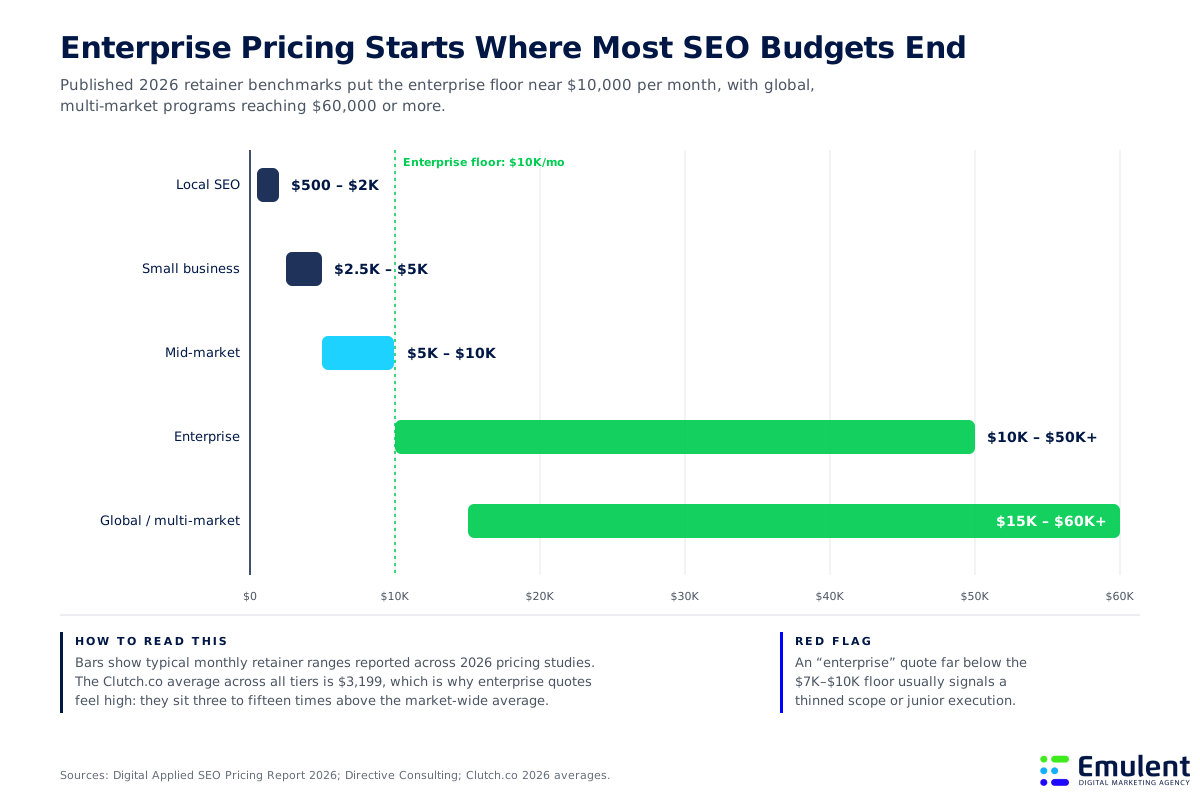
There is a reason for that floor. Enterprise engagements usually require 20 to 60 hours of senior work per week, and specialized consultants bill $250 to $400 per hour. Those numbers do not support a $4,000 enterprise package. When a quote comes in well below the floor, the agency has either reduced the scope or staffed the account with junior people, and you absorb the difference either way. If you are comparing providers, our overview of enterprise SEO services covers what a complete scope should include at this level. Once you know the market range, the next step is understanding what your specific budget actually pays for inside the agency you choose.
Are You Paying for Results or for the Agency’s Org Chart?
Two agencies can quote the same $25,000 retainer and deliver very different value, because the fee pays for two different operating models. Large agencies are built for volume: dozens or hundreds of clients, with account managers above project managers above the specialists who do the work. You become one client among many, and your retainer helps pay for those layers. A senior-level marketing agency model is built for depth instead, with fewer clients, direct access to the strategist, and a closer working relationship with your business.
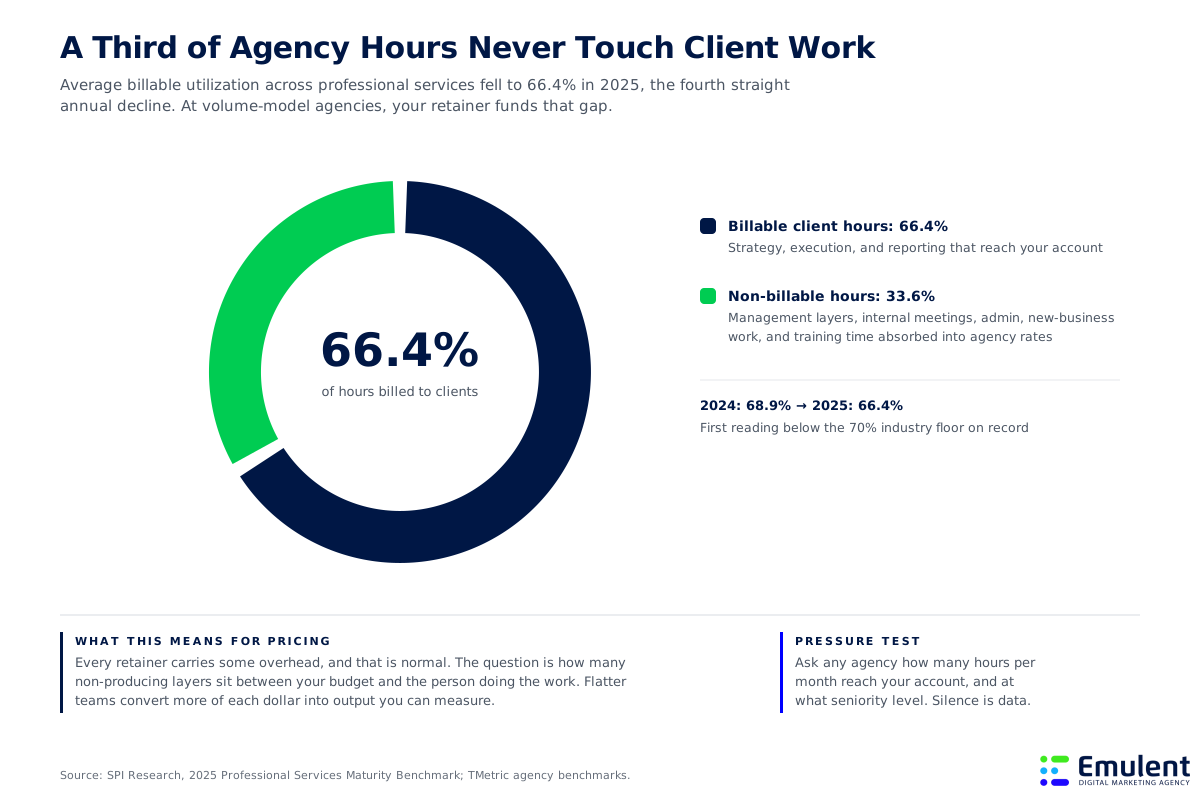
The benchmark data shows why this matters. Average billable utilization across professional services dropped to 66.4% in 2025, the fourth straight annual decline and the first reading below the industry’s 70% standard. In practice, about a third of agency hours go to internal meetings, management layers, admin, and new-business work, and client retainers help fund all of it. Some overhead is normal. Too much is not, and you can reasonably ask how much of yours pays for it.
When a client tells us a past agency disappointed them, our first question is whether they ever spoke with the person doing the work. If the answer is no, they were paying for distance from the work, not for expertise. – Emulent Strategy Team
Once you understand the operating model behind the number, the individual line items in a proposal start to matter. Some of them deserve closer review.
Which Scope Items Are Red Flags in an Enterprise Quote?
Padded scope is how some agencies justify high prices. The pattern is usually the same: outputs that sound impressive, take many hours, fill status reports, and do not affect your pipeline. You should pay for work that affects leads, sales, and revenue, and you should question the rest. The most expensive mistake we see is companies paying enterprise rates while junior staff learn on their account. A simple test is whether the people who pitched you are the same people running your account in month six, at the seniority promised.
Watch for these red flags before you sign an enterprise SEO agreement:
- A long audit nobody uses. A useful audit is a prioritized list of actions tied to revenue impact. A hundred-page audit often just adds billable hours and delays the actual work.
- Dashboards based on impressions. Impressions, rankings on terms nobody searches, and general visibility scores can all rise while leads stay flat. Ask for reporting tied to conversions and revenue.
- Unnamed team members. If the proposal lists roles instead of named people, expect staff turnover, and expect to bring each new person up to speed at your cost.
- Junior staffing at senior rates. Ask for the seniority mix of the hours billed to your account, in writing.
- Long lock-ins before any results. A 12 to 24 month minimum required up front shifts the risk to you rather than reflecting the agency’s confidence in its work.
Every line item in a scope should answer one question: how does this create a lead, a sale, or revenue? If it does not do so directly, it should clearly support something that does. – Emulent Strategy Team
Reading a quote carefully also raises a larger question that many leaders skip: whether an agency retainer is the right option at all, compared with hiring the team yourself.
Should You Build In-House, Hire an Agency, or Run a Hybrid?
The fair comparison uses fully loaded costs, not salaries alone. A capable in-house enterprise SEO function needs an SEO director, a technical specialist, and content resources. Once you add benefits, tools, and overhead, that team costs $420,000 to $606,000 per year before any work ships. A specialized senior agency team typically runs $180,000 to $360,000 per year, and a hybrid model that pairs an in-house director with outside specialists lands between $310,000 and $568,000.
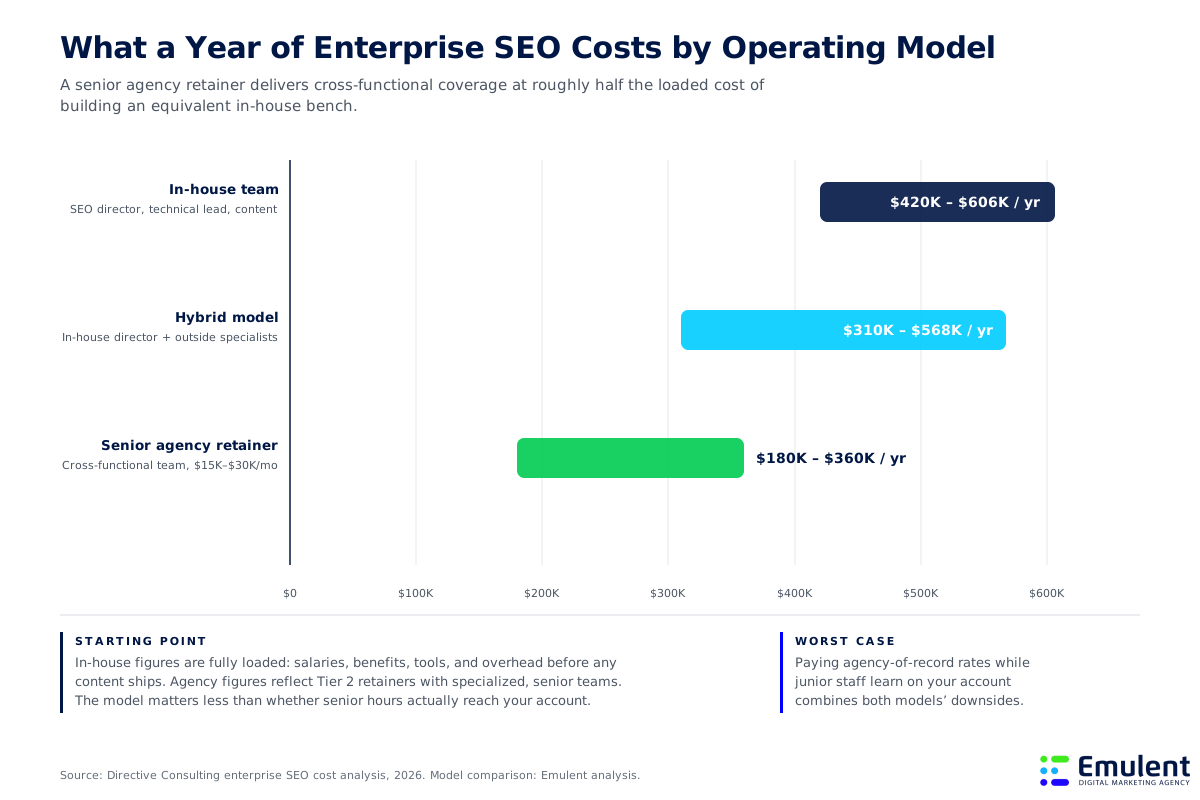
The agency option wins on cost and on breadth of specialization, but only when the retainer pays for senior hours that reach your account. The in-house option wins on institutional knowledge and control, but it concentrates risk in a few hires in a tight talent market. Many of the strongest programs we see are hybrids, and we have written about how SEO agencies boost ROI for in-house marketers when both sides divide the work clearly.
Decision criteria for choosing your operating model:
- Choose in-house when SEO is a core, permanent revenue channel and you can hire and keep director-level talent.
- Choose a senior agency when you need cross-functional depth across technical, content, authority, and analytics work faster than you could hire it, at about half the loaded cost.
- Choose hybrid when you have a strong internal owner who needs added execution capacity without several more hires.
Whichever model you choose, the agreement that governs it determines how much control you keep. That brings us to the contract itself.
How Long Should an Enterprise SEO Contract Lock You In?
SEO results build over time, and a serious program needs six to twelve months to stabilize. We do not dispute that, and the data agrees: most contracts in the industry run 6 to 12 months for that reason. The warning sign is the structure, not the length. Industry surveys suggest about 30% of agencies require minimums of a year or more, and enterprise agreements often run to 24 months, sometimes with auto-renewal clauses and 90-day notice periods. An agency that requires two years of committed revenue before proving anything is protecting itself, not earning your trust.
Contract terms worth negotiating before you sign:
- A performance exit clause. The right to end the contract with 30 to 60 days notice if agreed benchmarks are missed by a set date keeps both sides accountable.
- Quarterly performance reviews. Reviews should map to the revenue metrics in the scope, not to activity summaries.
- Asset ownership in writing. Content, links, analytics, and documentation should belong to you and stay portable from the first day to the last.
- Conversion to month-to-month. After the initial term, the agreement should continue with reasonable notice rather than auto-renew for another full year.
Trust comes from performance, not from contract terms. An agency that is confident in its work is willing to write agreements that make it easy for the client to leave. – Emulent Strategy Team
Contract terms matter even more in a rising market, because the price you agree to today sets the baseline for every renewal that follows.
Why Will Enterprise SEO Quotes Keep Rising Through 2030?
The global SEO services market grew from $92.7 billion in 2025 to $108.3 billion in 2026, a 16.8% increase in one year. Analyst forecasts differ on what comes next: the consensus path projects about 17.1% compound annual growth, reaching $203.8 billion by 2030, while a more conservative path near 12.1% reaches about $171 billion. We show both scenarios because zero-click results and Google AI Overviews reduce click volume even as budgets move toward AI-search visibility work. Both paths point to the same outcome for buyers: demand for senior talent keeps rising, and retainers rise with it.
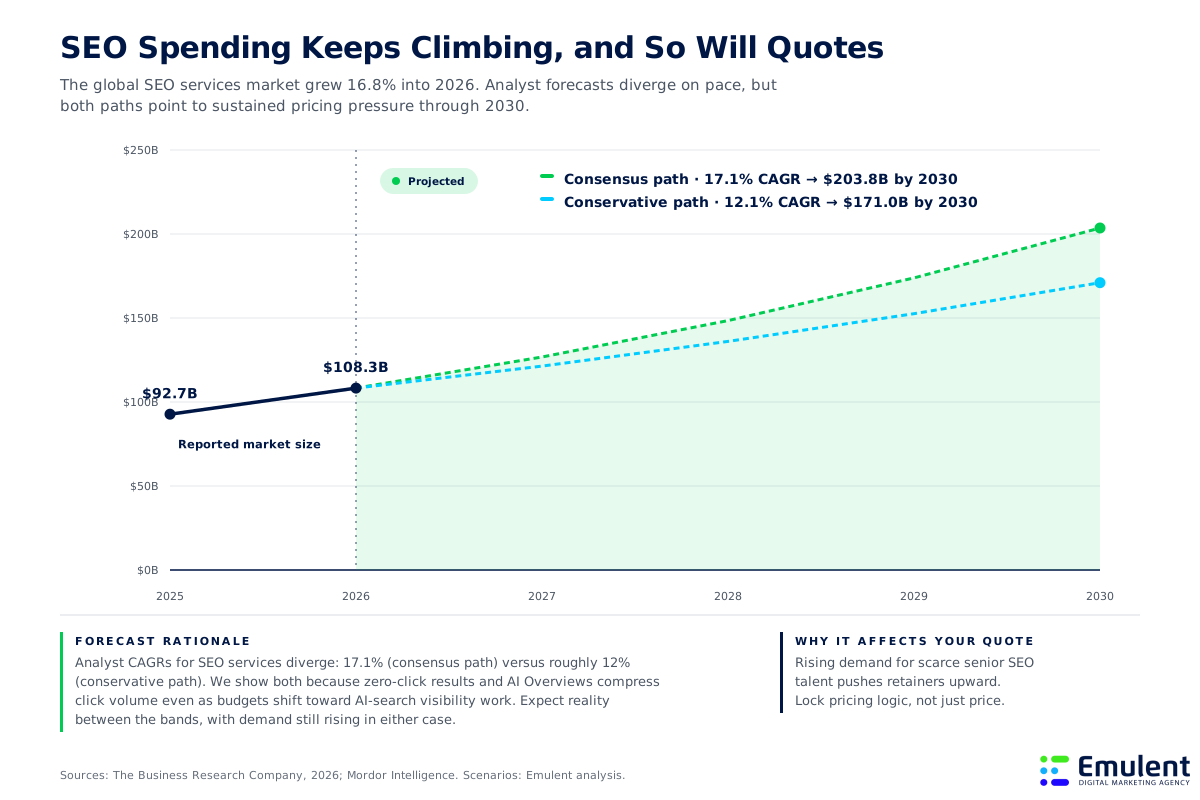
This is why we tell clients to focus on the pricing logic, not just the price. A quote that explains its own math, including hours, seniority mix, and revenue targets, gives you a clear baseline when renewal time arrives in a more competitive market. A quote with no detail behind it gives the agency the advantage instead. For more on where search budgets are heading, our SEO trends report tracks the projections we update through the year. The buyers who do best in this market are the ones who can tell rising prices apart from rising value, and that starts with the questions covered above.
How the Emulent Marketing Team Can Help
We built Emulent around the answers to the problems in this article: senior strategists doing the actual work, a select-client model focused on depth rather than volume, scopes tied to leads and revenue, and agreements that earn renewal through results. If you have an enterprise SEO quote you want a second opinion on, or you want a program built correctly from the start, we are glad to review it with you. Contact the Emulent Team for a no-pressure conversation about enterprise SEO.