
Your realtor website has one job: pass the background check a referred prospect runs on you before they call. Most agents build for a different job. They chase cold buyer leads with search portals and pop-up forms, and that mismatch is why so many agent sites get rebuilt every two years without ever earning back their cost. The numbers are blunt about this. In the National Association of REALTORS® 2025 Profile of Home Buyers and Sellers, 43% of buyers found their agent through a referral from a friend, neighbor, or relative. Another 18% went back to an agent they had used before. That's 61% of the market choosing from a relationship. Your website meets these people after they already have your name. Build it to confirm the recommendation, and every other decision about design, sections, and MLS feeds gets easier.
Your website exists for the referral check, not the cold lead
The most expensive mistake in realtor web design is building for a visitor who almost never shows up: the stranger who found you through a property search and wants to be captured. The visitor who does show up is the neighbor's friend who got your name at a cookout and typed it into her phone that night. She's deciding whether the recommendation was a good one. And she is probably the only shot you get. NAR's 2025 data says 67% of first-time buyers and 76% of repeat buyers interviewed exactly one agent before committing. No shortlist. No bake-off. If your site confirms the referral, you win the only interview that will ever happen. If it looks abandoned or interchangeable, she quietly asks someone else for a name, and you never find out the meeting was lost.
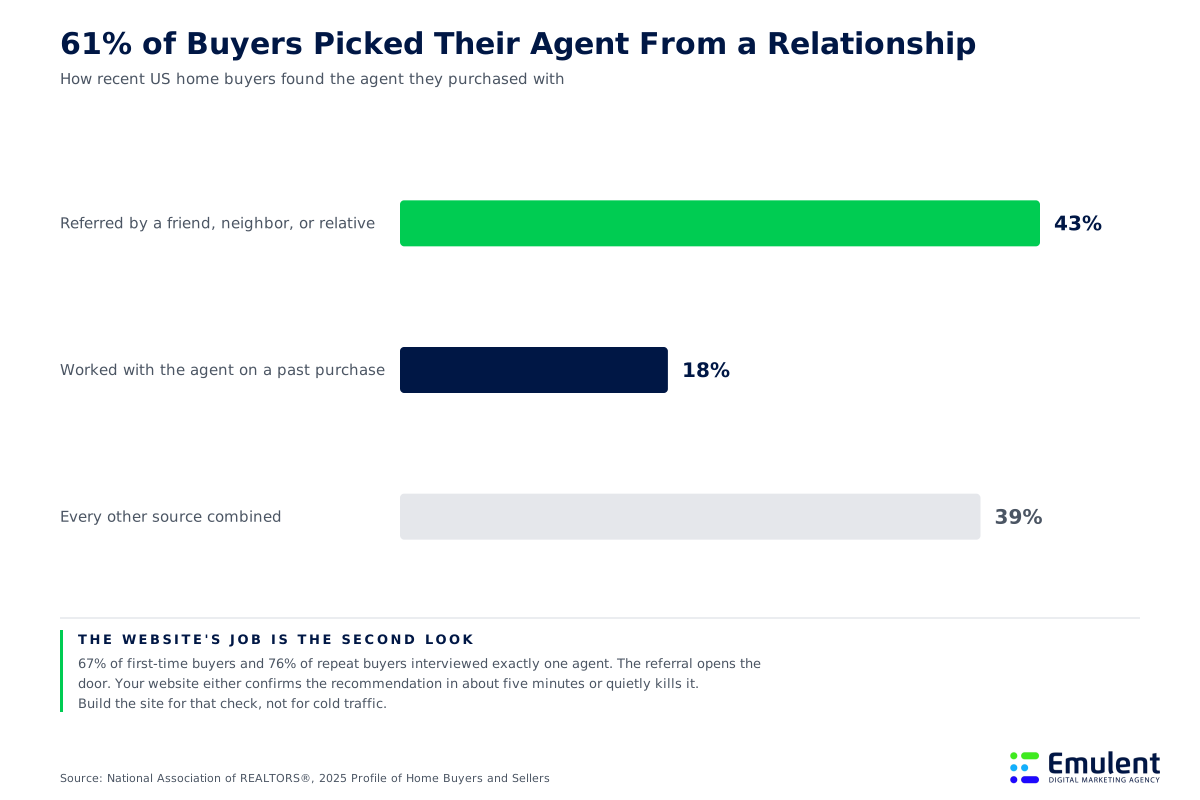
This changes what "conversion" means for an agent site. A portal like Zillow converts strangers into inquiries. Your site converts a warm recommendation into a booked call, and that's a psychology problem before it's a design problem. The mechanism at work is a trust threshold: the referral gets the prospect most of the way there, so the site only has to close the remaining gap without planting doubt. Stock photography plants doubt. So does a blog that went quiet in 2023, or a homepage that could belong to any of the roughly 1.5 million agents in the country. We wrote about this pattern across the whole industry in our report on real estate brokerage marketing trends, and it holds at the individual agent level too. The sites that win are built around proof. The search widgets are decoration.
Buyers are not comparing you to other agents when they land on your site. They are looking for a reason to stop looking. Give them proof fast, or they will manufacture doubt on their own. - Bill Ross, Founder, Emulent
The lead-gen website is the most oversold product in real estate marketing
The realtor website industry sells a promise the profession's own data contradicts. In NAR's 2025 Technology Survey, only 12% of REALTORS® named their personal business website as their highest source of quality leads. Social media led at 39%. The CRM came in at 23%, the local MLS at 17%, and listing portal sites at just 9%. Now read that against the price tags: the same survey found 19% of agents spending more than $500 a month on lead generation. A meaningful slice of the industry is paying premium prices for a channel its own members rank near the bottom.
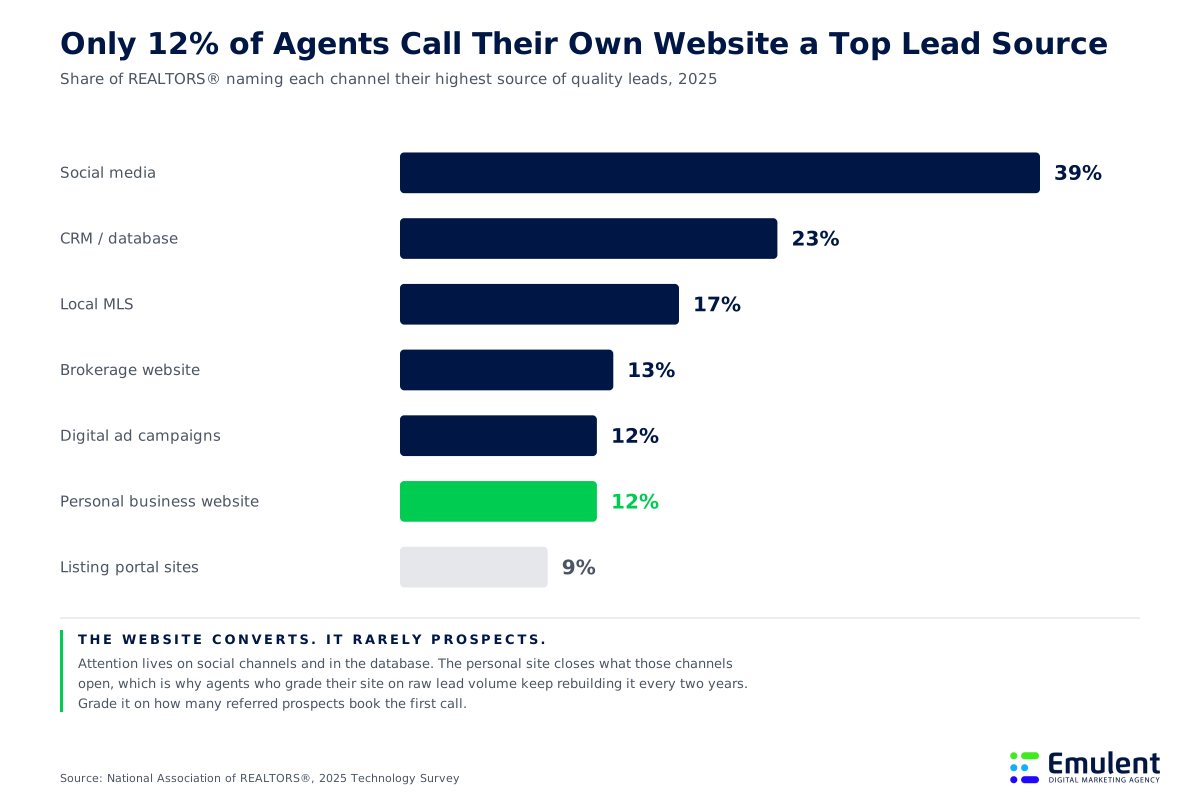
The website still matters. It's just being graded on the wrong scoreboard. Traffic and raw lead counts are vanity numbers for an agent site, the same way ranking #1 is nothing more than a vanity metric when the ranking never becomes revenue. The honest scoreboard for a realtor website is the referral-to-call rate. Of the people who arrived with your name already in hand, how many booked time with you? A site can fail that test with 5,000 monthly visitors and pass it with 80. If you have traffic and no appointments, the diagnosis is usually the one we laid out in why your website gets traffic but doesn't convert: the page answers the visitor's search and ignores the visitor's decision.
Here's the position we'd defend to any agent, and it costs us some web-design revenue to say it. Skip the $400-a-month lead-gen site package. Put that budget into the trust layer described below, and buy the cheapest reliable MLS integration that serves your actual clients. The agents who beat you next year will not out-capture you. They will out-prove you.
What sections a realtor website needs, based on a national analysis
We audited the realtor and team websites ranking in US search results for agent-selection queries, along with the templates the major real estate site vendors ship, and the pattern repeats often enough to call it a national standard. Almost every ranking site carries the same eight sections. The difference between the sites that convert and the ones that decorate is which sections carry real substance. Current website design trends push agents toward full-screen video and minimalist menus. None of that matters if the eight sections below are thin.
1. A homepage that names your market in one sentence
The first line should say who you serve and where. "Helping families buy and sell in Wake Forest and North Raleigh" beats any slogan about dreams or doors. A referred visitor needs to confirm within seconds that the name they were given works their area and their price range.
2. An about page built around a real face
For a referred prospect, this is the true homepage. It needs a current professional photo of you, your license and brokerage, how long you've worked the market, and a short answer to why you do this work. No stock imagery anywhere on it.
3. A proof page: sold gallery and results
Recent sales with addresses or neighborhoods, days on market, and sale-to-list ratios where your MLS rules allow. Specific numbers do the persuading. "Sold in 9 days at 102% of list" is a brand statement no logo can make.
4. Testimonials and reviews, with names attached
Pull your Google reviews onto the site and pair them with two or three longer client stories. Anonymous praise reads as fabricated. A first name paired with the neighborhood where you sold reads as checkable.
5. Neighborhood pages instead of a generic blog
This is where the national pattern breaks in your favor. Nearly every agent site has a blog full of "10 staging tips" posts nobody reads, and almost none have real pages on the specific neighborhoods the agent works: schools, price history, what $450k buys there, what the agent has sold there. Neighborhood pages prove local expertise to humans and give a Google local SEO service something real to build on. Kill the generic blog. Write the neighborhoods.
6. Listings, including your own featured listings
The MLS feed, covered in its own section below, plus a hand-curated page of your active and recent listings. Sellers judge you on how you present other people's homes.
7. A seller page and a buyer page, kept separate
Sellers want your pricing process, your marketing plan, and a home-valuation request form. Buyers want search, financing basics, and what working with you looks like. One combined "services" page serves neither.
8. Contact with a real booking path, plus the compliance footer
A calendar link or a direct phone line, never a bare form that emails into a void. And the footer every US agent site needs: license number, brokerage affiliation, Equal Housing Opportunity logo, and an accessibility statement.
When we audit agent sites, the blog is where the budget went to die. Twenty posts, forty total readers. One good neighborhood page would have outworked all of them. - The Strategy Team at Emulent
The trust layer: real photos, real reviews, real results
Everything in the section list above depends on one production decision: real photography of you, your team, and your market. Agents skip this because it feels vain. Buyers weigh it more than anything else on the site. We've made the case before that professional team photos build instant trust, and the mechanism is plain costly signaling: a real photo shoot proves you invested in your own business, while stock imagery proves you didn't. Real estate raises the stakes because the product being purchased is you. An agent site with stock photos of handshakes is a restaurant with photos of someone else's food. Good brand photography covering you at work, your signage, and the neighborhoods you sell is the single highest-return asset on the entire site.
Reviews are the second half of the trust layer, and the bar keeps climbing. BrightLocal's Local Consumer Review Survey 2026 found that 97% of US consumers read reviews when evaluating a local business, and the share who say they always read reviews when browsing jumped from 29% in 2025 to 41% in 2026. Same survey: 74% now want reviews written within the past three months. A wall of five-star reviews from 2022 no longer settles the question. Recency is part of the proof.
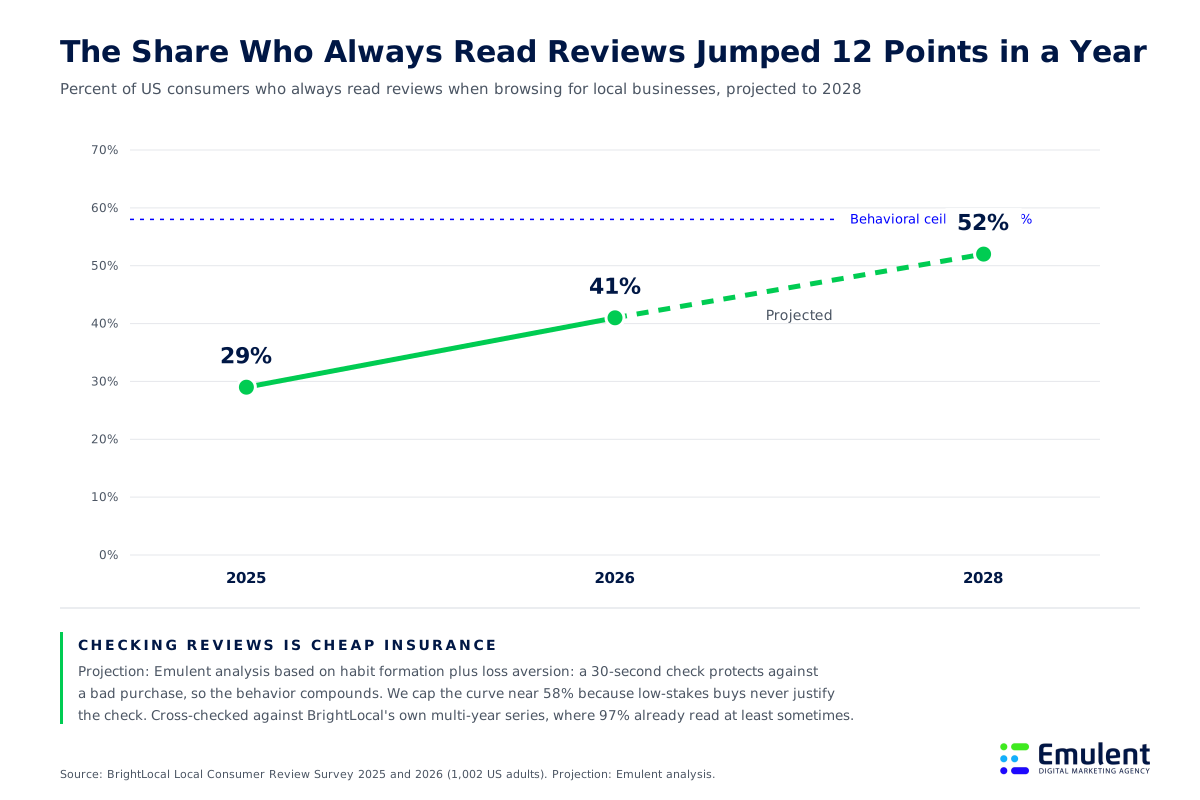
Projection: Emulent analysis based on trust-threshold ratcheting and habit formation, assuming a 55-60% ceiling because "always" is a strict standard and low-stakes purchases skip research, cross-checked against BrightLocal's 2026 recency findings, which tighten in parallel.
The practical program: ask every closed client for a Google review within a week of closing, respond to each one personally, and stream the feed onto your site. Steady beats bursts. A review cadence is itself evidence you're actively closing. And this work belongs inside your broader brand system, not on a task list by itself. If the site, the photography, and the review program each tell a slightly different story, the whole thing reads as assembled rather than earned, which is the problem our brand development services exist to fix.
AI now runs the background check for you
The verification moment this whole article is built around is changing hands. In BrightLocal's 2026 survey, the share of US consumers using AI tools like ChatGPT to find and vet local businesses jumped from 6% to 45% in a single year, while Google's share of local business discovery fell from 83% to 71%. The referral still starts the process. But a growing share of prospects now ask an AI assistant "is [your name] a good agent in [your town]?" and act on the summary. That summary gets assembled from your reviews, your site's content, and whatever else the web says about you, which is why we treat how reviews affect AI search as a website problem, not a side project.
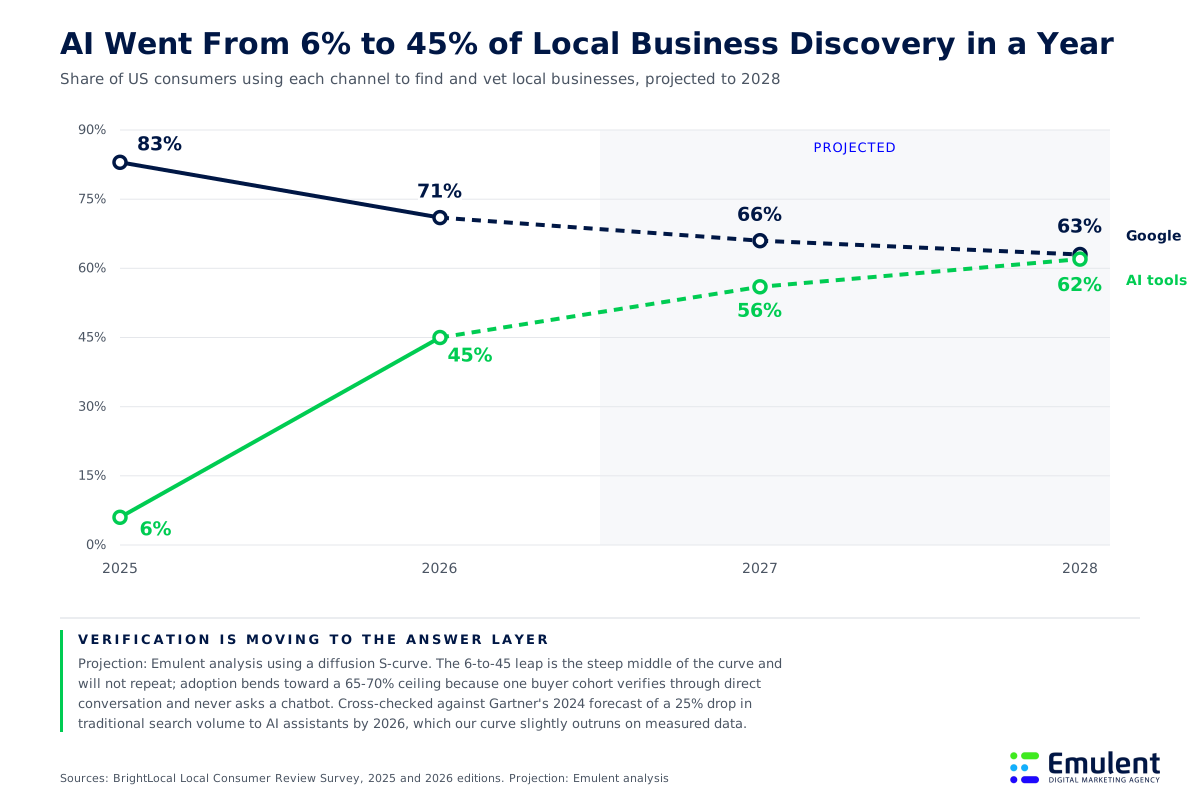
Projection: Emulent analysis based on a diffusion-of-innovations S-curve past its visibility tipping point, assuming a 65-70% ceiling because one buyer cohort verifies through direct conversation and never uses AI tools, cross-checked against Gartner's 2024 forecast of a 25% decline in traditional search volume to AI assistants by 2026.
That projection deserves its caveats said out loud. The 6-to-45 leap is the steep middle of an adoption curve, and steep middles don't repeat. We bend the line toward a 65-70% ceiling because a durable cohort of buyers, mostly the older repeat buyers who now dominate purchases, verifies through conversation and habit rather than chatbots. Gartner forecast in 2024 that traditional search volume would drop 25% to AI assistants by 2026. BrightLocal's measured data already outran that estimate on the discovery side, so we weight the measured numbers. What you do with this is concrete: keep your name, market, brokerage, and review profile consistent everywhere it appears, write neighborhood pages that answer questions in plain language, and treat AI SEO services as the successor to the old directory-listing work. The site that reads clearly to a human referral now also reads clearly to the machine summarizing you.
What to use to pull in MLS listings
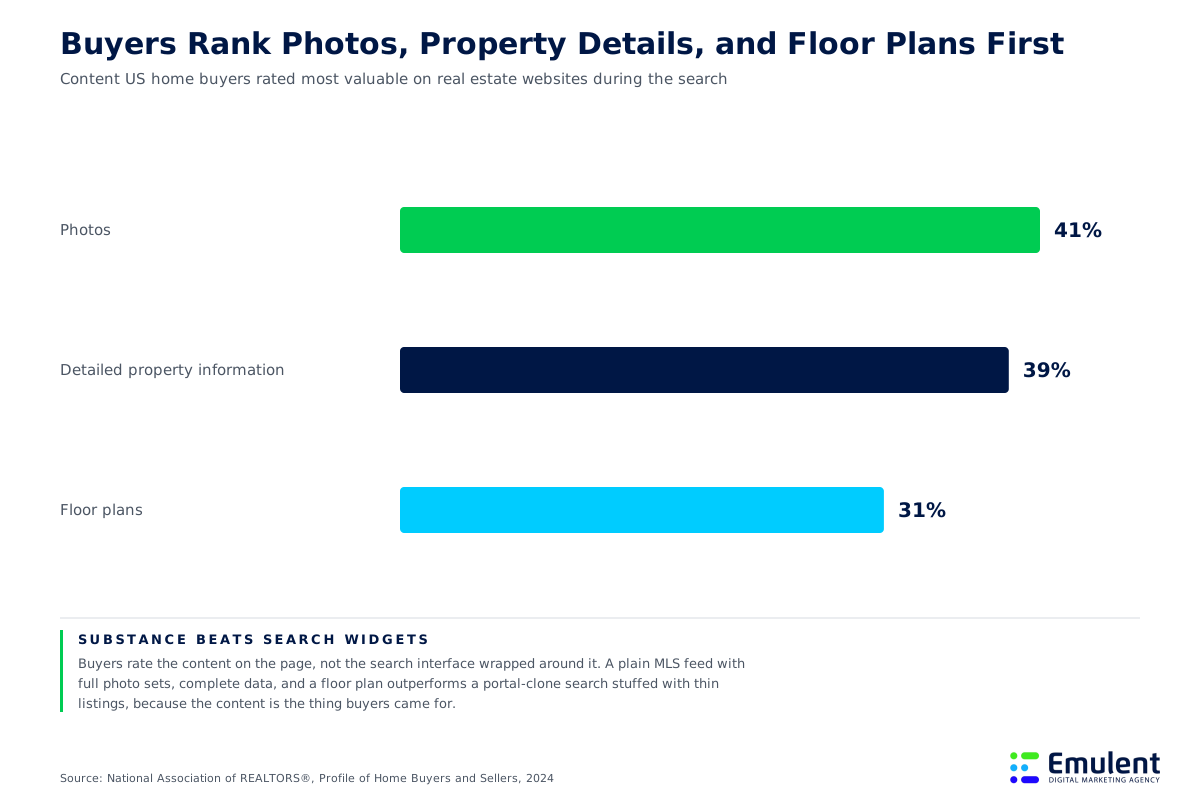
Now the plumbing question every agent asks first, answered in its proper place: how to get MLS listings onto your site. The short version is that your MLS syndicates listing data through IDX (Internet Data Exchange) feeds, increasingly delivered over the RESO Web API standard, and a handful of vendors package that feed for WordPress. Before you pick one, look at what buyers actually value once they reach a listing. In NAR's 2024 Profile of Home Buyers and Sellers, the website content buyers rated most valuable was photos at 41%, detailed property information at 39%, and floor plans at 31%. Buyers grade the substance on the listing page, not the cleverness of the search interface wrapped around it.
We build agent sites on WordPress, and for a single agent or small team we host them on Kinsta, because IDX pages rebuild on every feed refresh and cheap hosting falls over the first time a refresh and a traffic bump land together. Every option below works with standard WordPress themes such as Hub or Ave and drops into Visual Composer's backend editor through shortcodes or widgets, so your listing search can live inside pages you control instead of on a vendor's island.
iHomefinder (Optima Express plugin)
The default answer for most solo agents. The WordPress plugin is free; the data subscription typically runs about $50 to $100 a month as of mid-2026 depending on whether you add the marketing tier. Setup is fast, MLS coverage is broad, and the built-in email alerts give past clients a reason to keep using your site instead of a portal.
IDX Broker (IMPress plugin)
The longest track record and the deepest customization, with published plans generally in the $60 to $149 monthly range. The trade-off to check before signing: on lower tiers, parts of the search experience run on an IDX Broker subdomain rather than your own pages. That's fine for serving clients and weaker for building your domain.
Showcase IDX
The most polished consumer search experience of the group, from roughly $85 a month. Listings render inside your WordPress pages, and the map search feels closest to what buyers are used to on the portals. You pay for that polish. And the lead-capture registration walls should be loosened, for the reasons this whole article argues.
Realtyna (WPL plugin)
The "own it" option: listings import as native WordPress content on your own server, which gives you full control and indexable listing pages. It costs more up front, often needs a developer, and puts feed-compliance maintenance on your side. Right for teams and brokerages treating the site as a long-term asset. Heavy for a solo agent.
SimplyRETS
An API rather than a plugin, for custom builds. If a developer is creating something specific for you, this is the clean data layer. Skip it otherwise.
Two rules cut through the comparison. First, ask each vendor one question: do my listing pages render on my domain in a form Google can index, or inside a frame? Framed IDX serves your clients fine and builds your site not at all, so pay for native rendering only if you'll invest in the neighborhood-page and local search work that compounds on it. Second, whatever you choose, fill it with the substance buyers ranked first: full photo sets and floor plans on your own listings. Floor plans are one of the fastest-moving standards in US listings, growing from 2% of new listings in early 2022 to 15% in 2024 and 1 in 3 by late 2025, per CubiCasa's platform data. Attaching one costs a five-minute phone scan and puts your listings ahead of a standard most of your competitors haven't adopted yet.
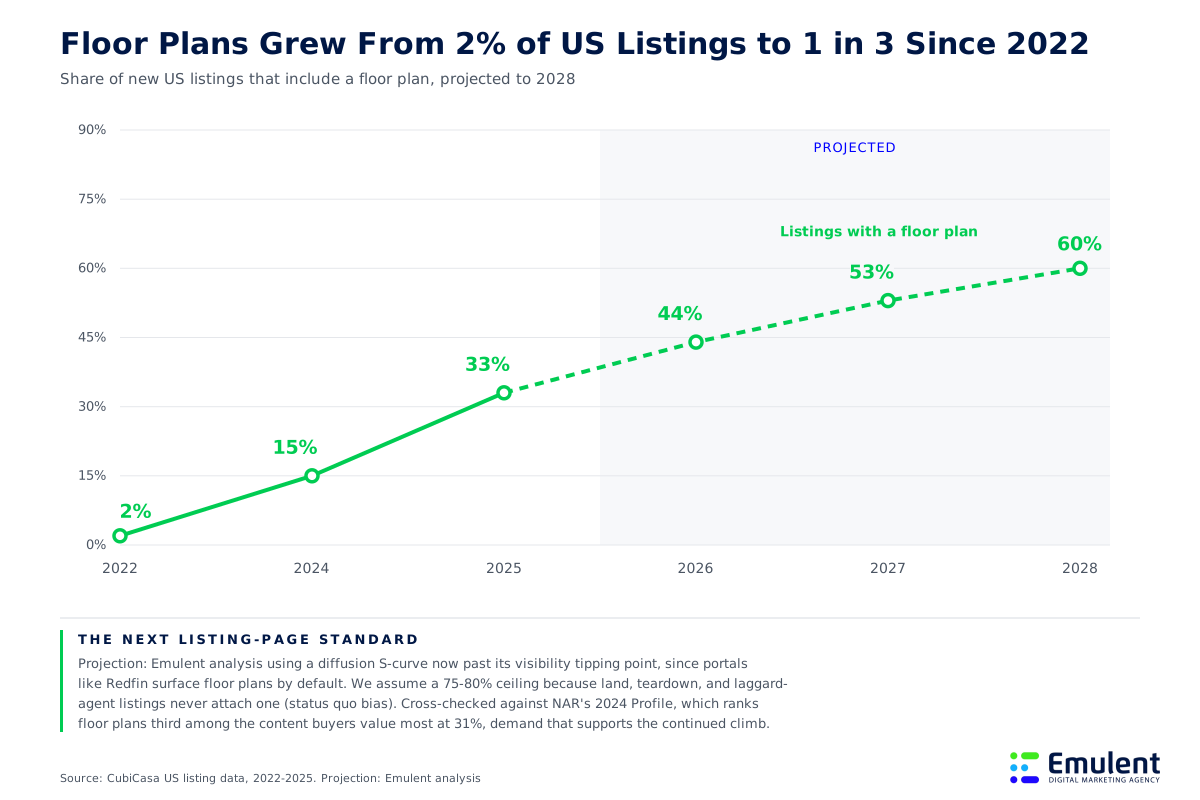
Projection: Emulent analysis based on a diffusion S-curve past its visibility tipping point as portals surface floor plans by default, assuming a 75-80% ceiling because land, teardown, and laggard-agent listings never attach one, cross-checked against NAR's 2024 Profile ranking floor plans third among content buyers value most.
The build order: what to spend on first
Budgets are finite, so here's the sequence we'd give a paying client, including the parts that delay our own invoice. First, fix your Google review profile before touching the website. The review profile is the version of you that AI summaries and referral-checkers see everywhere, with or without a site. And the threshold consumers apply keeps rising: BrightLocal's 2026 survey found 31% will now only use a business rated 4.5 stars or higher, up from 17% a year earlier. If you sit below 4.5, a beautiful new site pours traffic onto a losing first impression.
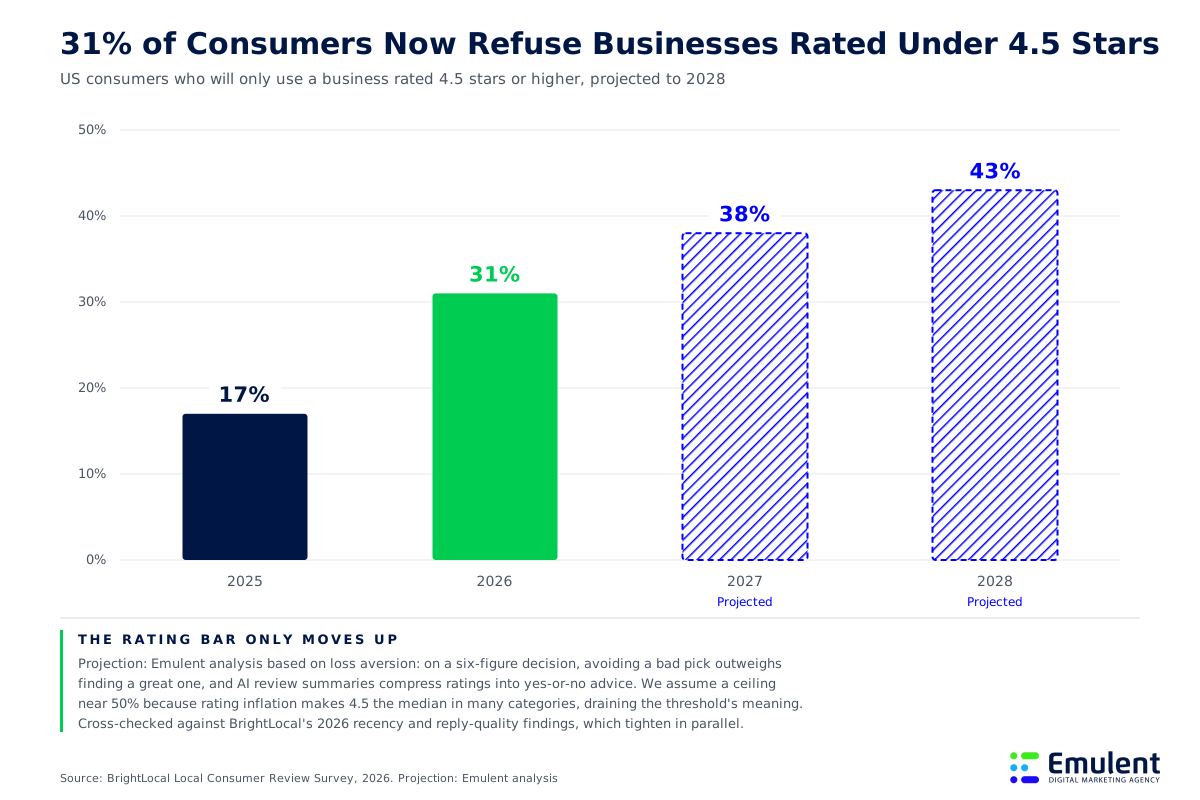
Projection: Emulent analysis based on loss aversion and AI review summaries compressing ratings into yes-or-no advice, assuming a ceiling near 50% because rating inflation drains the threshold's discriminating power, cross-checked against BrightLocal's 2026 recency and reply-quality findings.
Second, book the photography: you, your work, your market. Third, write the eight sections, with the about page and two neighborhood pages getting the most hours. Fourth, add the MLS integration at the cheapest tier that renders cleanly on mobile, since NAR's 2025 Profile found 70% of buyers used a phone or tablet in their search. Last, and only if the first four are done, spend on promotion. Agents run this order backwards constantly. They buy traffic for a site with no proof on it, and end up owning what we call beautiful websites that don't convert are expensive art. If you want help with the build itself, our website design services start from this same sequence: proof first, plumbing second, promotion last.
The site that confirms the referral wins the only interview
Come back to the stance this article opened with, because every recommendation above hangs on it: a realtor website exists to pass the background check a referred prospect runs before they call, and 61% of buyers arrive exactly that way, with most granting only one interview. Build the eight sections. Fill them with real photos, dated proof, and neighborhood substance. Wire in the cheapest MLS feed that serves your clients well, and keep your review profile fresh enough for both the humans and the AI assistants doing the checking. Skip the expensive lead-capture machinery until all of that exists, and maybe forever. The agents winning the next three years are the ones a stranger can verify in five minutes flat.