
Author: Bill Ross | Reading Time: 5 minutes | Published: May 1, 2026 | Updated: April 29, 2026 This is a familiar story. Clients tell us, “We invested in a user-focused platform and built a standout experience, but buyers still are not finding us.” Our job was to close that gap and connect great products with the right buyers. But before we created a single piece of content, we got clear on exactly who we needed to reach. We focused on logistics directors, supply chain VPs, and operations leaders at companies moving serious parcel volume. In larger organizations, finance leaders like CFOs or VPs of Finance also get involved, since carrier spend hits the bottom line and any new platform needs their sign-off. These buyers do their homework. The sales cycle is measured in weeks or months, not days. They look closely at both the platform and the team behind it. They want to see that we understand their day-to-day challenges, that our platform fits with their systems, and that the ROI will hold up when finance takes a closer look. Picking the wrong vendor is not just a failed project—it means starting over and having to explain it to leadership. That level of risk shapes how they research. They start with industry resources, not vendor websites. They want real answers to operational questions: how do carrier billing errors happen, what does a fair surcharge structure look like, when is it time to renegotiate contracts, and how do you build a case for change? They use what they learn to get buy-in across their teams. They are looking for proof, not promises. They want specifics: how much did a similar company recover in their first year, what did the implementation actually look like, and did the platform handle their unique carrier mix? For these buyers, real-world case studies and testimonials matter more than any feature list. They want to know: has this worked for someone in my shoes? That reality guided every decision we made. We uncovered three core issues.
“When a buyer spends three weeks researching parcel spend software before reaching out to anyone, the company with the most useful content is already ahead. Visibility and credibility build together, and you cannot separate one from the other.” – Strategy Team, Emulent Marketing.
A fresh coat of paint on the website was not going to cut it. We rebuilt the messaging from the ground up. Instead of leading with features, we put outcomes front and center: lower parcel shipping costs, stronger carrier contracts, and cleaner audit processes. We redesigned navigation so a logistics VP could get to the right solution page in just two clicks. Proof points like client results, use-case breakdowns, and clear calls to action appeared earlier in the journey. The result was a site that drove more leads, boosted engagement, and proved our marketing was working. We built our organic strategy on three key layers. First, we tackled the technical foundation. We fixed crawling and indexing issues, improved site speed, repaired broken links, and updated metadata to match what buyers were actually searching for. Second, we built topic authority with content clusters. We mapped out the core topics buyers were searching for and built content clusters around each one. Parcel spend management was our anchor. Supporting content covered carrier rate analysis, freight invoice auditing, benchmarking, and cost reduction. Third, we targeted decision-stage queries. Buyers who are ready to purchase search differently from those just starting out. We identified the phrases they use when comparing vendors or building a business case for investment, then built content and landing pages to match those queries.
“In enterprise B2B, search volume can mislead you. A query with 200 monthly searches might represent 20 companies with six-figure budgets. We focus on buyer intent, not search volume alone.” – Strategy Team, Emulent Marketing.
Publishing in specialized B2B is not the same as general blog writing. The buyer is an expert who can spot filler a mile away and manages large-scale parcel spend every day. We created content logistics leaders could actually use. Topics included surcharges, benchmarking, and cost savings. Every piece was designed to rank and build real credibility. We added in-depth guides to support the review process. Well-researched content helped buyers build a strong case to leadership. Over time, our content library grew. Early pieces started earning links and traffic. Newer pieces benefited from that established authority. By the end, we were showing up in searches where we had been invisible before. Trade shows in logistics and supply chain still drive real business. Buyers at these events are actively looking for solutions. A well-designed booth is more than just a presence. It is the moment when all other channels come together for a buyer who is ready for a real conversation. We designed a booth that aligned with our digital brand and conveyed our core value proposition. Visual language, messaging, and materials were consistent with what buyers had already seen online. That consistency matters. Buyers who have read your articles and visited your site before seeing your booth are far more likely to stop. We built the booth to support real conversations, not replace them. The layout encouraged one-on-one engagement. Materials were designed to support the sales conversation, not just summarize the platform. Follow-up collateral connected back to our digital content. Conversations at the booth continued online after the event.
“Physical events work best when they are not treated as separate from the digital strategy. The buyers who stop at your booth have usually already seen your content. You are not starting the conversation from scratch. You are continuing one that began weeks earlier online.” – Strategy Team, Emulent Marketing.
We saw fewer unqualified inquiries and more conversations with logistics leaders who understood the category and were ready to evaluate seriously.
“A 49% lead growth number is meaningful, but the more durable outcome is the foundation built to produce it. The content, the search presence, the website, the brand visibility at events: those assets keep working long after any single campaign ends.” – Strategy Team, Emulent Marketing
If your company is facing similar challenges and needs a team that understands how enterprise B2B buyers really make decisions, let’s talk. We are ready to help you reach your enterprise SEO and B2B lead generation goals. How We Helped a Parcel Spend Management Platform Grow Leads by 49% Year Over Year

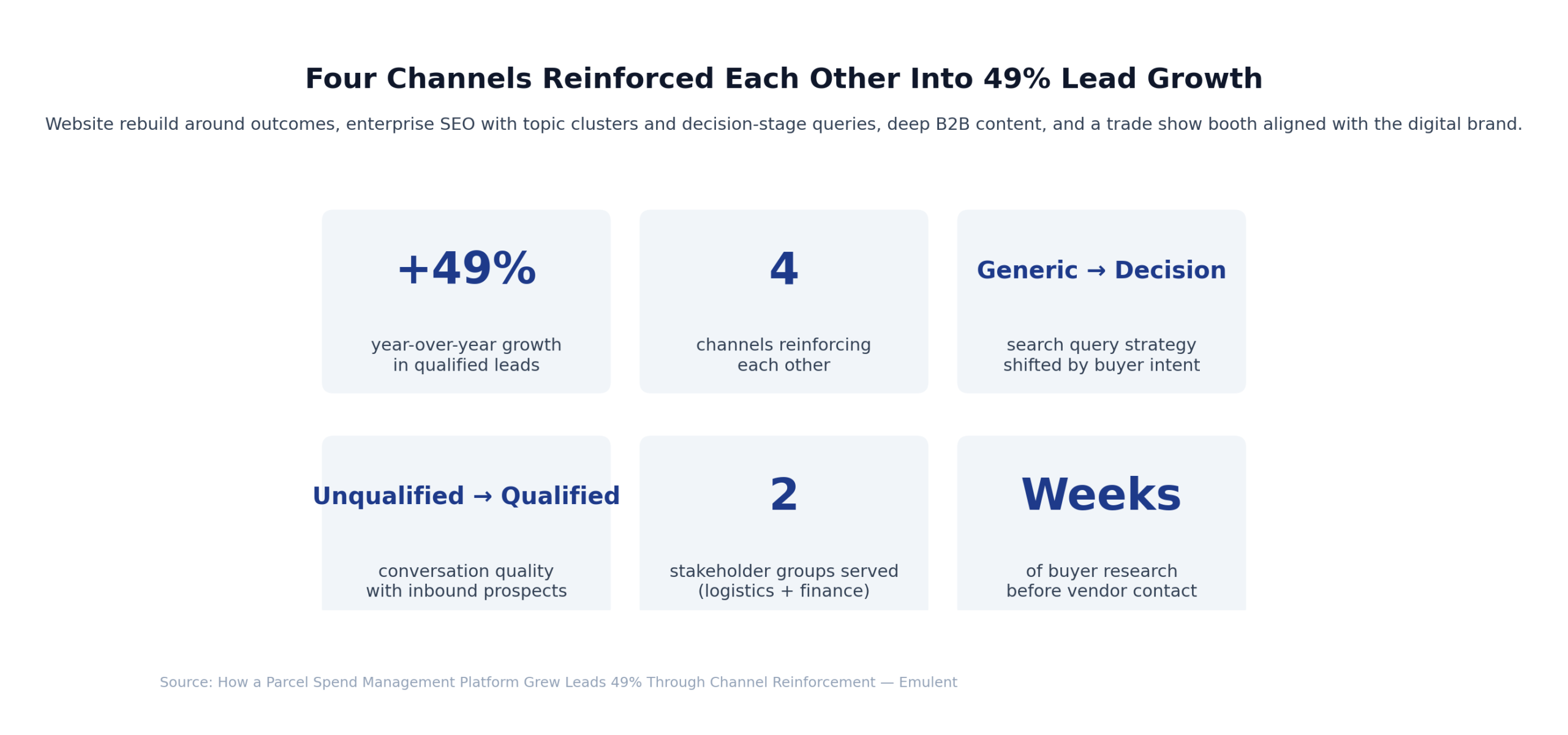 To measure impact, we started by asking why our digital presence was not keeping up with the quality of our product.
Once we had a clear picture of the issues, we turned our attention to how a redesigned website could actually influence buyer behavior.
After the relaunch, our next priority was to make sure the right buyers could actually find us. That started with a targeted search strategy.
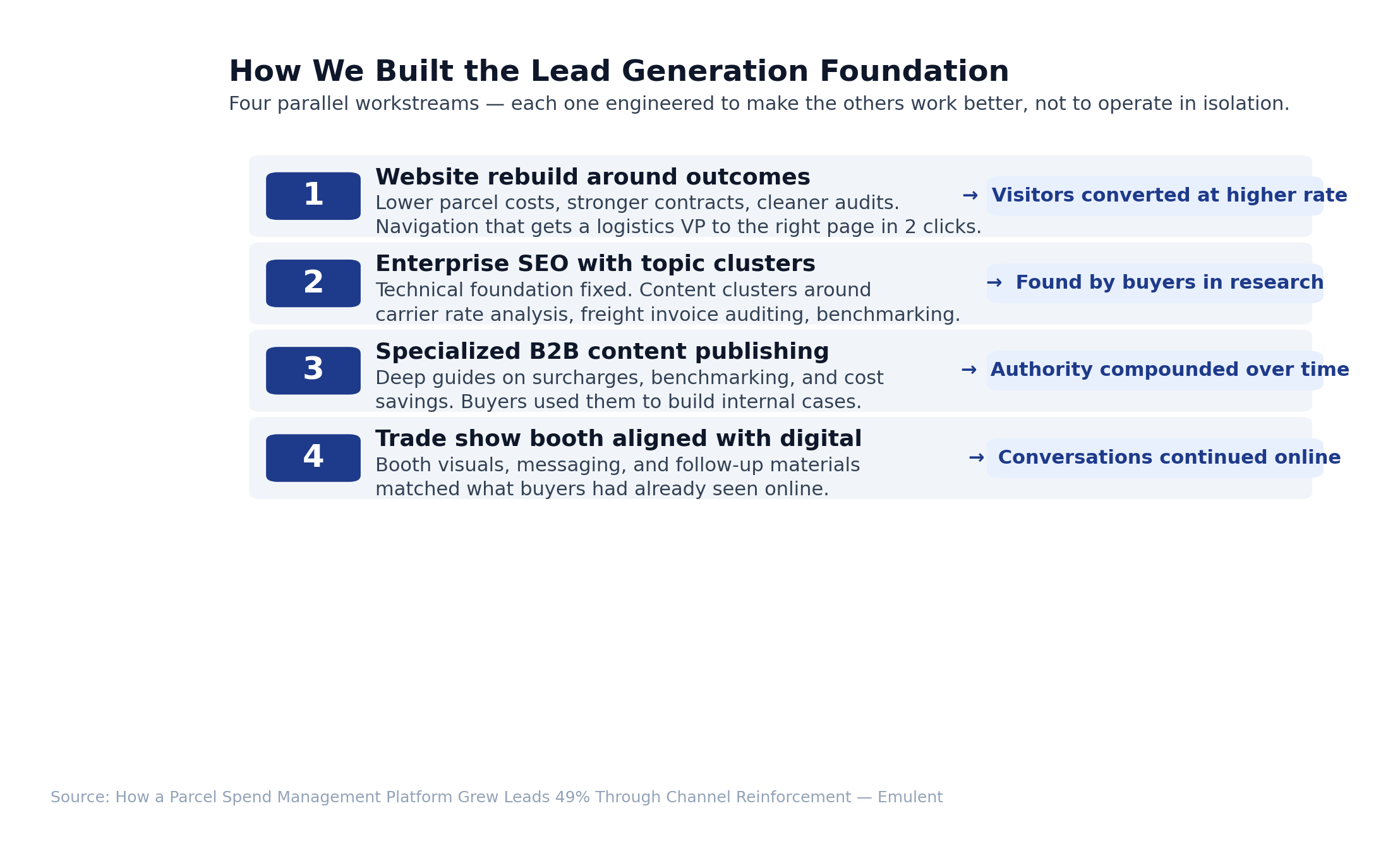 Enterprise SEO for B2B software is about ranking for the terms that matter to specialized buyers, not just chasing high search volumes.
Once SEO laid the groundwork, building ongoing authority meant publishing content consistently – especially in this specialized B2B space.
Why a Trade Show Booth Is Part of a Lead Generation Strategy
With these changes in place, we could finally see what they meant for the business.
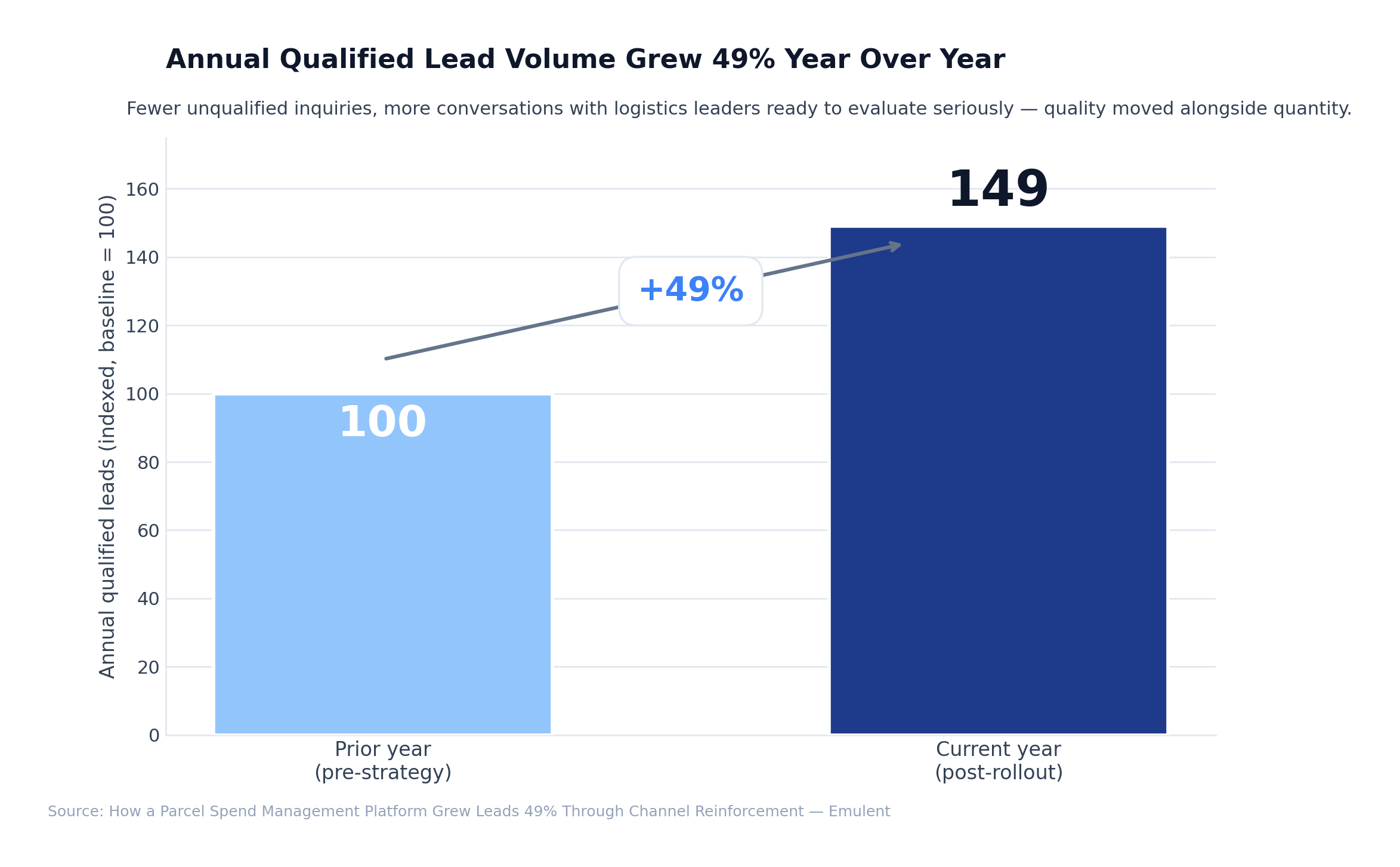
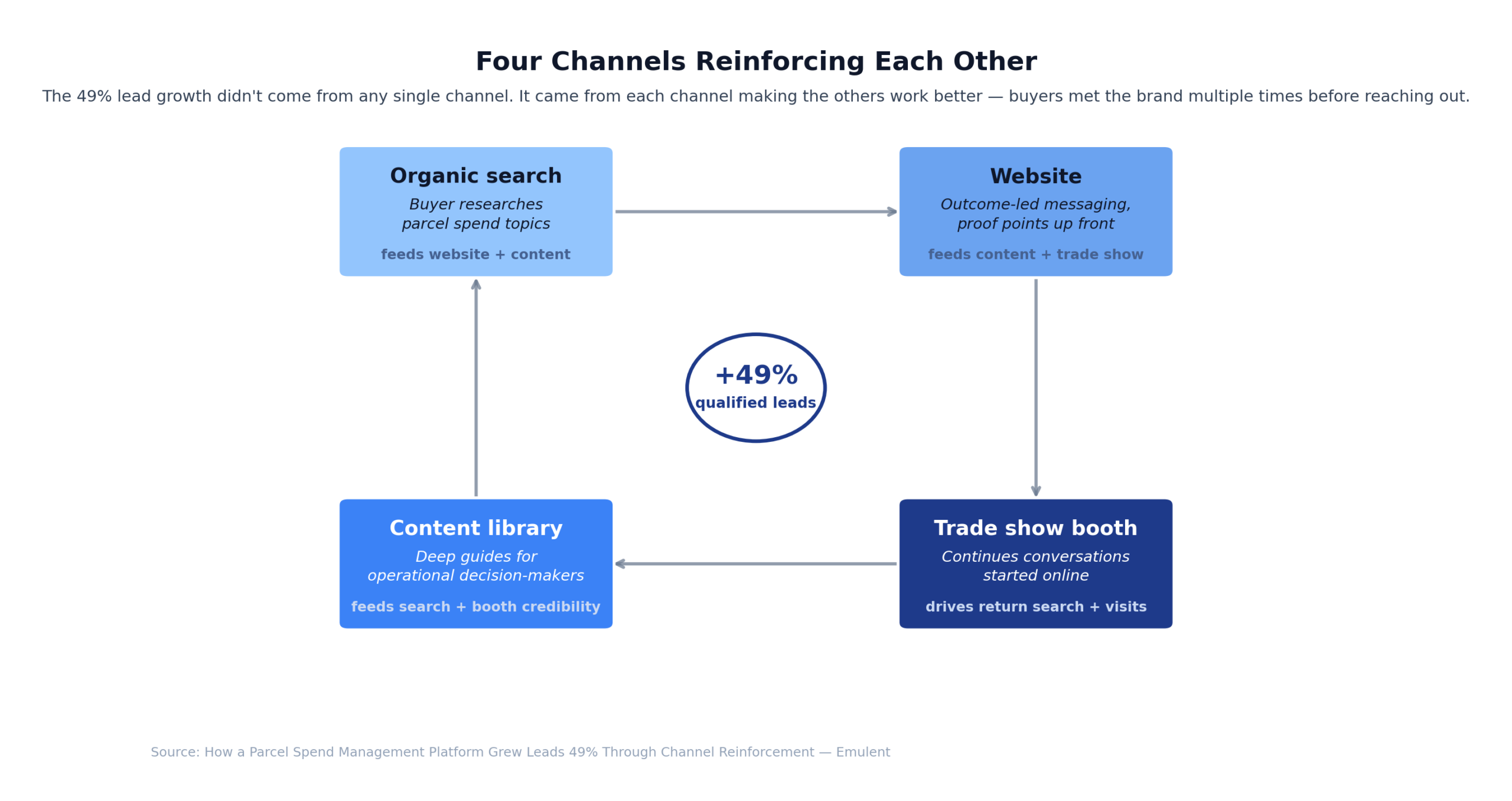 The 49% year-over-year lead growth came from four channels working together and reinforcing each other.
Ready to build a lead generation foundation that actually delivers results?
- Our Story
- What We Do
Website Optimization
What's Your Situation
- What We’ve Done
- Resource Center
- Let’s Talk!