
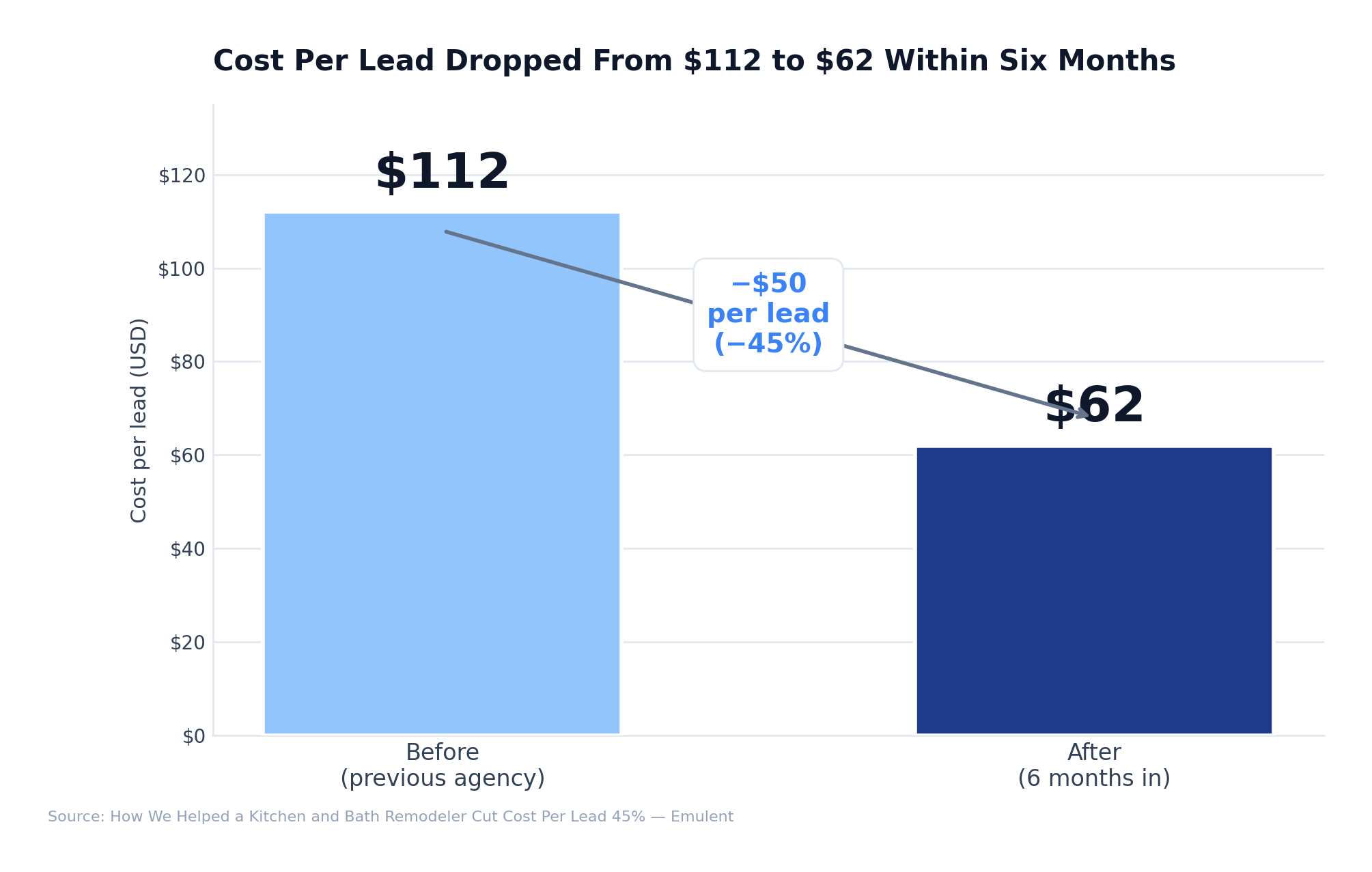
Author: Bill Ross | Reading Time: 5 minutes | Published: February 21, 2026 | Updated: April 28, 2026 A regional remodeling company was spending more on paid ads every quarter but generating fewer qualified leads. We rebuilt their digital advertising and local search strategy from the ground up, and the numbers turned around within 90 days. When a home remodeling company spends thousands each month on Google Ads, and the phone still isn’t ringing with the right prospects, something is broken. That was the situation for this kitchen and bath remodeler: rising ad costs, low-quality leads, and no clear picture of what was working. We stepped in, restructured their campaigns, and built a lead-generation system that reduced cost per lead from $112 to $62 while increasing lead volume by 68%. Most remodeling companies react to slow months by spending more on ads. That instinct makes sense on the surface, but it ignores the real question: how much are you paying for each qualified lead, and is that number going up or down? A remodeler spending $5,000 a month with a $120 cost per lead is getting roughly 42 inquiries. If half of those are tire-kickers, the true cost of a real sales opportunity doubles. Fixing the targeting, the landing page experience, and the follow-up process can produce more real leads at the same budget. Five takeaways from this client story: The client is a family-owned kitchen and bath remodeling company serving a mid-sized metro area in the Southeast. They handle projects ranging from full kitchen gut-renovations to bathroom updates, walk-in shower conversions, and countertop replacements. Their average project size falls between $15,000 and $45,000, and they rely on a steady flow of homeowner inquiries to keep their crew booked. The company had been in business for over 12 years with a strong local reputation, but their digital marketing had not kept pace with how homeowners search for remodeling contractors today. Three problems were working against this client simultaneously. First, their Google Ads account had been managed by a previous agency that used broad-match keywords with almost no negative-keyword filtering. The result was that their ads appeared for searches such as “kitchen remodel DIY,” “how to tile a bathroom floor,” and “remodeling contractor jobs near me.” None of those searches comes from someone ready to hire a remodeler. The client was paying for clicks that had zero chance of converting into customers. Second, every ad campaign pointed to the same generic homepage. A homeowner searching for “walk-in shower installation near me” landed on a page that talked about the company’s full range of services, community involvement, and team bios. Nothing on that page spoke directly to what the searcher wanted. There was no clear call to action, no pricing guidance, and no project photos specific to bathrooms. Third, the client had no call tracking in place. About 60% of their leads came in by phone, but there was no way to connect a phone call back to a specific ad, keyword, or campaign. The previous agency reported on clicks and form submissions only, which meant more than half the lead data was invisible.
“A remodeling company’s ad budget should work like a filter, not a firehose. Every dollar should be aimed at homeowners who are ready to start a project, not people browsing for inspiration on Pinterest.” – Strategy Team at Emulent Marketing
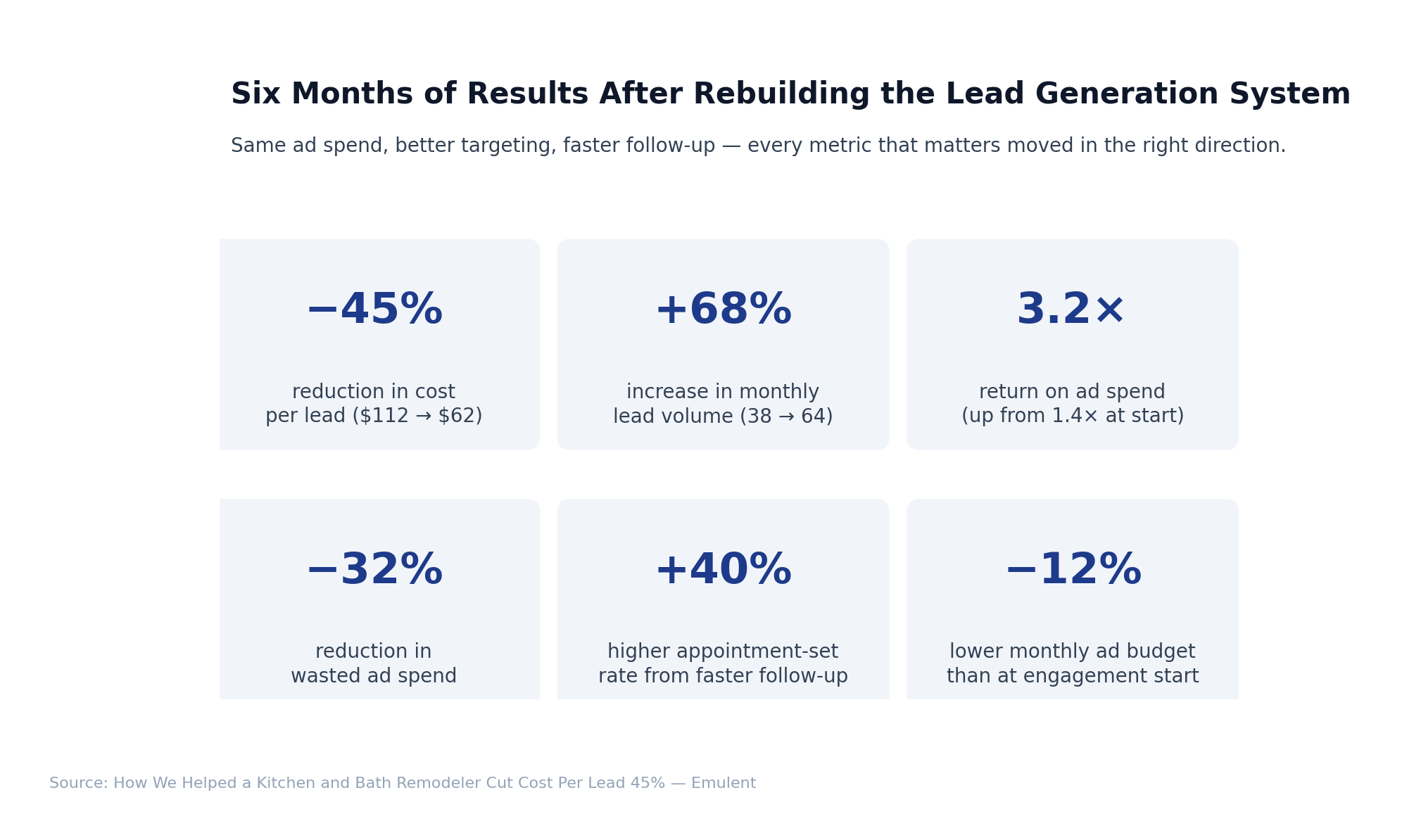
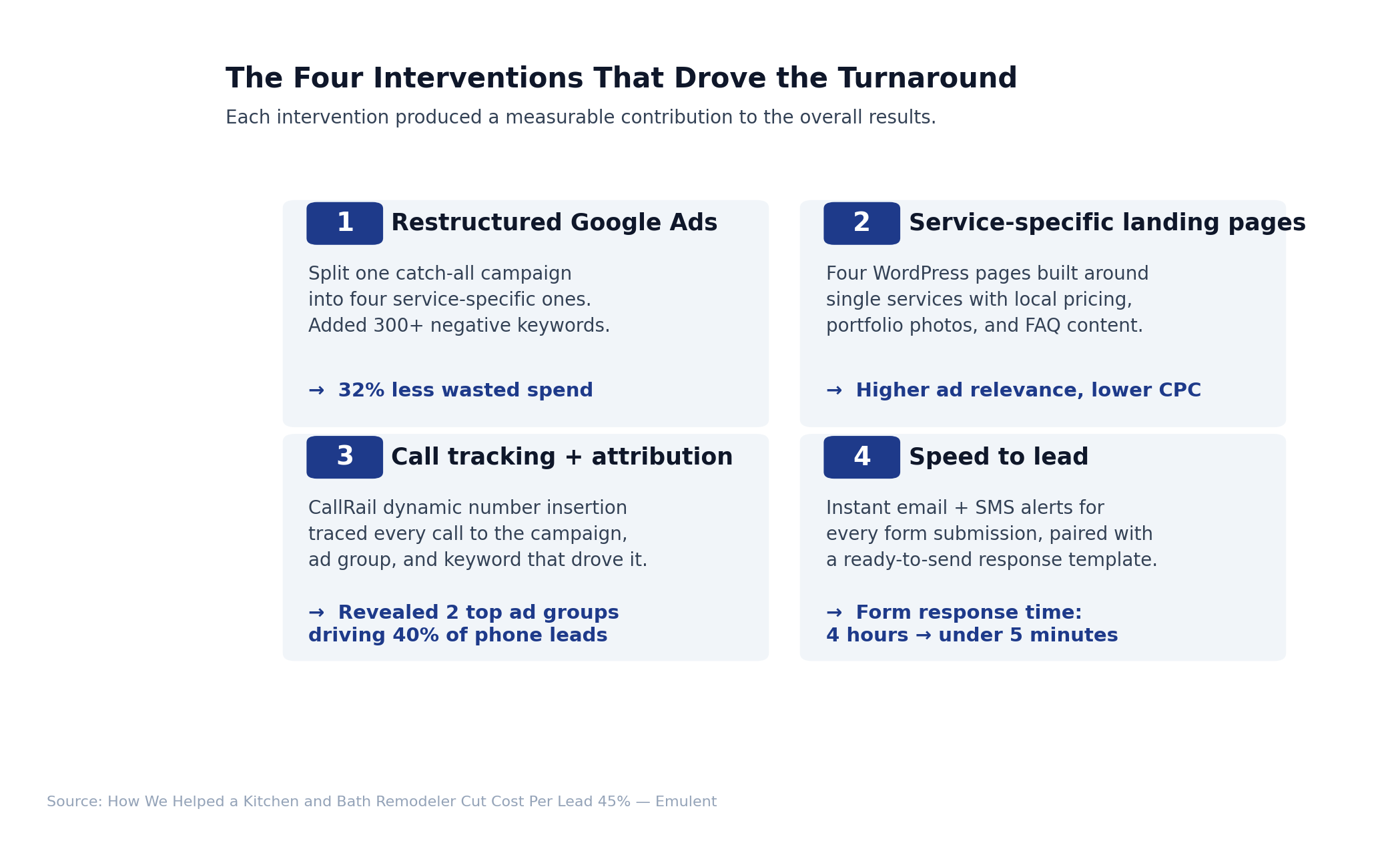
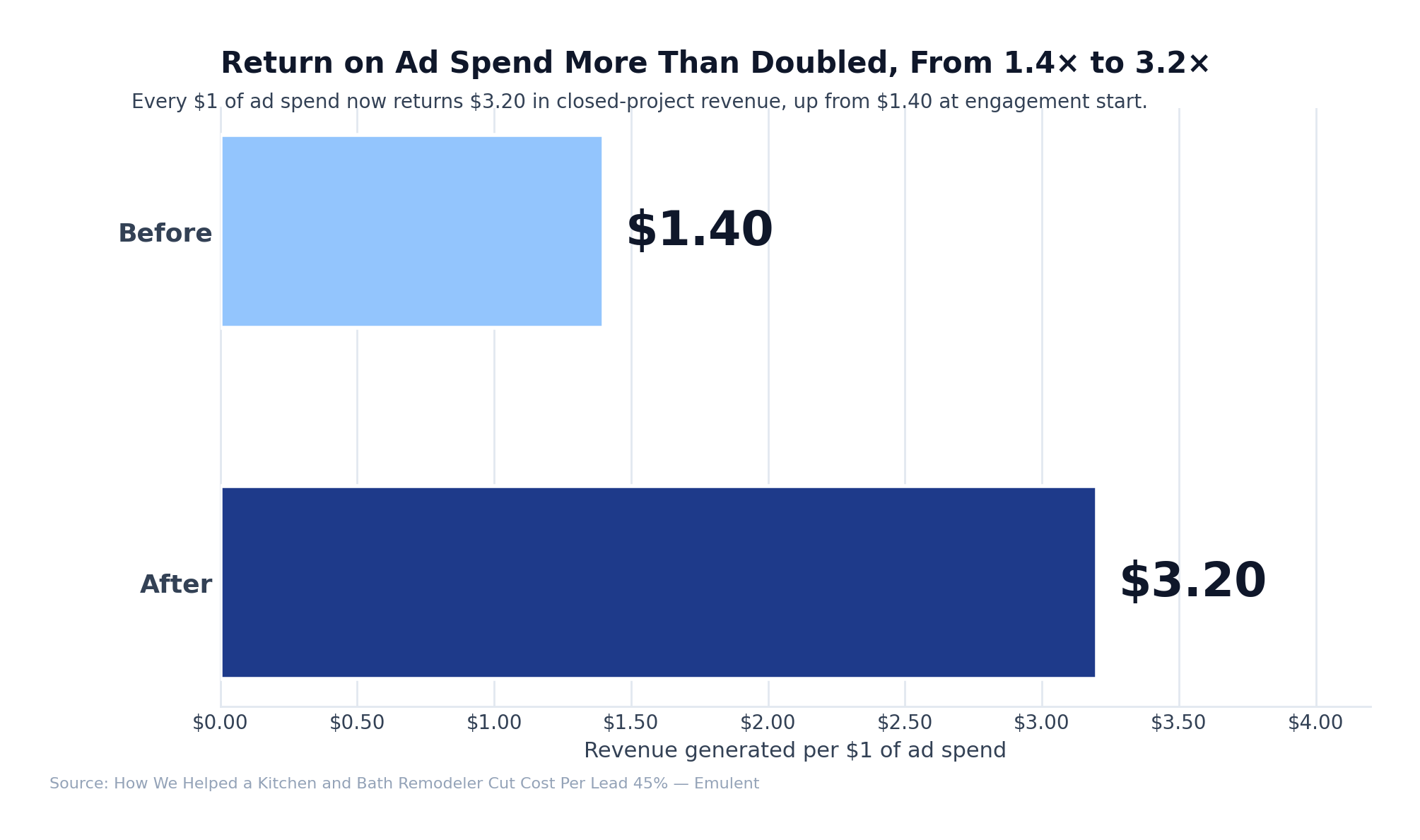
We broke the single catch-all campaign into four focused campaigns: kitchen remodeling, bathroom remodeling, countertop replacement, and walk-in shower installation. Each campaign had its own ad groups organized around specific search intent. “Kitchen remodel cost” got a different ad than “kitchen remodeling contractor near me” because those two searches represent different stages of the buying process. We also built a negative keyword list of over 300 terms covering DIY queries, job searches, and wholesale supplier lookups. Within the first 30 days, that list alone cut wasted ad spend by 32%. We created four dedicated landing pages on WordPress, one for each campaign. Each page was built around a single service and included project photos from the client’s own portfolio, a clear price range (“Most kitchen remodels in [metro area] run between $18,000 and $50,000”), a short FAQ section addressing the top three questions homeowners ask, and a prominent “Request Your Free Estimate” form above the fold. We also added click-to-call buttons that displayed on mobile devices, since over 70% of the client’s traffic came from phones. We set up dynamic number insertion through CallRail so that every phone call could be traced back to the exact campaign, ad group, and keyword that triggered it. This gave us full visibility into which searches were driving real phone conversations, not just clicks. Within 60 days, we identified two ad groups that generated 40% of all phone leads and three ad groups that produced zero calls over 90 days. We shifted the budget from the underperformers to the top producers. We worked with the client’s office manager to set up instant email and SMS notifications for every form submission, paired with a simple response template they could send within minutes. Before this change, the average response time to a web form was over four hours. After implementation, it dropped to under five minutes during business hours. That single change increased their appointment-set rate by 40%. Cost per lead dropped from $112 to $62. The client was generating more qualified leads while spending 12% less on monthly ad budget than when we started. Total monthly leads (phone calls plus form submissions) went from an average of 38 to 64. Because targeting improved at the same time, the client’s sales team reported that lead quality went up, not just quantity. The negative keyword strategy and campaign restructuring eliminated clicks from searchers who were never going to become customers. That freed up budget to bid more aggressively on high-intent keywords that converted. Faster follow-up on form submissions meant more leads turned into booked estimates. The client’s close rate on estimates stayed the same, so more appointments translated directly to more signed contracts. For every dollar the client spent on Google Ads, they generated $3.20 in revenue from closed projects. Six months earlier, that number was $1.40. Kitchen and bath remodeling is one of the most competitive categories in home services advertising. The average cost per click for remodeling keywords on Google often lands between $8 and $25, which means a poorly structured campaign can burn through a monthly budget fast. Many remodeling companies run a single campaign targeting every service they offer. That approach forces Google to guess which landing page is most relevant to each search. Splitting campaigns by service type is one of the fastest ways to improve ad relevance scores, which lowers cost per click and improves ad positioning. Another common gap is the absence of call tracking. Remodeling is a high-consideration purchase, and homeowners often want to talk to a real person before committing to an estimate visit. If your marketing reports only count form submissions, you are missing more than half the picture.
“The remodeling companies that win online are not always the ones with the biggest ad budgets. They are the ones who track every lead source, respond fast, and keep refining what works. That discipline matters more than spending.” – Strategy Team at Emulent Marketing
Local SEO also plays a long-term role that paid ads alone cannot fill. A Google Business Profile with strong reviews, accurate service categories, and regular photo updates builds trust before a homeowner ever clicks an ad. We helped this client generate 54 new five-star reviews over six months, which improved both their Maps visibility and their ad click-through rate. This kitchen and bath remodeler did not need a bigger marketing budget. They needed a smarter one. Restructured campaigns, purpose-built landing pages, call tracking, and faster lead response turned the same ad spend into significantly more revenue. If your remodeling company is spending on digital advertising but not seeing the return you expected, the Emulent team can help. Contact us to discuss your lead generation strategy and find out how your budget could be working harder. How We Helped a Kitchen and Bath Remodeler Cut Cost Per Lead 45%

Why Lowering Your Cost Per Lead Matters More Than Increasing Your Ad Budget
Who Was the Client?
What Was Holding Them Back?
How We Rebuilt Their Lead Generation From the Ground Up
 We started with a full audit of the existing Google Ads account, the website, and the competitive positioning in their local market. That audit gave us a clear list of what to fix and in what order.
Restructuring the Google Ads Account
Building Service-Specific Landing Pages
Installing Call Tracking and Lead Attribution
Improving Speed to Lead
The Results After Six Months
 45% Reduction in Cost Per Lead
68% Increase in Monthly Lead Volume
 32% Reduction in Wasted Ad Spend
40% Higher Appointment-Set Rate
3.2x Return on Ad Spend
What Other Remodeling Companies Can Learn From This
The Bottom Line
- Our Story
- What We Do
Website Optimization
What's Your Situation
- What We’ve Done
- Resource Center
- Let’s Talk!