
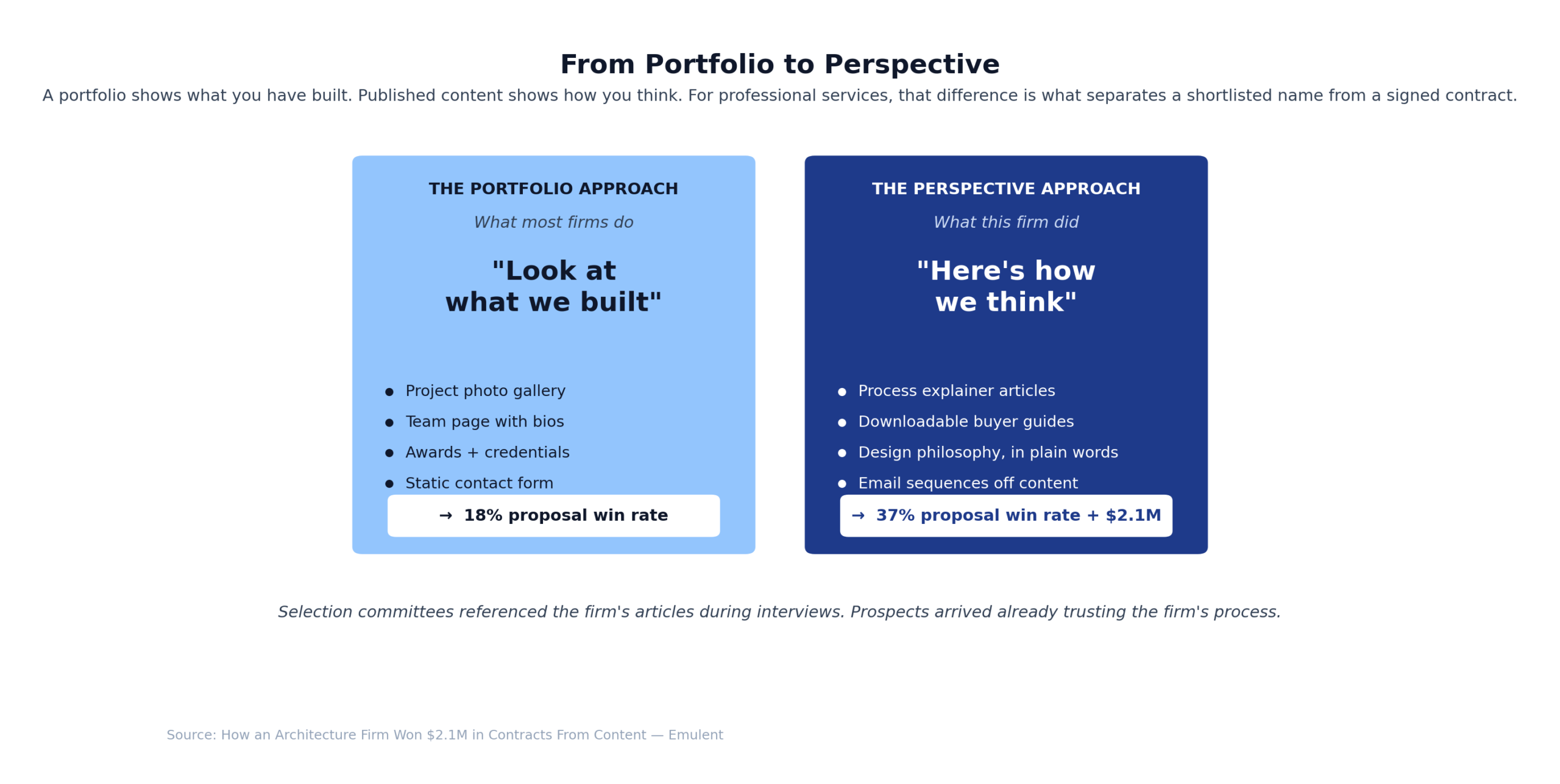
Author: Bill Ross | Reading Time: 5 minutes | Published: April 29, 2026 | Updated: April 29, 2026 A mid-sized architecture firm was losing proposals to larger competitors. A focused content strategy turned their website into a project-winning asset. Most architecture firms treat their websites like digital portfolios: project photos, a team page, and a contact form. That approach does not win new work. The firm we partnered with shifted from showcasing past projects to publishing original perspectives on the design and construction process. Within 12 months, that shift generated over $2 million in new signed contracts, and the firm’s pipeline is still growing. Architecture is a referral-heavy industry, and that reliance on word-of-mouth creates a ceiling. When a property developer, school board, or municipal planner begins researching firms, they search online long before requesting a proposal. If your website only shows finished buildings, you look the same as every other firm in the search results. But if your site explains how value engineering works, why pre-design planning saves money, or what owners should expect during permitting, you become the firm that already feels like a trusted advisor. That is the real advantage of publishing what your team knows: you start the relationship before the first meeting. The firm is a 30-person architecture practice based in the Southeast, with a focus on commercial, institutional, and mixed-use projects. They had built a solid reputation over 15 years through referrals and repeat clients, completing work for school districts, municipal buildings, and mid-rise commercial developments. Their portfolio was strong, but their digital presence did not reflect the quality of their work or the depth of their team’s knowledge. The firm’s website had not been updated in four years. It ran on a dated theme with no blog, no resource section, and no clear service pages targeting the types of projects they wanted to win. When prospective clients searched for terms like “architect for school renovations” or “commercial design-build firm near me,” the firm did not appear in results at all. At the same time, their proposal win rate had dropped below 20%. They were making shortlists but losing to larger firms with stronger online presences, published white papers, and appearances in industry publications. The principals felt they had more experience than several of these competitors, but had no way to demonstrate that experience outside of a credentials package.
“A portfolio shows what you have built. Published content shows how you think. For professional services firms, that difference is what separates a shortlisted name from a signed contract.” — Strategy Team at Emulent Marketing
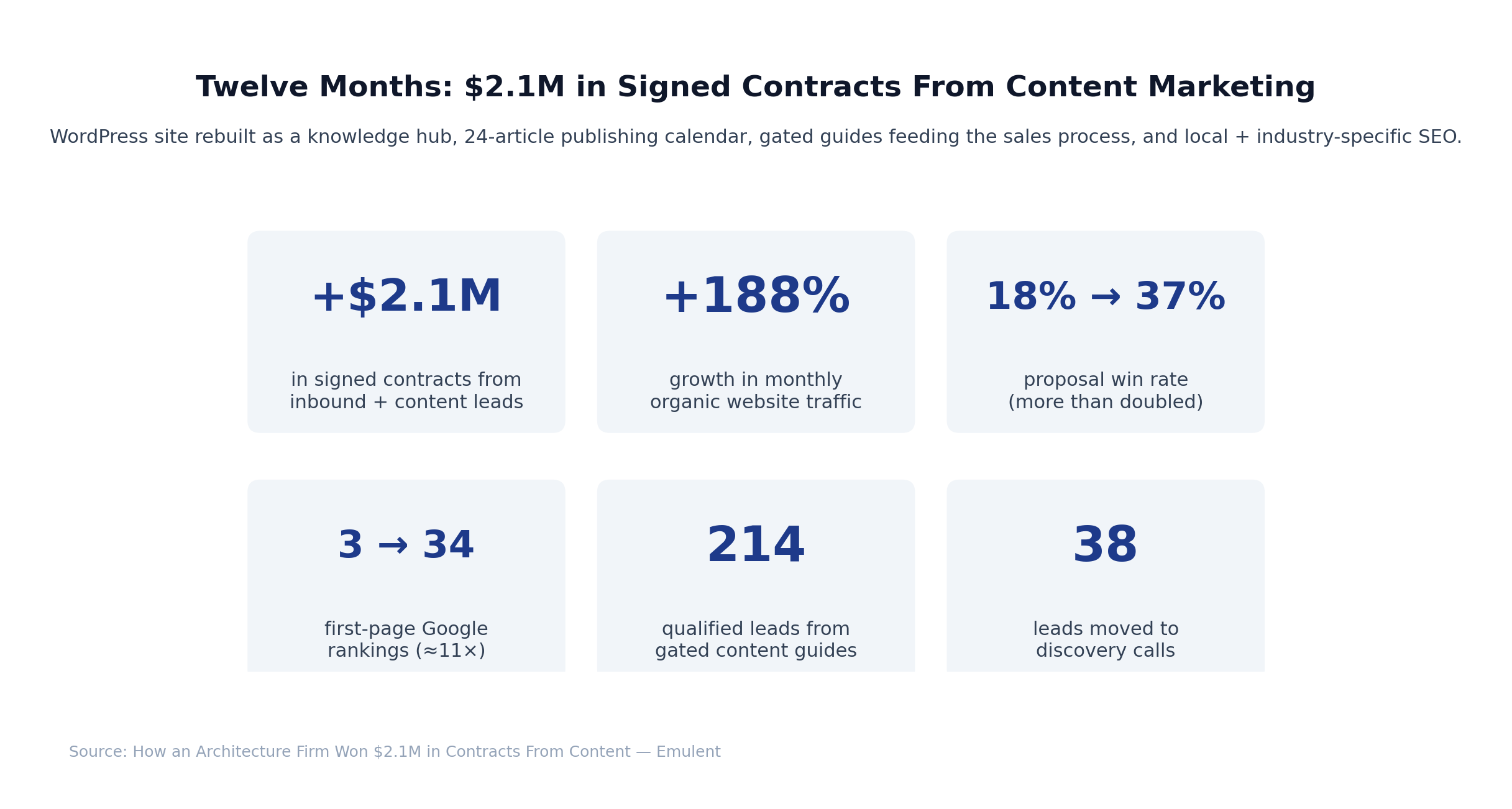
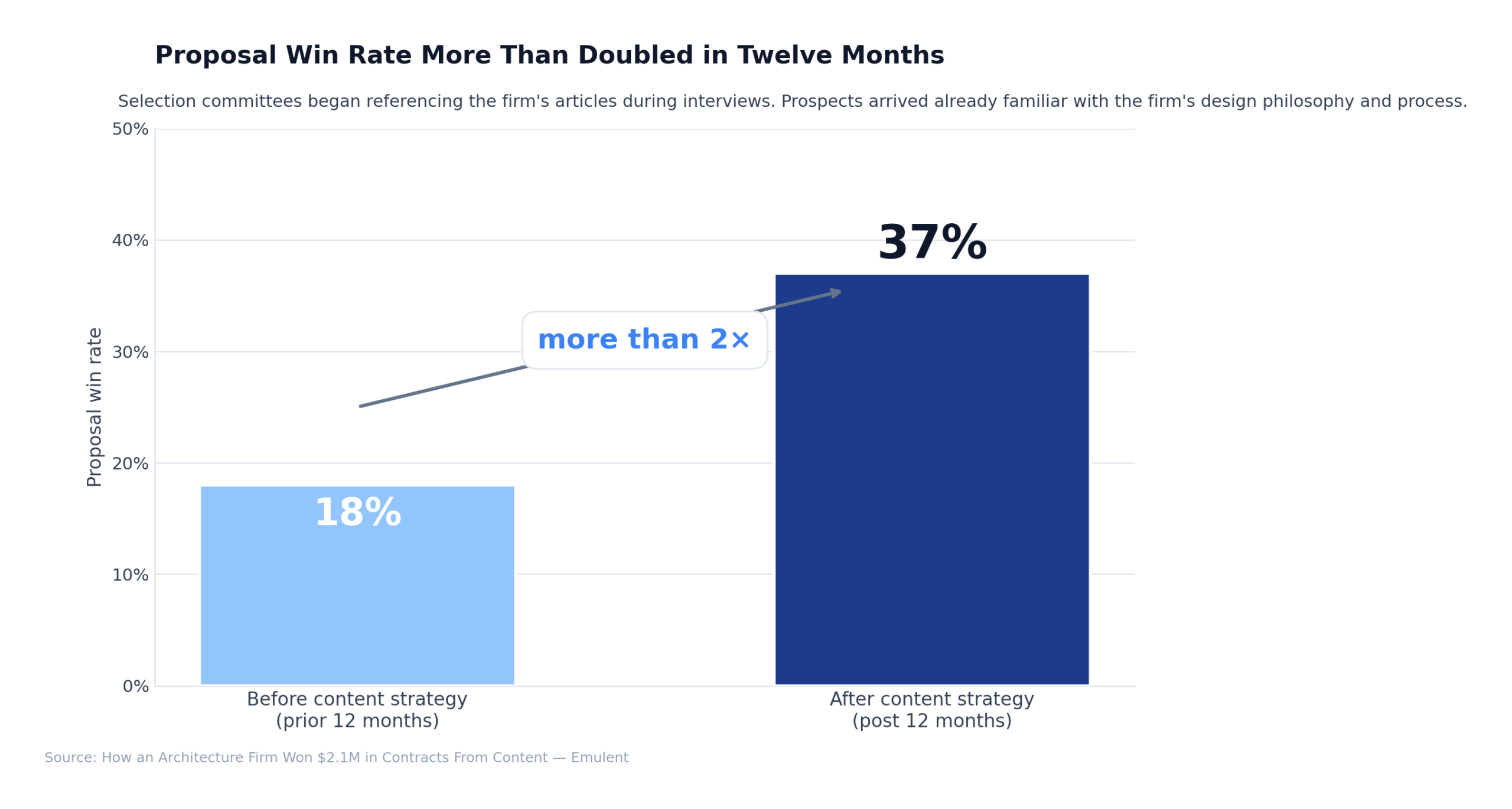
Referrals were also slowing. Two of their largest referral sources had retired, and the firm had no inbound lead generation channel to fill the gap. They were spending on trade show sponsorships and print ads with no way to measure return. We rebuilt the firm’s site on WordPress, organizing it around service categories (K-12 education, municipal, commercial, mixed-use) with dedicated landing pages for each. Every landing page included project examples, a clear explanation of the firm’s approach to that project type, and links to related articles. We designed the site on a clean, modern theme and built it using Visual Composer to enable easy back-end editing by the firm’s marketing coordinator. We developed a 12-month editorial calendar with two articles per month, each targeting a specific question or topic that prospective clients were searching for. Topics included “how to plan a school renovation without disrupting classes,” “what owners should know about sustainable building certifications,” and “the real cost of skipping pre-design services.” Each article was written in collaboration with the firm’s principals and project managers, capturing their actual expertise and turning it into search-friendly, readable content. We built downloadable guides (a pre-design planning checklist and an owner’s guide to selecting an architect) gated behind simple contact forms. These guides gave the firm a reason to follow up with leads and a way to track which topics attracted the most qualified prospects. We also set up email sequences that delivered relevant articles to leads based on which guide they downloaded, keeping the firm visible without requiring manual outreach. We optimized the firm’s Google Business Profile, built location-specific pages for each metro area they served, and created backlink opportunities through partnerships with local business organizations and AEC industry directories. We tracked rankings weekly in Google Search Console and adjusted content topics based on which pages were gaining traction. The firm tracked every lead source through its CRM. Over 12 months, prospects who first found the firm through its website or downloaded content accounted for $2.1 million in signed project contracts, including a $900K school renovation and a $650K mixed-use commercial project. Monthly organic sessions grew from 1,400 to over 4,000. The firm now ranks on page one for 34 target keywords related to architecture services in their region, up from just 3 at the start of the engagement. Selection committees began referencing the firm’s articles during interviews. Principals reported that prospects arrived at initial meetings already familiar with the firm’s design philosophy and process, thereby shortening the sales cycle and improving close rates. The two downloadable guides generated 214 form submissions from facility directors, developers, and municipal planners over 12 months. Of those, 38 moved to discovery calls. The AEC industry has been slow to adopt content marketing compared to other professional services sectors like law and accounting. That gap creates a real opportunity. Most architecture firm websites still function as static portfolios, which means any firm willing to publish useful, search-targeted content will stand out quickly. The firms winning this shift share a few traits. They treat their website as a business development tool, not a brochure. They assign content creation the same priority as proposal writing. And they measure results with the same rigor they apply to project budgets, tracking which pages generate leads and which topics attract the right prospects.
“The firms that publish what they know are not giving away their value. They are proving it. Every article that answers a prospect’s question builds trust before the first handshake.” — Strategy Team at Emulent Marketing
One common mistake we see is firms producing content that speaks to other architects instead of to clients. Award announcements and design theory articles have their place, but they rarely attract the facility director who needs to renovate a building next year. The most effective content answers the questions that owners, developers, and planners are already typing into Google. If your firm has deep expertise but relies on referrals and proposals alone to win work, there is a more effective path. A focused content strategy can put your knowledge in front of the right prospects before your competitors even get a meeting. Contact the Emulent Team to talk about how content marketing can work for your firm. How a Regional Architecture Firm Landed $2M in New Projects by Publishing What It Knows

 Why Publishing Original Expertise Matters for Growing Your Business
 Authority starts with answers — Prospects trust firms that explain complex processes in plain language, not firms that hide behind jargon
Who Was the Client?
What Was Holding Them Back?
How We Built a Content Strategy That Wins Projects
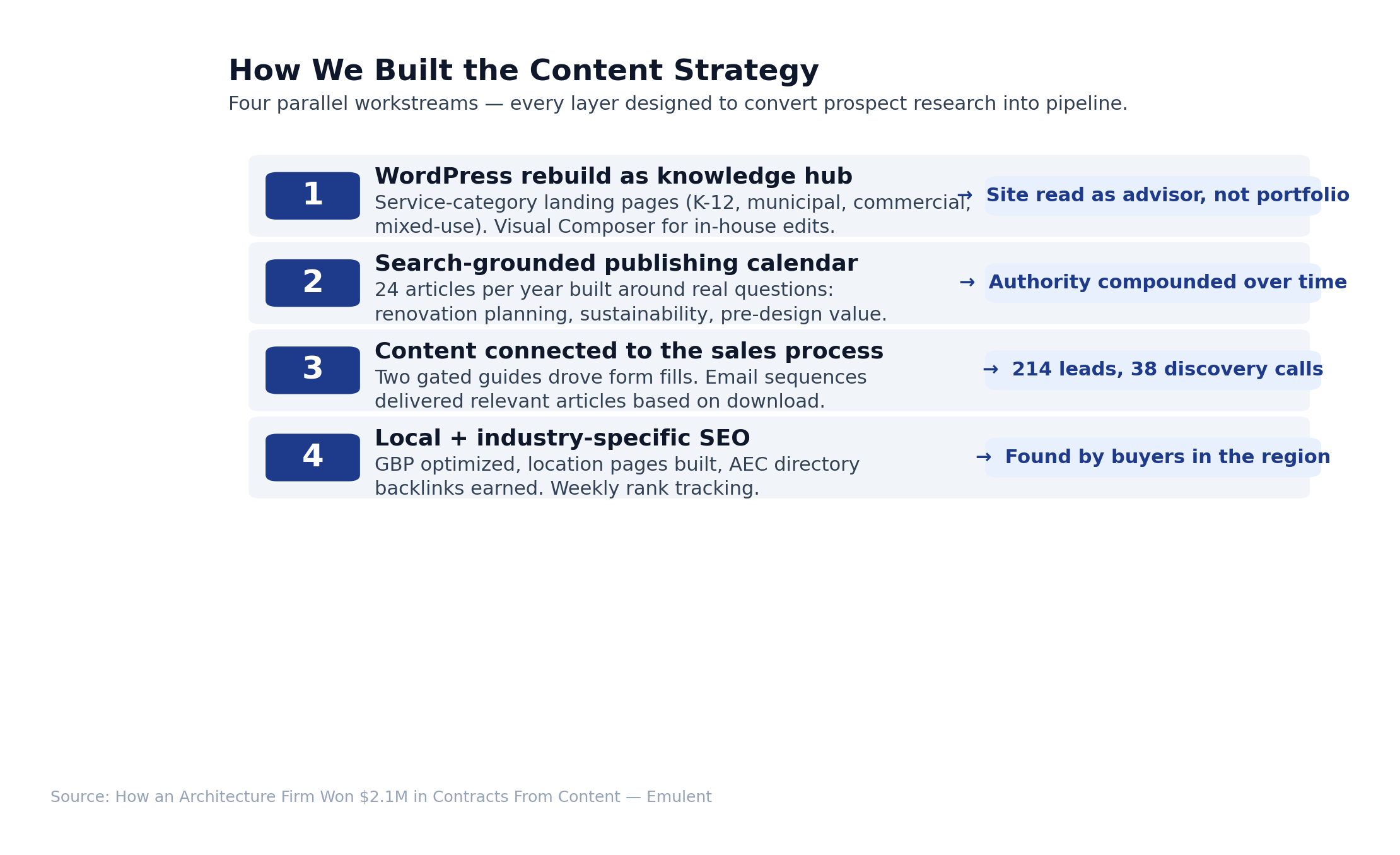 We started with a full audit of the firm’s online presence, their competitors’ content, and the search behavior of their target audience: facility directors, developers, municipal planners, and school board members. We used Google Search Console and keyword research tools to identify the questions these groups were asking and the topics where the firm could offer a genuine point of view.
Rebuilding the Website as a Knowledge Hub
Creating a Publishing Calendar Grounded in Search Data
Connecting Content to the Sales Process
Optimizing for Local and Industry-Specific Search
The Results After 12 Months
 $2.1 Million in New Signed Contracts Attributed to Inbound Leads
188% Increase in Organic Website Traffic
Proposal Win Rate Jumped from 18% to 37%
214 Qualified Leads from Gated Content
What Other Architecture and Professional Services Firms Can Learn
Ready to Turn Your Expertise into New Business?
- Our Story
- What We Do
Website Optimization
What's Your Situation
- What We’ve Done
- Resource Center
- Let’s Talk!