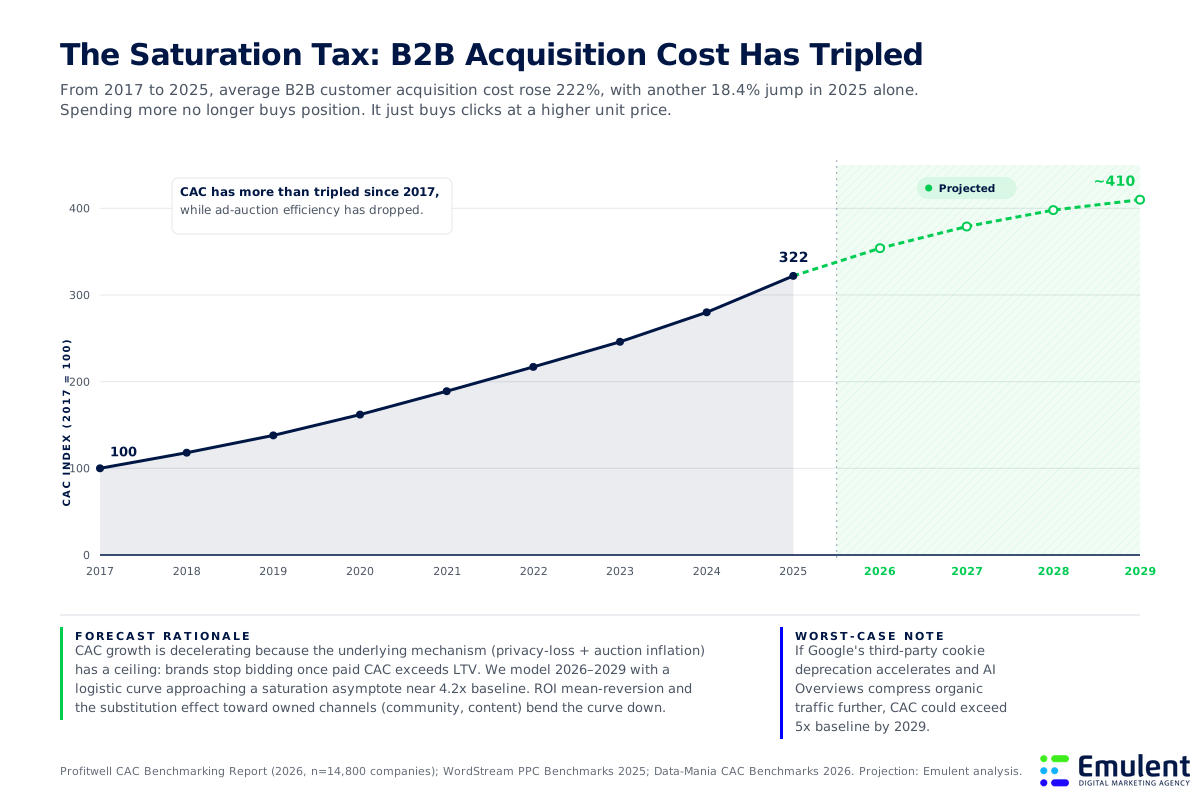
Author: Bill Ross | Published: April 23, 2026 | Updated: May 21, 2026 Differentiation techniques for a saturated market separate the brands that hold their position from the ones that quietly drift back to the category average. The harder problem is not picking the angle. It is keeping that angle visible, credible, and operationally defensible after every competitor in your category has read the same playbooks, attended the same conferences, and started running their messaging through the same language models. The 2026 data on what marketing executives now find hardest tells the same story the most experienced operators have been telling for a decade: positioning is no longer one task among many. It is becoming the work. Key takeaways from this guide: Saturated markets do more than crowd the field. They change how buyers decide. When a buyer has fifteen plausible options instead of three, the cognitive cost of comparing every feature rises past the point of usefulness, and the buyer reaches for shortcuts. Defaults win. The most familiar name wins. The option with the strongest proof wins. The one that pattern-matches a previous successful purchase wins. Generic claims of quality, value, or service become invisible because every competitor uses the same words. The financial pressure of that shift shows up in customer acquisition cost. Profitwell’s 2026 benchmarking report, drawn from 14,800 companies across three regions, found that average CAC has risen 222% since 2017, with another 18.4% increase in 2025 alone. The structural drivers are familiar: ad auctions are crowded, privacy changes have raised attribution costs, and longer sales cycles require more touchpoints per closed deal. None of those drivers reverse with bigger budgets.
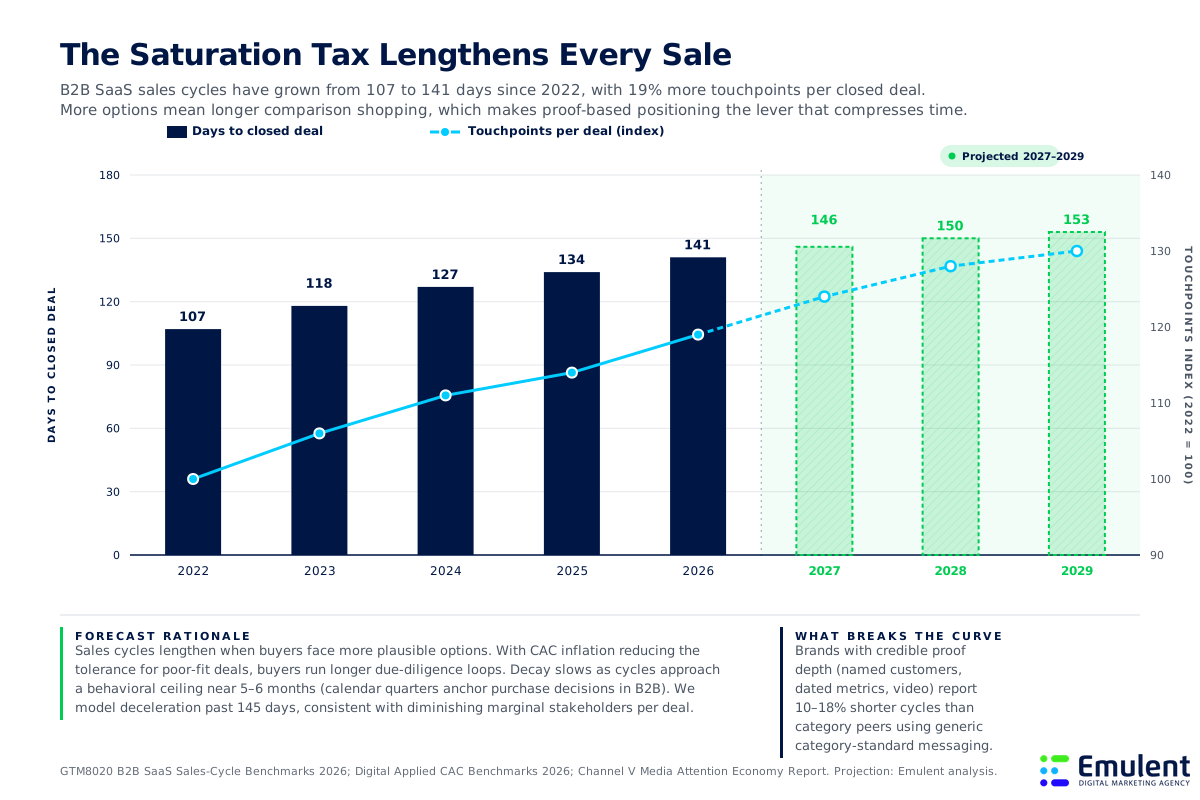
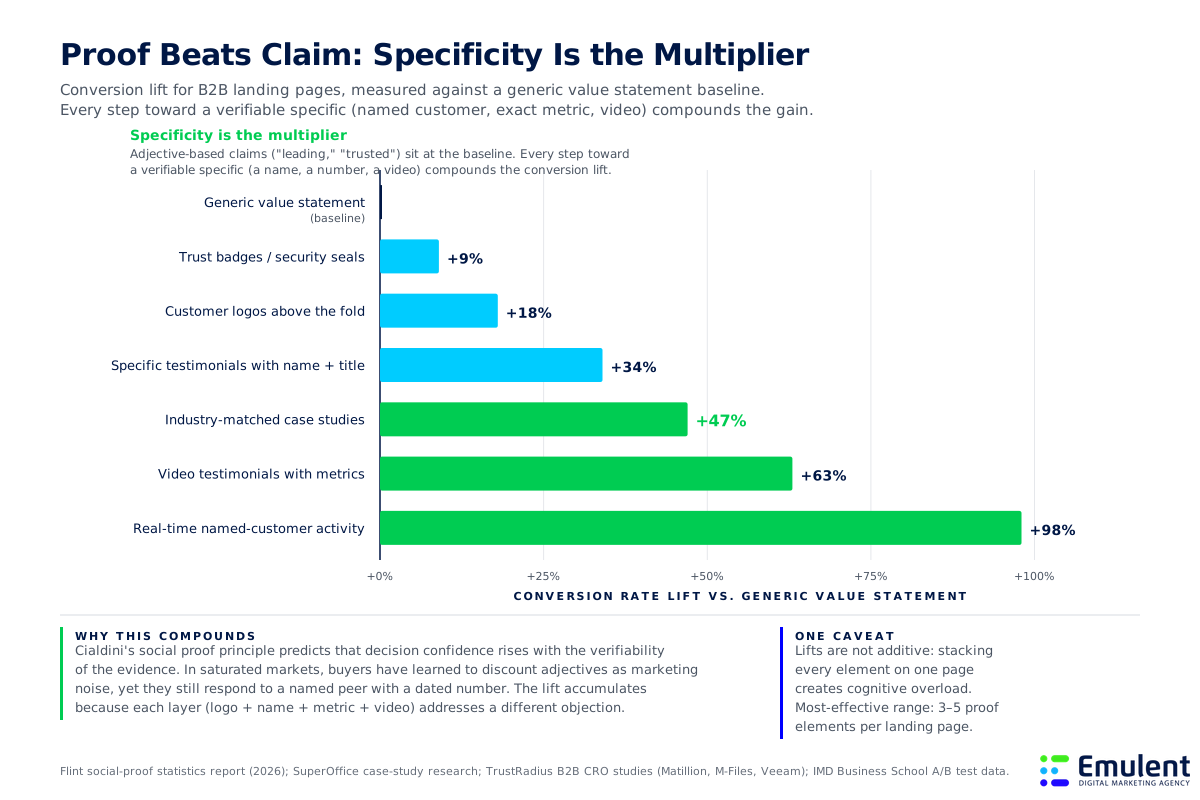
The brands we work with in saturated categories almost always have better products than their messaging suggests. The product team built something genuinely different, and then marketing translated that difference into category-standard language because category-standard language felt safer. Saturation punishes that safety. The buyer cannot tell you apart from your weakest competitor when you both use the same words. Once you accept that saturation is a perception problem first and a budget problem second, the question shifts from “how do we spend more” to “how do we be remembered as the specific solution to a specific situation.” Picking a position is the easier half. Making sure that position is what buyers actually encounter at every step is where most efforts come apart. The mistake most companies make at this stage is choosing a differentiation angle based on what they want to be true rather than what they can prove and sustain. A claim of “best customer service” that the company cannot back with response times, retention numbers, or named customer testimonials is a marketing liability, not a position. A claim of “advanced technology” in a category where every competitor calls themselves advanced gets discounted before the buyer finishes reading the sentence. We apply three tests to any candidate position before committing to it. Questions to ask before naming a differentiation angle: The dimensions that hold up best in saturated categories tend to be those that require organizational commitment to sustain rather than a one-time decision. A specific buyer segment you serve better than anyone else. A proprietary methodology that took years to develop. A community of customers who refer each other. A documented track record in a vertical that no competitor has prioritized. These are harder to copy than a price point or a feature because they were built rather than chosen. The position you commit to also dictates how saturation pressure shows up in your numbers. Brands without a defensible angle inherit the category’s average sales cycle, which in B2B SaaS has grown from 107 days in 2022 to 141 days in 2026, with 19% more touchpoints per closed deal. Brands with credible proof depth report 10 to 18% shorter cycles than peers using generic messaging. The choice you make here also determines what your competitive analysis needs to surface next. If you decide to differentiate on segment specialization, the question is who else is targeting that segment and how seriously. If you decide on a methodology, the question is whether it produces results that competitors cannot match. The choice and the proof have to move together, which is the work of the next section. Buyers in saturated markets have learned to discount marketing language by default. They assume every brand will claim the same set of virtues, so they look past the claim to find the substantiation. When the substantiation is missing, the claim registers as marketing copy and gets ignored. When the substantiation is specific, the claim becomes a reason to keep reading. The conversion data on this is unambiguous. The shift from claim-based to proof-based messaging is mostly about replacing adjectives with specifics across every piece of marketing copy. Instead of “we deliver fast results,” try “our average client sees their first ranking improvement within six weeks of launch.” Instead of “we work with industry leaders,” name three of them and link to the case study. Instead of “our team has deep expertise,” show LinkedIn profiles, years of experience by role, and published work.
The pattern we see in our most effective client websites is that proof appears within the first scroll on every commercial page. Not in a logo strip at the bottom. In the headline copy itself. When a buyer lands on a page that says “we helped a pharmaceutical CDMO grow blog traffic 110% in twelve months,” they have already begun to believe before they get to the case study. When the same page says “we deliver high-quality content marketing,” the buyer has already left. Proof has a half-life. A 2022 case study reads as outdated in 2026. A testimonial from a customer who has since churned reads as suspicious. A growth chart that ends two years ago raises questions about what happened next. The brands that hold differentiation longest treat proof as an inventory that needs constant restocking: new case studies every quarter, refreshed numbers on the homepage, current photos and bios for the team page. The work of proof maintenance is what makes proof-based messaging credible over time. That credibility then has to show up in the right channels to compound. Not every channel rewards differentiation equally. Some channels favor whoever spends the most. Some favor whoever shows up most consistently. Some favor whoever has the strongest, most distinct point of view. In a saturated market, the channels that reward distinct positioning are the ones that compound, and the channels that reward spend are the ones that pull you back toward the category average. The channels that deliver the strongest returns for clients in saturated categories share a common feature: they reward sustained substance over time, not one-off creative. Channels that reward distinct positioning: Paid advertising can extend the reach of a strong position but cannot create one. Brands that try to outspend their way to differentiation in a saturated market usually find that the spend produces traffic without conversion, because the underlying message is not different enough to justify the click. Channel choice should follow the position, not substitute for it. That logic extends naturally into the harder question of what happens once competitors notice your position and start copying it. Every successful differentiation eventually gets copied. The question is not whether a competitor will adopt your language, your visual style, or your service approach. The question is what you do when they do. The brands that hold their position over five or ten years almost never do so by being uncopyable. They do so by being one step ahead of the copycats and by having proof depth that newer entrants cannot match. Defensive moves that work in saturated categories:
Differentiation is a verb in saturated markets. The brands that treat it as a noun, as something they have rather than something they keep doing, are the ones that lose it. Every quarter we sit down with clients and ask the same question: what did we publish, prove, or build this quarter that no competitor in the category did. If the answer is nothing, we have a problem regardless of what the traffic numbers look like. The defensive work also includes a discipline most companies underestimate: refusing to chase the buyer segments that pull you toward the category center. Every saturated market contains a large segment of price-shopping, feature-comparing buyers who would prefer you to look like every other option so they can choose on price. Selling to that segment is how brands lose their position. The brands that keep their differentiation are the ones that keep saying no to those buyers, even when the revenue is tempting. The failure to enforce that discipline is also the most common reason differentiation programs collapse. The patterns we see when differentiation fails are predictable enough to flag in advance. Most failed efforts share at least one of these problems, and most can be caught before they consume a year of marketing budget. The five failure modes we see most often:
None of these failures is a strategy failure. They are all execution failures. Which is why differentiation in saturated markets is finally a question of organizational discipline more than creative talent. The brands that win the next five years are not going to be the ones with the cleverest positioning statements. They will be the ones that built the operating habits to keep saying the same true thing for years. Recognizing the failure modes is most of the work. Avoiding them requires a system the company actually maintains, which is where most internal teams quietly run aground. The brands that maintain differentiation in saturated markets do so by treating it as an ongoing operating commitment rather than a campaign that ends when a goal is reached. They build proof faster than competitors can. They publish their thinking before competitors catch up. They refuse the deals that would pull them toward the center. They invest in the channels that reward distinct points of view rather than the ones that reward spend. None of those habits is glamorous. All of them compound. The Emulent Marketing Team helps brands in crowded categories work through that operational discipline: competitive analysis, brand strategy decisions, content and search investments, and channel choices that make a chosen position visible and defensible. If you are working through how to differentiate your brand in a saturated market and want a partner who treats that as a system rather than a slogan, contact the Emulent team to talk through your brand strategy.
Differentiation Techniques For Marketing In A Saturated Market

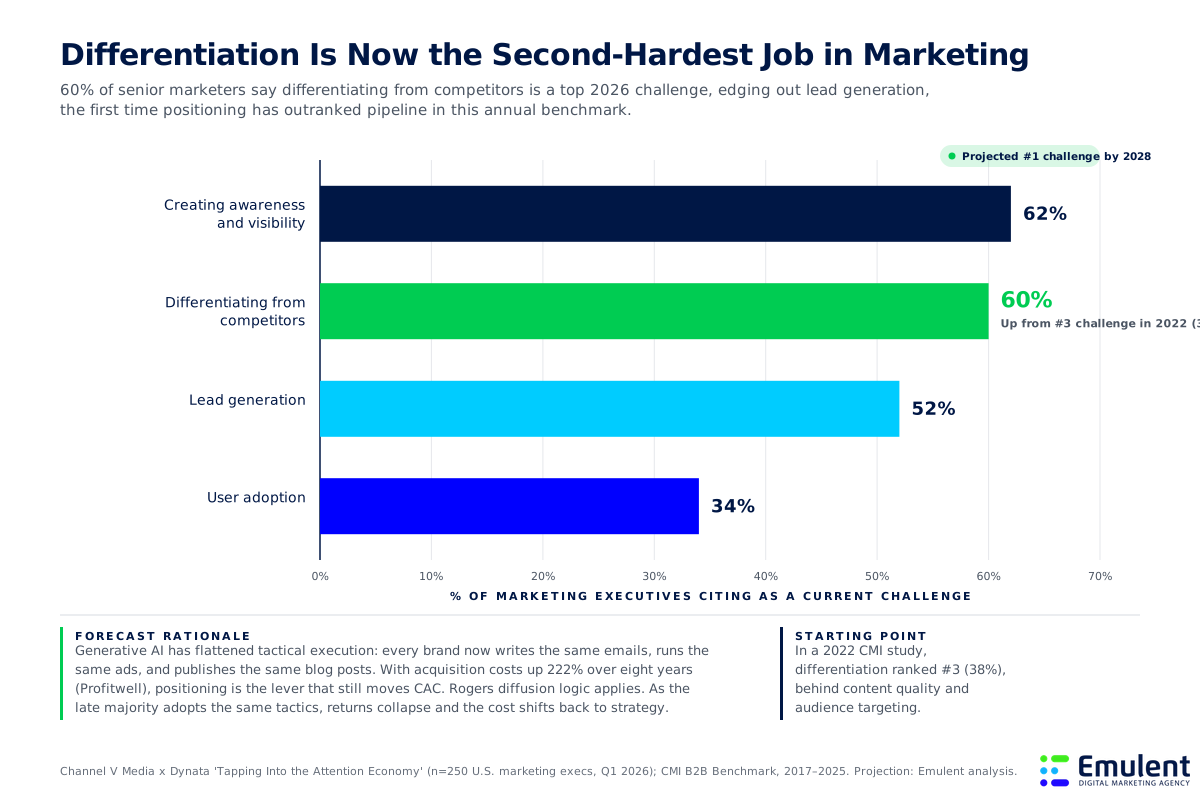
Why does saturation change the rules of marketing execution?
– Emulent Marketing Strategy Team
How do you choose a differentiation dimension you can actually defend?
What does proof-based messaging look like in practice?
– Emulent Marketing Strategy Team
Which marketing channels reward differentiation the most in saturated categories?
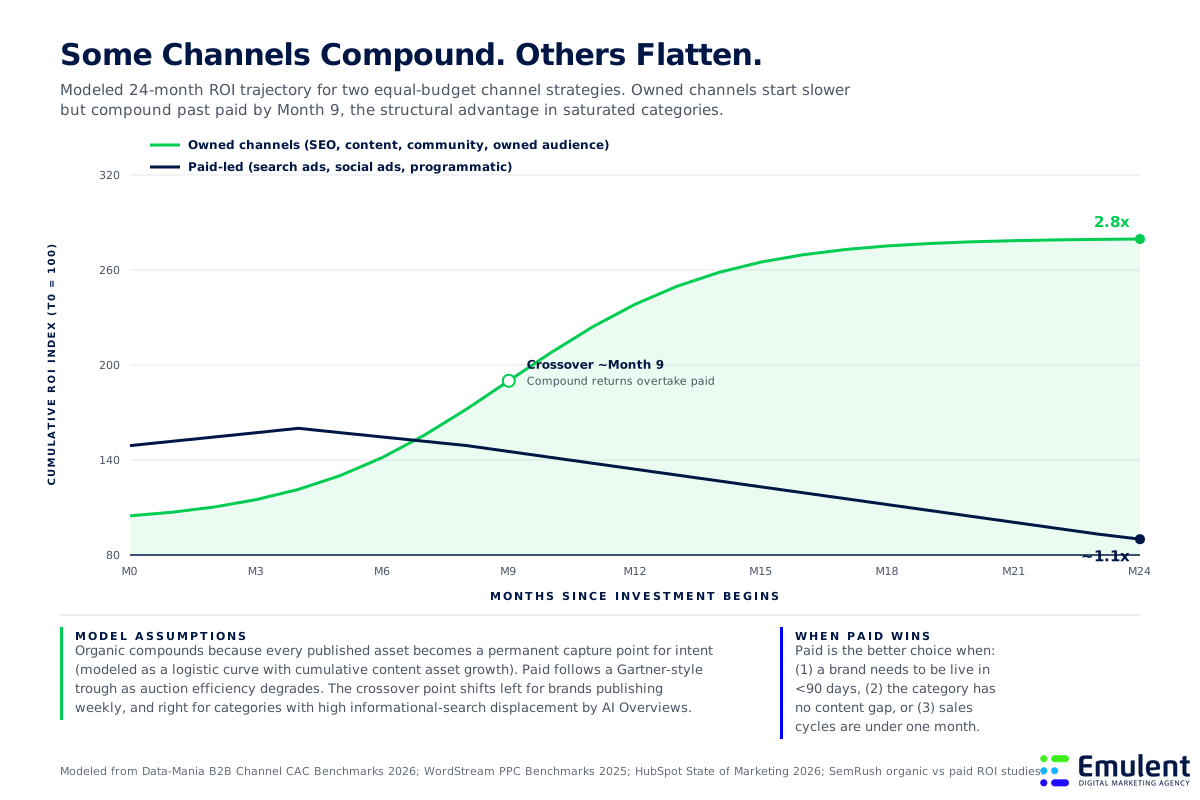
How do you keep your differentiation visible when competitors copy you?
– Emulent Marketing Strategy Team
Where do most differentiation efforts fail, and how do you avoid those traps?
– Emulent Marketing Strategy Team
Building differentiation that holds up